


US Officials Demand Comprehensive Strategy to Confront Syria’s Illicit Drug Trade

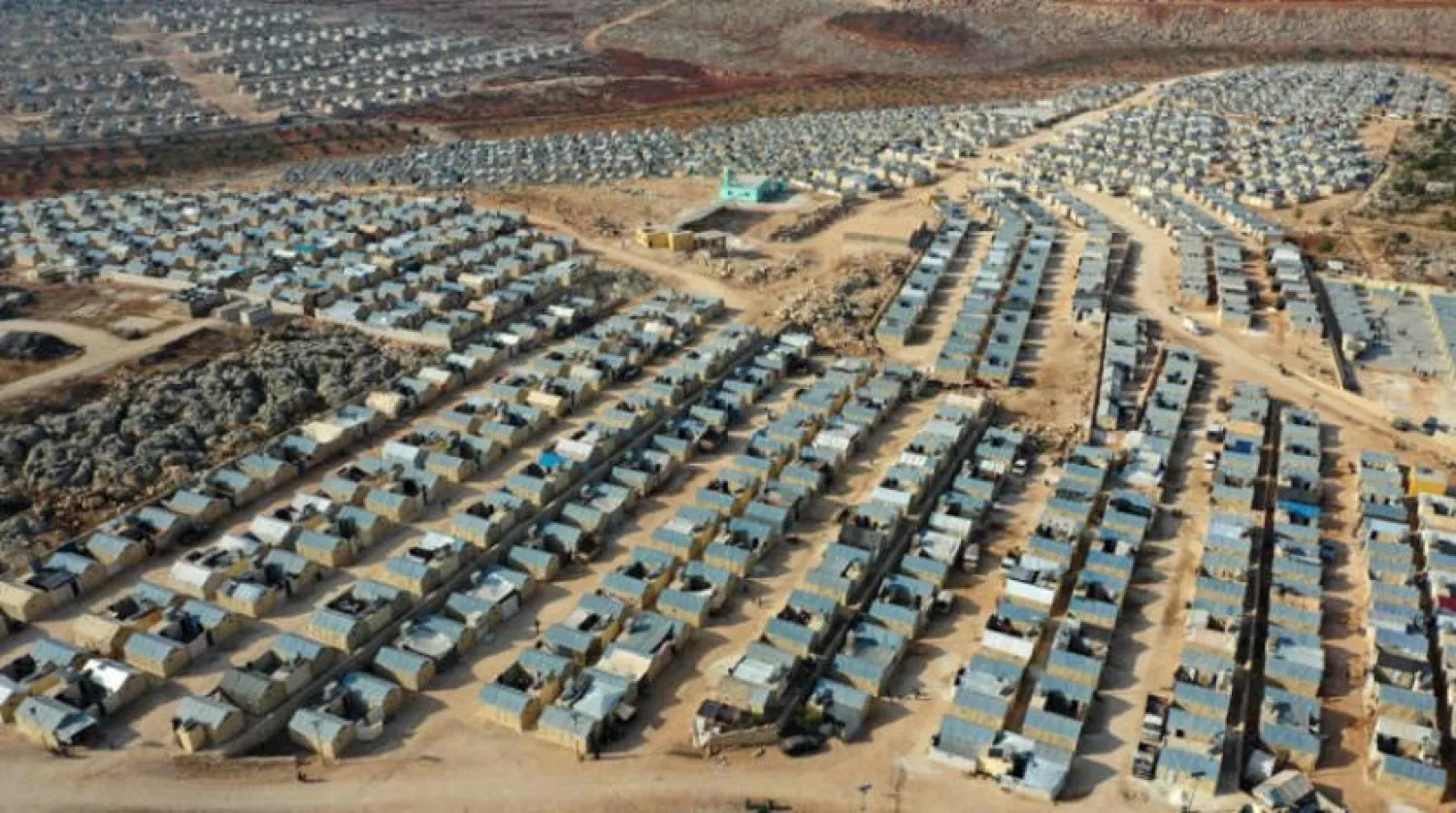
An aerial view shows shelters at the newly-established Watan camp for internally displaced people in the village of Kafr Jales in Syria's northwestern Idlib province, on November 17, 2021. (Photo by Omar HAJ KADOUR / AFP)
TT

US Officials Demand Comprehensive Strategy to Confront Syria’s Illicit Drug Trade

An aerial view shows shelters at the newly-established Watan camp for internally displaced people in the village of Kafr Jales in Syria's northwestern Idlib province, on November 17, 2021. (Photo by Omar HAJ KADOUR / AFP)

Over the course of the Syrian civil war, the Syrian regime had transformed into one of the leading “narcotics institutions” worldwide.

Its production chains and smuggling networks dealt with everything from Hashish to the most profitable drug, Captagon. With narcotics becoming one of the regime’s main exports, many countries were harmed, leaving a harsh reality before US government and legislative institutions which are fighting off this harmful trade.

Captagon, produced in Syria, is a mild stimulant pill that is taken for “recreational purposes” throughout the Middle East.

According to a report issued by the Center for Operational Analysis and Research (COAR), Captagon pills reached a market value of no less than 3.5 billion dollars during 2020.

This figure is five times the value of Syria’s legitimate exports.

Legislators in the US have called for the need to fight Syria’s harmful trade and stand against it within the policy of sanctions against the Syrian regime.

Although the Caesar Syria Civilian Protection Act did not include punishing or disrupting Syrian drug networks, the new 2022 National Authorization Act (NDAA) received some amendments that work towards the goal of curbing Syria’s drug trade.

The 2022 NDAA amendment, proposed by Congressman French Hill (R-AR-2), demands that the US administration develops a strategy among government agencies to disrupt and dismantle the drug trade and smuggling networks linked to the Bashar al-Assad regime in Syria.

This amendment was supported by a majority vote - 316 votes out of 435 - in the House of Representatives and is proposed before the Senate.

According to Hill’s amendment, the Captagon trade linked to the regime in Syria constitutes a transnational security threat, and the US must develop and implement an interagency strategy to dismantle it no later than 180 days from the date of enactment of the abovementioned law.

The 2022 NDAA amendment’s proposal demands that the Department of State, Department of Treasury, Department of Defense, DEA, and other federal agencies present a joint report on a strategy to disrupt and dismantle illicit drug manufacturing in Syria. The report must be submitted to appropriate congressional committees.

The report must also present an infrastructure for executive actions against the Assad regime.

Moreover, the amendment requests using sanctions authorities to target individuals and entities linked directly or indirectly to the illicit drug infrastructure of the Assad regime. It also calls for using US-global diplomatic interactions related to the economic pressure campaign against the Assad regime to target the illicit drug infrastructure.

Although there is still a long way to go before the approval of this bill, the mobilization for its approval may make it binding in the new 2022 National Authorization Act (NDAA).

In a video published by Hill, he urges President Joe Biden’s administration to do everything in its power to stop the systematic drug smuggling operations in Syria, describing the Assad regime as a narcostate.

Hill called on his fellow representatives in Congress to support the amendment.

He explained that the amendment constitutes the first step to end the civil war that has devastated the country.

A State Department spokesperson told Asharq Al-Awsat last month that the US government is concerned about drug trafficking from Syria and is working to combat it, through multiple efforts, including “traditional law enforcement tools and capabilities.”

The spokesperson emphasized that the US government has numerous powers to identify and detect those who lead, facilitate, or partner with drug traffickers and transnational organized crime.

Caroline Rose, a political researcher at the Newlines institute for policy and research in Washington, believes that Hill’s amendment is the first of its kind that addresses the harmful effects of the Captagon trade and its relationship to the Assad regime.

She considered the amendment an important step that defines an interagency process that can review the adverse effects of the Captagon trade.

Rose told Asharq Al-Awsat that this is an attempt on behalf of the US to fill a vacuum in the maximum pressure campaign in Syria.

However, she believes that it will be difficult, as there appears to be a level of paralysis on the democratic side over US policy toward Syria.

Hill has introduced this amendment, but it has been difficult for it to gain bipartisan support, she said.



Israel Military Says Soldier Killed in Gaza 

A drone view shows the destruction in a residential neighborhood, after the withdrawal of the Israeli forces from the area, amid a ceasefire between Israel and Hamas in Gaza, in Gaza City, October 21, 2025. (Reuters)
TT

Israel Military Says Soldier Killed in Gaza 

A drone view shows the destruction in a residential neighborhood, after the withdrawal of the Israeli forces from the area, amid a ceasefire between Israel and Hamas in Gaza, in Gaza City, October 21, 2025. (Reuters)

The Israeli military announced that one of its soldiers had been killed in combat in southern Gaza on Wednesday, but a security source said the death appeared to have been caused by "friendly fire".

"Staff Sergeant Ofri Yafe, aged 21, from HaYogev, a soldier in the Paratroopers Reconnaissance Unit, fell during combat in the southern Gaza Strip," the military said in a statement.

A security source, however, told AFP that the soldier appeared to have been "killed by friendly fire", without providing further details.

"The incident is still under investigation," the source added.

The death brings to five the number of Israeli soldiers killed in Gaza since a ceasefire took effect on October 10.


Syria: SDF’s Mazloum Abdi Says Implementation of Integration Deal May Take Time

People sit outdoors surrounded by nature, with the Tigris river flowing in the background, following a long atmospheric depression, near the Syrian-Turkish border in Derik, Syria, February 16, 2026 REUTERS/Orhan Qereman
TT

Syria: SDF’s Mazloum Abdi Says Implementation of Integration Deal May Take Time

People sit outdoors surrounded by nature, with the Tigris river flowing in the background, following a long atmospheric depression, near the Syrian-Turkish border in Derik, Syria, February 16, 2026 REUTERS/Orhan Qereman

Mazloum Abdi, commander of the Syrian Democratic Forces, said the process of merging the SDF with Syrian government forces “may take some time,” despite expressing confidence in the eventual success of the agreement.

His remarks came after earlier comments in which he acknowledged differences with Damascus over the concept of “decentralization.”

Speaking at a tribal conference in the northeastern city of Hasakah on Tuesday, Abdi said the issue of integration would not be resolved quickly, but stressed that the agreement remains on track.

He said the deal reached last month stipulates that three Syrian army brigades will be created out of the SDF.

Abdi added that all SDF military units have withdrawn to their barracks in an effort to preserve stability and continue implementing the announced integration agreement with the Syrian state.

He also emphasized the need for armed forces to withdraw from the vicinity of the city of Ayn al-Arab (Kobani), to be replaced by security forces tasked with maintaining order.


Israeli Far-Right Minister to Push for ‘Migration’ of West Bank, Gaza Palestinians 

A Palestinian man checks leather belts as people prepare for Ramadan, in the old city of Hebron in the Israeli-occupied West Bank, February 17,2026. (Reuters)
TT

Israeli Far-Right Minister to Push for ‘Migration’ of West Bank, Gaza Palestinians 

A Palestinian man checks leather belts as people prepare for Ramadan, in the old city of Hebron in the Israeli-occupied West Bank, February 17,2026. (Reuters)

Israel's far-right Finance Minister Bezalel Smotrich said he would pursue a policy of "encouraging the migration" of Palestinians from the occupied West Bank and Gaza Strip, Israeli media reported Wednesday.

"We will eliminate the idea of an Arab terror state," said Smotrich, speaking at an event organized by his Religious Zionism Party late on Tuesday.

"We will finally, formally, and in practical terms nullify the cursed Oslo Accords and embark on a path toward sovereignty, while encouraging emigration from both Gaza and Judea and Samaria.

"There is no other long-term solution," added Smotrich, who himself lives in a settlement in the West Bank.

Since last week, Israel has approved a series of measures backed by far-right ministers to tighten control over the West Bank, including in areas administered by the Palestinian Authority under the Oslo Accords, in place since the 1990s.

The measures include a process to register land in the West Bank as "state property" and facilitate direct purchases of land by Jewish Israelis.

The measures have triggered widespread international outrage.

On Tuesday, the UN missions of 85 countries condemned the measures, which critics say amount to de facto annexation of the Palestinian territory.

"We strongly condemn unilateral Israeli decisions and measures aimed at expanding Israel's unlawful presence in the West Bank," they said in a statement.

"Such decisions are contrary to Israel's obligations under international law and must be immediately reversed.

"We underline in this regard our strong opposition to any form of annexation."

UN Secretary-General Antonio Guterres on Monday called on Israel to reverse its land registration policy, calling it "destabilizing" and "unlawful".

The West Bank would form the largest part of any future Palestinian state. Many on Israel's religious right view it as Israeli land.

Israeli NGOs have also raised the alarm over a settlement plan signed by the government which they say would mark the first expansion of Jerusalem's borders into the occupied West Bank since 1967.

The planned development, announced by Israel's Ministry of Construction and Housing, is formally a westward expansion of the Geva Binyamin, or Adam, settlement situated northeast of Jerusalem in the West Bank.

The current Israeli government has fast-tracked settlement expansion, approving a record 52 settlements in 2025.

Excluding Israeli-annexed east Jerusalem, more than 500,000 Israelis live in West Bank settlements and outposts, which are illegal under international law.