As Iran Nuclear Talks Hit Snags, Israel Seeks Harder US Line

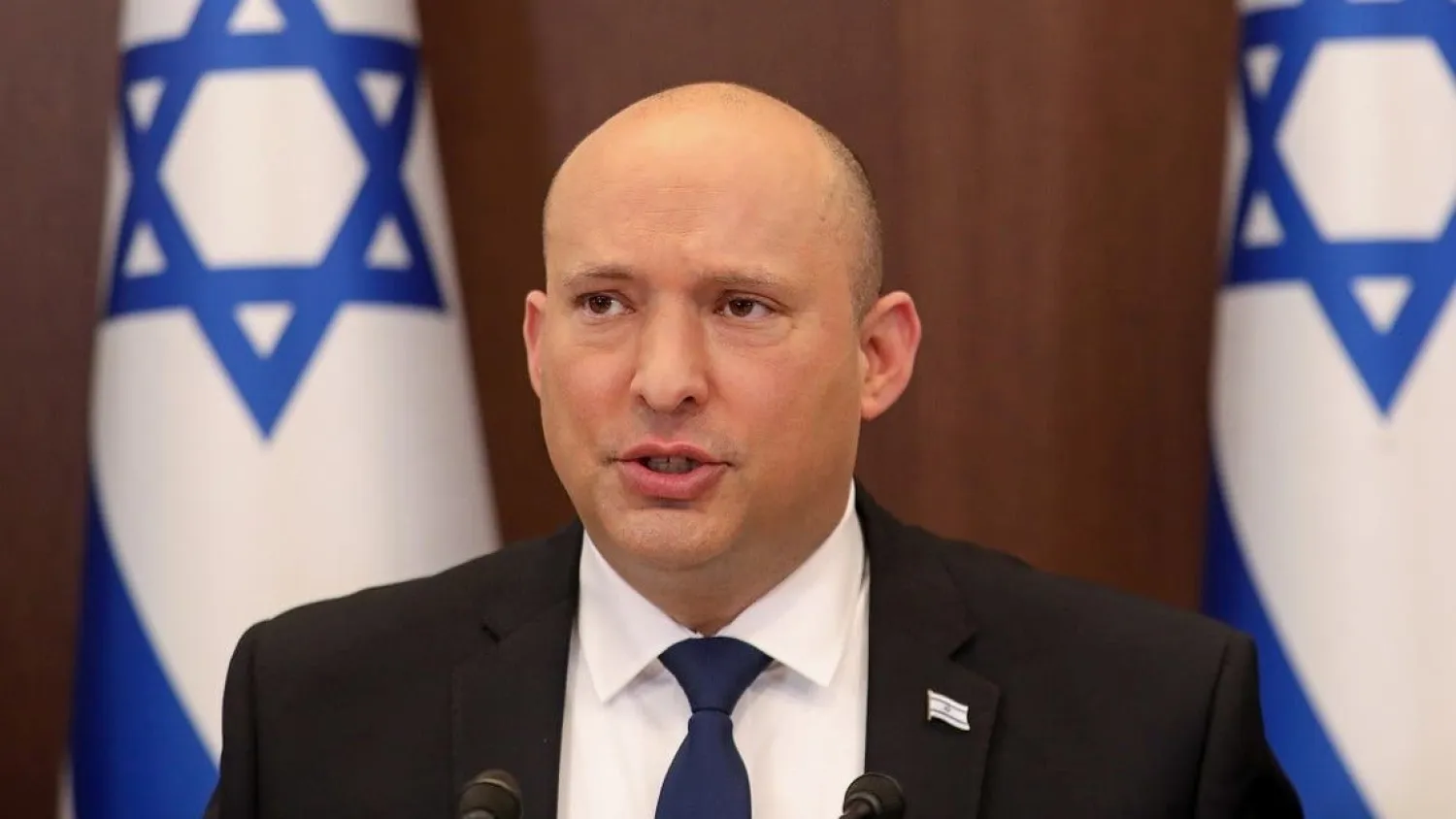
Israeli Prime Minister Naftali Bennett chairs a weekly cabinet meeting in Jerusalem, Israel, December 5, 2021. (Reuters)
TT

As Iran Nuclear Talks Hit Snags, Israel Seeks Harder US Line

Israeli Prime Minister Naftali Bennett chairs a weekly cabinet meeting in Jerusalem, Israel, December 5, 2021. (Reuters)

The long-delayed resumption of nuclear talks with Iran has gotten off to a rough start — with Iran digging in and its negotiating partners openly voicing frustration and pessimism.

After five days of talks in Vienna ended last week, the United States said Iran did not appear to be serious. European diplomats accused Iran of backtracking on previous promises. Even Russia, which has stronger relations with Iran, questioned Iran’s commitment to the process. Israel, an outside observer with a stake in the outcome of the talks, has ramped up its rhetoric and is dispatching two top security officials to Washington for consultations.

“I call on every country negotiating with Iran in Vienna to take a strong line and make it clear to Iran that they cannot enrich uranium and negotiate at the same time,” Prime Minister Naftali Bennett said Sunday. “Iran must begin to pay a price for its violations.”

Perhaps the most encouraging outcome of last week’s talks was an agreement to continue talking. When negotiators reconvene in coming days, it could become clearer if the wide gaps visible last week were a sign of posturing or a serious crisis.

The negotiations seek to revive the 2015 nuclear accord between Iran and six world powers. That agreement, spearheaded by President Barack Obama, granted Iran relief from crippling sanctions in exchange for curbs on its nuclear program.

But three years later, President Donald Trump, with strong encouragement from then-Israeli Prime Minister Benjamin Netanyahu, withdrew from the deal, causing it to unravel. Since then, Iran has stepped up its nuclear activities -- amassing a stockpile of highly enriched uranium that goes well beyond the bounds of the accord.

Iran last week took a hard stance, suggesting everything discussed in previous rounds of diplomacy could be renegotiated. In the midst of the negotiations, the UN’s nuclear watchdog confirmed that Iran had begun enriching uranium up to 20% purity at its underground facility at Fordo – a site where enrichment is not permitted under the deal.

Despite Iran's claims that its nuclear activities are for peaceful purposes only, the continued advances in its atomic program have further raised the stakes.

Last week’s talks in Vienna came after a hiatus of more than five months and were the first in which Iran’s new hard-line government participated. The United States, no longer a party to the agreement, was not in the room and negotiated remotely through mediators.

A senior US State Department official said over the weekend that negotiators had expected Iran to “show seriousness” at the talks. He said that even Russia and China, important trading outlets for Iran that have traditionally taken a softer line, were concerned about the prospects for a deal.

“Every day that goes by is a day where we come closer to the conclusion that they don’t have in mind a return" to the deal, said the official, who spoke on condition of anonymity to brief reporters on the US assessment.

European negotiators also expressed frustration. In a joint statement, senior diplomats from Germany, Britain and France said Iran has “fast-forwarded its nuclear program” and “backtracked on diplomatic progress.”

“Unclear how these new gaps can be closed in a realistic time frame on the basis of Iranian drafts,” they said.

Mikhail Ulyanov, a senior Russian diplomat in Vienna, said that Iran had offered a “radical revision” of previous understandings.

“Technically, amendments are always possible,” he said. “However, it is desirable that such amendments ... do not turn into a roadblock to progress.”

On Sunday, Iran’s Foreign Ministry issued a nine-page document that appeared to slightly step back from its tough positions.

“Other parties only need to show political determination and express readiness to take necessary practical steps,” the document read. “Then, ways will be opened for the conclusion of a deal and settlement of differences.”

But the document gave few specifics on what Iran might have in mind.

That is unlikely to satisfy Israel, which has returned to its role as possible spoiler.

Israel considers Iran to be its greatest enemy and it strongly opposed the 2015 deal.

It says it wants an improved deal that places tighter restrictions on Iran’s nuclear program and addresses Iran’s long-range missile program and its support for hostile proxies along Israel’s borders.

Israel also says that the negotiations must be accompanied by a “credible” military threat to ensure that Iran does not delay indefinitely.

Bennett said Israel was using the time between rounds to persuade the Americans to “use a different toolkit” against Iran’s nuclear program, without elaborating.

The head of Israel’s Mossad intelligence service, David Barnea, was traveling to Washington on Sunday, and Israeli Defense Minister Benny Gantz, a former military chief, heads there later this week.

Israel’s figurehead president, Isaac Herzog, delivered an uncharacteristically blunt message Sunday as he welcomed the new American ambassador to Israel, Thomas Nides.

“If the international community does not take a vigorous stance on this issue, Israel will do so. Israel will protect itself,” Herzog said.

Despite Israel’s support for Trump’s withdrawal in 2018, prominent voices in the country are now saying in retrospect that the move was a blunder.

Former Prime Minister Ehud Barak wrote in the Yediot Ahronot daily Sunday that pulling out “was a delusional decision that allowed the Iranians to move forward quickly in the direction of becoming a nuclear threshold state.”

Barak, who reportedly favored a military strike when he served as Netanyahu’s defense minister early last decade, said Netanyahu, who is now Israel’s opposition leader, had failed to put together with the US a “Plan B in the form of a surgical military operation.”

Over the past decade, Iran has greatly complicated any military operation by scattering its nuclear sites and hiding some deep underground. Israeli officials insist military action is still feasible.

Yoel Guzansky, a senior fellow and Iran expert at Israel’s Institute for National Security Studies, said the Israeli threats should be taken seriously, especially in light of questions over America’s willingness to use force in the region.

“I think the United States doesn’t understand our red lines,” he said. “They think we’re bluffing, but we’re not.”

Over the weekend, Iran said it had tested a surface-to-air missile defense system near its Natanz nuclear facility. Late Saturday, people leaving nearby saw a light in the sky and heard a loud explosion.

“Any threat from the enemies will be met with a decisive and firm response,” state TV quoted Lt. Cmdr. Ali Moazeni as saying.


Trump Arrives in Manila for Quad Talks Ahead of China Visit

US President Donald Trump waves as he walks to board Air Force One at Joint Base Andrews, Maryland, on November 16, 2026. (AFP)
TT

Trump Arrives in Manila for Quad Talks Ahead of China Visit

US President Donald Trump waves as he walks to board Air Force One at Joint Base Andrews, Maryland, on November 16, 2026. (AFP)

US President Donald Trump arrived in the Philippines on Tuesday at the tail end of a Southeast Asian summit, with protests awaiting him as he prepares for the first meeting in two years of the Quad group of Indo-Pacific countries.

Trump's Asia trip, which includes the Asia-Pacific Economic Cooperation (APEC) forum in Shenzhen and a much-anticipated trilateral meeting with his Chinese and Russian counterparts, comes after his Republican Party's defeat in midterm elections, plus spy allegations and new US curbs on China's access to AI chips that could complicate a fragile trade-war truce.

Demonstrators gathered in Manila for a fifth day of protests that have included the burning of Trump effigies, calls for an end to the Middle East war and scrapping of the US-led Pax Silica supply chain initiative.

Trump arrived late afternoon at the end of the Association of Southeast Asian Nations summit ‌and will join a ‌US-ASEAN "Special Summit" later on Tuesday.

He will first hold a meeting of the Quad – ‌the ⁠US, Japan, Australia and ⁠India – which will be his first and takes place two years after the last gathering of the group, which Trump's predecessor Joe Biden regarded as a signature foreign policy initiative.

It comes ahead of the APEC gathering hosted by Chinese President Xi Jinping, who has previously objected to the Quad as an effort to encircle Beijing. Quad members have said the grouping is not directed against any one country.

QUAD MEETING THE 'BEST POSSIBLE SIGNAL'

At the ASEAN summit on Monday, Chinese Premier Li Qiang hailed what he called "truly extraordinary" economic achievements of China and ASEAN in the face of global trade restrictions, expressing Beijing's commitment to free trade and the need to "stand united, ward off interference, and work together".

China ⁠is ASEAN's largest trading partner and a key source of investment, but the biggest economies ‌of the 11-member bloc – which has a combined GDP of more than $3.9 trillion – ‌want to deepen ties with the US despite protracted trade and diplomatic uncertainty under the Trump administration.

Former US Deputy Secretary of State Kurt ‌Campbell credited Washington's top diplomat, Marco Rubio, with the timing and reconvening of the Quad, which he said had lost ambition ‌under Trump.

"Part of what he (Rubio) is thinking is that this is probably the best possible signal if you're going to go into a trilateral meeting," said Campbell, co-founder of The Asia Group, referring to Thursday's US-China-Russia talks.

"The linchpin of everything that we do in Asia is the US-Japan relationship, and a perception that this is not at the top of the president's mind would concern me."

White House spokesperson Olivia Wales on Friday ‌said that under Trump's leadership, the Quad had demonstrated it is "a partnership of action, tackling the region's toughest challenges and driving opportunities to ensure a free and open Indo-Pacific".

A Japanese foreign ⁠ministry official said it was ⁠expected that Quad leaders would try to show unity, with maritime security, export restrictions, critical-minerals supply-chain diversification and AI among potential discussion points.

Undersea cables, emerging technology and disaster relief were also likely to be covered, a source familiar with the matter said.

JAPAN TO PLAY MORE PROACTIVE ROLE, PM SAYS

ASEAN's leaders held meetings on Tuesday involving counterparts of Japan, South Korea, China and India.

Japanese Prime Minister Sanae Takaichi pledged to work with ASEAN to boost regional economic and energy resilience to address export restrictions and vulnerabilities from rapid AI development, and strengthen supply chains, including on critical minerals.

"While the international order is experiencing a period of great instability, Japan will play an ever more proactive role," Takaichi said.

Trump will sign a joint statement with Thai Prime Minister Anutin Charnvirakul on Tuesday on an agreement on reciprocal trade. Thai media have reported the two would hold talks and the statement would be about progress on negotiations.

The US is Thailand's largest export market, accounting for 24% of its total shipments this year. The US designated Thailand as a major non-NATO ally in 2003.

Trump will on Wednesday meet Ferdinand Marcos Jr, president of US defense ally the Philippines, before heading to Shenzhen.


Pakistan Army Chief and Iran FM Discuss Regional Peace, Security

Vessels at the Strait of Hormuz, as seen from Musandam, Oman, November 17, 2026. (Reuters)
TT

Pakistan Army Chief and Iran FM Discuss Regional Peace, Security

Vessels at the Strait of Hormuz, as seen from Musandam, Oman, November 17, 2026. (Reuters)

Asim Munir, the powerful army chief of mediating country Pakistan, met with Iranian foreign minister Abbas Araghchi, the Pakistani military said Tuesday, during continued efforts to end the war between the United States and Iran.

Pakistan brokered a June accord that led to a brief halt in fighting between the United States and Iran and set a roadmap for further agreement on reopening the crucial Strait of Hormuz waterway and for negotiations on Tehran's nuclear program.

But the truce collapsed with Washington and Tehran accusing each other of violating the agreement and prompting months of shuttle diplomacy to resuscitate the ceasefire, led principally by mediators Qatar and Pakistan.

During the meeting on Monday, "matters of mutual interest, regional security dynamics and evolving geopolitical developments were discussed," the Pakistani military's media wing said in a statement.

Munir "underscored the importance of sustained engagement, mutual trust and close coordination between the two brotherly countries for promoting regional peace and stability", it added.

Araghchi arrived in Pakistan late on Sunday for a meeting of the Economic Cooperation Organization, a group of nations from Central and South Asia and the Middle East.

Pakistani Foreign Minister Ishaq Dar said on Monday he had held "very candid, very frank" discussions with Araghchi, during the conference confirming that Iran had put forward a two-day proposal to reopen the Strait of Hormuz as part of efforts to end the war with the United States.

He said Washington had not yet responded.

The United States and Israel launched the war on February 28, killing members of Iran's leadership and demanding it cease any nuclear-related activities.

The war plunged the Middle East into violence, with Tehran's retaliatory strikes targeting Gulf countries and sending global energy prices skyrocketing.

Tehran has insisted that Washington meet conditions including the release of frozen assets abroad, sanctions relief and an end to the US naval blockade of Iranian ports in exchange for reopening the Strait of Hormuz.


US Probes Why a Router Installation Sparked Mass Flight Grounding

A person takes a photo of a screen displaying information of delayed and cancelled flights at Hartsfield-Jackson Atlanta International Airport in Atlanta, Georgia, US, November 13, 2026. (Reuters)
TT

US Probes Why a Router Installation Sparked Mass Flight Grounding

A person takes a photo of a screen displaying information of delayed and cancelled flights at Hartsfield-Jackson Atlanta International Airport in Atlanta, Georgia, US, November 13, 2026. (Reuters)

US Transportation Secretary Sean Duffy said on Monday it remains unclear why a router installed by L3Harris Technologies in a remote Arkansas facility triggered a nearly five-hour nationwide aviation ground stop on Friday.

Shares of L3Harris, the contractor for the Federal Aviation Administration, closed down 3.7% after the government blamed the mass flight shutdown on its router installation. Airlines canceled more than 18,000 flights as a result.

Shares of Hewlett Packard Enterprise, which owns Juniper Networks, the maker of the routers that L3Harris installed, dropped 4.5% on Monday.

L3Harris has said it is ‌cooperating with ‌the official investigation into what went wrong.

Duffy, speaking on CNBC, said the ‌installation ⁠at an FAA radio ⁠communications site in El Dorado, Arkansas, led to an overload of a key government communications system at a rate of 1,000 connection attempts every four to five seconds.

That destabilized aircraft communications and radar feeds, affecting 17 of 22 FAA en route air traffic control centers that were using old routers and prompting the ground stop, Duffy said. He added that he has urged Congress to fund the construction of a new telecom network that is not owned by L3Harris.

Duffy is set to brief US senators ⁠on the investigation on Tuesday.

The FAA had said on Sunday that the ‌initial investigation suggested the data overload could have happened in ‌two locations: the El Dorado site and a radar site in Amarillo, Texas. Duffy said L3Harris had replaced ‌the router in Amarillo three weeks earlier.

Duffy said testing of the two routers was taking ‌place at an L3Harris lab in Florida overseen by the FAA. He invited the FBI to attend the investigation to make sure the review is being done correctly.

The FAA said that after the data "inconsistencies" occurred, L3Harris ultimately blocked those two locations, stabilizing the network. The broadcasting function was also disabled on all the new routers as ‌well as 60 other routers in the system as a precaution, it added.

L3Harris had been installing Juniper Networks routers to replace Cisco routers, produced ⁠in 2001, which ⁠were supposed to have been replaced in 2006, the FAA said.

"Based on what we know and have been told by others, our equipment was working as configured," HPE said on Monday. "The FAA is assessing the configuration and performance of all infrastructure involved to determine the cause."

Duffy has asked for billions of dollars from Congress to build a new fiber network operated by AT&T, Verizon and Lumen to replace the old L3Harris-owned copper network.

"I have the architecture ready. These companies are ready to deploy tomorrow. All I need is the money to tell them to start," he said on NBC on Sunday. "I want to get away from L3Harris and get to a new one. But they own the network. So I can’t cancel the network that they own and I operate on."

The FAA said the Arkansas router replacement was part of the $1 billion a year it spends to maintain and sustain the existing 1980s telecom network, but not part of its broader modernization effort.