


McGurk Says US Committed to Regional Defense of Saudi Arabia

US National Security Council Coordinator for the Middle East and North Africa Brett McGurk (AFP)
TT

McGurk Says US Committed to Regional Defense of Saudi Arabia

US National Security Council Coordinator for the Middle East and North Africa Brett McGurk (AFP)

US National Security Council Coordinator for the Middle East and North Africa Brett McGurk has said that the participation of his country’s delegation in the nuclear negotiations in Vienna would not deviate from the framework agreed upon with the Gulf partners.

He stressed that President Joe Biden’s administration would not act “behind the back of its friends and allies”, and that mutual consultations were ongoing on the Iranian nuclear program and the security of the region.

In a video interview with the Arab Gulf Center for Studies and Research in Washington on Friday, McGurk said that the Biden administration sees security in the Arab region as a fundamental pillar of its foreign policy.

A security and defense partnership is necessary to reach “structural integration,” he stressed, pointing out that the “failed states” scenario does not serve the administration’s goals, as there must be solidarity and cooperation to avoid this from happening.

According to McGurk, the presence of failed states opens Iran’s appetite for interference, by spreading its militias and destabilizing the concerned countries. Other terrorist groups, such as ISIS, see the presence of failed states as an opportunity for them to move and target security, he said.

“We are a global power, we have global responsibilities. But in term of priorities, we ask ourselves the question: What are we trying to achieve? We have learned many very difficult lessons in the past, and we will not pursue unattainable goals.”

In response to a question about openness and dialogue with Iran - as Saudi Arabia began negotiations with Tehran - as well as the latest Emirati move, he said: “We encourage that, and the challenge of Iran, the challenge of non-state actors, the challenge of extremism, can be met if the partners work together... The decision to enter into negotiations with Iran is a decision taken by sovereign parties, they are not affiliated with America. We don’t order them and say go talk to Iran. Sometimes we get the question from them, and we may have a chance for a channel with Iran. But in general, we do not mind using the language of dialogue between everyone. And I think that our friends in the Gulf are sitting at the table with Iran conscious of their dealings with the country.”

The senior US official said he believed that the only way to reach a solution to the Iranian nuclear program was through Iran’s return to compliance with its obligations.

He expressed his displeasure with the sanctions inherited by the Biden administration, just as it inherited Iran’s nuclear program, which is “another problem we received, in the wake of the rapid progress of Iran’s nuclear program.”

McGurk reiterated that the Biden administration is not like the previous administration of Donald Trump, and its policy does not resemble that of the Barack Obama administration, because “Joe Biden’s policies are completely different, we have our very own position.” He stressed that the current administration has adopted one principle that it will work on, which is “just to all our allies, whether in Europe, partners in the Gulf or partners in the Middle East; we will not do anything behind their back.”

He pointed to the meetings held by the US envoy to Iran and the official of the negotiating team on the Iranian nuclear program in Vienna, Robert Malley, with the entire Gulf Cooperation Council, and the joint statement issued before the next round in Vienna.

“There is complete transparency regarding what is being discussed with our friends. We are deeply committed to returning Iran’s nuclear program to a place where we are a strong international community, and the countries of the region and the Gulf States have a short list of requests, which is that the nuclear program be peaceful,” he said.

He stressed that his country is primarily committed to the regional defense of Saudi Arabia, considering that the best example of this is the Senate's vote to grant Saudi Arabia the air-to-air missile deal to defend itself from attacks launched by the Houthis with Iranian support.

McGurk stressed that his country is primarily committed to the regional defense of Saudi Arabia, saying that the best example was the Senate’s vote to grant the Kingdom the air-to-air missile deal to defend itself from attacks launched by the Houthis with Iranian support.

“In fact, the Saudis are defeating nine out of ten missiles, and of course we want to get to 10 out of 10, and we are very engaged in trying to help stop arms transfers to Yemen,” he underlined.

“The Iranians are taking advantage of vacuums and failed states,” McGurk said. “First, we don’t want new failures and we don’t want to go backwards. Secondly, we want to increase the state’s ability to confront threats, especially in Iraq, to gain full control over its sovereign space. This is not an American policy, but rather the policy of the Iraqi government, which is to subject all armed groups to the control of the state.”

The US National Security Council Coordinator for the Middle East and North Africa warned that the current situation in Lebanon allows for Iran’s interference. He called on the countries of the region to avoid this scenario and try to understand it in Lebanon.

Referring to the presence of Iranian-backed groups in Syria that pose significant threats to Israel, he said: “We are committed to Israel’s national security. Israel’s right to defend itself.”



Makkah Deputy Governor Carries Out Field Inspection of Grand Mosque Readiness for Ramadan 

Deputy Governor of the Makkah Region Prince Saud bin Mishaal bin Abdulaziz is seen during his inspection tour at the Grand Mosque in the holy city of Makkah. (SPA)
TT

Makkah Deputy Governor Carries Out Field Inspection of Grand Mosque Readiness for Ramadan 

Deputy Governor of the Makkah Region Prince Saud bin Mishaal bin Abdulaziz is seen during his inspection tour at the Grand Mosque in the holy city of Makkah. (SPA)

Deputy Governor of the Makkah Region Prince Saud bin Mishaal bin Abdulaziz inspected the readiness of the Grand Mosque and its facilities, conducting a field tour to review operational and service preparations for receiving worshippers and Umrah performers during the holy month of Ramadan, reported the Saudi Press Agency on Tuesday.

Prince Saud was briefed on the operational plans implemented by the relevant authorities, including crowd management mechanisms, service enhancements, and facility preparations aimed at ensuring smooth movement and enhancing comfort and safety levels for visitors to the Grand Mosque, particularly during peak times.

He reviewed developmental initiatives and smart services supporting the operational system, notably electric mobility carts for transporting the elderly, persons with disabilities, and those in need of assistance within the Grand Mosque.

The tour also included an overview of the efforts of guidance teams deployed across the corridors and courtyards of the Grand Mosque, providing multilingual assistance and direction.

Prince Saud reviewed the interactive map and digital mobility platform, which allows visitors to plan their routes in advance and identify service locations, entrances and exits, and less crowded pathways.

He was briefed on crowd management systems, including the visitor density sensor platform that measures human density in real time, and the Tawaf and Sa’i crowd status display service, which allows worshippers to select appropriate times to perform rituals with ease. Models of the modern multilingual guidance system were also reviewed.

Prince Saud also visited the Smart Engineering Command and Control Center, which serves as an advanced central platform linking operational systems and monitoring performance in real time, boosting operational efficiency and raising readiness levels during Ramadan.


Saudi Leadership Provides Two Donations Worth SAR150 Mln Through Jood Eskan Platform

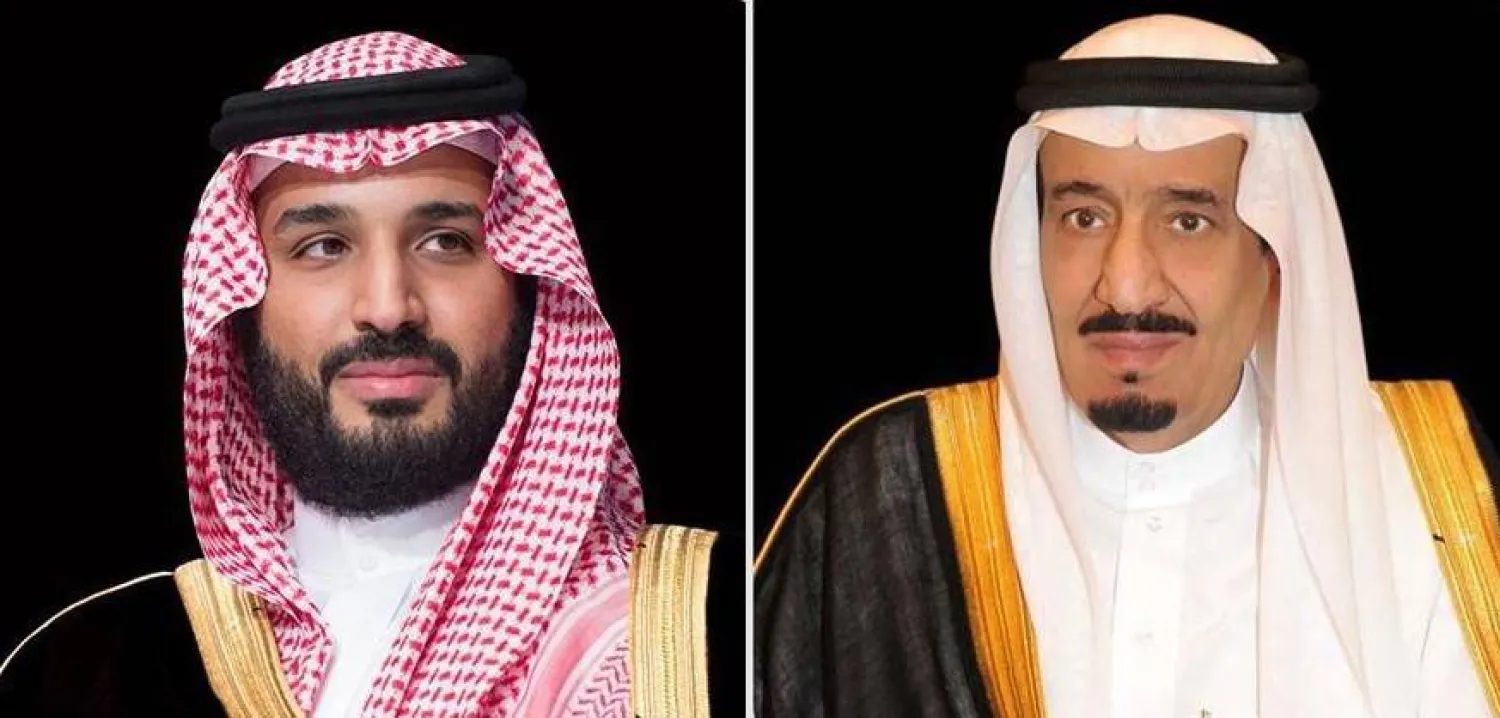
Custodian of the Two Holy Mosques King Salman bin Abdulaziz Al Saud and Prince Mohammed bin Salman bin Abdulaziz Al Saud, Crown Prince and Prime Minister. (SPA)
TT

Saudi Leadership Provides Two Donations Worth SAR150 Mln Through Jood Eskan Platform

Custodian of the Two Holy Mosques King Salman bin Abdulaziz Al Saud and Prince Mohammed bin Salman bin Abdulaziz Al Saud, Crown Prince and Prime Minister. (SPA)

Custodian of the Two Holy Mosques King Salman bin Abdulaziz Al Saud and Prince Mohammed bin Salman bin Abdulaziz Al Saud, Crown Prince and Prime Minister, have provided two generous donations amounting to SAR150 million through the Jood Eskan platform.

The move aligns with the leadership's commitment to supporting all national efforts and initiatives to provide suitable housing for deserving families.

Minister of Municipalities and Housing and Chairman of the Board of Trustees of the Developmental Housing Foundation (Sakan) Majed Al-Hogail expressed his deep gratitude to the leadership for its unwavering support to all national efforts and initiatives aimed at providing suitable housing for eligible families across the Kingdom.

He noted the effective impact of previous generous donations in achieving the goals of housing development, and motivating individuals and institutions to donate through the Jood Eskan platform that is based on community giving that helps provide decent housing and boosts stability and quality of life for deserving families.


Saudi Crown Prince Receives Message on Bilateral Ties from President of Kazakhstan

Prince Mohammed bin Salman bin Abdulaziz Al Saud, Saudi Crown Prince and Prime Minister. (SPA file)
TT

Saudi Crown Prince Receives Message on Bilateral Ties from President of Kazakhstan

Prince Mohammed bin Salman bin Abdulaziz Al Saud, Saudi Crown Prince and Prime Minister. (SPA file)

Prince Mohammed bin Salman bin Abdulaziz Al Saud, Saudi Crown Prince and Prime Minister, received on Tuesday a written message from President of Kazakhstan Kassym-Jomart Tokayev on bilateral relations between their two countries.

The message was received by Minister of Foreign Affairs Prince Faisal bin Farhan bin Abdullah during a meeting with his Kazakh counterpart Yermek Kosherbayev in Riyadh.