


US, Palestinians to Discuss PA’s Economic Situation

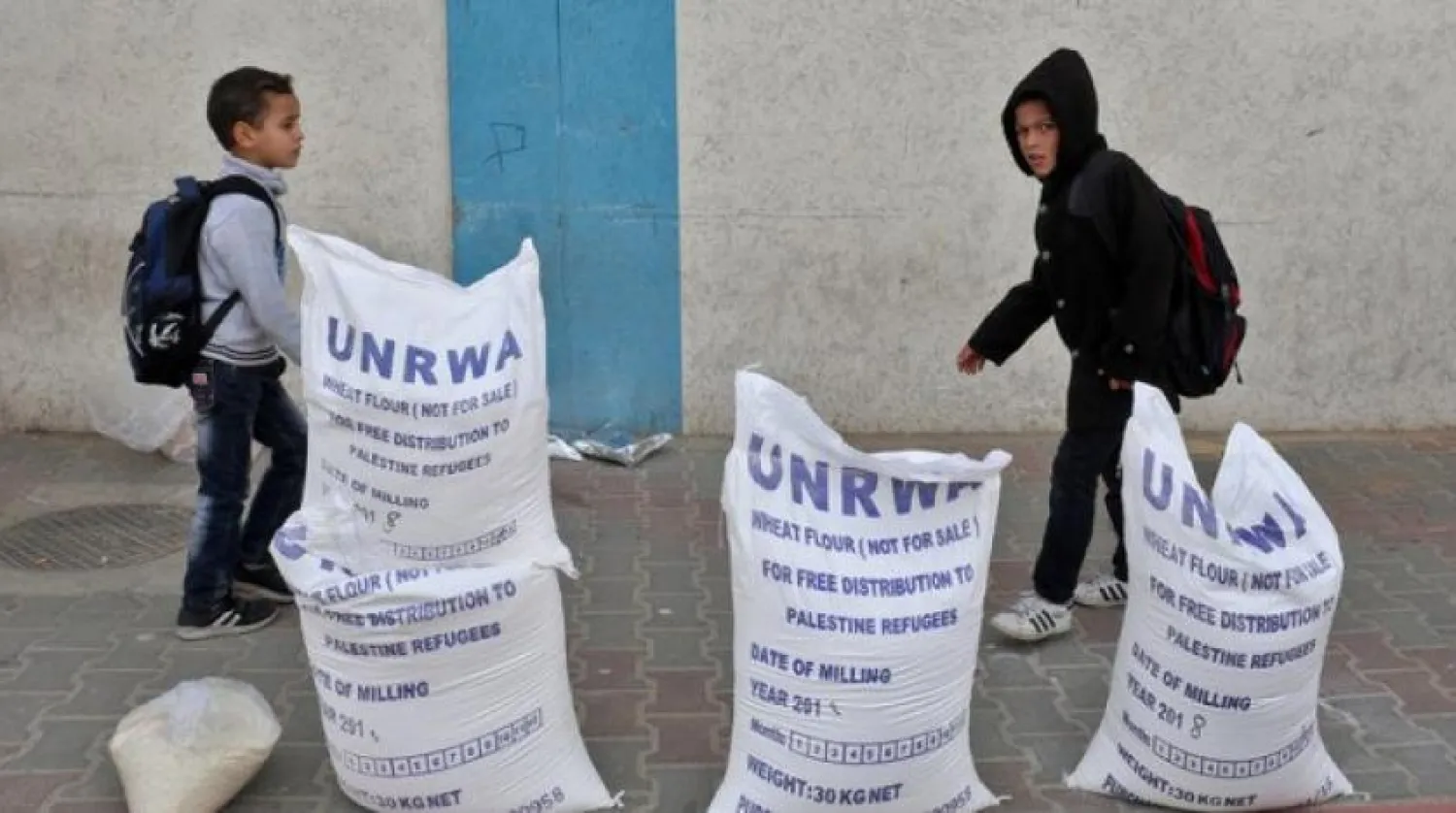
Palestinians receive aid from UNRWA. (AFP/File)
TT

US, Palestinians to Discuss PA’s Economic Situation

Palestinians receive aid from UNRWA. (AFP/File)

The Palestinian Prime Minister’s Advisor for Planning and Aid Coordination, Stephan Salameh, has revealed that an economic dialogue will resume on Tuesday between the Palestinian Authority and the US for the first time since 2016.

Speaking to the official Palestinian radio, Salameh said the Palestinian-American dialogue will take place via videoconference and will discuss ways to support the Palestinian economy and restore direct US support to the treasury of the Palestinian Authority (PA).

He said the PA will also request US pressure on Israel to stop deducting from Palestinian tax funds.

The PA has suffered from donor aid cuts over the past decade.

The Palestinian government's total revenues from foreign aid decreased by 89.6% during the first three months of 2021, according to data released by the Palestinian Finance Ministry.

Last month, the Authority’s 140,000 employees in the West Bank and Gaza saw a 25 percent cut of their salaries, an amount that the Finance Minister said will be paid out in arrears once Israel releases the withheld funds.

“These talks are important to us, especially under the current US administration. We hope, through dialogue, that US aid will return soon,” Salameh said.

In 2018, the United States passed legislation restricting some aid to the PA.

The Palestinian official stressed that the Biden administration has resumed its humanitarian support through third parties, while direct support to the treasury remains frozen.

“The US administration has promised to return financial support to the Palestinian treasury, but what is delaying this is the US laws that limit direct support to the Palestinian government, especially the operational support to the treasury, which was going to sustain salaries and poor families,” the official said.

Regarding European backing for the government’s treasury, Salameh said: “We are currently studying the agreements, and this support is expected to resume next February or March.”

The advisor said Palestinian officials expect 2022 to be better than this year in terms of international aid.

“We are also working to restore Arab support for the treasury,” he added.


Iraq's Coordination Framework Close to Naming Candidate for PM's Post

02 November 2025, Iraq, Najaf: Iraqi Prime Minister Mohammed Shia al-Sudani delivers a speech during a campaign rally of his Reconstruction and Development Coalition in Najaf. (dpa)
TT

Iraq's Coordination Framework Close to Naming Candidate for PM's Post

02 November 2025, Iraq, Najaf: Iraqi Prime Minister Mohammed Shia al-Sudani delivers a speech during a campaign rally of his Reconstruction and Development Coalition in Najaf. (dpa)

Iraq's pro-Iran Coordination Framework is leaning towards nominating Prime Minister Mohammed Shia al-Sudani for a second term days after the election of Nizar Amedi as president.

This would mean abandoning the nomination of former PM Nouri al-Maliki, whose chances of becoming premier are nil after US President Donald Trump’s declaration that he opposes his candidacy.

Sudani is not the only name being floated. Head of the Justice and Accountability Commission Bassem al-Badri and former PM Haidar al-Abadi are seen as “consensus” candidates.

A leading source in the Framework told Asharq Al-Awsat that the coalition has no more than two weeks to decide on a candidate.

Speaking on condition of anonymity, he said the coalition wants to take advantage of the truce between the United States and Iran to name a candidate and form a government.

A new candidate may be named very soon, he added.

He acknowledged the complex relations and divisions within the Framework, stressing however that time was running out for its members to name a candidate before the US-Iran war erupts again.

The source highlighted the “pivotal” role played by President of the Supreme Judicial Council Faiq Zaidan in trying to overcome differences and ensure that a candidate is named within the constitutional deadline.

On the possible candidates, the source said it was difficult to identify who has the greatest chances, but it is certain that Maliki is out of the race.

Sudani remains a strong candidate, while Abadi and Badri are also in the running. A fourth figure may also emerge as a candidate, he revealed.

On why Maliki continues to cling on to his nomination, the source explained that the former PM is awaiting the Framework to withdraw his candidacy because it named him in the first place.

He believes that there is no justification for him to pull out from the race unless the Framework decides so to avoid being viewed as having yielded to American pressure, the source said.

Meanwhile, Maliki appears to have become isolated within the Framework and he is now seeking to obstruct efforts to nominate Sudani and Abadi in an effort to portray himself as playing a major role in naming a prime minister.

Reports said that Maliki had informed the Framework of his readiness to quit the race in exchange for the coalition refraining from nominating Sudani for a second term.

He also demanded that it refrain from naming a former PM to the post, a reference to Abadi who was a member of Maliki’s Dawa party.

President of the Islamic Supreme Council of Iraq Humam Hamoudi said on Sunday the Framework has no more than two weeks to name a candidate, urging consensus or a majority agreement over the issue.

“The new government will have fundamental challenges ahead of it, starting with building an army capable of defending Iraq’s sovereignty and activating diplomacy to bolster partnerships with neighboring countries to help consolidate regional security and stability,” he stressed.

Meanwhile, Sudani and his Construction and Development Coalition are committed to his candidacy.

Sources within his alliance believe he is “close to being appointed” by the president to form a new government.

Leading member of the coalition Khalid Walid told local media on Monday that Sudani enjoys the support of the majority of the members of the Framework.

He believes that the coming 48 hours will be decisive for Sudani’s candidacy, especially amid the challenges facing Iraq that demand the formation of a government that enjoys broad political support and that can overcome the crises at hand.


Germany’s Merz Urges Netanyahu to End Lebanon Fighting

 German Chancellor and leader of Germany's Christian Democratic Union (CDU) Friedrich Merz attends the CDU's leadership meeting at the party's headquarters in Berlin, on April 13, 2026. (AFP)
German Chancellor and leader of Germany's Christian Democratic Union (CDU) Friedrich Merz attends the CDU's leadership meeting at the party's headquarters in Berlin, on April 13, 2026. (AFP)
TT

Germany’s Merz Urges Netanyahu to End Lebanon Fighting

 German Chancellor and leader of Germany's Christian Democratic Union (CDU) Friedrich Merz attends the CDU's leadership meeting at the party's headquarters in Berlin, on April 13, 2026. (AFP)
German Chancellor and leader of Germany's Christian Democratic Union (CDU) Friedrich Merz attends the CDU's leadership meeting at the party's headquarters in Berlin, on April 13, 2026. (AFP)

German Chancellor Friedrich Merz urged Israeli Prime Minister Benjamin Netanyahu on Monday to end fighting in southern Lebanon and engage in direct peace talks with the Lebanese government, a spokesman said.

Merz also expressed his "grave concern" about developments in the Palestinian territories in a telephone conversation with Netanyahu and demanded that there "must be no de facto partial annexation of the West Bank", the German government spokesman said.

The spokesman said Merz offered Germany's continuing support for efforts "to reach a diplomatic understanding between the United States and Iran" in the war launched by Israel and the US on February 28.

Merz initially welcomed the US-Israeli attacks, but has shifted to alarm as the potential global economic fallout became more serious and Iranian retaliatory strikes against Gulf states threatened to turn the conflict into a regional war.

On Monday, Merz told Netanyahu that "Germany is prepared to contribute to ensuring freedom of navigation in the Strait of Hormuz" -- but only following the "cessation of hostilities" and "provided the necessary conditions are met", according to the spokesman's summary of the conversation.

Shipping through the Strait of Hormuz -- a crucial waterway for about 20 percent of the world's oil supplies before the war -- has been largely halted by Iranian threats to strike tankers.

US President Donald Trump has declared a partial naval blockade of the strait after negotiations with Iran over the weekend broke down.


Hezbollah Leader Asks Lebanon to Cancel Tuesday Meeting with Israel

Israeli army excavators demolish buildings in the southern Lebanese village of Mais al-Jabal, as seen from the Israeli side of the border, 13 April 2026. (EPA)
TT

Hezbollah Leader Asks Lebanon to Cancel Tuesday Meeting with Israel

Israeli army excavators demolish buildings in the southern Lebanese village of Mais al-Jabal, as seen from the Israeli side of the border, 13 April 2026. (EPA)

Hezbollah leader Naim Qassem urged Lebanon to cancel a planned meeting with Israel in Washington on Tuesday, reiterating his group's rejection of direct negotiations with its foe.

Israeli strikes have killed more than 2,000 people in Lebanon and displaced more than a million since the Iran-backed group Hezbollah drew the country into the Middle East war.

The Lebanese and Israeli ambassadors to the United States are scheduled to meet in Washington on Tuesday to discuss holding direct negotiations between the two countries.

Lebanese authorities have stressed that Beirut first wants to secure a ceasefire in the Israel-Hezbollah war, but Israel has dismissed that prospect, saying it prefers instead to focus on formal peace talks with Lebanon itself, with which it has technically been at war for decades.

"We reject negotiations with the usurping Israeli entity," Hezbollah's Qassem, whose group has been at war with Israel since March 2, said in a televised address on Monday.

"We call for a historic and heroic stance by cancelling this negotiating meeting."

- 'Dismantle Hezbollah' -

Israeli Prime Minister Benjamin Netanyahu said Saturday that "we want the dismantling of Hezbollah's weapons, and we want a real peace agreement that will last for generations".

Qassem, however, said "these negotiations are futile and require a Lebanese agreement and consensus".

Hundreds of Hezbollah supporters protested on Friday and Saturday against the planned talks, accusing Lebanese Prime Minister Nawaf Salam of being a "Zionist".

"We will not surrender, we will remain in the field until our last breath," Qassem said as his fighters faced off with advancing Israeli troops seeking to create a "security zone" in southern Lebanon.

The Israeli army said on Monday that its troops had completely surrounded the key southern town of Bint Jbeil, while Hezbollah continued to claim attacks against Israeli forces there.

The Israeli military said Tuesday a soldier had been killed in southern Lebanon -- the first since a US-Iran temporary truce came into force that Israel insisted does not include the country.

Qassem said northern Israeli localities "will not be safe, even if the Israelis were to enter any area of Lebanon".

He also accused Beirut of "backstabbing" his group by declaring its military activities illegal at the start of the war.

"Israel and the US clearly said they want to strengthen the Lebanese army to disarm and fight Hezbollah... but the army cannot do that," Qassem added.
