Turkey's Crisis Rattles the Faithful in Erdogan's Heartland

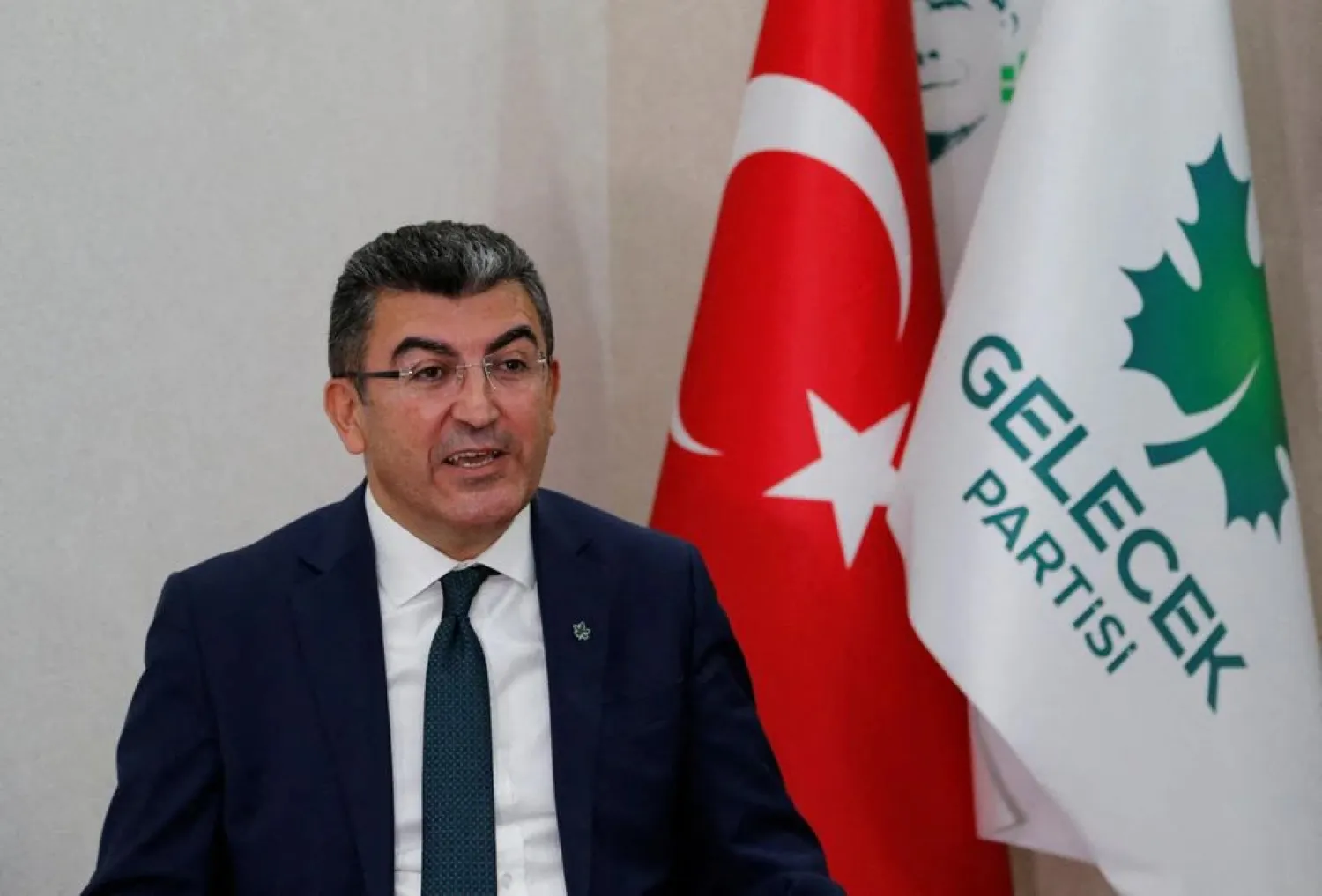
Hasan Ekici, Gelecek Party Konya provincial chairman, speaks during an interview with Reuters in Konya, Turkey December 7, 2021. Picture taken December 7, 2021. REUTERS/Cagla Gurdogan
TT

Turkey's Crisis Rattles the Faithful in Erdogan's Heartland

Hasan Ekici, Gelecek Party Konya provincial chairman, speaks during an interview with Reuters in Konya, Turkey December 7, 2021. Picture taken December 7, 2021. REUTERS/Cagla Gurdogan

Turkish laborer Hasan Sarikaya says he has no job, no money and no hope for a better future while President Tayyip Erdogan - the leader he supported for years - remains in power.

Like many people in the industrial city of Konya in Turkey's conservative heartlands, which enjoyed an economic boom in the early years of the Erdogan era, Sarikaya has been hit by the crash in the lira spiraling inflation, and a business slump, Reuters said.

Their misfortunes may spell trouble for Erdogan as economic pain erodes support for Turkey's most successful modern politician and transforms the next elections, due in mid-2023, into the toughest test of his two decades in power.

"I'm looking for work, I can't pay my debts... there is no solution. People are fed up now," said Sarikaya, 31, speaking on a busy Konya street. "I voted (for Erdogan) for years... Watch now, he won't be able to save himself."

Erdogan's enduring appeal through more than a dozen national and local election triumphs was based on a record of economic growth and pious conservative values which enthused millions of Muslim Turks who had long felt ignored by a secular elite.

Konya, home of the revered 13th-century Sufi mystic poet Rumi, has been a bastion for his AK Party (AKP), turning under his rule from an agricultural center into an industrial powerhouse.

Erdogan won 75% of Konya's vote in the 2018 presidential election and AKP support was higher than in all but one of Turkey's 81 provinces. That dominance is now threatened by an unprecedented set of challenges.

Other Konya residents who spoke to Reuters, including industrial workers, farmers and students, echoed Sarikaya's lament over rising prices and fewer jobs.

Although many said they would stick with Erdogan's party at the next elections, national surveys over the last year suggest Sarikaya's disillusion is part of a wider trend, with opposition parties pulling ahead of the AKP and its parliamentary ally, the nationalist MHP.

"Never have we seen such low support for the AKP in the past," said Sinan Ulgen, director at the Istanbul-based Centre for Economics and Foreign Policy Studies.

"There is an increased perception that in 2023 there will be political change."

WINNER TAKES ALL
Erdogan has ruled Turkey, first as prime minister and later as president, since 2003. Three years ago he assumed wider powers under a new executive presidency that critics say created a hyper-centralized system ill-equipped to tackle Turkey's economic, political and security challenges.

Power drained from institutions and ministries to the sprawling presidential palace in Ankara. Erdogan has dismissed three central bank governors since 2019, and sacked three bank policy makers in October.

Erdogan says the central bank remains independent, but it bowed to his call to slash interest rates well below inflation, triggering a 56% fall in the lira this year and driving up the cost of living for ordinary Turks.

The presidency did not respond to a request for comment on the impact of government policy on the economy and on support for Erdogan.

His opponents, energized by a groundswell of support, are on the offensive, accusing him of driving Turkey into poverty.

Erdogan's problems are compounded by the very presidential system he championed, which requires an absolute majority of votes at the ballot box, denying candidates the option of building alliances to reach the threshold.

Polls suggest three potential rivals - the mayors of Istanbul and Ankara, both from the main opposition Republican People's Party (CHP), and the leader of the nationalist IYI Party - would all beat him in a straight race.

"It's a 'winner takes all' system - that raises the risk at a time when his political popularity is sinking," Ulgen said.

"A SULTAN IN AUTUMN"
For the first time in an election Erdogan will also face two breakaway parties established by founding members of his AKP.

One is the Gelecek (Future) Party, led by ex-prime minister Ahmet Davutoglu, the other is run by Erdogan's former ally Ali Babacan. Both offer disenchanted AKP voters a chance to reject Erdogan without abandoning his conservative values.

"If voters have to make a choice and are right-oriented, they will find another right-wing party closer to them," said Hasan Ekici, local Gelecek Party chairman in Konya.

While national support for the new parties remains in low single digits, even marginal swings to them could harm Erdogan enough to turn the tables.

"Developments since 2018 when Turkey had its first economic crisis under Erdogan... all point to the fact that Erdogan is a sultan in the autumn of his career," said Soner Cagaptay, director of the Turkish Research Program at The Washington Institute for Near East Policy.

Concern over the 67-year-old leader's health, rebuffed by the presidential palace, has also swirled. Known as a fiery orator, Erdogan has sometimes appeared tired and pale in the past year, walking awkwardly and dozing off on camera.

In a country where half the population is 31 or younger, many have known no other leader. Erdogan says young Turks should appreciate their country's progress under him, but he has struggled to win over most young people.

Nevertheless, Erdogan's party still enjoys more support than any other and can rely on near blanket support from media owned predominantly by his supporters.

His rule witnessed a construction boom and improved health services, and religious Turks welcomed his ending of restrictions on wearing headscarves.

The loose alliance of his opponents lacks an agreed policy platform and has yet to select a presidential candidate.

But the gathering uncertainty over Erdogan's prospects is rippling out to the wider world, where he has been making tentative efforts to repair strained relations with some of Turkey's allies and rivals.

Unal Cevikoz, a retired ambassador, said countries such as Egypt and Israel, long at odds with Erdogan, were in no rush to make up with him.

"People sense that the wind of change is now blowing and everybody is waiting for a change in the government," he said.


Trump Arrives in Manila for Quad Talks Ahead of China Visit

US President Donald Trump waves as he walks to board Air Force One at Joint Base Andrews, Maryland, on November 16, 2026. (AFP)
TT

Trump Arrives in Manila for Quad Talks Ahead of China Visit

US President Donald Trump waves as he walks to board Air Force One at Joint Base Andrews, Maryland, on November 16, 2026. (AFP)

US President Donald Trump arrived in the Philippines on Tuesday at the tail end of a Southeast Asian summit, with protests awaiting him as he prepares for the first meeting in two years of the Quad group of Indo-Pacific countries.

Trump's Asia trip, which includes the Asia-Pacific Economic Cooperation (APEC) forum in Shenzhen and a much-anticipated trilateral meeting with his Chinese and Russian counterparts, comes after his Republican Party's defeat in midterm elections, plus spy allegations and new US curbs on China's access to AI chips that could complicate a fragile trade-war truce.

Demonstrators gathered in Manila for a fifth day of protests that have included the burning of Trump effigies, calls for an end to the Middle East war and scrapping of the US-led Pax Silica supply chain initiative.

Trump arrived late afternoon at the end of the Association of Southeast Asian Nations summit ‌and will join a ‌US-ASEAN "Special Summit" later on Tuesday.

He will first hold a meeting of the Quad – ‌the ⁠US, Japan, Australia and ⁠India – which will be his first and takes place two years after the last gathering of the group, which Trump's predecessor Joe Biden regarded as a signature foreign policy initiative.

It comes ahead of the APEC gathering hosted by Chinese President Xi Jinping, who has previously objected to the Quad as an effort to encircle Beijing. Quad members have said the grouping is not directed against any one country.

QUAD MEETING THE 'BEST POSSIBLE SIGNAL'

At the ASEAN summit on Monday, Chinese Premier Li Qiang hailed what he called "truly extraordinary" economic achievements of China and ASEAN in the face of global trade restrictions, expressing Beijing's commitment to free trade and the need to "stand united, ward off interference, and work together".

China ⁠is ASEAN's largest trading partner and a key source of investment, but the biggest economies ‌of the 11-member bloc – which has a combined GDP of more than $3.9 trillion – ‌want to deepen ties with the US despite protracted trade and diplomatic uncertainty under the Trump administration.

Former US Deputy Secretary of State Kurt ‌Campbell credited Washington's top diplomat, Marco Rubio, with the timing and reconvening of the Quad, which he said had lost ambition ‌under Trump.

"Part of what he (Rubio) is thinking is that this is probably the best possible signal if you're going to go into a trilateral meeting," said Campbell, co-founder of The Asia Group, referring to Thursday's US-China-Russia talks.

"The linchpin of everything that we do in Asia is the US-Japan relationship, and a perception that this is not at the top of the president's mind would concern me."

White House spokesperson Olivia Wales on Friday ‌said that under Trump's leadership, the Quad had demonstrated it is "a partnership of action, tackling the region's toughest challenges and driving opportunities to ensure a free and open Indo-Pacific".

A Japanese foreign ⁠ministry official said it was ⁠expected that Quad leaders would try to show unity, with maritime security, export restrictions, critical-minerals supply-chain diversification and AI among potential discussion points.

Undersea cables, emerging technology and disaster relief were also likely to be covered, a source familiar with the matter said.

JAPAN TO PLAY MORE PROACTIVE ROLE, PM SAYS

ASEAN's leaders held meetings on Tuesday involving counterparts of Japan, South Korea, China and India.

Japanese Prime Minister Sanae Takaichi pledged to work with ASEAN to boost regional economic and energy resilience to address export restrictions and vulnerabilities from rapid AI development, and strengthen supply chains, including on critical minerals.

"While the international order is experiencing a period of great instability, Japan will play an ever more proactive role," Takaichi said.

Trump will sign a joint statement with Thai Prime Minister Anutin Charnvirakul on Tuesday on an agreement on reciprocal trade. Thai media have reported the two would hold talks and the statement would be about progress on negotiations.

The US is Thailand's largest export market, accounting for 24% of its total shipments this year. The US designated Thailand as a major non-NATO ally in 2003.

Trump will on Wednesday meet Ferdinand Marcos Jr, president of US defense ally the Philippines, before heading to Shenzhen.


Pakistan Army Chief and Iran FM Discuss Regional Peace, Security

Vessels at the Strait of Hormuz, as seen from Musandam, Oman, November 17, 2026. (Reuters)
TT

Pakistan Army Chief and Iran FM Discuss Regional Peace, Security

Vessels at the Strait of Hormuz, as seen from Musandam, Oman, November 17, 2026. (Reuters)

Asim Munir, the powerful army chief of mediating country Pakistan, met with Iranian foreign minister Abbas Araghchi, the Pakistani military said Tuesday, during continued efforts to end the war between the United States and Iran.

Pakistan brokered a June accord that led to a brief halt in fighting between the United States and Iran and set a roadmap for further agreement on reopening the crucial Strait of Hormuz waterway and for negotiations on Tehran's nuclear program.

But the truce collapsed with Washington and Tehran accusing each other of violating the agreement and prompting months of shuttle diplomacy to resuscitate the ceasefire, led principally by mediators Qatar and Pakistan.

During the meeting on Monday, "matters of mutual interest, regional security dynamics and evolving geopolitical developments were discussed," the Pakistani military's media wing said in a statement.

Munir "underscored the importance of sustained engagement, mutual trust and close coordination between the two brotherly countries for promoting regional peace and stability", it added.

Araghchi arrived in Pakistan late on Sunday for a meeting of the Economic Cooperation Organization, a group of nations from Central and South Asia and the Middle East.

Pakistani Foreign Minister Ishaq Dar said on Monday he had held "very candid, very frank" discussions with Araghchi, during the conference confirming that Iran had put forward a two-day proposal to reopen the Strait of Hormuz as part of efforts to end the war with the United States.

He said Washington had not yet responded.

The United States and Israel launched the war on February 28, killing members of Iran's leadership and demanding it cease any nuclear-related activities.

The war plunged the Middle East into violence, with Tehran's retaliatory strikes targeting Gulf countries and sending global energy prices skyrocketing.

Tehran has insisted that Washington meet conditions including the release of frozen assets abroad, sanctions relief and an end to the US naval blockade of Iranian ports in exchange for reopening the Strait of Hormuz.


US Probes Why a Router Installation Sparked Mass Flight Grounding

A person takes a photo of a screen displaying information of delayed and cancelled flights at Hartsfield-Jackson Atlanta International Airport in Atlanta, Georgia, US, November 13, 2026. (Reuters)
TT

US Probes Why a Router Installation Sparked Mass Flight Grounding

A person takes a photo of a screen displaying information of delayed and cancelled flights at Hartsfield-Jackson Atlanta International Airport in Atlanta, Georgia, US, November 13, 2026. (Reuters)

US Transportation Secretary Sean Duffy said on Monday it remains unclear why a router installed by L3Harris Technologies in a remote Arkansas facility triggered a nearly five-hour nationwide aviation ground stop on Friday.

Shares of L3Harris, the contractor for the Federal Aviation Administration, closed down 3.7% after the government blamed the mass flight shutdown on its router installation. Airlines canceled more than 18,000 flights as a result.

Shares of Hewlett Packard Enterprise, which owns Juniper Networks, the maker of the routers that L3Harris installed, dropped 4.5% on Monday.

L3Harris has said it is ‌cooperating with ‌the official investigation into what went wrong.

Duffy, speaking on CNBC, said the ‌installation ⁠at an FAA radio ⁠communications site in El Dorado, Arkansas, led to an overload of a key government communications system at a rate of 1,000 connection attempts every four to five seconds.

That destabilized aircraft communications and radar feeds, affecting 17 of 22 FAA en route air traffic control centers that were using old routers and prompting the ground stop, Duffy said. He added that he has urged Congress to fund the construction of a new telecom network that is not owned by L3Harris.

Duffy is set to brief US senators ⁠on the investigation on Tuesday.

The FAA had said on Sunday that the ‌initial investigation suggested the data overload could have happened in ‌two locations: the El Dorado site and a radar site in Amarillo, Texas. Duffy said L3Harris had replaced ‌the router in Amarillo three weeks earlier.

Duffy said testing of the two routers was taking ‌place at an L3Harris lab in Florida overseen by the FAA. He invited the FBI to attend the investigation to make sure the review is being done correctly.

The FAA said that after the data "inconsistencies" occurred, L3Harris ultimately blocked those two locations, stabilizing the network. The broadcasting function was also disabled on all the new routers as ‌well as 60 other routers in the system as a precaution, it added.

L3Harris had been installing Juniper Networks routers to replace Cisco routers, produced ⁠in 2001, which ⁠were supposed to have been replaced in 2006, the FAA said.

"Based on what we know and have been told by others, our equipment was working as configured," HPE said on Monday. "The FAA is assessing the configuration and performance of all infrastructure involved to determine the cause."

Duffy has asked for billions of dollars from Congress to build a new fiber network operated by AT&T, Verizon and Lumen to replace the old L3Harris-owned copper network.

"I have the architecture ready. These companies are ready to deploy tomorrow. All I need is the money to tell them to start," he said on NBC on Sunday. "I want to get away from L3Harris and get to a new one. But they own the network. So I can’t cancel the network that they own and I operate on."

The FAA said the Arkansas router replacement was part of the $1 billion a year it spends to maintain and sustain the existing 1980s telecom network, but not part of its broader modernization effort.