


Israel Strikes Gaza after Gunfire Wounds Civilian near Fence

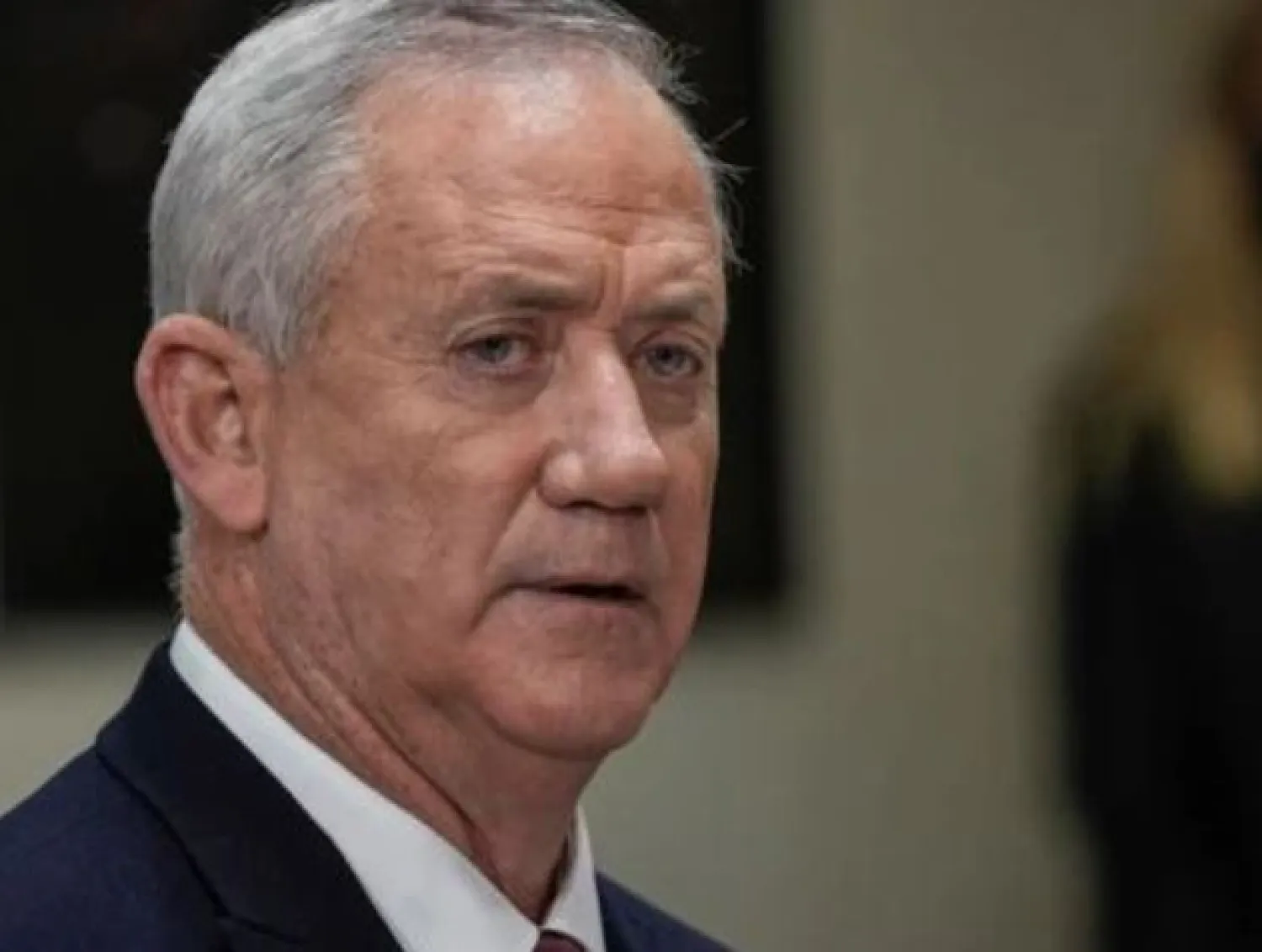
Israel's Defense Minister Benny Gantz speaks during a meeting with US Defense Secretary Lloyd Austin following an enhanced honor cordon arrival ceremony at the Pentagon, in Arlington, Virginia, US, December 9, 2021. REUTERS/Ken Cedeno
TT

Israel Strikes Gaza after Gunfire Wounds Civilian near Fence

Israel's Defense Minister Benny Gantz speaks during a meeting with US Defense Secretary Lloyd Austin following an enhanced honor cordon arrival ceremony at the Pentagon, in Arlington, Virginia, US, December 9, 2021. REUTERS/Ken Cedeno

An Israeli and three Palestinians were wounded on Wednesday in the first exchange of fire in months on the Gaza frontier. The violence came as Israel announced measures aimed at improving living conditions in the occupied West Bank after a rare meeting of top officials.

Israel has announced a number of measures in recent months it says are aimed at easing tensions, but they have had little visible impact on the ground, where attacks by both Israeli settlers and Palestinians are on the rise. There have been no peace talks in more than a decade.

The Israeli military said a civilian near the security fence was lightly wounded by gunfire from Gaza, and that it responded with tank fire at multiple military positions manned by the Hamas group, which has ruled the territory since 2007. The Gaza Health Ministry said three Palestinians were wounded, without saying if they were civilians or fighters.

Earlier, Israeli Defense Minister Benny Gantz approved a series of measures aimed at improving relations with the Palestinians after hosting Palestinian President Mahmoud Abbas at his home in Israel late Tuesday.

It was the first time Abbas met an Israeli official inside the country since 2010. The two discussed security coordination between Israel and the Palestinian Authority, which administers pockets of the occupied West Bank.

Gantz's office said he approved “confidence-building measures,” including the transfer of tax payments to the Palestinian Authority, the authorization of hundreds of permits for Palestinian merchants and VIPs, and approving residency status for thousands of Palestinians in the West Bank and Gaza Strip.

Israel collects hundreds of millions of dollars of taxes on behalf of the PA as part of the interim peace agreements signed in the 1990s.

The tax transfers are a key source of funding for the cash-strapped Palestinians, but Israel has withheld funds over the PA's payment of stipends to thousands of families that have had relatives killed, wounded or imprisoned in the conflict. Israel says the payments incentivize terrorism, while the Palestinians say they provide crucial support to needy families.

Israel approved residency for some 9,500 Palestinians. Israel controls the Palestinian population registry, and over the years its policies have left an estimated tens of thousands of Palestinians without legal status, severely limiting their freedom of movement, even within the occupied territories. Israel granted legal status to some 4,000 Palestinians in October.

Israeli Prime Minister Naftali Bennett is opposed to Palestinian statehood. His government has shown no interest in reviving peace talks but has said it wants to reduce tensions by improving living conditions in the West Bank.

Recent months have seen a surge in violence by Israeli settlers against Palestinians in the West Bank, as well as Palestinian attacks on Israelis in east Jerusalem and the West Bank.

Gantz’s meeting with Abbas — the second in the six months since Bennett's coalition government took office — drew vocal criticism from Israeli opposition lawmakers, including those from former prime minister Benjamin Netanyahu’s Likud party, the largest in parliament.

The Palestinians seek an independent state that includes all of the West Bank, east Jerusalem and the Gaza Strip, areas Israel captured in the 1967 Middle East war.

Hamas seized Gaza from Abbas' forces in 2007, a year after the movement won a landslide victory in parliamentary elections. Gaza has been under an Israeli blockade since then.

The Gaza frontier has been mostly quiet since Israel and Hamas fought an 11-day war in May — their fourth since Hamas took over Gaza. Israel holds Hamas responsible for all attacks emanating from Gaza, even those claimed by other armed groups.



Jordan Sentences Man to Death Over Attack That Killed Officer

The State Security Court convicted the man of carrying out ⁠terrorist acts resulting in death. (Petra news agency)
TT

Jordan Sentences Man to Death Over Attack That Killed Officer

The State Security Court convicted the man of carrying out ⁠terrorist acts resulting in death. (Petra news agency)

Jordan's State ‌Security Court on Wednesday sentenced a man to death over an attack that killed a security officer in the capital Amman earlier this month, the armed forces said in a statement.

The officer was stabbed near the Sri Lankan embassy ‌on November 5, ‌less than two weeks ‌after ⁠gunmen opened fire ⁠at a church in the southern Karak governorate, both rare assaults in the country.

The court convicted the man of carrying out ⁠terrorist acts resulting in death, ‌and of ‌possession of a weapon for ‌terrorist purposes, the statement read.

The ruling ‌is subject to an appeal and an automatic review by the Court of Cassation, the statement said.

Jordan ‌sentenced three men to death earlier this month ⁠for the ⁠church attack. Gunmen opened fire during a funeral at a Greek Orthodox church in the village of Hamoud on October 23, killing nine people and wounding 34.

Jordan's King Abdullah ordered security forces to respond with an "iron fist" after that attack.


Israeli Strike Kills Hamas Security Official and Family

 A Palestinian man inspects an apartment destroyed in an Israeli strike in Gaza City, Wednesday, Nov. 25, 2026. (AP)
A Palestinian man inspects an apartment destroyed in an Israeli strike in Gaza City, Wednesday, Nov. 25, 2026. (AP)
TT

Israeli Strike Kills Hamas Security Official and Family

 A Palestinian man inspects an apartment destroyed in an Israeli strike in Gaza City, Wednesday, Nov. 25, 2026. (AP)
A Palestinian man inspects an apartment destroyed in an Israeli strike in Gaza City, Wednesday, Nov. 25, 2026. (AP)

An Israeli strike killed a Gaza security official, his wife and their two daughters on Wednesday, first responders and officials said, while the Israeli military told AFP it "targeted a Hamas terrorist".

Civil defense spokesman Mahmoud Bassal told AFP that an Israeli strike on a residential building in the Al-Shati refugee camp west of Gaza City killed four people including "a man, his wife and his two daughters" and wounded 12 others.

The civil defense, a rescue force which operates under Hamas authority, said the girls were aged 13 and 15 years old.

It reported "extensive destruction to the targeted apartment and several neighboring homes" in the camp located on the Mediterranean coast.

Gaza's interior ministry, which also operates under Hamas authority, identified the man as Colonel Mohammed Abu al-Ouf, the director of the internal security service for northern Gaza. It confirmed his death and that of his wife and two daughters.

Israel's military told AFP it "targeted a Hamas terrorist" without immediately providing more details.

Gaza City's Al-Shifa Hospital confirmed to AFP the arrival of the four bodies.

The strike comes a day after Israel killed Hamas's director of internal security, Naim Abu Nahal, who had been appointed two months ago.

Israel and Hamas regularly accuse each other of violating the ceasefire that came into effect in October 2025, after two years of war triggered by Hamas's October 2023 attack on Israel.

More than 1,650 Palestinians have been killed since the start of the truce, according to an AFP tally based on data from the Gaza health ministry, which also operates under Hamas authority and whose figures are considered reliable by the United Nations.

In the same period, the Israeli military says seven of its soldiers have been killed, as well as one civilian contractor.


Al-Zaidi’s Sweeping Measures Spark Anger in Iraqi Kurdistan

The Iraqi government is moving to assert control over oilfields currently under the security authority of the Kurdistan region. (X)
TT

Al-Zaidi’s Sweeping Measures Spark Anger in Iraqi Kurdistan

The Iraqi government is moving to assert control over oilfields currently under the security authority of the Kurdistan region. (X)

Sweeping decisions by Iraqi Prime Minister Ali al-Zaidi have sparked anger in Erbil, with Kurdistan Regional Government (KRG) Prime Minister Masrour Barzani rejecting the measures and Kurdish politicians warning against treating the autonomous region like Jurf al-Sakhar, a town south of Baghdad targeted by a security campaign against oil smuggling.

Kurdistan Democratic Party (KDP) leader Masoud Barzani on Tuesday urged Baghdad to uphold constitutional principles and exercise wisdom in resolving disputes, rejecting decisions driven by “personal whims.”

“For some time, Iraq’s decision-making centers have witnessed unusual moves targeting the Kurdistan region, with ill-conceived decisions and proposals reflecting a tendency towards escalation and adventurism,” he said.

Al-Zaidi announced on Tuesday what observers described as an “administrative storm,” ordering the closure of all unofficial border crossings with neighboring countries, including those in Kurdistan, and placing oil fields in the region under federal control as part of efforts to combat the smuggling of oil and petroleum products.

Estimates of the number of unofficial crossings range from six to 46, most of them in Sulaymaniyah.

Kurdistan Interior Minister Rebar Ahmed rejected Baghdad’s decisions on border crossings, stressing that the region had its own laws and that its Peshmerga and interior ministry forces had their own responsibilities.

Speaking on the sidelines of the World Youth Summit in Erbil, Masrour Barzani described Baghdad’s decisions as “unacceptable in any form,” saying they contradicted messages conveyed during earlier talks.

He stressed that the door remained open to dialogue, provided any agreement was based entirely on the constitution rather than unilateral decisions that violated the region’s constitutional rights.

The measures came just three days after Popular Mobilization Forces (PMF) chief Faleh al-Fayyad held talks with Masoud Barzani, Kurdistan President Nechirvan Barzani and Masrour Barzani on outstanding disputes over the budget, oil and border crossings.

The KRG denied reports that Fayyad’s visit was intended to warn the region that it would face measures similar to those implemented in Jurf al-Sakhar.

Mounting pressure

KDP member and KRG adviser Dijwar Faiq told Asharq Al-Awsat that al-Zaidi’s decisions stemmed from pressure over the security campaign in Jurf al-Sakhar, with voices in Baghdad questioning why Kurdistan was not being treated similarly.

“They have forgotten that the region is protected by the constitution and the law and is not an area where illegal activities take place,” he said.

He stressed that the constitution provided for joint management of border crossings and oil, rather than exclusive federal control.

Faiq said there was no evidence that Kurdistan had violated the law or smuggled “a single drop of oil,” citing ongoing joint inspections by federal and regional authorities.

He attributed the oil dispute to Baghdad’s insistence on receiving 400,000 barrels per day as a condition for releasing salaries, a demand exceeding the region’s capacity.

Kurdish activists believe political disputes have largely obstructed the adoption of a new oil law for nearly two decades, while disagreements persist over constitutional powers, contracts with foreign companies, independent oil projects and contractual arrangements.

Security concerns

Beyond the oil and border measures, concerns are mounting in Erbil over possible changes in security arrangements and federal troop deployments, although there has been no official confirmation.

KDP member and former federal lawmaker Mayada al-Najjar stressed that Kurdistan was a federal region recognized under Article 117 of the constitution, unlike Jurf al-Sakhar, which falls under the Babil province.

Disputes over powers, security or resources must be resolved through constitutional and legal mechanisms and institutional coordination, rather than escalation or threats of force, she told Asharq Al-Awsat.

Historic rivals unite

Al-Zaidi’s divisive decisions have united Kurdistan’s historic rivals, the KDP and the Patriotic Union of Kurdistan (PUK), despite nearly two years of tensions over government formation.

In a joint statement late Tuesday, the parties rejected what they described as repeated violations of the region’s rights, insisting that the constitution was the sole arbiter of disputes and that undermining Kurdistan’s gains was a red line.

They urged dialogue and transparency and called for avoiding unilateral decisions to preserve Iraq’s stability.

The statement followed an appeal for unity by Masrour Barzani, who stressed that safeguarding the Kurdistan region took precedence over personal or partisan gains.