


Turkish Lira Weakens Nearly 3%, Giving Up Some of Wednesday's Gains

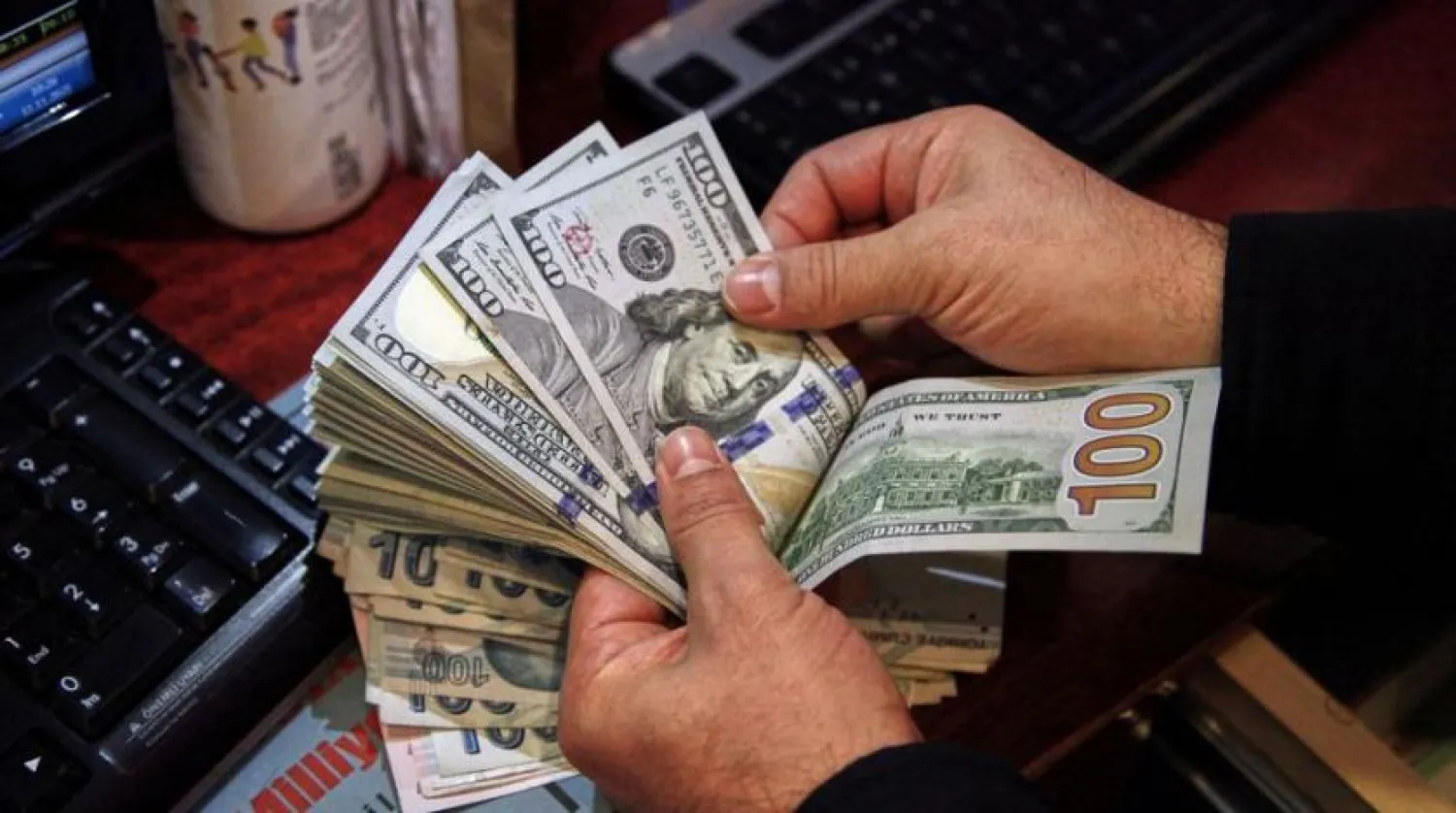
A money changer counts US dollar banknotes at a currency exchange office in Ankara, Turkey November 11, 2021. (Reuters)
TT

Turkish Lira Weakens Nearly 3%, Giving Up Some of Wednesday's Gains

A money changer counts US dollar banknotes at a currency exchange office in Ankara, Turkey November 11, 2021. (Reuters)

Turkey's lira weakened nearly 3% on Thursday, giving up most of the gains from a rally a day earlier, as concerns persisted over surging inflation against a background of unorthodox policies aimed at boosting exports and growth.

The lira lost 44% of its value against the dollar last year and a full-blown currency crisis was halted last month thanks in part to costly currency interventions and to government incentives to reduce savers' the dollar's appeal to savers.

The lira stood at 13.5550 against the dollar at 0905 GMT on Thursday, down from a close of 13.2890 the previous day, reported Reuters.

Earlier it weakened as much as 13.68 after rallying some 4.7% to 13.15 late on Wednesday from a close of 13.8 on Tuesday.

One trader who declined to be named said Wednesday's move was due to a low volume of transactions, caused by the absence of foreigners in the market and a decreased demand for foreign currencies by companies and individuals.

"When we put all these together, transactions in amounts that would not have changed the market for the lira in the past, now can change the direction of the market by 3%," the trader said.

Under pressure from President Tayyip Erdogan, who seeks higher growth by boosting production and exports, the central bank has slashed its policy rate by 500 basis points to 14% since September.

The unorthodox rate cuts led to the currency crisis late last year, driving inflation to a 19-year high of 36% in December, the highest under Erdogan's rule.

After the lira slumped to a record low of 18.4 against the dollar in late December, Erdogan announced a scheme to encourage savers to convert foreign exchange deposits, compensating depositors for any losses caused by lira weakness.

Corporate accounts were added to the scheme this week.

Separately, industrial production jumped 11.4% year-on-year in November, data showed on Thursday, for a 17th consecutive month of expansion.

Jason Tuvey, senior emerging markets economist at Capital Economics, said data indicated that the economy held up well during the earlier parts of the currency crisis.

"We doubt that this strength will last for much longer as the more pernicious effects created by very large falls in the lira in December filter through," he said in a note.

"On balance, we expect the economy to have entered a downturn at the very end of last year, albeit one that may prove to be milder than that which followed the 2018 crisis," Tuvey added.

The crisis in 2018 had prompted three consecutive quarters of contraction for Turkey's economy.

The World Bank this week cut its growth forecast for Turkey in 2022 to 2% from 4.5% earlier, while economists see inflation reaching 50% in the first half of the year.


IMF Urges BOJ to Keep Raising Rates Even as Iran War Poses New Risks

FILE PHOTO: Bank of Japan Governor Kazuo Ueda attends a press conference after a BOJ policy meeting in Tokyo, Japan, March 19, 2026. REUTERS/Kim Kyung-Hoon/File Photo
TT

IMF Urges BOJ to Keep Raising Rates Even as Iran War Poses New Risks

FILE PHOTO: Bank of Japan Governor Kazuo Ueda attends a press conference after a BOJ policy meeting in Tokyo, Japan, March 19, 2026. REUTERS/Kim Kyung-Hoon/File Photo

The International Monetary Fund urged the Bank of Japan to continue raising interest rates, even as the Middle East war posed "significant new risks" to the country's economic outlook.

The proposal comes amid market expectations the BOJ will raise interest rates as soon as April in the face of mounting inflationary pressure from the conflict-induced spike in oil prices, and higher import costs blamed on the weak yen, Reuters said.

While growth is expected ‌to moderate, due ‌partly to the Iran war, gradual wage gains will ‌underpin ⁠consumption, the IMF ⁠said in a statement issued from Washington on Friday after the conclusion of its policy consultation with Japan.

"Risks to the outlook and inflation are broadly balanced" with inflation expected to converge to the BOJ's 2% target in 2027, the IMF said.

In the statement, the IMF said its executive board commended Japan's "strong economic resilience" to global shocks and agreed the BOJ was appropriately withdrawing monetary accommodation.

"They noted ⁠that as underlying inflation converges toward the BOJ's target, ‌gradual rate hikes toward neutral should continue" in ‌a flexible, well-communicated and data-dependent approach, the statement said.

"Directors stressed the importance of maintaining ‌a flexible exchange rate as a credible shock absorber," it added.

The BOJ ‌ended a massive stimulus in 2024 and raised interest rates several times, including in December, on the view that Japan was on the cusp of durably hitting its 2% inflation target.

The central bank has stressed its readiness to keep raising rates on the ‌expectation that underlying inflation will converge to its 2% target sometime from the second half of fiscal 2026 into ⁠fiscal 2027.

Japan's ⁠fiscal year starts in April. While rising oil prices hurt Japan's import-reliant economy, BOJ policymakers have signaled their concern they will add to inflationary pressures from years of steady wage gains and broader price increases. The BOJ's slew of hawkish communication has prodded markets to price in a roughly 70% chance of a rate hike in April.

The yen's slide towards the key 160-per-dollar level has also kept markets on alert for the chance of currency intervention by Japanese authorities. Finance Minister Satsuki Katayama issued a fresh warning against yen bears on Friday, saying Japan stood ready to act against speculative moves in the currency market. "We're ready to take all available means that are legally feasible, be it conventional or non-conventional," she told an online program on Friday evening.


Iraq in Talks with Gulf States on Pipeline Exports beyond Hormuz

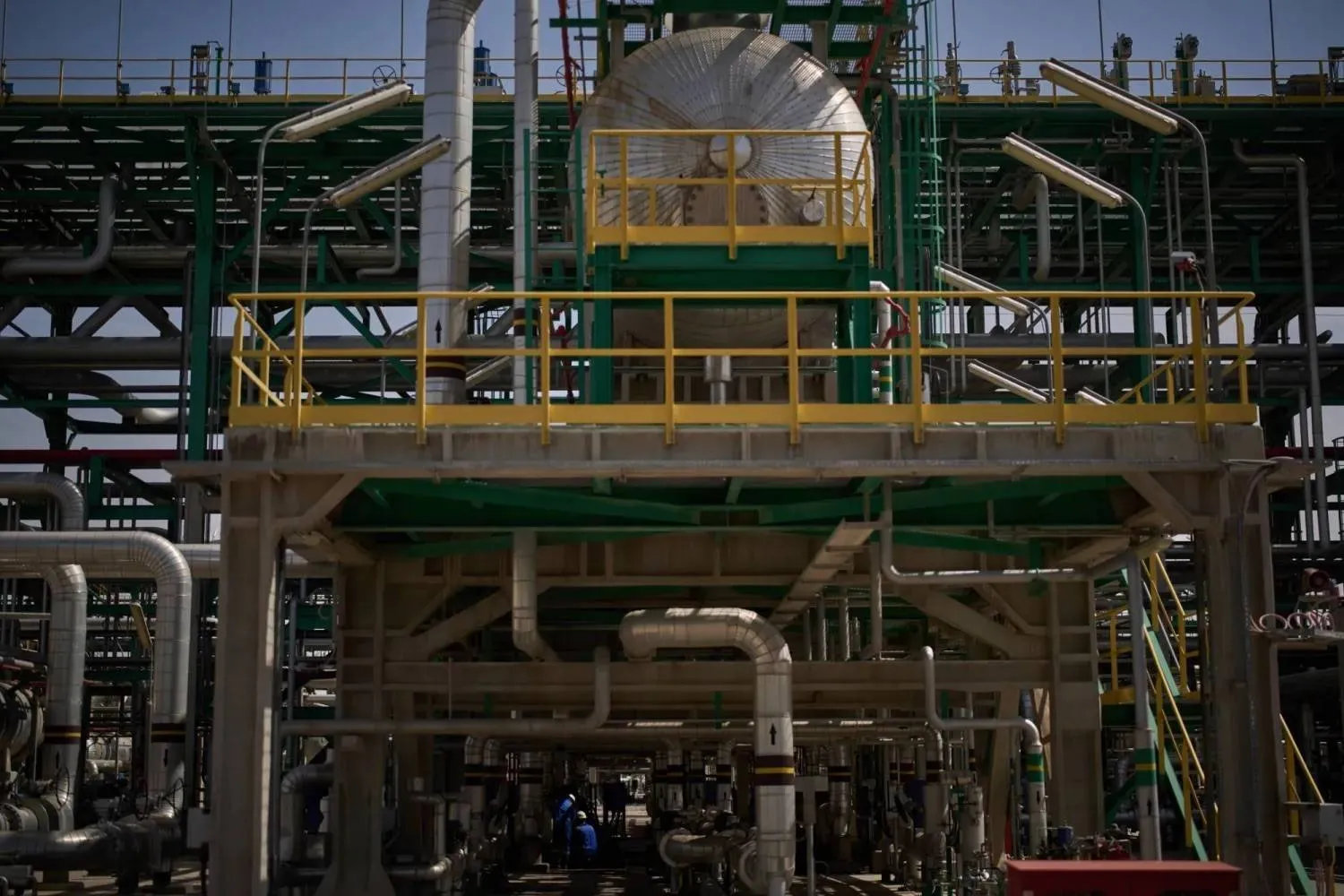
Workers carry out maintenance on a pipeline at a gas separation station in the Zubair oil field near Basra (AP). 
TT

Iraq in Talks with Gulf States on Pipeline Exports beyond Hormuz

Workers carry out maintenance on a pipeline at a gas separation station in the Zubair oil field near Basra (AP). 

Iraq is in talks with Gulf countries to use their pipeline networks to secure alternative oil export routes beyond the Strait of Hormuz, the state oil marketer SOMO said Thursday.

The move is part of an emergency strategy by the oil ministry to tap regional infrastructure and bypass maritime chokepoints, ensuring Iraqi crude continues to reach global markets while offsetting higher transport costs linked to the current crisis.

Ali Nizar al-Shatari, head of the State Organization for Marketing of Oil (SOMO), said the ministry is prioritizing negotiations to access Gulf pipeline systems extending beyond the Strait of Hormuz and into the Arabian Sea, allowing exports to avoid areas of military tension.

“The goal is to secure stable routes that guarantee efficient flows of Iraqi oil at lower transport costs,” Shatari said, adding that Iraq generated about $2 billion in oil revenues in March, up 28 percent from February.

He said SOMO exported around 18 million barrels of crude from Basra, Kirkuk and the Kurdistan region by using all available outlets, including southern ports that operated until early March and northern routes to Türkiye’s Mediterranean port of Ceyhan.

As part of efforts to diversify export options, Shatari revealed that the first shipments of fuel oil and Basra Medium crude successfully reached Syrian ports.

He noted that Iraq had signed a deal to export 50,000 barrels per day via this route, describing cooperation with Syria as “very significant,” with storage and security provided to ensure safe delivery to the port of Baniyas.

The route has proven effective and could become a permanent option after the crisis, he added.

Shatari further noted that the oil ministry is close to completing repairs on the Iraq-Türkiye pipeline, which suffered extensive damage in previous years.

Technical teams have inspected the most difficult terrain, with about 200 kilometers (125 miles) still to be assessed in the coming days before full pumping of Kirkuk crude resumes.

In a notable logistical move, Iraq has begun pumping Basra crude northwards for export via Ceyhan.

Flows started at 170,000 barrels per day and are expected to stabilize between 200,000 and 250,000 bpd, helping offset disrupted southern exports and supply energy-hungry markets in Europe and the Americas.

Shatari said Iraq has benefited from rising global prices by selling Kirkuk crude — a medium-grade oil — at strong premiums.

He also confirmed the reactivation of an agreement with the Kurdistan region to reuse the pipeline through the region to Ceyhan, helping lift total exports to 18 million barrels in March.

This came despite a drop in production in Kurdistan fields to about 200,000 bpd due to security threats, he added.


World Food Prices Rose in March as Iran War Lifted Energy Costs, FAO Says

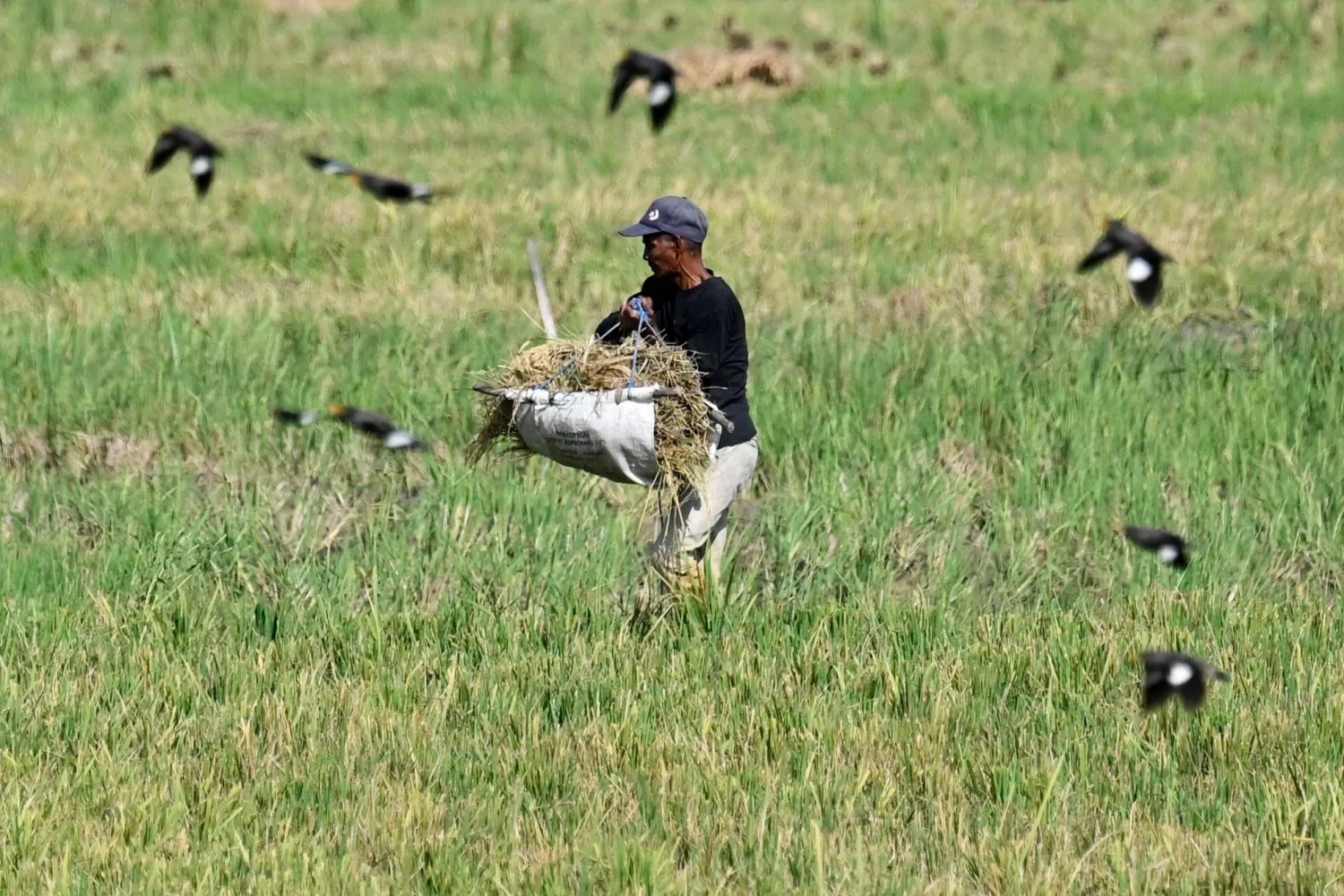
 A farmer carries harvested rice at a paddy field in Samahani, Aceh province on April 2, 2026. (AFP)
A farmer carries harvested rice at a paddy field in Samahani, Aceh province on April 2, 2026. (AFP)
TT

World Food Prices Rose in March as Iran War Lifted Energy Costs, FAO Says

 A farmer carries harvested rice at a paddy field in Samahani, Aceh province on April 2, 2026. (AFP)
A farmer carries harvested rice at a paddy field in Samahani, Aceh province on April 2, 2026. (AFP)

The war in the Middle East has pushed food commodity prices higher due to higher energy and fertilizer costs, the UN's food agency said Friday. 

The UN's Food and Agriculture Organization (FAO) said its Food Price Index, which measures the monthly changes in international prices of a basket of food commodities, had increased 2.4 percent in March from February. 

It was the second rise in a row, which the agency said was largely due to higher energy prices linked to conflict in the Middle East. 

Within the index, the category of vegetable oil saw the sharpest rise, of 5.1 percent over February, as palm oil prices reached their highest point since the middle of 2022, due to effects from spiking crude oil prices, FAO said. 

However, a "broadly comfortable" supply of cereal has cushioned the damaged from the conflict, FAO said. 

"Price rises since the conflict began have been modest, driven mainly by higher oil prices and cushioned by ample global cereal supplies," said FAO Chief Economist Maximo Torero in a statement. 

But he warned that if the conflict goes on beyond 40 days and the high prices on fertilizer continue, "farmers will have to choose: farm the same with fewer inputs, plant less, or switch to less intensive fertilizer crops". 

"Those choices will hit future yields and shape our food supply and commodity prices for the rest of this year and all of the next." 

Disruptions to production and supply chain routes had also introduced "additional uncertainty" into the outlook for wheat and maize, FAO found.