


Olympic ‘Curse’ Strikes Again as Beijing Costs Mount

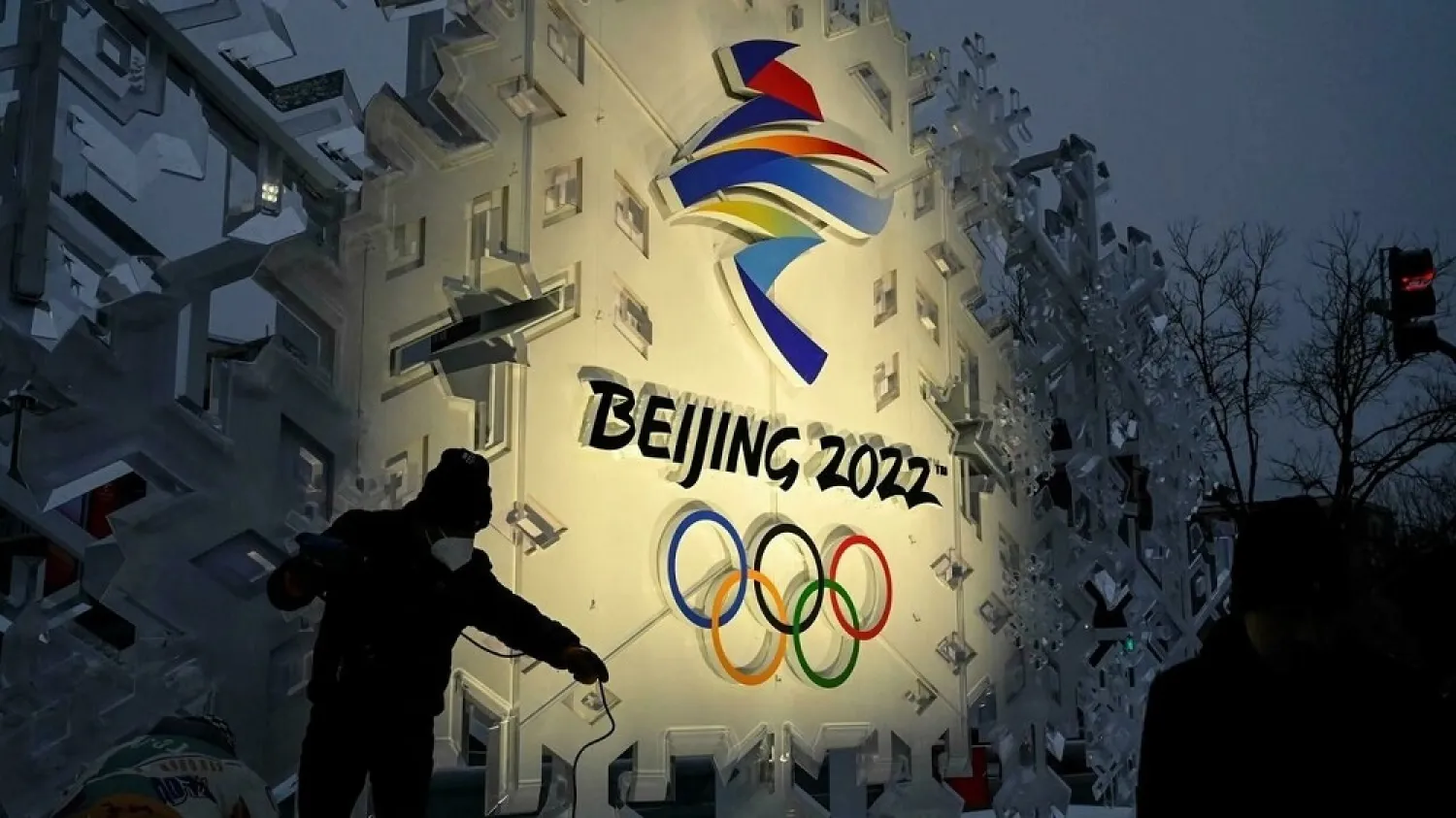
Workers set up an installation displaying the logo of the Beijing Winter Olympics. (AFP)
TT

Olympic ‘Curse’ Strikes Again as Beijing Costs Mount

Workers set up an installation displaying the logo of the Beijing Winter Olympics. (AFP)

The "curse" of Olympic overspending looks set to strike again at the Beijing Games, with stringent Covid measures and loss of ticket sale revenues pushing up costs for China.

It's not unusual for nations to find the bill for hosting an Olympics ballooning, but the pandemic and China's zero-Covid approach has made preparations for the February 4-20 Winter Games particularly difficult.

With increasingly strict rules imposed as domestic outbreaks spread in China, organizers announced last week that they will not sell tickets to the public because of the "complicated" Covid situation.

Instead, invitations will be given to select people. The organizing committee had originally calculated ticketing revenue to be worth $118 million.

That total was already in question after it was confirmed last year there would be no international spectators at the Games because of China's weeks-long quarantine requirements and closed borders.

Budget was a key part of China being awarded the Games, with Beijing winning the bid over only one other contender as other cities backed out over high costs.

Beijing Olympics communications manager Zhao Weidong recently admitted to reporters that the pandemic might mean a need to "increase some expenses".

However he pointed out that others could be reduced, without giving specifics.

'Curse'
In 2015, Beijing said it was counting on a budget of just over $3 billion, which included the costs of organizing and building sports facilities.

But excluded was a huge amount of new infrastructure needed, including the construction of a high-speed rail line between Beijing and the ski slopes.

The cost of hosting the Olympics usually doubles between the award date and the opening ceremony, experts say.

Wladimir Andreff, a specialist in sports economics from the University of Paris 1 Pantheon-Sorbonne, called it the "curse" of successful Olympics bids.

"Whoever wins them gets screwed," he said.

To get the Games all candidates "systematically underestimate the costs and overestimate the profits" expected, Andreff added.

The pandemic has brought additional problems and costs.

Last summer's Covid-delayed Tokyo Olympics, the first to be held in coronavirus times, ended up at around twice the budget proposed in the city's original 2013 bid.

That was even as organizers said they had saved cash by simplifying events and avoiding the cost of hosting fans, with most events closed to spectators.

'Certain shortfall'
In Beijing, athletes, support staff, volunteers and journalists will all be kept in a "closed loop" to prevent any contact with the population and limit the risk of contamination.

This "bubble" -- which is considerably stricter than the one in Tokyo -- requires a battery of measures to isolate Games participants from the outside world, as well as daily Covid screening tests.

Andreff said the absence of international spectators should not be underestimated.

"Hundreds of thousands of foreign tourists who were expected will not come," said Andreff. "There will be a certain shortfall due to the pandemic."

But Andrew Zimbalist, specialist in sports economics at Smith College in the United States, cautioned that even without the virus, assumptions the Games draw more tourists were not necessarily correct.

In 2008 -- when Beijing hosted a Summer Olympics -- tourism dropped by around a fifth, he said, amid heavy security measures.

"Normal tourists were discouraged from going to Beijing 2008 because they were concerned about congestion, high prices and the possibility of terrorism or other potentially dangerous incidents," he said.

"So normal tourism goes down as Olympic tourism goes up."

All about image

Beijing is hoping for a financial boost domestically that will last long beyond the Games.

The government committed to introducing 300 million Chinese to winter sports -- a goal achieved, according to official figures -- which they hope will generate a profitable future industry.

But this also means new infrastructure.

The Yanqing resort, for example, was built especially for the Olympics -- constructing the first track in China for bobsleigh, skeleton and luge from scratch.

Matthieu Llorca, lecturer at the University of Burgundy, said additional costs will probably be linked to pandemic control and not integrated into the final Olympics budget.

He said this reallocation will allow authorities to claim the Games were both "successful and at a lower cost".

Ultimately, he said, China -- the world's second-largest economy -- probably won't worry too much about the money.

"They don't look at how much it will cost," he said.

"They will look at the image of the country."


Harimoto Hails New Era as Japan Dethrone Table Tennis Kings China

Asian Games - Aichi-Nagoya 2026 - Table Tennis - Men's Team Final - Sky Hall Toyota, Toyota, Japan - September 24, 2026   Gold medallists Japan's Tomokazu Harimoto, Sora Matsushima, Shunsuke Togami, Yukiya Uda and Hiroto Shinozuka celebrate on the podium after winning the Men's Team Final with silver medallists China's Youzheng Huang, Shidong Lin, Chuqin Wang, Ruibo Wen and Peng Xiang REUTERS/Andrew Couldridge
Asian Games - Aichi-Nagoya 2026 - Table Tennis - Men's Team Final - Sky Hall Toyota, Toyota, Japan - September 24, 2026 Gold medallists Japan's Tomokazu Harimoto, Sora Matsushima, Shunsuke Togami, Yukiya Uda and Hiroto Shinozuka celebrate on the podium after winning the Men's Team Final with silver medallists China's Youzheng Huang, Shidong Lin, Chuqin Wang, Ruibo Wen and Peng Xiang REUTERS/Andrew Couldridge
TT

Harimoto Hails New Era as Japan Dethrone Table Tennis Kings China

Asian Games - Aichi-Nagoya 2026 - Table Tennis - Men's Team Final - Sky Hall Toyota, Toyota, Japan - September 24, 2026   Gold medallists Japan's Tomokazu Harimoto, Sora Matsushima, Shunsuke Togami, Yukiya Uda and Hiroto Shinozuka celebrate on the podium after winning the Men's Team Final with silver medallists China's Youzheng Huang, Shidong Lin, Chuqin Wang, Ruibo Wen and Peng Xiang REUTERS/Andrew Couldridge
Asian Games - Aichi-Nagoya 2026 - Table Tennis - Men's Team Final - Sky Hall Toyota, Toyota, Japan - September 24, 2026 Gold medallists Japan's Tomokazu Harimoto, Sora Matsushima, Shunsuke Togami, Yukiya Uda and Hiroto Shinozuka celebrate on the podium after winning the Men's Team Final with silver medallists China's Youzheng Huang, Shidong Lin, Chuqin Wang, Ruibo Wen and Peng Xiang REUTERS/Andrew Couldridge

Tomokazu Harimoto said Japan had overcome their inferiority complex after ending table tennis powerhouse China's 32-year run as Asian Games men's team champions in a nail-biting final.

China had won gold in the event at every Games since 1994 but they were dethroned by Japan after Sora Matsushima beat Wen Ruibo in the decisive match to win 3-2.

The Japan team also featured Harimoto, whose parents were both born in China and whose mother once represented the country at the world championships.

"That we beat them was proof that we had lacked confidence before," said Harimoto, whose sister Miwa plays for Japan's women's team.

"I'm happy, but looking at the actual contest, there was nothing unusual about the way we played or the outcome.

"We just managed to attain the one thing we'd been missing -- confidence."

China's team featured world number one Wang Chuqin but his team-mates Lin Shidong and Wen are respectively ranked eighth and 15th in the world.

Japan had two top-five players in number three Matsushima and number four Harimoto.

"China used to have six or seven strong players, that's why their era lasted 10 or 20 years," AFP quoted Harimoto as saying.

"Now with two of us in the world top five, Matsushima and I can win like this."

Harimoto could not bring himself to watch the final match from the team bench after beating Wang to level it at 2-2.

"I thought it was better not to go back, a bit like a superstition," said Harimoto.

"If I was on the bench, Matsushima would see me. He probably wouldn't mind, but I minded."

Wang won the opening match against Matsushima but lost 3-0 against Harimoto.

The Chinese player said: "Psychologically, I ran into problems.”

"Perhaps we panicked a little in trying to be better, and rushed some shots," he said.

China got their own back in the women's team final, beating Japan 3-0.

But the men's defeat left a bitter taste in the mouths of Chinese fans, who vented their anger on social media.

"The men's team, despite enjoying the best resources and treatment, suffers from lack of continuity and a talent gap," one user wrote on Weibo.

"There is no one coming through," wrote another.


Israel’s Abu Farchi Sent off After Gun Gesture Celebration

Israel's forward #22 Saied Abu Farchi celebrates scoring his team's first goal while holding a pitch flag pole during the UEFA Nations League Group B3 football match between Austria and Israel in Linz, Austria on September 24, 2026. (AFP)
TT

Israel’s Abu Farchi Sent off After Gun Gesture Celebration

Israel's forward #22 Saied Abu Farchi celebrates scoring his team's first goal while holding a pitch flag pole during the UEFA Nations League Group B3 football match between Austria and Israel in Linz, Austria on September 24, 2026. (AFP)

‌Israel forward Saied Abu Farchi was sent off for celebrating his goal against Austria in their 3-1 UEFA Nations League defeat on Thursday by using the corner flag to simulate a gun.

Abu Farchi headed ‌home in the ‌55th minute to ‌bring ⁠Israel level after ⁠Austria had taken the lead through a Romano Schmid penalty before halftime at the Raiffeisen Arena in Linz.

The 20-year-old ran ⁠to the corner flag, ‌grabbed ‌it and made a gun-firing gesture ‌during his celebration.

The referee ‌had booked Abu Farchi four minutes earlier and showed him a second yellow card for ‌the celebration, followed by a red, leaving Israel ⁠with ⁠10 players.

Austria regained the lead in the 90th minute through Phillipp Mwene, who netted following a cross from Paul Wanner. Sasa Kalajdzic added a third in stoppage time with a close-range finish.


Klopp Denied on Germany Debut as Portugal Win in Nations League

Football - Nations League - Group B - Netherlands v Germany - Johan Cruijff Arena, Amsterdam, Netherlands - September 24, 2026 Germany coach Jurgen Klopp before the match. (Reuters)
TT

Klopp Denied on Germany Debut as Portugal Win in Nations League

Football - Nations League - Group B - Netherlands v Germany - Johan Cruijff Arena, Amsterdam, Netherlands - September 24, 2026 Germany coach Jurgen Klopp before the match. (Reuters)

Jurgen Klopp was denied a winning start to his reign as Germany coach when Cody Gakpo scored a late equalizer to earn the Netherlands a 1-1 draw in their UEFA Nations League clash on Thursday, while reigning champions Portugal saw off Wales.

Erling Haaland picked up where he left off for Norway at the World Cup with two more goals for his country in a thrilling 3-2 victory over Scandinavian rivals Denmark.

Former Liverpool and Borussia Dortmund boss Klopp has vowed to reinvigorate Germany after replacing Julian Nagelsmann following the country's third successive early World Cup exit.

Klopp returned to the dugout in Amsterdam for the first time since leaving Liverpool in 2024, facing a Netherlands side led by ex-Barcelona and Spain star Xavi Hernandez, who succeeded Ronald Koeman as coach.

Germany's night got off to a rocky start when they lost Jamal Musiala to injury in the warm-up. Kai Havertz also limped off, but Klopp seemed on course for his first win at international level thanks to Felix Nmecha's goal on 32 minutes.

Netherlands players remonstrated furiously with the referee and their opponents as play continued with Dutch forward Brian Brobbey down injured, before Nmecha fired home a loose ball from close range.

However, Gakpo thumped in a terrific volley in added time from a cross by debutant Ruben van Bommel -- son of former Dutch midfielder and new Belgium coach Mark van Bommel -- to thwart Klopp and Germany.

"There's a long list of things that went well. We got off to a great start, then had real trouble for 10 minutes," Klopp told German broadcaster RTL.

"I'm very pleased with many individual performances, and with the passion, too. But we can play better football -- most definitely."

- Frustrating night for Ronaldo -

Cristiano Ronaldo, who is refusing to set a date for his international retirement at the age of 41, missed a handful of chances and had a goal ruled out for offside as Portugal beat Wales 1-0 in Lisbon.

Joao Felix's deflected 25-yard drive gave new Portugal coach Jorge Jesus his first win in charge.

"It was a very good game from our side," Portugal midfielder Bruno Fernandes told BBC Sport.

"We controlled the game and had a lot of chances to score more, but we were not capable of it. We wanted the three points and we got that."

In Oslo, Norway surged two ahead against Denmark through strikes from Oscar Bobb and Haaland.

The Danes, who had to watch from home this summer as Norway reached the World Cup quarter-finals, hit back as Mikkel Damsgaard curled in a free-kick and Rasmus Hojlund nodded them level on the hour.

Haaland grabbed the winner for Norway by lashing in his 64th international goal in just 56 appearances following a cut-back from captain Martin Odegaard.

"That felt good. It's great to beat our neighbors and start with a win," Odegaard told Norway's TV2.

"There's plenty we can do better, but even when we were pushed back, we found a way to take back the lead."

Norway will stay in the capital to face Portugal in their second Group A4 fixture on Sunday.

Greece came from behind to surprise Serbia 2-1 in Belgrade to send them top of Group A2, above Germany and the Netherlands.

Andrija Zivkovic gave the hosts an early lead, but Arsenal winger Christos Tzolis equalized before substitute Tasos Douvikas struck deep into stoppage time.

In Group B3, Kosovo edged the Republic of Ireland 1-0 in Pristina courtesy of a late goal from Vedat Muriqi.

Austria also made a winning start after taking advantage of Sayed Abu Farchi's red card to beat Israel 3-1 in Linz.

Abu Farchi was sent off for a second booking after he celebrated his equalizer by using the corner flag to make a gun-firing gesture.
