


Virus-ravaged Iran Finds Brief Respite with Mass Vaccination

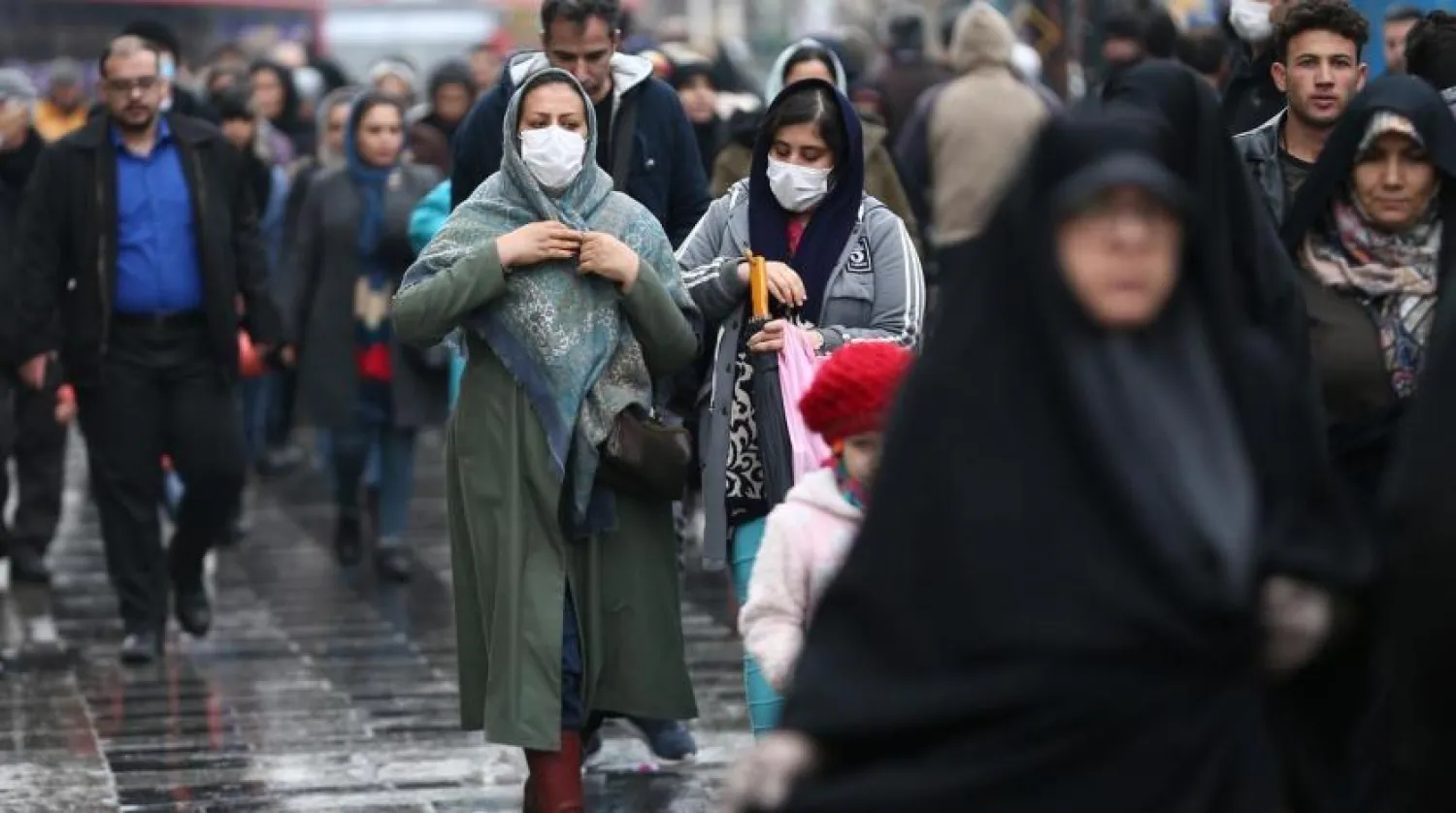
FILE PHOTO: Iranian women wear protective masks to prevent contracting a coronavirus, as they walk at Grand Bazaar in Tehran, Iran February 20, 2020. WANA (West Asia News Agency)/Nazanin Tabatabaee via REUTERS
TT

Virus-ravaged Iran Finds Brief Respite with Mass Vaccination

FILE PHOTO: Iranian women wear protective masks to prevent contracting a coronavirus, as they walk at Grand Bazaar in Tehran, Iran February 20, 2020. WANA (West Asia News Agency)/Nazanin Tabatabaee via REUTERS

As much of the world sees vaccination slowing and infections soaring with the spread of omicron, Iran has found a rare, if fleeting, respite from the anxiety and trauma of the pandemic.

After successive virus waves pummeled the country for nearly two years, belated mass vaccination under a new, hard-line president has, for a brief moment, left the stricken nation with a feeling of apparent safety.

Now, the specter of an omicron-fueled surge looms large. Hospitals are preparing for the worst as infections tick upward after a months-long lull. But so far, the variant has not battered the Iranian Republic as it has many Western countries where most adults got jabs a year ago, The Associated Press said.

Drastic infection surges among the inoculated from the United States to Russia have revealed the vaccine's declining defenses against infection even as its protection against hospitalization and death remains strong. Meanwhile, Iranians have received doses more recently and are feeling off the hook with their immunity still robust.

“A large number of people already have contracted the virus and huge vaccination has taken place in recent months,” health official Moayed Alavian said in an attempt to explain the sharp drop in infections easing the burden on Iran’s overwhelmed health system.

The virus has killed over 132,000 people by Iran’s official count — the highest national toll in the Middle East.

Iran’s recently elected president, conservative cleric Ebrahim Raisi, has made it a mission to expedite imports of foreign-made COVID-19 vaccines. With hard-liners in control of all branches of government, the new administration is fast fulfilling a task that had been vexed by power struggles during former President Hassan Rouhani’s term.

The contrast is not lost on ordinary Iranians.

“I do not know what happened,” said Reza Ghasemi, a Tehran taxi driver. “Suddenly vaccination happened in a widespread and quick way after Raisi came to office.”
“By the way,” he added, “I am thankful.”

But skeptics question the presidents' starkly different pandemic responses, criticizing the human cost of the country's factional rivalries.

“We delayed vaccination because of political issues,” reformist lawmaker Masoud Pezeshkian bluntly said last September.

Former President Donald Trump’s decision to withdraw America from Tehran’s landmark nuclear deal with world powers and pile on sanctions doomed the relatively moderate President Rouhani and his political camp.

Talks to revive the nuclear deal floundered over the past year, deepening mistrust of the West as hopes for quick sanctions relief faded.

With anti-American hostility simmering, Supreme Leader Ayatollah Ali Khamenei banned the import of Western shots a year ago. Hard-liners swept the parliament and railed against American-made vaccines even as virus deaths shattered records.

Scrambling to contain a vicious virus wave that inundated hospitals with intubated patients last summer, authorities urged Iranians to get one of the country’s five domestically produced shots instead of foreign alternatives.

Rouhani’s health officials struggled as information they provided was publicly contradicted, leading to conflicting messaging and leaving the vaccine program in shambles. Desperate Iranians flocked to neighboring Armenia for spare doses. In the end, Rouhani’s government distributed just 5 million shots.

Now under Raisi, Iran is riding high on its successes against COVID-19. Cases have fallen to about 7,000 a day from some 40,000 just months before. The death toll plummeted to 20 a day this month from peaks of over 700. His administration has provided 180 million vaccines since taking the reins in August.

More than 88% of all of those eligible for vaccines have been fully vaccinated. Iran has administered booster shoots to 20% of its population. Last week the government announced it would make vaccines available to children under 18.

Like many middle-income countries, Iran has relied on Sinopharm, the state-backed Chinese vaccine, but offers citizens a smorgasbord of other shots to choose from — Oxford-AstraZeneca, Russia’s Sputnik V, Indian firm Bharat’s Covaxin and its homegrown COVIran Barekat shot.

In a sign that resistance toward Western vaccines has softened, British-Swedish AstraZeneca makes up a substantial amount of Iran's inoculations. Although Moderna and Pfizer-BioNTech remain forbidden, some Iranians have described receiving the American-made shots through a booming black market.

While Raisi gets credit for a triumphant inoculation program, observers note that the campaign's foundations, including vaccine-sharing agreements and supply issues, were set under Rouhani.

“Under Raisi," Health Ministry spokesman Alireza Raisi said in September, “our past contracts have come into practice."

The groundwork for public acceptance was laid long before.

Iran's historically robust national vaccination program grew out of its battles against disease outbreaks from cholera to polio. In response to the El Tor strain of cholera that spawned a pandemic through the 1960s, Iran produced millions of vaccine doses, distributed American antibiotics to pilgrims and controlled the spread.

Coronavirus vaccination marks the nation’s first mass inoculation campaign outside of childhood illnesses since the 1979 Revolution that toppled the Western-backed shah.

Although the usual flood of misinformation about coronavirus shots fills Iranian social media, only a small percentage of Iran’s population has shunned the shot.

The climbing vaccination rate has fueled a sense among citizens that they have overcome the worst of the crisis. Virus restrictions — and public compliance with health measures — have notably relaxed. Tehran’s cafes, markets and metro stations are bustling with maskless patrons. Last week, Raisi increased spectator capacity at major sporting events and trade shows.

“I think the disease is over,” declared Masoud Navabi, a maskless 39-year-old delivery worker in downtown Tehran.

But authorities fear a nightmare wave of infection as omicron spreads. Iran recorded its first three deaths from the variant this month. The central city of Ardalan was classified on Wednesday as the country's first high-infection “red zone” because of the variant.

The country faces its sternest test in the next months as it marks the anniversary of its 1979 Revolution and Nowruz, the Persian New Year. The events typically involve massive street celebrations and gatherings.

The country's modest success against the virus has now given way to uncertainty, officials say. A recent uptick in cases reveals how fragile its gains against the virus can be.
“All (medical) centers should be on alert," Deputy Health Minister Saeed Karimi warned. “This is an alarm bell.”



WHO Eyes ‘Encouraging’ Signs in DR Congo Fight Against Ebola

A member of the civil protection team's dignified and safe burial service prepares to swab the body of a child suspected of having died from Ebola at the Butembo Unit Hospital morgue, in Butembo, North Kivu province, Democratic Republic of Congo, September 13, 2026. (Reuters)
TT

WHO Eyes ‘Encouraging’ Signs in DR Congo Fight Against Ebola

A member of the civil protection team's dignified and safe burial service prepares to swab the body of a child suspected of having died from Ebola at the Butembo Unit Hospital morgue, in Butembo, North Kivu province, Democratic Republic of Congo, September 13, 2026. (Reuters)

The Ebola epidemic in the Democratic Republic of Congo is still spreading but appears to be showing "encouraging" signs of improvement, the head of the World Health Organization said on Wednesday.

"We are starting to see encouraging signs that we're gaining ground," Tedros Adhanom Ghebreyesus told a news conference in Geneva.

Since the DRC declared its 17th Ebola outbreak in mid-May, more than 3,500 deaths have been recorded from over 7,200 cases to date across seven northern and eastern provinces plagued by widespread insecurity and a litany of armed groups.

Ebola, which is transmitted through contact with bodily fluids and can cause severe internal and external bleeding and organ failure, has killed more than 15,000 people in Africa over the last 50 years.

Tedros said that transmission was declining in the worst-affected areas of Ituri province, the epicenter of the outbreak, while South Kivu has not reported any new cases since May.

"Trials of treatments and post-exposure prophylaxis are picking up speed, due to increased community engagement," he added.

"Vaccine trials should begin in the coming weeks," Tedros said, while warning against complacency. "Make no mistake: the epidemic continues to grow and continues to kill," he said.

"We still have many, many months ahead of us," added Maria Van Kerkhove, director of epidemic and pandemic management at the UN health agency.

- Right response -

In North Kivu, the number of cases was rising "fast", Tedros said, with weekly cases almost doubling from about 100 to more than 200.

"The area is so vast that it is hard to speak of a single epidemic. It is many outbreaks, in many places. We must get the response right in every one of them," he added.

The remoteness of the province, high population mobility and attacks on humanitarian workers were further complicating efforts to fight the epidemic, he explained.

The Africa Centers for Disease Control and Prevention (CDC) and the WHO issued a funding appeal in June for $518 million to support the epidemic response until November.

Both organizations and the Congolese government earlier this month launched a new bid for $1.3 billion for the next six months, on top of the $1.1 billion requested by the UN in August for humanitarian assistance, WHO health emergencies chief Chikwe Ihekweazu said.

There is currently no approved vaccine or treatment against the Bundibugyo strain responsible for the current outbreak.

Some 70,000 doses of the Ervebo vaccine, which has been approved against the Zaire strain of Ebola, have been sent to the DRC to assess its effects on tackling the spread of Bundibugyo.

More than 3,000 health workers and frontline staff have already been vaccinated in Kisangani, said Meg Doherty, director of science for health at the UN health agency.

An observational study led by the Doctors Without Borders (MSF) charity will start on Saturday to evaluate the vaccine's effectiveness in reducing illness and death, she added.

Clinical trials of two vaccines in development against Bundibugyo will take place in the country on a date to be fixed.


Netanyahu’s Party Seeks to Impede Israeli Expat Voting

Israeli Prime Minister Benjamin Netanyahu greets supporters after delivering a statement to members of the press, in Jerusalem, September 8, 2026. (Reuters)
TT

Netanyahu’s Party Seeks to Impede Israeli Expat Voting

Israeli Prime Minister Benjamin Netanyahu greets supporters after delivering a statement to members of the press, in Jerusalem, September 8, 2026. (Reuters)

Prime Minister Benjamin Netanyahu's party on Wednesday petitioned the electoral commission to block initiatives aimed at helping Israelis who live abroad return to vote in upcoming close-fought elections.

Israel's electoral law does not allow citizens residing outside the country to vote abroad, except for diplomats and emissaries sent by certain organizations. The Central Bureau of Statistics estimates there are 600,000 Israelis living abroad.

Government opponents have been working for several weeks to encourage voters to come home to cast their ballots, hoping to strengthen the anti-Netanyahu camp in elections scheduled for October 27.

Initiatives include offering discounted plane tickets, assisting expatriates with the administrative procedures required to vote and organizing their transport from the airport.

Attorney Ilan Bombach, representing Netanyahu's right-wing Likud party, filed an appeal on Wednesday with the chairman of the Central Elections Committee demanding an end to these practices.

The petition specifically targets the US-based AID Coalition, an organization which says it is aimed at "strengthening and preserving the democratic foundations of the State of Israel" and is behind the "Fly&Vote" scheme.

The petition also targets the opposition Democrats party.

In his appeal, seen by AFP, Bombach likens these methods to an "electoral bribe" and argues that they violate the law on party financing.

Likud maintains that even if the passengers themselves pay for their plane tickets, the "Fly&Vote" scheme grants illicit benefits, such as discounted fares negotiated with airlines through group bookings.

The AID Coalition, which says it is an apolitical organization, has not immediately responded.

On its website, the organization describes the upcoming elections as "critical for the future of the country".

It says the law stipulating that Israelis must be physically in Israel to vote "impacts hundreds of thousands of dedicated Israelis who serve in the reserves... pay taxes, and never-endingly support Israel".

Michal Dagon from the AID Coalition recently told left-leaning daily Haaretz that the organization aimed to help bring between 50,000 and 70,000 voters from abroad to cast their ballots.

More than 30,000 Israelis have already registered, organizers said.

According to polls, the elections are expected to be tightly contested between the bloc led by Netanyahu and that of his main rival, centrist Gadi Eisenkot.


Putin Casts Parliamentary Election as Barometer of Support for War, Urges Russians to Vote

 Russian President Vladimir Putin listens to the Head of the Russian Federal Service for the Oversight of Consumer Protection and Welfare (Rospotrebnadzor) Anna Popova at the Kremlin in Moscow, Tuesday, Sept. 15, 2026. (Vyacheslav Prokofyev/Sputnik, Kremlin Pool Photo via AP)
Russian President Vladimir Putin listens to the Head of the Russian Federal Service for the Oversight of Consumer Protection and Welfare (Rospotrebnadzor) Anna Popova at the Kremlin in Moscow, Tuesday, Sept. 15, 2026. (Vyacheslav Prokofyev/Sputnik, Kremlin Pool Photo via AP)
TT

Putin Casts Parliamentary Election as Barometer of Support for War, Urges Russians to Vote

 Russian President Vladimir Putin listens to the Head of the Russian Federal Service for the Oversight of Consumer Protection and Welfare (Rospotrebnadzor) Anna Popova at the Kremlin in Moscow, Tuesday, Sept. 15, 2026. (Vyacheslav Prokofyev/Sputnik, Kremlin Pool Photo via AP)
Russian President Vladimir Putin listens to the Head of the Russian Federal Service for the Oversight of Consumer Protection and Welfare (Rospotrebnadzor) Anna Popova at the Kremlin in Moscow, Tuesday, Sept. 15, 2026. (Vyacheslav Prokofyev/Sputnik, Kremlin Pool Photo via AP)

President Vladimir Putin ‌on Wednesday framed participation in an upcoming parliamentary election as a barometer of support for Russia's war in Ukraine and urged Russians to vote.

Russia holds a three-day parliamentary election starting on Friday to choose the composition of its 450-seat lower house of parliament, the State Duma, which has a track record of faithfully approving the Kremlin's initiatives.

It is the first parliamentary election since Russia launched its ‌full-scale war ‌in Ukraine in February 2022 and ‌comes ⁠at a time when ⁠opinion polls show some Russians have become more anxious about how the conflict affects them, as the economy is under strain, and as most anti-war candidates have been excluded from the ballot.

The political system is tightly controlled and the ⁠ruling United Russia party, backed by Putin, ‌is widely expected to retain ‌its dominance.

In a televised address to the nation ‌ahead of the vote, Putin referred to the ‌war in Ukraine and to Russian-controlled parts of Ukraine, saying that casting a vote would help secure Russia's victory and demonstrate national resolve in the face of external ‌pressure.

"Your choice and your will once again demonstrate that millions of people ⁠stand ⁠behind our soldiers, that we are a united people bound together by shared values, historical memory, and love for our homeland, and that no one will succeed in dividing or intimidating us, or in undermining our statehood and our socio-political system," Putin said.

He said the vote would serve as a collective response to those seeking to weaken Russia, hinder its development, and deprive it of its sovereignty and right to determine its own future.