


Worries over Ukraine Invasion Pummel US Stocks, Lift Oil Prices

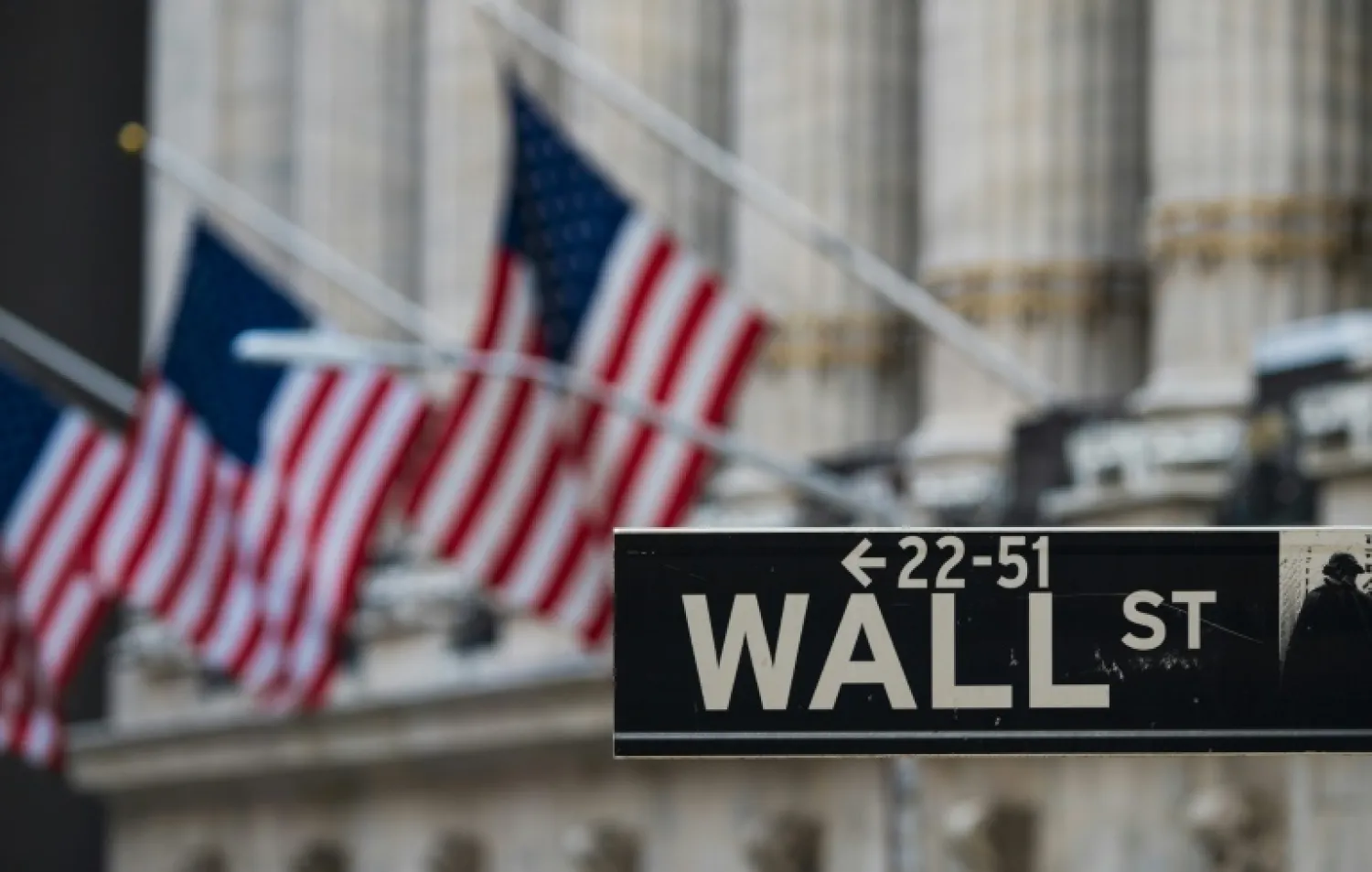
File: Both the Dow and S&P finished at new peaks on Friday and also posted their fourth consecutive weekly gains. AFP/Angela Weiss
TT

Worries over Ukraine Invasion Pummel US Stocks, Lift Oil Prices

File: Both the Dow and S&P finished at new peaks on Friday and also posted their fourth consecutive weekly gains. AFP/Angela Weiss

Wall Street stocks tumbled and oil prices surged Friday as White House warnings of a possibly imminent Russian invasion of Ukraine reverberated through financial markets.

Markets lurched during a briefing by US National Security Advisor Jake Sullivan, who said a Russian invasion could "begin at any time," including during the Beijing Winter Olympics, AFP said.

"If a Russian attack on Ukraine proceeds, it is likely to begin with aerial bombing and missile attacks that could obviously kill civilians," Sullivan said. "Any American in Ukraine should leave as soon as possible, and in any event in the next 24 to 48 hours."

Investors had become less worried about an imminent invasion of Ukraine in recent days following Western diplomacy with Russian President Vladimir Putin.

But stocks tumbled after Sullivan's remarks, with the S&P 500 ultimately losing 1.9 percent.

Analysts said the sell-off was likely heightened by the timing just before the weekend, with investors shifting into a "risk-off" mode to reduce their exposure for the two days when there is no trading.

"The Russia-Ukraine tensions have hovered over already shaky investor sentiment," said John Lynch, chief investment officer for Comerica Wealth Management. "Investors have been counting on a diplomatic resolution, but recent developments indicate this may be wishful thinking and therefore, not fully priced into the markets."

Most industrial sectors finished lower on Wall Street following the midday White House announcement.

An exception was energy, with oil giants Chevron and ExxonMobil winning more than two percent as crude prices jumped on worries that stiff sanctions on Russia could prompt the country, a major crude and natural gas exporter, to curtail investment or weaponize their energy assets.

Shares of weapons makers also moved higher, including Lockheed Martin, which gained 2.8 percent and Northrop Grumman, which rose 4.5 percent.

Earlier in Europe, London equities slid after economic data pointed to a December slowdown amid the Omicron variant of Covid-19.

The UK economy grew by a record 7.5 percent last year to rebound from the pandemic crash, but shrank by a modest 0.2 percent in the final month, official data showed.

In the eurozone, Frankfurt and Paris stocks banked lower, mirroring Asia after overnight Wall Street losses.

- Key figures around 2150 GMT -
New York - Dow: DOWN 1.4 percent at 34,738.06 (close)

New York - S&P 500: DOWN 1.9 percent at 4,418.64 (close)

New York - Nasdaq: DOWN 2.8 percent at 13,791.15 (close)

London - FTSE 100: DOWN 0.2 percent at 7,661.02 (close)

Frankfurt - DAX: DOWN 0.4 percent at 15,425.12 (close)

Paris - CAC 40: DOWN 1.3 percent at 7,011.60 (close)

EURO STOXX 50: DOWN 1.0 percent at 4,153.23 (close)

Hong Kong - Hang Seng Index: DOWN 0.1 percent at 24,906.66 (close)

Shanghai - Composite: DOWN 0.7 percent at 3,462.95 (close)

Tokyo - Nikkei 225: Closed for a holiday

Euro/dollar: DOWN at $1.1351 from $1.1428 late Thursday

Pound/dollar: UP at $1.3564 from $1.3557

Euro/pound: DOWN at 83.64 pence from 84.29 pence

Dollar/yen: DOWN at 115.48 yen from 116.01 yen

Brent North Sea crude: UP 3.3 percent at $94.44 per barrel

West Texas Intermediate: UP 3.6 percent at $93.10 per barrel


Trump Says He Will Raise US Global Tariff Rate from 10% to 15%

US President Donald Trump speaks during a press briefing at the White House, following the Supreme Court's ruling that Trump had exceeded his authority when he imposed tariffs, in Washington, DC, US, February 20, 2026. (Reuters)
TT

Trump Says He Will Raise US Global Tariff Rate from 10% to 15%

US President Donald Trump speaks during a press briefing at the White House, following the Supreme Court's ruling that Trump had exceeded his authority when he imposed tariffs, in Washington, DC, US, February 20, 2026. (Reuters)

President Donald Trump said on Saturday he will raise temporary tariffs on almost all US imports from 10% to 15%, the maximum level allowed under the law, after the US Supreme Court struck down his previous tariff program as invalid.

Trump had immediately announced a 10% across-the-board tariff on Friday after the court's decision, which ‌found the president ‌had exceeded his authority when ‌he ⁠imposed an array ⁠of higher rates under an economic emergency law.

The new levies are grounded in a separate law, known as Section 122, that allows tariffs up to 15% but requires congressional approval to extend them after 150 days.

In a ⁠social media post on Saturday, ‌Trump said he ‌would use that period to work on issuing other "legally ‌permissible" tariffs. The administration intends to rely ‌on two other statutes that permit import taxes on specific products or countries based on investigations into national security or unfair trade practices.

"I, as President of ‌the United States of America, will be, effective immediately, raising the 10% ⁠Worldwide ⁠Tariff on Countries, many of which have been 'ripping' the US off for decades, without retribution (until I came along!), to the fully allowed, and legally tested, 15% level," he wrote in a Truth Social post.

Trump has shown little sign of backing off his global trade war in the hours since the court's 6-3 decision, attacking individual justices in personal terms and insisting he retained the power to impose tariffs as he sees fit.


Asian Economies Weigh Impact of Fresh Trump Tariff Moves, Confusion

 Shoppers crowd for the upcoming Chinese Lunar New Year celebrations at the Dihua Street market in Taipei, Taiwan, Sunday, Feb. 15, 202. (AP)
Shoppers crowd for the upcoming Chinese Lunar New Year celebrations at the Dihua Street market in Taipei, Taiwan, Sunday, Feb. 15, 202. (AP)
TT

Asian Economies Weigh Impact of Fresh Trump Tariff Moves, Confusion

 Shoppers crowd for the upcoming Chinese Lunar New Year celebrations at the Dihua Street market in Taipei, Taiwan, Sunday, Feb. 15, 202. (AP)
Shoppers crowd for the upcoming Chinese Lunar New Year celebrations at the Dihua Street market in Taipei, Taiwan, Sunday, Feb. 15, 202. (AP)

US trading partners in Asia started weighing fresh uncertainties on Saturday after President Donald Trump vowed to impose a new tariff on imports, hours after the Supreme Court struck down many of the sweeping levies he used to launch a global trade war.

The court's ruling invalidated a number of tariffs that the Trump administration had imposed on Asian export powerhouses from China and South Korea to Japan and Taiwan, the world's largest chip maker and a key player in tech supply chains.

Within hours, Trump said he would impose a new 10% duty on US imports from all countries starting on Tuesday for an initial 150 days under a different law, prompting analysts to warn that more measures could follow, threatening more confusion for businesses and investors.

In Japan, a government spokesman said Tokyo "will carefully examine the content of this ruling and ‌the Trump administration's response ‌to it, and respond appropriately."

China, which is preparing to host Trump in ‌late ⁠March, has yet to ⁠formally comment or launch any counter moves with the country on an extended holiday. But a senior financial official in China-ruled Hong Kong described the US situation as a "fiasco".

Christopher Hui, Hong Kong's secretary for financial services and the treasury, Trump's new levy served to underscore Hong Kong's "unique trade advantages", Hui said.

"This shows the stability of Hong Kong's policies and our certainty ... it shows global investors the importance of predictability," Hui said at a media briefing on Saturday when asked how the new US tariff's would affect the city's economy.

Hong Kong operates as a separate customs territory from mainland China, a ⁠status that has shielded it from direct exposure to US tariffs targeting Chinese goods.

While ‌Washington has imposed duties on mainland exports, Hong Kong-made products have ‌generally faced lower tariff rates, allowing the city to maintain trade flows even as Sino-US tensions escalated.

Before the Supreme Court's ruling, Trump's ‌tariff push had strained Washington's diplomatic relations across Asia, particularly for export-reliant economies integrated into US-bound supply chains.

Friday's ruling ‌concerns only the tariffs launched by Trump on the basis of the International Emergency Economic Powers Act, or IEEPA, intended for national emergencies.

Trade policy monitor Global Trade Alert estimated that by itself, the ruling cuts the trade-weighted average US tariff almost in half from 15.4% to 8.3%.

For those countries on higher US tariff levels, the change is more dramatic. For China, Brazil and ‌India, it will mean double-digit percentage point cuts, albeit to still-high levels.

In Taiwan, the government said it was monitoring the situation closely, noting that the US government ⁠had yet to determine how ⁠to fully implement its trade deals with many countries.

"While the initial impact on Taiwan appears limited, the government will closely monitor developments and maintain close communication with the US to understand specific implementation details and respond appropriately," a cabinet statement said.

Taiwan has signed two recent deals with the US - one was a Memorandum of Understanding last month that committed Taiwan to invest $250 billion and the second was signed this month to lowering reciprocal tariffs.

Analysts say the Supreme Court's ruling against Trump's more aggressive tariff measures may offer little relief for the global economy. They warned of looming confusion as trading nations brace for moves by Trump to find other means of using levies to circumvent the ruling.

Thailand's Trade Policy and Strategy Office head Nantapong Chiralerspong said the ruling might even benefit its exports as uncertainty drove a fresh round of "front loading", where shippers race to move goods to the US, fearing even higher tariffs.

In corporate disclosures tracked by Reuters, firms across the Asia-Pacific region reported financial hits, supply shifts and withdrawals as levies escalated through 2025 and early 2026.


Brazil, India Eye Critical Minerals Deal as Leaders Meet

Brazil's President Luiz Inacio Lula da Silva (L) and Indian Prime Minister Narendra Modi are expected to discuss efforts to increase trade links. Ludovic MARIN / AFP/File
TT

Brazil, India Eye Critical Minerals Deal as Leaders Meet

Brazil's President Luiz Inacio Lula da Silva (L) and Indian Prime Minister Narendra Modi are expected to discuss efforts to increase trade links. Ludovic MARIN / AFP/File

India's Prime Minister Narendra Modi and Brazilian President Luiz Inacio Lula da Silva are set to meet in New Delhi on Saturday, seeking to boost cooperation on critical minerals and rare earths.

Brazil has the world's second-largest reserves of these elements, which are used in everything from electric vehicles, solar panels and smartphones to jet engines and guided missiles.

India, seeking to cut its dependence on top exporter China, has been expanding domestic production and recycling while scouting for new suppliers.

Lula, heading a delegation of more than a dozen ministers as well as business leaders, arrived in New Delhi on Wednesday for a global summit, reported AFP.

Officials have said that in talks with Modi on Saturday, the two leaders are expected to sign a memorandum on critical minerals and discuss efforts to increase trade links.

The world's most populous nation is already the 10th largest market for Brazilian exports, with bilateral trade topping $15 billion in 2025.

The two countries have set a trade target of $20 billion to be achieved by 2030.

With China holding a near-monopoly on rare earths production, some countries are seeking alternative sources.

Rishabh Jain, an expert with the Delhi-based Council on Energy, Environment and Water think tank, said India's growing cooperation with Brazil on critical minerals complements recent supply chain engagements with the United States, France and the European Union.

While these partnerships grant India access to advanced technologies, finance and high-end processing capabilities, "Global South alliances are critical for securing diversified, on-ground resource access and shaping emerging rules of global trade", Jain told AFP.

- 'Challenges' -

Modi and Lula are also expected to discuss global economic headwinds and strains on multilateral trade systems after both of their countries were hit by US tariffs in 2025, prompting the two leaders to call for stronger cooperation.

Washington has since pledged to roll back duties on Indian goods under a trade deal announced earlier this month.

"Lula and Modi will have the opportunity to exchange views on... the challenges to multilateralism and international trade," said Brazilian diplomat Susan Kleebank, the secretary for Asia and the Pacific.

Brazil is India's biggest partner in Latin America.

Key Brazilian exports to India include sugar, crude oil, vegetable oils, cotton and iron ore.

Demand for iron ore has been driven by rapid infrastructure expansion and industrial growth in India, which is on track to become the world's fourth largest economy.

Brazilian firms are also expanding in the country, with Embraer and Adani Group announcing plans last month to build aircraft in India.

Lula addressed the AI Impact summit in Delhi on Thursday, calling for a multilateral and inclusive global governance framework for artificial intelligence.

He will travel on to South Korea for meetings with President Lee Jae Myung and to attend a business forum.
