


US Slaps Sanctions on Russia’s Central Bank, Threatens More Action

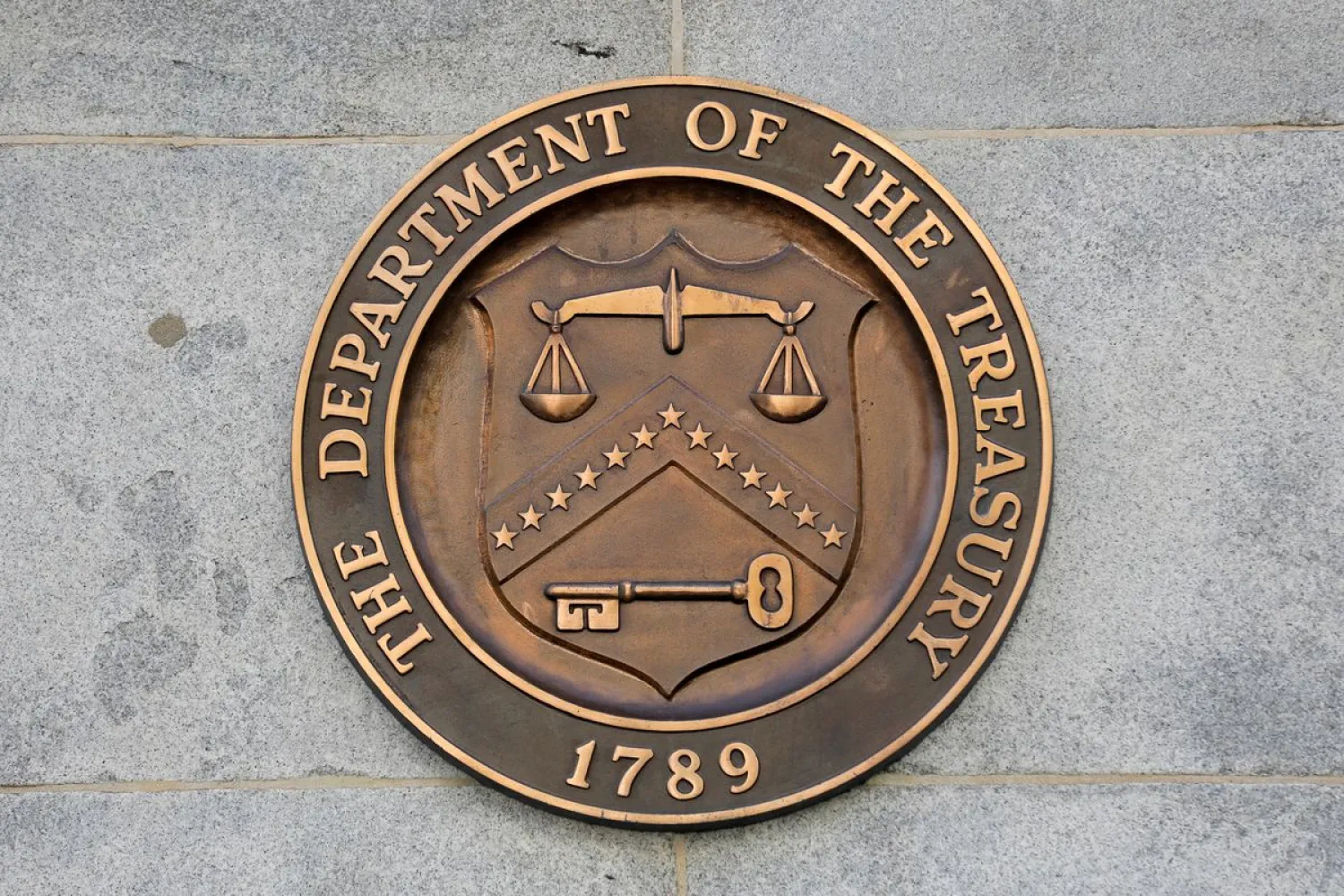
Signage is seen at the United States Department of the Treasury headquarters in Washington, DC, US, August 29, 2020. (Reuters)
TT

US Slaps Sanctions on Russia’s Central Bank, Threatens More Action

Signage is seen at the United States Department of the Treasury headquarters in Washington, DC, US, August 29, 2020. (Reuters)

The United States on Monday imposed sanctions on Russia's central bank and other key sources of wealth, dealing a crushing blow to the country's economy in further punishment of Moscow over its invasion of Ukraine.

The measures, which blocked Americans from engaging in any transactions involving Russia's central bank, finance ministry and national wealth fund, are likely to push Russian inflation higher, cripple its purchasing power and drive down investments, US officials said on Monday as the new measures took effect.

The move, which included a carve out for energy payments, comes after Washington last week imposed several rounds of sanctions targeting Moscow, including against Russian President Vladimir Putin and major banks, after the country's forces invaded Ukraine in the biggest assault on a European state since World War Two.

"Our objective is to make sure that the Russian economy goes backwards if President Putin decides to continue to go forward with an invasion in Ukraine, and we have the tools to continue to do that," a senior US administration official said on Monday.

The measures were announced after the United States and its allies on Saturday said they would take action against the central bank and bar some of the country's banks from the SWIFT international payments system, a list that officials said was still being finalized with EU partners.

The US Treasury Department in a statement on Monday said it had also slapped sanctions on a key Russian sovereign wealth fund, the Russian Direct Investment Fund, its management company and its chief executive, Kirill Dmitriev, whom Washington accused of being a close ally of Putin.

Russia's central bank more than doubled its key policy rate on Monday and introduced some capital controls as the country faced deepening economic isolation, but its governor said sanctions had stopped it selling foreign currency to prop up the rouble.

The US official on Monday said that when Russia was planning its invasion of Ukraine, it was counting on being able to use their central bank's assets to mitigate the impact of sanctions, and since Saturday's announcement had been attempting to bring those assets back to Russia or safe havens.

Monday's measures "immobilized" any assets Russia's central bank held in the United States in a move that will hinder Russia's ability to access hundreds of billions of dollars in assets.

"Putin's war chest of $630 billion of reserves only matters if he can use it to defend his currency, specifically by selling those reserves in exchange for buying the rouble," a second senior administration official said.

"After today's action, that will no longer be possible and 'Fortress Russia' will be exposed as a myth."

Mark Sobel, a former senior Treasury official who serves as the US chairman of the OMFIF forum for central banking, economic policy and public investment, said the action was a "tremendous example of Western unity."

"This all happened overnight, and the force of it basically cut off a significant country from the global financial system overnight. And there's no precedent for that," Sobel said.

Energy supplies

The Treasury issued a general license alongside Monday's action authorizing certain energy-related transactions until June 24.

President Joe Biden's administration has been concerned that its sanctions could raise already high gas and energy prices and has taken steps to mitigate that.

The US officials said Washington would continue to tailor its measures against Russia to limit the impact felt at home and allow for steady energy supplies to global markets.

They also warned that the United States would not hesitate to impose more consequences on Russia and was actively exploring measures that would cut off Russia from critical technologies it needs to remain a major energy producer in the longer term, citing similar steps already taken by the European Union.

They said Washington was also watching Belarus's involvement closely, adding that the strong Russian ally could face more punitive action if it continues to aid Moscow in the invasion.

"These are serious consequences for Russia's unprovoked invasion of Ukraine and we won't hesitate to level more if necessary," the first official said.



US Voices Hope on Iran Deal Progress Before Pakistan Army Chief Visit

Secretary of State Marco Rubio speaks to the press before boarding his plane at Homestead Air Reserve Base, Thursday, May 21, 2026. Julia Demaree Nikhinson/Pool via REUTERS
TT

US Voices Hope on Iran Deal Progress Before Pakistan Army Chief Visit

Secretary of State Marco Rubio speaks to the press before boarding his plane at Homestead Air Reserve Base, Thursday, May 21, 2026. Julia Demaree Nikhinson/Pool via REUTERS

US Secretary of State Marco Rubio voiced hope on Thursday of progress on ending the war with Iran, with mediator Pakistan's army chief due to arrive in Iran for talks.

The expected visit by Field Marshal Asim Munir, a powerful figure with a growing role in Pakistan's foreign relations, comes a day after US President Donald Trump warned that negotiations to end the war were on the "borderline" between a deal and renewed strikes.

"I believe the Pakistanis will be travelling to Tehran today. So hopefully that'll advance this further," Rubio told reporters on Thursday, according to Reuters.

A ceasefire on April 8 halted the war launched weeks earlier by the US and Israel, but negotiation efforts have so far failed to yield a lasting peace agreement.

A war of words has taken the place of open conflict but the impasse continues to weigh on the world economy, leaving everyone from investors to farmers in a painful state of uncertainty.

On Thursday, Iran's ISNA news agency said Munir's visit was aimed at continuing "talks and consultations" with Iranian authorities, without providing details. Other Iranian media carried the same report.

Pakistan hosted in April the only direct negotiations between US and Iranian officials to take place since February 28, the day the war began.

Munir was at the center of the action during that round of talks, greeting both delegations on their arrival and displaying remarkable bonhomie with US Vice President JD Vance.

But the talks ultimately failed, with Iran accusing the US of making "excessive demands".

Since then, the two sides have exchanged multiple proposals, with the threat of renewed war looming all along.

"It's right on the borderline, believe me," Trump told reporters Wednesday. "If we don't get the right answers, it goes very quickly. We're all ready to go."

He said a deal could come "very quickly" or "in a few days", but warned Tehran would have to provide "100 percent good answers".

Rubio also criticized NATO allies for their refusal to help Trump's war against Iran.

"He's not asking them to commit troops. He's not asking them to send their fighter jets in. But they refuse to do anything," he said.

"We were very upset about that."

Tehran's chief negotiator Mohammad Bagher Ghalibaf on Wednesday accused Washington of seeking to restart the war, warning of a "forceful response" if Iran were to be attacked.

"The enemy's movements, both overt and clandestine, show that despite economic and political pressure, it has not abandoned its military objectives and is seeking to start a new war," Ghalibaf said.

Iran's foreign ministry spokesman Esmaeil Baqaei said Iran was examining points received from Washington, while repeating Tehran's demands for the release of its assets frozen abroad and an end to a US naval blockade.

Trump is under political pressure at home as energy costs rise.

The ceasefire halted the fighting but has not reopened the Strait of Hormuz, the vital waterway that normally carries about a fifth of the world's oil and liquefied natural gas.

The future of Hormuz remains a key sticking point in the negotiations, with fears growing that the global economy will feel more pain as pre-war oil stockpiles run down.

Iran imposed the blockade of Hormuz as part of its retaliation in the war, allowing only a trickle of vessels through in recent weeks while introducing a toll system.


Trump Postpones Signing Order on AI Oversight

US President Donald Trump speaks during an event with Environmental Protection Agency Administrator Lee Zeldin in the Oval Office at the White House in Washington, DC, USA, 21 May 2026. EPA/AL DRAGO / POOL NEWS SERVICE OK
TT

Trump Postpones Signing Order on AI Oversight

US President Donald Trump speaks during an event with Environmental Protection Agency Administrator Lee Zeldin in the Oval Office at the White House in Washington, DC, USA, 21 May 2026. EPA/AL DRAGO / POOL NEWS SERVICE OK

US President Donald Trump on Thursday said he had postponed signing an executive order on AI because he "didn't like certain aspects of it."

Trump had planned to sign the order at a ceremony on Thursday afternoon attended by CEOs of AI companies.

The order would create a voluntary framework for AI developers to ⁠engage with the ⁠US government before the public release of covered models, two sources told Reuters on Wednesday.

The president also had planned to direct the US government to use the advanced models to improve the cybersecurity defenses of ⁠government systems, along with networks owned by sectors that are vital to the nation's economy, such as banks and hospitals, according to another source.

Concerns are growing across the US government and in the private sector about the cybersecurity risks posed by powerful new AI systems, including Anthropic’s Mythos.

Anthropic has warned that Mythos could supercharge complex cyberattacks, though cybersecurity experts ⁠told ⁠Reuters that fears of unfettered hacking are overstated.

The president's executive order, if implemented, could hurt the industry's profits if it slows the rollout of new models or prompts companies to change how they perform to address security concerns.

Trump, who spoke to reporters on Thursday in the Oval Office, did not say which parts of the order he didn't like.


Teen Among 3 Dead in Türkiye after Floods, Landslides Hit Southern Province

FILE - A Navy officer helps a woman cross a flooded street after heavy rain in Poza Rica, Veracruz state, Mexico, Oct. 12, 2025. (AP Photo/Felix Marquez, File)
TT

Teen Among 3 Dead in Türkiye after Floods, Landslides Hit Southern Province

FILE - A Navy officer helps a woman cross a flooded street after heavy rain in Poza Rica, Veracruz state, Mexico, Oct. 12, 2025. (AP Photo/Felix Marquez, File)

Three people have died during flooding in southern Türkiye on Thursday, officials said, as the Interior Ministry issued weather warnings for 15 of the country's 81 provinces.

Heavy rainfall in Hatay, the province most affected by a devastating earthquake in 2023, caused the Asi river, also known as the Orontes, to break its banks, submerging fields and villages. Roads and bridges were also washed away, The Associated Press reported.

Among the victims was a 15-year-old boy who died in a house that collapsed during a landslide in Antakya, the provincial capital, Hatay Gov. Mustafa Masatli said.

A 66-year-old man died when his car rolled into a ditch in Defne, while and another man, aged 62, was swept away in floodwaters in the Samandag district.

Masatli said the flooding had caused significant damage to agriculture across 2,900 hectares (7,166 acres) as disaster teams continued to assess the impact. Firefighters rescued many people by boat as residents bailed out their homes and tried to hold the waters at bay with makeshift barriers.