Will Determined Inheritance between Married Couples in Ancient Egypt, Study Finds

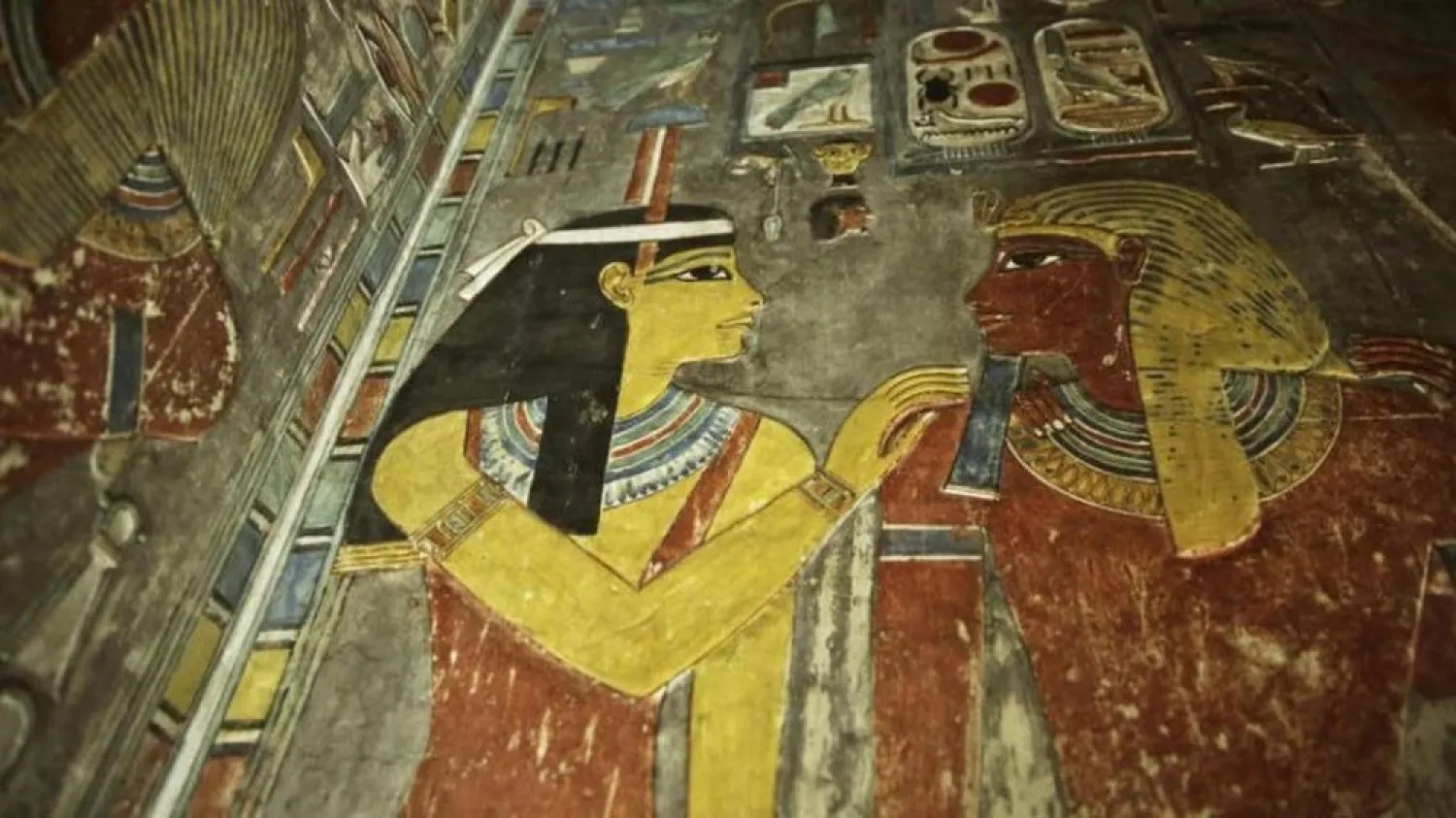
Carvings are seen on a wall at the Horemheb tomb in the Valley of the Kings in Luxor, Egypt, Tuesday, Sept. 29, 2015. (AP)
TT

Will Determined Inheritance between Married Couples in Ancient Egypt, Study Finds

Carvings are seen on a wall at the Horemheb tomb in the Valley of the Kings in Luxor, Egypt, Tuesday, Sept. 29, 2015. (AP)

According to inheritance laws in Ancient Egypt, married couples were not allowed to inherit each other unless a will states that, found a study that analyzed 62 ancient Egyptian texts. The findings were published in the latest issue of the Journal of the General Union of Arab Archaeologists.

The examined texts include the Kahun Papyrus from the era of King Amenhotep III, and the Turin Papyrus Map that emerged under the rule of the 20th dynasty. The study led by Mohammed Helmi Issa, associate professor at Sohag University’s Egyptology department, found that in Ancient Egypt, partners in a married couple enjoyed an independent ownership of their properties; both husband and wife had the right to leave their properties to whoever they want of their children, and the other partner had no influence on the decision. In some cases, husbands waived their assets to their wives based on a will that also gave them the right to leave these assets to the children.

The study considered the assets that belonged to the husband before marriage, and those the couple made during the marriage separately. The results showed that based on the marriage contract Ancient Egyptians used, each partner received a share of the joint properties they made together during marriage, 2/3 for the husband and 1/3 for the wife if the marriage ended with divorce or death.

In some cases, husbands sought to circumvent laws to enable their wives to inherit a bigger share after their death. They resorted to legal tricks to skip inheritance regulations such as mock sale. In addition to women inheritance of their husbands, the study reported that females inherited the same share as males in family assets, but the males had the right to choose their shares first. Women also inherited movable and immovable properties.

Finally, the study showed that the oldest daughter in the family had the right to manage properties on behalf of her younger brothers and sisters. Women at the time were also allowed to testify in inheritance-related disputes and had the right to mention their names as witnesses on inheritance documents.


Cuba’s Iconic Antique Cars Sit Idle as US Energy Blockade Deepens Fuel Crisis

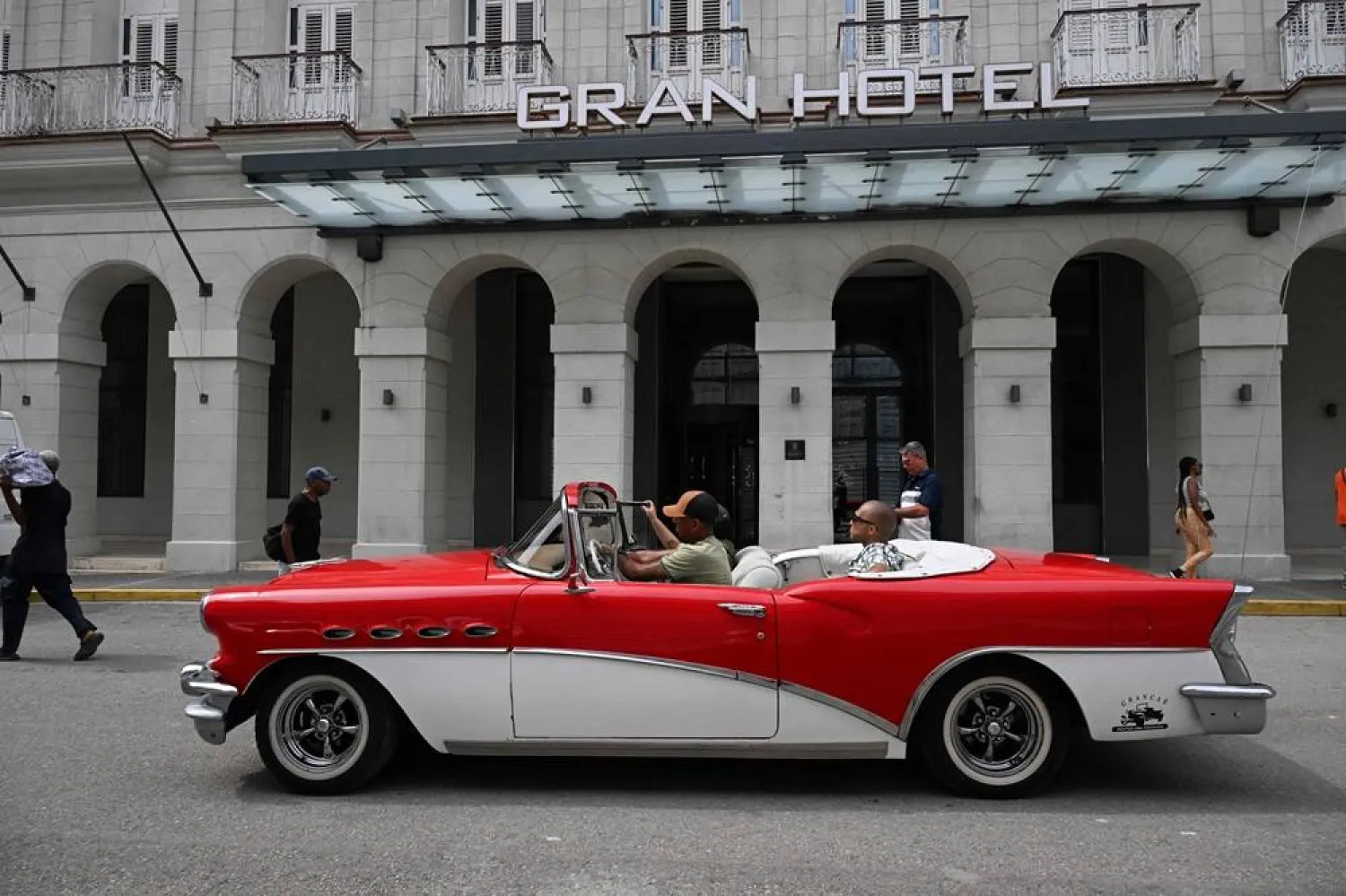
An old car drives past the Gran Hotel Bristol in Havana on June 3, 2026. (AFP)
TT

Cuba’s Iconic Antique Cars Sit Idle as US Energy Blockade Deepens Fuel Crisis

An old car drives past the Gran Hotel Bristol in Havana on June 3, 2026. (AFP)

A worsening fuel crisis across Cuba is testing the island's famed “almendrones," the vintage American cars that serve as vital shared taxis and embody the island’s ingenuity and endurance.

These days, many of the iconic gas-guzzling antique cars sit idle, casualties of fuel shortages that have gripped Cuba since January and that Cuban officials blame on a US energy blockade.

Outside his modest concrete-block home on a dirt road in Las Minas, a town of about 2,000 people on the outskirts of Havana, Diriel Valdez is restoring a 1951 Chevrolet Deluxe. The burgundy body is intact and the original engine still works. Finding fuel for it, however, is another matter.

Valdez is among thousands of Cubans waiting for fuel through a government reservation app that, for many, has become a symbol of the shortages it was designed to manage.

“I signed up in February ... I’m still somewhere around number 2,800,” said the 27-year-old who runs an auto body shop from his home.

The reward for the wait would be 20 liters (5.3 gallons) of gasoline — enough fuel, Valdez says, to get him to the beach.

The name almendrón comes from the Spanish word for almond, a reference to the rounded shape of the large American sedans imported before Cuba’s 1959 revolution.

For decades, sanctions, shortages and limited imports forced Cuban mechanics to become masters of improvisation. Engines were swapped, bodies rebuilt and replacement parts sourced from wherever they could be found.

On a recent night in Havana, as another blackout darkened much of the city, taxi driver Leonardo Daniel González steered a friend’s glowing purple 1948 Chevrolet Fleetmaster through the darkness.

“These cars are passed down from generation to generation,” said González, 30. “I had one that belonged to my great-grandfather. It went from him to my grandfather, then to my father, and then to me.”

The wait for fuel Cuba is experiencing one of its most severe energy crises in years. The population, already battered by decades of economic crises and shortages, is now navigating daily blackouts that can last up to 20 hours in some parts of the island.

The country produces only about 40% of the fuel it consumes and depends heavily on imports to keep its power plants running and its transportation network moving.

Since January, the Trump administration has tightened sanctions on Cuba as an element of its ongoing pressure campaign against the island’s communist government. Trump also threatened tariffs on countries that sell or transport oil to Cuba, further complicating the island’s efforts to secure fuel supplies. Just a single Russian tanker has delivered oil to the island nation since then.

Standing beside his Chevrolet in Las Minas, Valdez, who runs the auto body shop, said the fuel shortage is also affecting his livelihood. He learned auto-body work from his stepfather and has been repairing classic cars since he was 13.

“People don’t want to do major repairs anymore,” he said. “A lot of them have their cars parked. They don’t have much hope that they’ll be circulating the way they used to.”

Almendrones persist even with electric vehicles

As gasoline becomes harder to obtain, many drivers are turning to Cuba’s black market, where fuel can often be found more quickly, though at significantly higher prices that can reach up to $8 per liter ($30 per gallon).

Omar Everleny Pérez, a former economist at the University of Havana’s Center of Cuban Economic Studies, said the country’s transportation system still depends heavily on almendrones because modern vehicles remain out of reach for most Cubans.

“They’ve been vital to the transportation of ordinary Cubans,” he said. “Not only in Havana but throughout the country.”

New vehicles have become available in Cuba in recent years, but at prices far beyond the reach of most state-sector workers, Pérez said. That has helped keep the aging American cars on the road, even as a different future is beginning to emerge on Cuba’s streets.

Electric motorcycles imported from China have become increasingly common. Small electric vehicles are also appearing, aided by a growing network of solar-powered charging stations promoted by the government as part of its push toward renewable energy.

Back in Havana, González is not ready to write off the almendrones. Despite the lack of fuel and a sharp decline in tourism, he can still make a living off the old Chevrolet.

“There are ... several WhatsApp groups for us to find rides and so on,“ said González. “But tourism in Cuba is in very bad shape.”



Note in Time Capsule Helps Punters Win £2,500

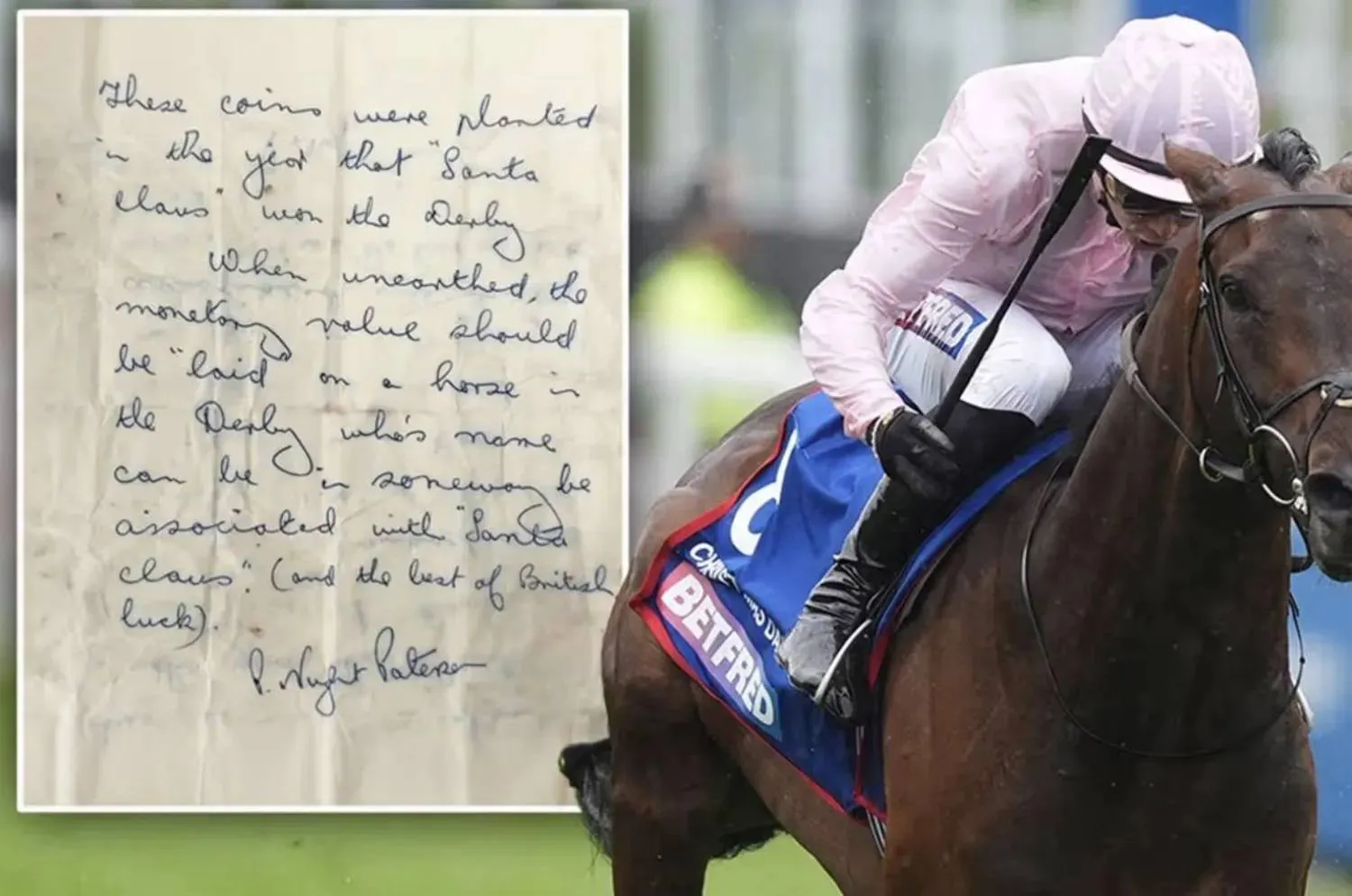
A buried message from 1964 helped four lucky punters scoop £2,500 by picking the winner of the Epsom Derby (Crystal Palace)
TT

Note in Time Capsule Helps Punters Win £2,500

A buried message from 1964 helped four lucky punters scoop £2,500 by picking the winner of the Epsom Derby (Crystal Palace)

A 'time capsule' letter buried 62 years ago which urged the finder to back any runner whose name could be linked to Santa Claus, helped four lucky punters scoop £2,500 by picking the winner of the Epsom Derby on Sunday, according to The Guardian.

Josh Smalls, site manager on the restoration project at Crystal Palace Park in south London, said the note and four old coins were discovered by a colleague underneath the giant bust of Sir Joseph Paxton, the Victorian designer of the Crystal Palace.

The note explained that the money was the winnings from a bet on a horse named Santa Claus in the 1964 Epsom Derby.

The writer urged any future finder of the time capsule to use the money to bet on a horse in the Derby with a name that “can in some way be associated with ‘Santa Claus.’”

Smalls – speaking before Saturday’s race – told the BBC: “Unbelievably, there is a horse in this year’s Derby called Christmas Day ... To find a piece of history like that – and for it to link up so well with the horse this year – it was kind of spooky. I looked through the rosters of the last few years and couldn’t find any other horse with a Christmassy name.”

Santa Claus was the name of the horse that won the Derby in front of the late Queen in 1964.

Subsequently, a sentimental racing fan who had seemingly backed the horse himself took another gamble without knowing whether it would ever pay off, according to the Daily Mail.

He buried a 'time capsule' in a park in Crystal Palace with a letter and some coins urging the finder to bet on a horse 'whose name can be associated in some way with Santa Claus.'

The time capsule was first discovered in April by Smalls’s colleague, Craciun Marius Dorin, a member of the team overseeing the park’s regeneration, who said: “I’m Romanian and Craciun in Romanian actually means Christmas – isn’t that crazy?”


Japanese City Suspends 94 Schools after First-ever Bear Sighting

This image made from the security camera footage provided by the Fukushima Steel Works, shows a bear, right, chasing a person, second right, on its premises in Fukushima, Japan, Tuesday, June 2, 2026. (FUKUSHIMA STEEL WORKS  via AP)
This image made from the security camera footage provided by the Fukushima Steel Works, shows a bear, right, chasing a person, second right, on its premises in Fukushima, Japan, Tuesday, June 2, 2026. (FUKUSHIMA STEEL WORKS via AP)
TT

Japanese City Suspends 94 Schools after First-ever Bear Sighting

This image made from the security camera footage provided by the Fukushima Steel Works, shows a bear, right, chasing a person, second right, on its premises in Fukushima, Japan, Tuesday, June 2, 2026. (FUKUSHIMA STEEL WORKS  via AP)
This image made from the security camera footage provided by the Fukushima Steel Works, shows a bear, right, chasing a person, second right, on its premises in Fukushima, Japan, Tuesday, June 2, 2026. (FUKUSHIMA STEEL WORKS via AP)

The Japanese city of Utsunomiya has suspended all 94 of the primary and middle schools that it operates on Monday after its first-ever bear sighting, a municipal official said.

According to Reuters, the city of half-a-million residents about 100 km (60 miles) north of Tokyo said the bear was first seen in a residential area near a park on Saturday evening. It remains at ⁠large after the last ⁠sighting early Monday morning about half a kilometer from a middle school.

Bear attacks, including in urban areas, have been on the rise in Japan, prompting the government to set ⁠up a task force this year to reduce casualties.

Last week, a bear attack in the northeastern city of Fukushima left at least four people injured.

Security footage from Fukushima Steel Works shows a black bear chasing a worker by the entrance of the factory and throwing him to the ground.

Asiatic black bears are ⁠listed ⁠as a vulnerable species globally, but their numbers are estimated to have tripled in Japan since 2012, helped by a decline in hunting.

Experts say climate change has reduced harvests of bears' natural food like acorns and beechnuts, while the depopulation of rural areas and the proliferation of abandoned farmland have emboldened them to seek food near human settlements.