

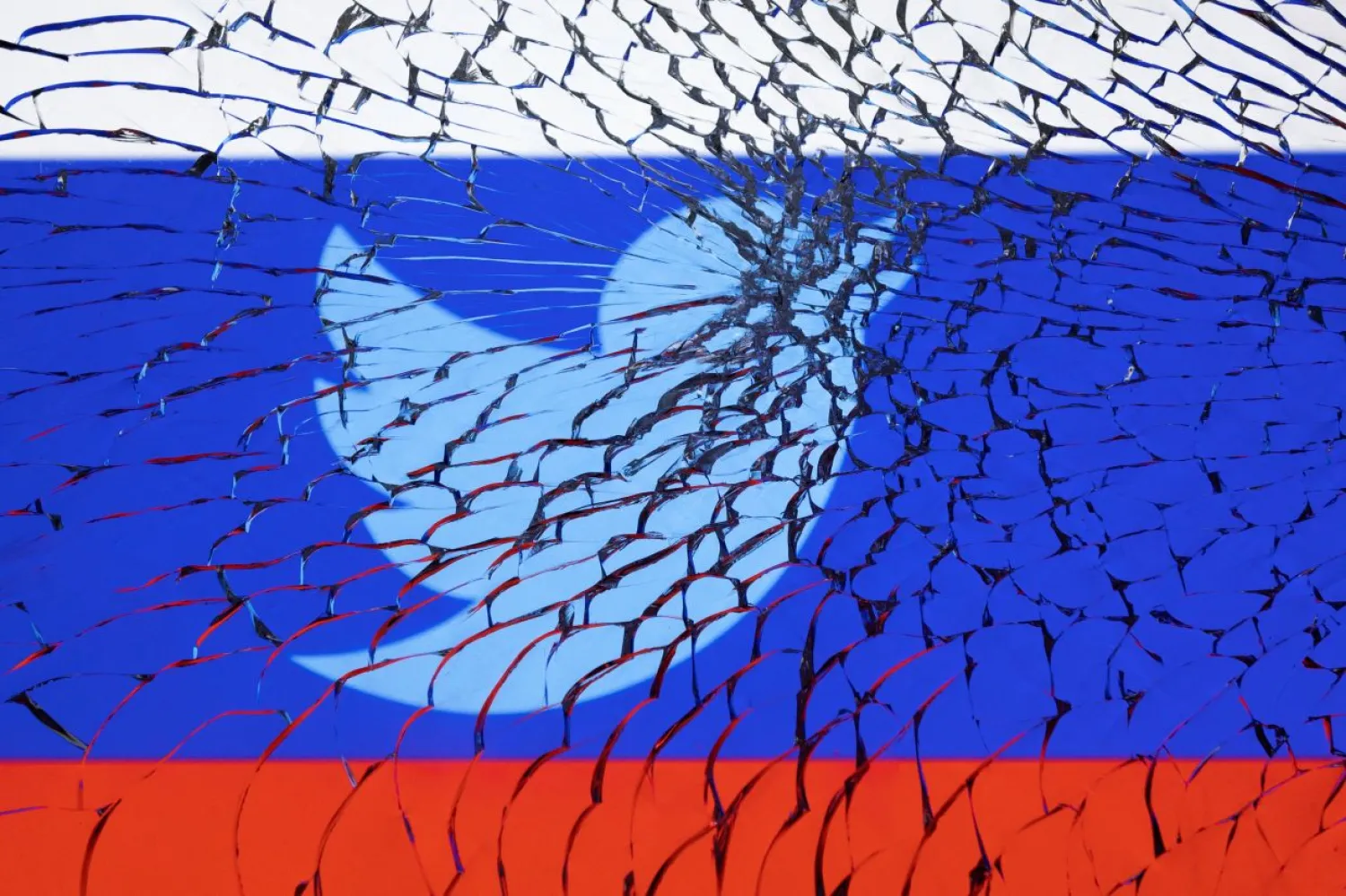

Ukraine Official Twitter-shaming Firms to Action over Invasion

Ukraine's vice prime minister is pressuring big tech, by calling them out on Twitter, pushing them to penalize Russia over its invasion. — REUTERS/Illustration
TT

Ukraine Official Twitter-shaming Firms to Action over Invasion

Ukraine's vice prime minister is pressuring big tech, by calling them out on Twitter, pushing them to penalize Russia over its invasion. — REUTERS/Illustration

Ukraine's vice prime minister has been calling out big tech companies by name on Twitter to push them to penalize Russia over its invasion -- and it's having an impact.

Marshalling his government's social media savvy and a deep international well of sympathy, Mykhailo Fedorov's feed has become a list of firms willing to oppose Moscow or come to Ukraine's aid, AFP said.

"We need your support -- in 2022 modern technology is perhaps the best answer to tanks, multiple rocket launchers and missiles," he wrote in a letter he tweeted out Friday to Apple chief Tim Cook.

By Tuesday the iPhone maker had announced sales were halted in Russia, and Apple Pay services were limited.

The 31-year-old minister had also paid Cook a visit in the United States last year with the two discussing topics from training opportunities to Apple stores in Ukraine.

Fedorov's callouts only gathered pace after his tweet seeking Cook's support, with subsequent ones noting Ukraine's government had asked Google, Netflix, YouTube and Facebook to cut off Russia.

While those companies have not severed ties completely, all have announced actions ranging from restrictions on the spread of Russian state-owned media to resisting Kremlin requirements.

"You hold them accountable this way," Larissa Doroshenko, a postdoctoral researcher at Boston's Northeastern University said of the impact of calling out companies on Twitter.

"It's a very savvy, very strategic way of social media because you can do it behind closed doors or... you can make it public," she added.

Fedorov, who is responsible for Ukraine's digital matters, is part of a government that has built social media into its communication strategy from the start.

Doroshenko said Ukrainian President Volodymyr Zelensky's campaign engaged with people on social media during the 2019 election, and his government has kept doing so once in power.

- 'Gratitude from people of Ukraine ' -
Since Russia's invasion last week, the 44-year-old president has used his eye for modern image management and the skills honed as an actor to deliver stirring messages on social media.

"It has been adapted to these war times," Doroshenko added.

Moscow's invasion of Ukraine is one of the most dangerous global moments in decades, with spiking tensions as the West imposes unprecedented economic sanctions on Russia.

At the same time, support has poured in for embattled Ukraine and has ranged from kind words to flows of money, supplies and weapons.

"There are literally millions of people on the internet wanting to try and do something," said Omar Wasow, an assistant professor of politics at Pomona College in California.

"So if he (Fedorov) does this callout of a particular company, and then thousands of people like and retweet what he's doing that's going to get the attention of those companies' social media managers and ultimately CEOs," he added.

Fedorov's tweet with the appeal letter to Cook has gotten over 10,600 likes and retweets combined to date.

The tweet to Tesla boss Elon Musk asking for Starlink satellite internet service got over 200,000 likes and retweets.

"While you try to colonize Mars — Russia try to occupy Ukraine!" the message began, with another more than 588,000 likes and retweets on Fedorov's tweet showing the Starlink terminals had arrived.

"In Ukraine, being the image of a younger democracy, we see social media used very similarly by regular people and by people in power," Doroshenko added.

Fedorov has kept up his stream of callouts, urging video game developers like Riot Games to close any Russia operations. The company did not immediately reply to a request for comment.

He also tweeted letters sent to German software firm SAP and US tech giant Oracle urging them to cut any ties with Russia, noting "more sanctions imposed -- faster peace restored in Ukraine!"

"Oracle Corporation has already suspended all operations in the Russian Federation", the company replied, drawing this message from Fedorov: "With gratitude from all the free people of Ukraine!"



Report: France Aims to Ban Under-15s from Social Media from September 2026

French President Emmanuel Macron holds a press conference during a European Union leaders' summit, in Brussels, Belgium December 19, 2025. (Reuters)
TT

Report: France Aims to Ban Under-15s from Social Media from September 2026

French President Emmanuel Macron holds a press conference during a European Union leaders' summit, in Brussels, Belgium December 19, 2025. (Reuters)

France plans to ban children under 15 from social media sites and to prohibit mobile phones in high schools from September 2026, local media reported on Wednesday, moves that underscore rising public angst over the impact of online harms on minors.

President Emmanuel Macron has often pointed to social media as one of the factors to blame for violence among young people and has signaled he wants France to follow Australia, whose world-first ‌ban for under-16s ‌on social media platforms including Facebook, Snapchat, TikTok ‌and ⁠YouTube came into force ‌in December.

Le Monde newspaper said Macron could announce the measures in his New Year's Eve national address, due to be broadcast at 1900 GMT. His government will submit draft legislation for legal checks in early January, Le Monde and France Info reported.

The Elysee and the prime minister's office did not immediately respond to a request for comment on the reports.

Mobile phones have been banned ⁠in French primary and middle schools since 2018 and the reported new changes would extend that ban ‌to high schools. Pupils aged 11 to ‍15 attend middle schools in the French ‍educational system.

France also passed a law in 2023 requiring social platforms to ‍obtain parental consent for under-15s to create accounts, though technical challenges have impeded its enforcement.

Macron said in June he would push for regulation at the level of the European Union to ban access to social media for all under-15s after a fatal stabbing at a school in eastern France shocked the nation.

The European Parliament in ⁠November urged the EU to set minimum ages for children to access social media to combat a rise in mental health problems among adolescents from excessive exposure, although it is member states which impose age limits. Various other countries have also taken steps to regulate children's access to social media.

Macron heads into the New Year with his domestic legacy in tatters after his gamble on parliamentary elections in 2024 led to a hung parliament, triggering France's worst political crisis in decades that has seen a succession of weak governments.

However, cracking down further on minors' access to social media could prove popular, according to opinion ‌polls. A Harris Interactive survey in 2024 showed 73% of those canvassed supporting a ban on social media access for under-15s.


Poland Urges Brussels to Probe TikTok Over AI-Generated Content

The TikTok logo is pictured outside the company's US head office in Culver City, California, US, September 15, 2020. (Reuters)
TT

Poland Urges Brussels to Probe TikTok Over AI-Generated Content

The TikTok logo is pictured outside the company's US head office in Culver City, California, US, September 15, 2020. (Reuters)

Poland has asked the European Commission to investigate TikTok after the social media platform hosted AI-generated content including calls for Poland to withdraw from the EU, it said on Tuesday, adding that the content was almost certainly Russian disinformation.

"The disclosed content poses a threat to public order, information security, and the integrity of democratic processes in Poland and across the European Union," Deputy Digitalization Minister Dariusz Standerski said in a letter sent to the Commission.

"The nature of ‌the narratives, ‌the manner in which they ‌are distributed, ⁠and the ‌use of synthetic audiovisual materials indicate that the platform is failing to comply with the obligations imposed on it as a Very Large Online Platform (VLOP)," he added.

A Polish government spokesperson said on Tuesday the content was undoubtedly Russian disinformation as the recordings contained Russian syntax.

TikTok, representatives ⁠of the Commission and of the Russian embassy in Warsaw did not ‌immediately respond to Reuters' requests for ‍comment.

EU countries are taking ‍measures to head off any foreign state attempts to ‍influence elections and local politics after warning of Russian-sponsored espionage and sabotage. Russia has repeatedly denied interfering in foreign elections.

Last year, the Commission opened formal proceedings against social media firm TikTok, owned by China's ByteDance, over its suspected failure to limit election interference, notably in ⁠the Romanian presidential vote in November 2024.

Poland called on the Commission to initiate proceedings in connection with suspected breaches of the bloc's sweeping Digital Services Act, which regulates how the world's biggest social media companies operate in Europe.

Under the Act, large internet platforms like X, Facebook, TikTok and others must moderate and remove harmful content like hate speech, racism or xenophobia. If they do not, the Commission can impose fines of up to 6% ‌of their worldwide annual turnover.


Saudi National Cybersecurity Authority Launches Service to Verify Suspicious Links

Saudi National Cybersecurity Authority Launches Service to Verify Suspicious Links
TT

Saudi National Cybersecurity Authority Launches Service to Verify Suspicious Links

Saudi National Cybersecurity Authority Launches Service to Verify Suspicious Links

The National Cybersecurity Authority has launched the “Tahqaq” service, aimed at enabling members of the public to proactively and safely deal with circulated links and instantly verify their reliability before visiting them.

This initiative comes within the authority’s strategic programs designed to empower individuals to enhance their cybersecurity, SPA reported.

The authority noted that the “Tahqaq” service allows users to scan circulated links and helps reduce the risks associated with using and visiting suspicious links that may lead to unauthorized access to data. The service also provides cybersecurity guidance to users, mitigating emerging cyber risks and boosting cybersecurity awareness across all segments of society.

The “Tahqaq” service is offered as part of the National Portal for Cybersecurity Services (Haseen) in partnership with the authority’s technical arm, the Saudi Information Technology Company (SITE). The service is available through the unified number on WhatsApp (+966118136644), as well as via the Haseen portal website at tahqaq.haseen.gov.sa.