


Long Road ahead for Iraq Pledge to Phase Out Gas Flares

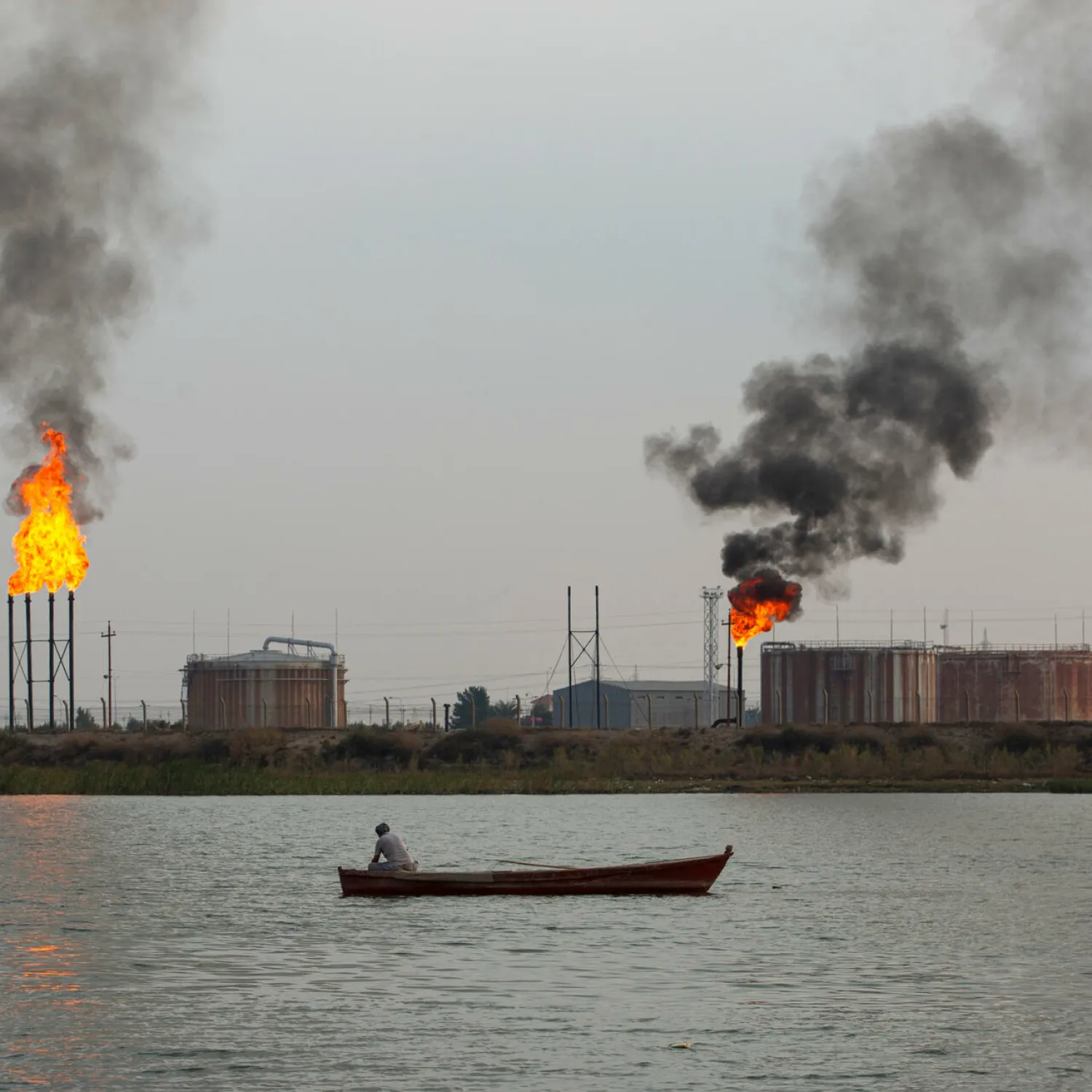
A boat passes polluting gas flares at the Umm Qasr port near Iraq's southern city of Basra. Hussein FALEH AFP
TT

Long Road ahead for Iraq Pledge to Phase Out Gas Flares

A boat passes polluting gas flares at the Umm Qasr port near Iraq's southern city of Basra. Hussein FALEH AFP

In the oilfields of southern Iraq, billions of cubic feet of gas literally go up in smoke, burnt off on flare stacks for want of the infrastructure to capture and process it.

The flares produce vast amounts of carbon dioxide and other greenhouse gases, contributing to global warming without any economic or social benefit, AFP reported.

Analysts say the waste is particularly egregious, as Iraq is a significant importer of natural gas, meeting a third of its needs through expensive and not always reliable supplies from neighboring Iran.

The government has pledged to phase out the practice by 2030 but the road to a greener, less wasteful energy sector is proving a long one.

For the oil companies exploiting the mega fields around Basra, it is actually cheaper to flare off the associated gas than to capture, process and market it, despite the obvious environmental costs.

Currently, only half of the three million cubic feet of gas that comes out of Iraqi oil wells each day is captured and processed.

The rest is burnt off in flares creating the plumes of acrid black smoke that blight the skies.

"Flared gas, if captured and processed, could provide electricity to three million homes," said Yesar al-Maleki, Gulf analyst at Middle East Economic Survey.

"This could definitely help the country end its acute power shortages that go up all the way to a supply and demand gap of nine gigawatts in summer."

- 'Up in smoke' -
In December, Iraq's oil minister Ihsan Ismail pledged to cut flare gas by 90 percent by 2024.

But despite contracts with foreign oil majors, including France's TotalEnergies, the target is likely to face bureaucratic obstacles in a sector which provides 90 percent of government revenues.

Over the past two years, the government has cut flare gas by just five percent.

The captured gas is fuel that Iraq desperately needs for its power stations.

Under an exemption from US sanctions on Iran, Iraq imports 750 million cubic feet per day from its eastern neighbour.

Any disruption to that supply can lead to widespread power cuts, particularly in summer when the demand for air conditioning and refrigeration peaks.

Maleki said the failure to address the issue bore multiple costs for Iraq.

"It loses financially by burning money in the air; it loses more money by importing gas from neighboring countries at a premium; it loses more money resolving resultant issues in its power sector when it switches its gas turbines to costly and pollutive liquid fuels; and it definitely loses environmentally."

Basra province is home to Iraq's five largest oilfields and accounts for 65 percent of its flared gas, according to World Bank figures.

The Basrah Gas Company, a consortium of Iraq's state-owned South Gas Company, Shell and Mitsubishi, captures one billion cubic feet of gas from the three fields in which it operates.

It plans to raise that figure to 1.4 billion cubic feet by the end of 2023 but doing so requires heavy investment, in processing as well as capture.

Managing director Malcolm Mayes said the consortium was investing around $1.5 billion in a giant new processing facility in Artawi, outside Basra.

"In Artawi, we are building two processing trains," Mayes said.

"The first will be on stream in May 2023 and the second will come on stream in November 2023, and at that point we will have the capacity to process 1.4 billion cubic feet -- approaching 90 percent from our lease area."

- 'Cleaner electricity' -
Iraq has also signed a mega-contract with TotalEnergies that includes building a processing facility for the associated gas from three southern oilfields.

"The plant's launch is scheduled for 2026," the French firm said.

Iraq says the plant will process 300 million cubic feet a day of gas that is currently flared off, rising to 600 million in a second phase.

Teams from TotalEnergies are already on the ground carrying out preliminary studies, but the process is dragging on.

Last month, Baghdad said some clauses of the contract "require time and cannot be implemented or solved in a short period".

A similar project awarded to Chinese firms in neighboring Maysan province is only half finished.

In the meantime, Basra's residents continue to live with the environmental consequences.

"Everything is polluted by these flares -- the water, the animals, they're all dead," said Salem, an 18-year-old shepherd in the village of Nahr Bin Omar, site of a major oilfield just north of Basra.



Israel's Netanyahu Says No Reconstruction of Gaza before Demilitarization

Israel’s Prime Minister Benjamin Netanyahu - File Photo/AFP
TT

Israel's Netanyahu Says No Reconstruction of Gaza before Demilitarization

Israel’s Prime Minister Benjamin Netanyahu - File Photo/AFP

Israeli Prime Minister Benjamin Netanyahu said on Thursday there would be no reconstruction of war-shattered Gaza before the disarmament of Hamas, as the "Board of Peace" convened for its inaugural meeting in Washington.

Around two dozen world leaders and senior officials met for the first meeting of the board, which was set up after the United States, Qatar and Egypt negotiated a ceasefire in October to halt two years of war in the Gaza Strip.

"We agreed with our ally the US there will be no reconstruction of Gaza before the demilitarization of Gaza," Netanyahu said during a televised speech at a military ceremony on Thursday, AFP reported.

The meeting in Washington will also look at how to launch the International Stabilization Force (ISF) that will ensure security in Gaza.

One of the most sensitive issues before the board is the future of the Islamist movement Hamas, which fought the war with Israel and still exerts influence in the territory.

Disarmament of the group is a central Israeli demand and a key point in negotiations over the ceasefire's next stage.

US officials including Steve Witkoff, Trump's friend and roving negotiator, have insisted that solid progress is being made and that Hamas is feeling pressure to give up weapons.

Israel has suggested sweeping restrictions including seizing small personal rifles from Hamas.

It remains unclear whether, or how, the Palestinian technocratic committee formed to handle day-to-day governance of Gaza will address the issue of demilitarization.

The 15-member National Committee for the Administration of Gaza (NCAG) will operate under the supervision of the "Board of Peace", and its head, Ali Shaath, is attending the meeting in Washington on Thursday.


Trump Tells First Meeting of Board of Peace that $7 billion Raised for Gaza

US President Donald Trump speaking in Washington - AFP
TT

Trump Tells First Meeting of Board of Peace that $7 billion Raised for Gaza

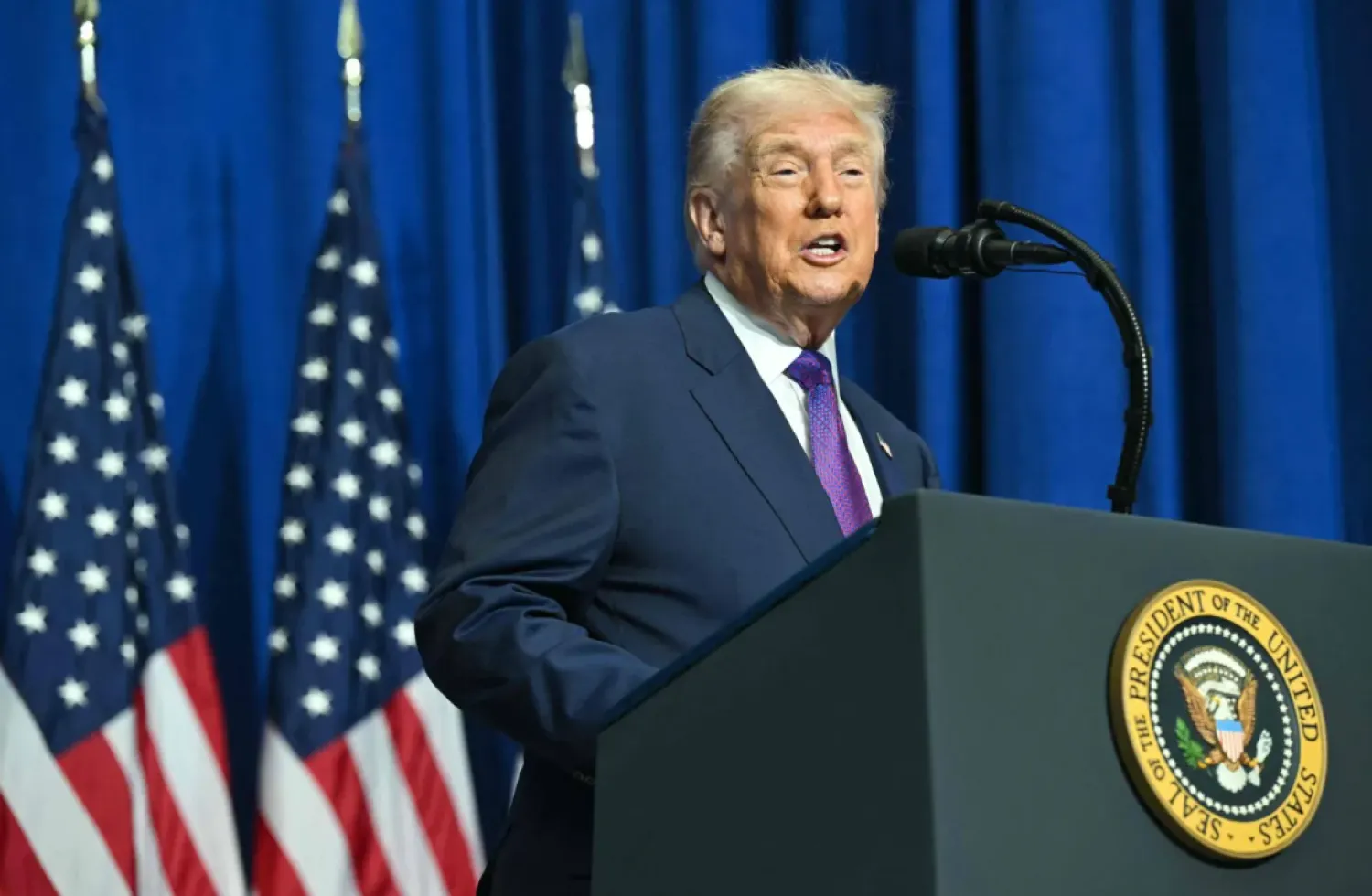
US President Donald Trump speaking in Washington - AFP

US President Donald Trump told the first meeting of his Board of Peace on Thursday that $7 billion has been contributed to a Gaza reconstruction fund that aims to rebuild the enclave once Hamas disarms, an objective that is far from becoming a reality.

The disarmament of Hamas militants and accompanying withdrawal of Israeli troops, the size of the reconstruction fund and the flow of humanitarian aid to the war-battered populace of Gaza are among the major questions likely to test the effectiveness of the board in the weeks and months ahead.

In a flurry of announcements at the end of a long, winding speech, Trump said the United States will make a contribution of $10 billion to the Board of Peace. He said contributing nations had raised $7 billion as an initial down payment for Gaza reconstruction.

Trump first proposed the board last September when he announced his plan to end Israel's war in Gaza. He later made clear the board's remit would be expanded beyond Gaza to tackle other conflicts worldwide.

Trump also said FIFA will raise $75 million for soccer-related projects in Gaza and that the United Nations will chip in $2 billion for humanitarian assistance.

TRUMP SAYS ANY IRAN DEAL MUST BE MEANINGFUL, PROSPECTS SHOULD BE CLEAR IN 10 DAYS

The Board of Peace includes Israel but not Palestinian representatives and Trump's suggestion that the Board could eventually address challenges beyond Gaza has stirred anxiety that it could undermine the UN's role as the main platform for global diplomacy and conflict resolution.

"We're going to strengthen the United Nations," Trump said, trying to assuage his critics. "It's really very important."

The meeting came as Trump threatens war against Iran and has embarked on a massive military buildup in the region in case Tehran refuses to give up its nuclear program.

Trump said he should know in 10 days whether a deal is possible. "We have to have a meaningful deal," he said.

The event had the feel of a Trump campaign rally, with music blaring from his eclectic playlist from Elvis Presley to the Beach Boys. Red Trump hats were given to participants.

Senior US officials said Trump will also announce that several nations are planning to send thousands of troops to participate in an International Stabilization Force that will help keep the peace in Gaza when it eventually deploys.

Hamas, fearful of Israeli reprisals, has been reluctant to hand over weaponry as part of Trump's 20-point Gaza plan that brought about a fragile ceasefire last October in the two-year Gaza war.

Trump said he hoped use of force to disarm Hamas would not be necessary. He said Hamas had promised to disarm and it "looks like they're going to be doing that, but we'll have to find out."


Few People Left at Syria Camp that Held ISIS Families, Former Director Says

Children, part of a group of detainees, look through a fence at al-Hol camp after the Syrian government took control of it following the withdrawal of Syrian Democratic Forces (SDF), in Hasaka, Syria, January 21, 2026. REUTERS/Khalil Ashawi
TT

Few People Left at Syria Camp that Held ISIS Families, Former Director Says

Children, part of a group of detainees, look through a fence at al-Hol camp after the Syrian government took control of it following the withdrawal of Syrian Democratic Forces (SDF), in Hasaka, Syria, January 21, 2026. REUTERS/Khalil Ashawi

Fewer than 1,000 families remain at a camp where relatives of suspected ISIS militants had been held in Syria's northeast, the camp's former director said on Wednesday, with thousands having fled last month as government forces seized control of the area from Kurdish-led fighters.

Al-Hol, near the Iraqi border, was one of the main detention camps for relatives of suspected ISIS militants who were detained during the US-backed campaign against the terrorist group in Syria.

Control of the camp changed hands last month when government forces under President Ahmed al-Sharaa seized swathes of the northeast from the Kurdish-led Syrian Democratic Forces, including several jails holding ISIS militants. The US military said last week it had completed a mission to transfer 5,700 adult male ISIS detainees to Iraq.

Jihan Hanna, the former director who still coordinates with international agencies and the Syrian government, told Reuters the remaining families were Syrian nationals and were being transferred to a camp in Aleppo. Most of the camp’s foreign nationals had fled, she said.

The Syrian government did not immediately respond to requests for comment.

According to the latest camp data obtained by Reuters, dated January 19 - a day before the government took control of the camp - its population was 6,639 families comprising 23,407 people, mostly Syrians and Iraqis, as well as 6,280 foreigners from more than 40 nationalities.

UNHCR, the UN refugee agency, said it had observed "a significant decrease in the number of residents in al-Hol camp in recent weeks," adding in a statement to Reuters that there were no confirmed figures on the remaining population.

"Over the weekend the camp administration advised UNHCR not to enter the camp due to the unrest and anxiety in the camp," UNHCR added.

The Syrian government accused the SDF of withdrawing from al-Hol on January 20 without any coordination.

The SDF, in a statement that day, said its forces had been "compelled to withdraw from al-Hol camp and redeploy to areas surrounding cities in northern Syria that are facing increasing risks and threats."

A Syrian government security source said most people in the camp fled that day during a five-hour period when it was unguarded, and that some had left with men who came to take their relatives to unknown destinations.

The security source and a source from a non-governmental organization working there said a section of the camp that housed its most dangerous residents, known as the annex, was empty.

The security source said the escapees had spread throughout Syria and that security authorities, working in cooperation with international partners, had established a unit to "follow up on the matter and pursue those who are wanted."

Some have left Syria.

In Lebanon, the army has questioned more than a dozen Lebanese who crossed illegally from Syria after leaving al-Hol, a Lebanese security source said.

The Syrian government’s Directorate of International Cooperation said on Tuesday that hundreds of people, mostly women and children, had been transferred from al-Hol to a newly prepared camp near the town of Akhtarin in northern Aleppo.