Israeli Court's Decision to Cancel Russia's Church Ownership Could Lead to Tensions

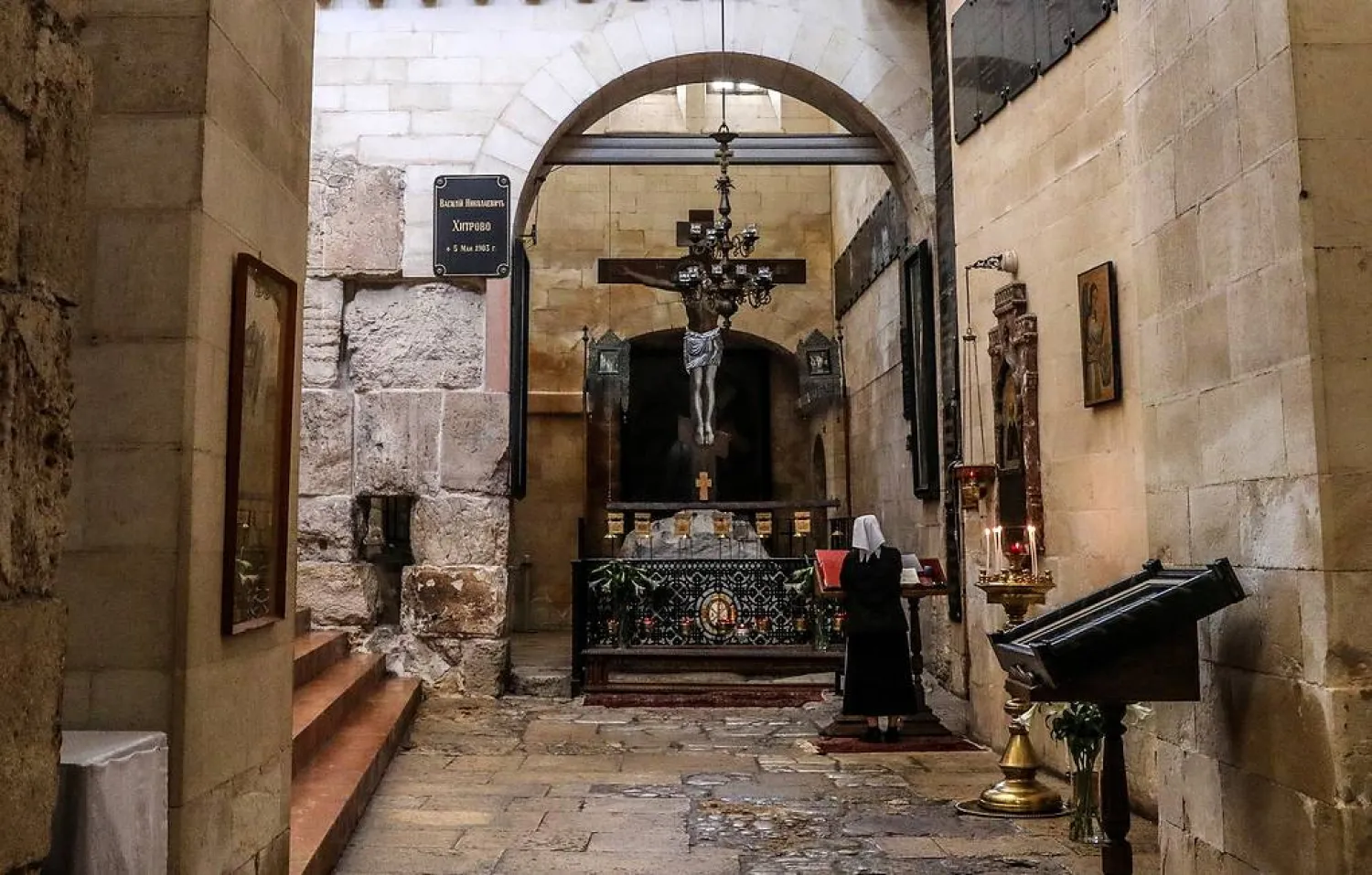
Alexander Metochion in the Old City of Jerusalem (TASS)
TT

Israeli Court's Decision to Cancel Russia's Church Ownership Could Lead to Tensions

Alexander Metochion in the Old City of Jerusalem (TASS)

The Jerusalem District Court halted the registration of ownership of the Russian Orthodox "Alexander Nevsky" church in the name of the Russian government on Thursday.

Diplomatic sources warned that the court’s decision could create a diplomatic crisis with Moscow, mainly that it comes amid Russia's war in Ukraine.

They called on Prime Minister Naftali Bennett to take advantage of his powers and officially transfer the church's ownership to the Russian government.

The Alexander Nevsky church, built at the end of the 19th century and is considered the most important Russian holding in and around the Old City, is adjacent to the Church of the Holy Sepulchre. During Ottoman times, the property was registered in the name of the Russian government.

It was managed by a group of Russian immigrants to Palestine, who established an Orthodox company, Imperial Orthodox Palestine Society, through which they handled dozens of Russian sites in the Holy Land.

After the revolution in Russia, the government claimed ownership of these lands. But the British Mandate government, and later the Israeli government, rejected the request.

In 2017, the Russian government filed a registration request for ownership rights with Israel's inspector in charge of the land registry.

The then-Prime Minister Benjamin Netanyahu promised to comply with the request but never fulfilled it.

In 2019-2020, Netanyahu approved giving Alexander's Courtyard to Russia after Moscow agreed to release Naama Issachar, an Israeli woman arrested in transit in Moscow for smuggling hashish and sentenced to seven and a half years in prison. The details of the deal remained unknown.

However, it turned out that one of those conditions was to approve the Russian government's request to register the Courtyard and the Church in the name of the Russian government.

The Imperial Orthodox Palestine Society filed objections to the transfer of ownership, which the court rejected.

The Society then filed an appeal, prompting Netanyahu to sign an order declaring that the church was a holy site, as defined by British Mandatory law, meaning that the government and not the courts are authorized to make any decisions regarding ownership disputes.

The Land Registry Commissioner dismissed appeals against the registration and ruled that the Russian Federation was recognized by international bodies and by the authorized bodies in the State of Israel as "the successor state" of the Russian imperial government.

Therefore, as part of the registration renewal order, the land should be registered in the name of the Russian Federation and not in the name of organizations representing the Russian imperial government, which no longer exists.

The Society then filed a lawsuit against the Israeli government, asserting that its registration as a holy place aims to dispossess the company in preparation for transferring ownership of the land and the church to the Russian government.

The court accepted the case. However, the presiding judge, Mordechay Caduri, referred to immense diplomatic sensitivity and opened a loophole for the government to resolve the matter by an official decision.

Caduri said in his ruling that since the property is a holy site by definition, then the competent body to determine the ownership is not an administrative body or the court but the Israeli government.

He admitted that the government would have to decide the issue considering various religious, political, and diplomatic considerations.

In practical terms, the court passed the issue to Bennett, who must decide the matter amid the war between Russia and Ukraine and the massive sanctions imposed by the West on Moscow.

Bennett set up a ministerial committee to examine the matter in July 2021. He will have to ask the committee to decide, knowing that it has never met since its formation.

According to the Israeli Foreign Ministry experts, a decisive decision in favor of the Russian government is inevitable.


International Messages Reaffirm Support for Lebanon’s Sovereignty as Hezbollah Steps Up Criticism of Aoun

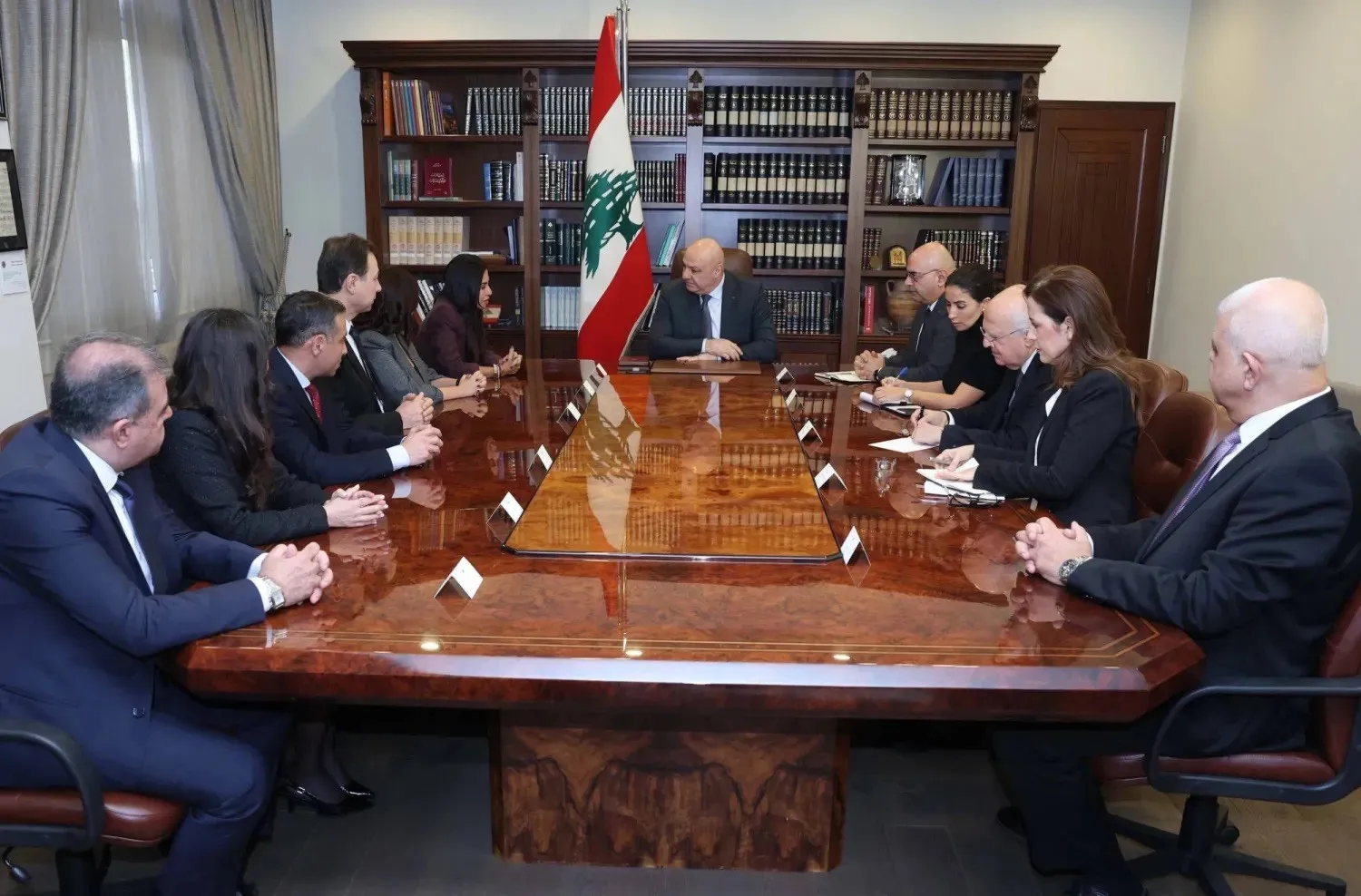
President Aoun meets with a delegation from the National Competition Authority, the regulatory body tasked with protecting free and fair competition and combating monopolies in Lebanese markets. (Lebanese Presidency)
TT

International Messages Reaffirm Support for Lebanon’s Sovereignty as Hezbollah Steps Up Criticism of Aoun

President Aoun meets with a delegation from the National Competition Authority, the regulatory body tasked with protecting free and fair competition and combating monopolies in Lebanese markets. (Lebanese Presidency)

International messages marking Lebanon’s Independence Day have reaffirmed support for the country’s aspirations for peace, stability and the restoration of its full sovereignty, while expressions of local support for President Joseph Aoun’s address have continued along with calls for concrete measures to strengthen state authority.
 
Hezbollah, meanwhile, has increased its rhetoric against Aoun over his remarks on sovereignty, foreign interference and relations with Iran.
 
International support for Lebanon
 
In his Independence Day message, Pope Leo XIV expressed hope for a peaceful and prosperous Lebanon.
 
Syrian President Ahmed al-Sharaa reaffirmed his country’s commitment to strengthening bilateral relations, wishing “the brotherly Lebanese people further prosperity and progress” and emphasizing the importance of enhancing ties in the interests of both countries and their peoples.
 
Turkish President Recep Tayyip Erdogan pledged that his country’s support for Lebanon would “continue across various sectors,” reflecting the importance Ankara attaches to Lebanon in the context of regional security and stability.
 
Italian President Sergio Mattarella placed particular emphasis on Lebanon’s sovereignty, reiterating Rome’s readiness to cooperate in achieving a just and lasting peace in the region.
 
Italy would continue working toward “a definitive cessation of hostilities and the restoration of Lebanon’s full sovereignty,” he affirmed, describing dialogue and diplomacy as “indispensable tools for overcoming conflicts and ensuring peaceful coexistence throughout the Middle East.”
 
Aoun also received congratulatory messages from the presidents of Uruguay, the Czech Republic, Tajikistan, the Democratic Republic of the Congo and Gabon.
 
Kataeb urges immediate action
 
At home, the Kataeb Party’s political bureau welcomed Aoun’s Independence Day address, urging the government and state agencies to follow it up with “immediate measures to implement previous government decisions on establishing a state monopoly on arms and banning Hezbollah’s security and military activities.”
 
The party warned that “hesitation in implementation threatens internal security,” citing what it described as Hezbollah’s continued prohibited activities.
 
It also called for referring the case of Hezbollah’s security and military apparatus to the Judicial Council to establish responsibility for “dragging Lebanon into war without the state’s consent.”
 
Hezbollah: Equating Israel with Iran a grave mistake
 
Hezbollah lawmaker Hassan Ezzeddine stepped up the party’s criticism of Aoun, taking aim at his Independence Day address without naming him directly.
 
“No one, regardless of their standing, should take a one-sided view of any issue, whether they are a president, an analyst, a thinker or anyone else,” he declared.
 
Equating Israel with Iran, Ezzeddine argued, was “a grave political mistake, indeed a moral crime that cannot be met with silence.”
 
Defending Tehran, he insisted that Iran “has never interfered with Lebanon’s sovereignty,” describing it instead as “the only hope and lifeline for Lebanon, its people, the resistance and its community.”
 
He further stressed that the resistance was here to stay, maintaining that it had endured throughout history and would continue to confront any aggressor or colonizer setting foot on Lebanese soil.
 
In his Independence Day address, Aoun said that Israel and Iran represent the two principal obstacles to the completion of Lebanon’s sovereignty and independence, stressing that the country must not remain captive to either project.

 Tehran opposes alternatives to UNIFIL
 
Iran’s Foreign Ministry also weighed in on the future of the international presence in South Lebanon as the mandate of the United Nations Interim Force in Lebanon (UNIFIL) nears its expiry at the end of the year.
 
The ministry warned against “US efforts to establish alternative mechanisms to the international force,” arguing that Washington’s attempts to create arrangements lacking national consensus in Lebanon would fail to safeguard the country’s rights and national interests.
 
Instead, it cautioned, such moves would “expose Lebanon’s independence, security, stability and national cohesion to grave risks.”


Egypt Fuel Tanker Crash Ignites Massive Fire on Highway, At Least 31 Dead

People gather near the scene of a fuel tanker fire in the Warraq district near Imbaba, Giza Governorate, Egypt, 25 November 2026. EPA/MOHAMED HOSSAM
TT

Egypt Fuel Tanker Crash Ignites Massive Fire on Highway, At Least 31 Dead

People gather near the scene of a fuel tanker fire in the Warraq district near Imbaba, Giza Governorate, Egypt, 25 November 2026. EPA/MOHAMED HOSSAM

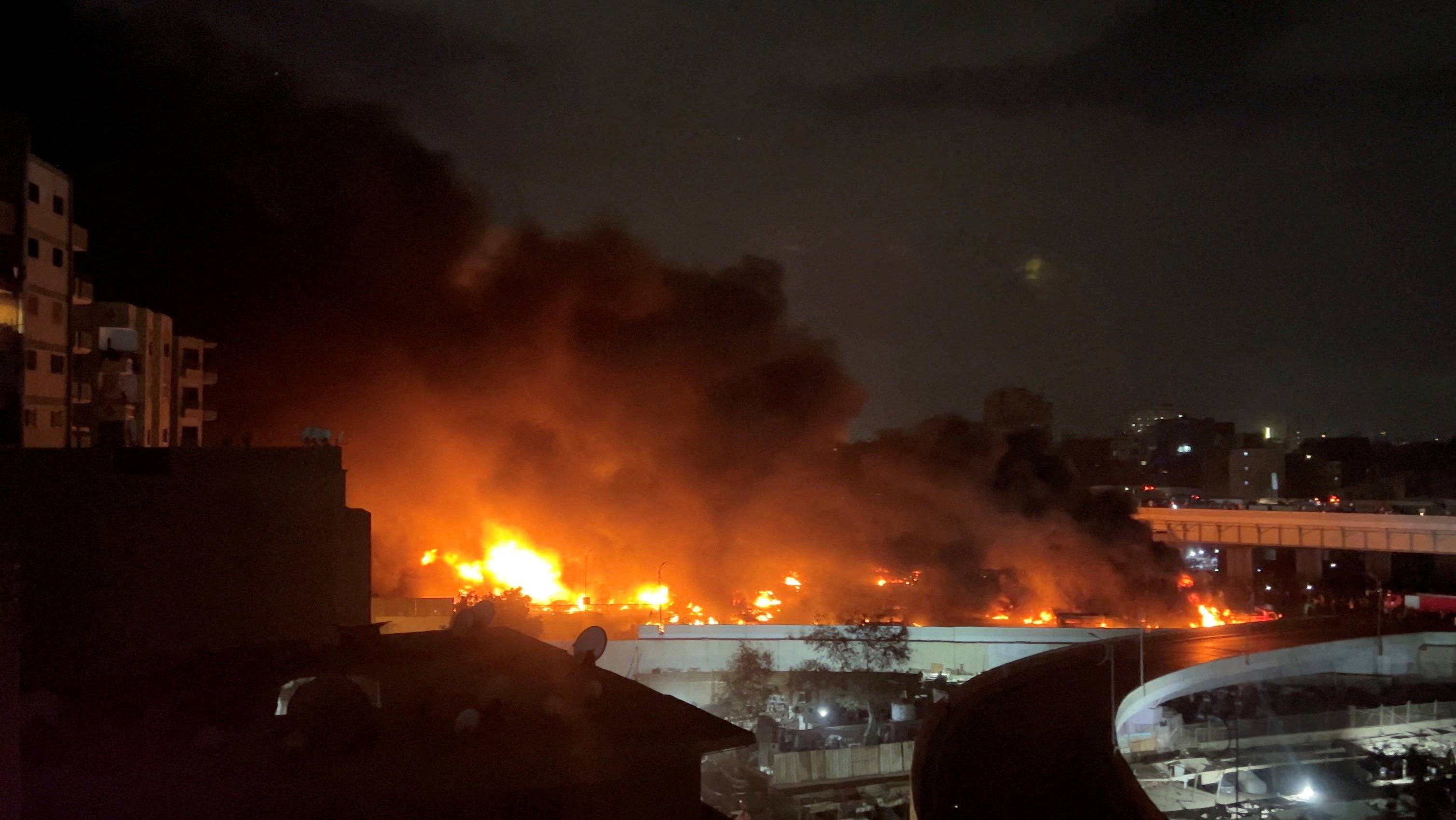
A crash involving a fuel tanker ignited a massive fire on a major highway surrounding Cairo on Wednesday, killing at least 31 people, Egyptian authorities said.

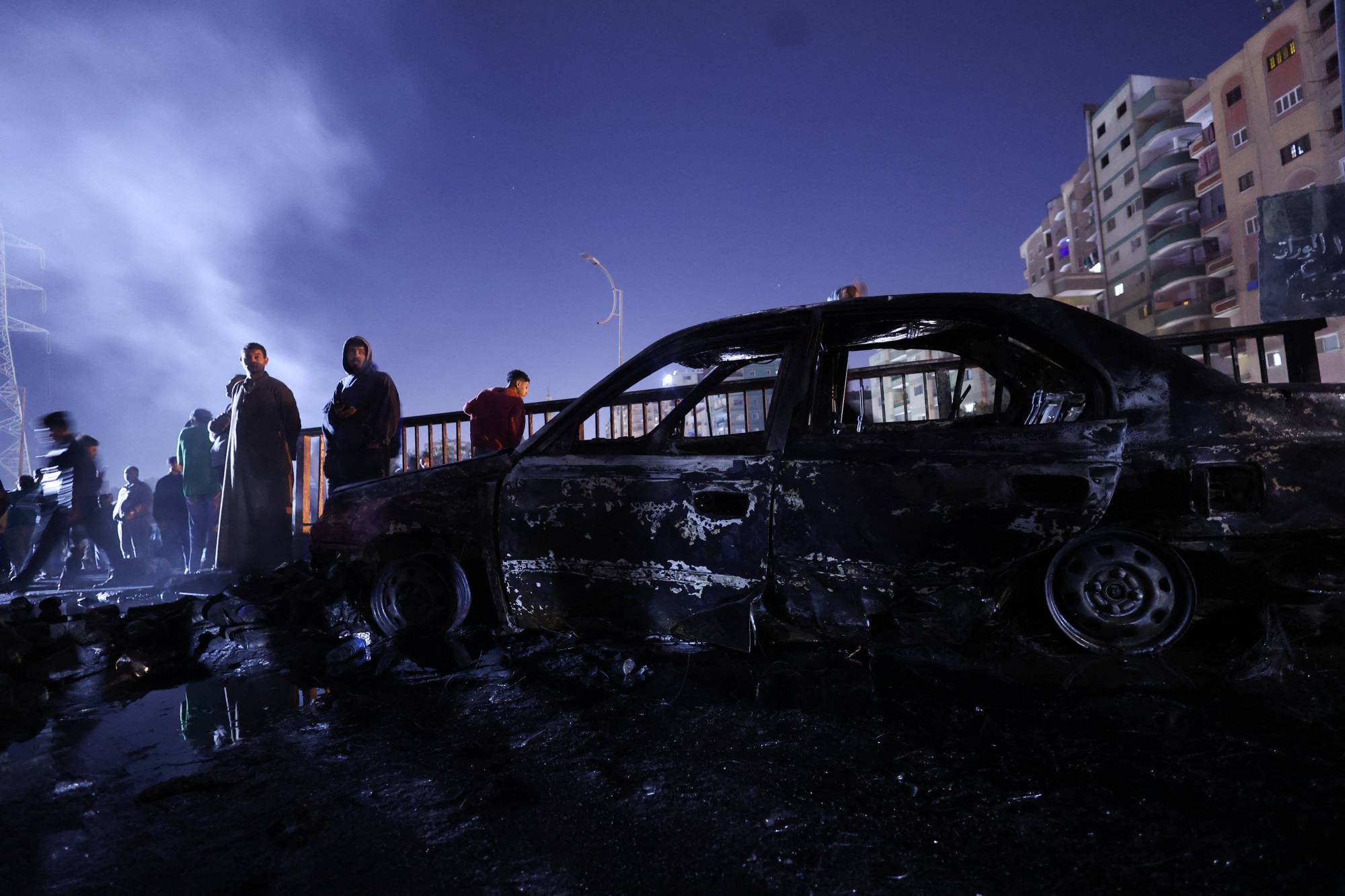
The blaze on Ring Road, a key artery that encircles the Egyptian capital, also injured at least 21 people and left more than two dozen cars and motorcycles charred, according to the latest figures released by the Health Ministry.

People stand next to the charred remains of a vehicle at the site where a vehicle carrying petroleum products overturned and caught fire on a major ring road in Cairo, Egypt, November 25, 2026. REUTERS/Amr Abdallah Dalsh

The stretch of the highway where the crash occurred was in Warraq, a densely populated neighborhood in Giza, part of the Greater Cairo area, according to the Health Ministry.

Egyptian President Abdel-Fattah el-Sissi expressed his condolences to the victims in a statement. The Public Prosecutor’s office said DNA investigations were underway to identify the victims.

Health Minister Khaled Abdel Ghaffar said the injured were taken to nearby hospitals. He said the death toll was preliminary, raising concerns it could rise further. Initial statements said 25 people were injured, but that figure was later revised to 21.

A fire burns at the site where a vehicle carrying petroleum products overturned and caught fire on a major ring road in the Warraq district, Giza, Egypt, November 25, 2026, in this screengrab obtained from social media video. Habiba Abd El Aziz/via REUTERS

A spokesperson for the Egyptian Cabinet told local media that Prime Minister Mostafa Madbouly had ordered an investigation into the causes of the accident.

He said the government was awaiting a full clarification before determining "future measures regarding the transport of petroleum products and ensuring safety and security during such transport operations.”


Al-Zaidi’s Crackdown Gains Legal Backing, No Plans to Send Troops to Kurdistan

Flames rise from flare stacks at oilfields in Kirkuk, Iraq, in October 2017. (Reuters)
TT

Al-Zaidi’s Crackdown Gains Legal Backing, No Plans to Send Troops to Kurdistan

Flames rise from flare stacks at oilfields in Kirkuk, Iraq, in October 2017. (Reuters)

Iraq’s government has secured legal backing for its decisions on border crossings in the Kurdistan Region and oilfields in disputed territories, vowing to press ahead with its anti-smuggling crackdown while ruling out a military deployment to the region.

An authorized government source said Baghdad had no plans to send troops into Kurdistan to tighten control over border crossings, stressing that smuggling would be tackled through constitutional mechanisms and coordination between federal authorities in Baghdad and regional authorities in Erbil.

The assurances followed mounting Kurdish fears of a federal military deployment after intelligence reports uncovered routes used to smuggle oil from Kirkuk and Sulaimaniyah in northern Iraq to Iran and onward to Afghanistan.

Kurdish platforms circulated videos purportedly showing Peshmerga units deploying along a road linking cities in the Kurdistan Region with other Iraqi provinces. The footage could not be independently verified.

Will Baghdad send troops to Kurdistan?

The Iraqi source dismissed reports that Prime Minister Ali al-Zaidi was mobilizing troops to seize control of the region’s official and unofficial border crossings.

“There are absolutely no such intentions ... It will not happen because there is no need for such action,” the source told Asharq Al-Awsat.

The source urged parties to the dispute to “avoid escalatory rhetoric and resort to official channels to find solutions consistent with existing laws.”

“The dispute between the region and the federal government is primarily over border crossings used for smuggling. These must be brought under control through cooperation between Baghdad and Erbil, in accordance with the constitution,” the source said.

While suggesting the crisis was headed toward a resolution, the source stressed that Baghdad insisted on having full knowledge of all activity at those crossings, as it does elsewhere in the country, where it has drawn up a comprehensive plan to secure crossings and stamp out all forms of smuggling.

Al-Zaidi on Tuesday ordered federal authorities to take control of border crossings administered by the Kurdistan Region following an oil-smuggling investigation at the state-run North Oil Company.

The move sparked anger in Erbil.

Kurdistan Democratic Party (KDP) leader Masoud Barzani sent a message to Baghdad urging adherence to constitutional principles and wisdom in resolving disputes, rejecting decisions driven by “personal whims.”

“Iraqi Kurdistan has legitimate and inherent rights and will not submit to decisions that violate the constitution,” Barzani said.

Kurdistan Regional Government (KRG) Prime Minister Masrour Barzani described Baghdad’s decisions as “unacceptable in any way,” but stressed that the door remained open for dialogue with the federal government to reach a mutual agreement.

‘Foreign dictates’

The Iraqi government rejected accusations that it was acting under “foreign dictates,” insisting that it exercised its constitutional powers and responsibilities with complete independence.

“Iraq is a fully sovereign, democratic federal state that derives its powers and the legitimacy of its institutions from the constitution and the will of its people,” it said in a statement.

The government said Iraqi decision-making was an exclusively national matter and that its actions within the country’s internationally recognized borders reflected its independent will and were grounded solely in its constitutional powers and legal responsibilities.

They were not a response to encouragement, dictates or instructions from any foreign party, it added.

The government stressed that it neither derived the legitimacy of its decisions from the positions or policies of other countries nor awaited anyone’s encouragement to exercise its constitutional and sovereign responsibilities.

Its actions, it said, were guided by Iraq’s interests, the rights of its people and the requirements of its security and stability.

The Kurdistan Region’s Council of Ministers on Wednesday renewed its criticism of what it called “military language and threats” in a statement issued in the name of the spokesperson for the commander-in-chief of the Iraqi armed forces.

It demanded the full implementation of Iraq’s constitution, particularly Article 140.

In a statement following a meeting chaired by Masrour Barzani, the council said Baghdad’s recent measures had dominated discussions.

It expressed concern and dismay over the spokesperson’s statement, describing it as a constitutional violation, an infringement of the region’s constitutional rights, a sign of disregard for federalism and an attempt to return Iraq to centralized rule.

The KRG called for the establishment of Iraq’s Federation Council and the reconstitution of the Federal Supreme Court in accordance with constitutional provisions to ensure representation of all segments of Iraqi society.

Legal backing

Al-Zaidi’s decisions on Kurdistan gained legal backing on Wednesday when Iraq’s Federal Supreme Court ruled that Baghdad could deploy federal forces to secure the country’s international borders, including those in territories administered by the Kurdistan Region.

The court said federal authorities could also oversee government departments operating at all border crossings, including those in Kurdistan.

State television reported that the court stressed the need for Baghdad to coordinate with regional and provincial governments on customs administration.

The court said establishing a unified national system to automate border crossings and customs operations, linking them electronically to relevant federal ministries and agencies nationwide, including in Kurdistan, and setting technical, financial and customs standards for their operation fell within federal jurisdiction.

These powers, it said, were part of the federal authorities’ mandate to formulate fiscal and customs policies and regulate trade across regional and provincial borders.

The court also affirmed that the federal government, together with the governments of producing regions and provinces, was responsible for managing extracted oil and gas, which belong to all Iraqis.

It upheld the constitutional and legal powers of the federal Oil Ministry and relevant federal oversight bodies to supervise, monitor and audit oil and gas fields, operations and contracts involving production, extraction, marketing and exports.

Iraq’s Supreme Judicial Council, meanwhile, called on the federal government, the KRG and all political forces concerned to abide by the country’s permanent constitution.

Joint committee for dialogue

In Baghdad, a KDP delegation led by Hoshyar Zebari, a member of the party’s Politburo executive committee, met Iraqi Parliament Speaker Haibat al-Halbousi on Tuesday evening.

Delegation member Abdul Mohsen al-Saadoun said on Wednesday that the talks focused on the prime minister’s recent decisions and statements concerning Kurdistan.

The delegation urged Halbousi, as head of the legislative branch, to fulfill his responsibilities and take a clear stand on any demand or violation at odds with the Iraqi constitution, Saadoun said.

“There must be a joint committee between Erbil and Baghdad so that any problem or new development can be addressed through dialogue,” he added.

Al-Zaidi’s decisions continued to fuel political tensions.

KDP member Vian Sabri told Asharq Al-Awsat that Baghdad had resorted to “escalatory rhetoric against the region to settle routine disputes that could be resolved through dialogue and in accordance with the constitution.”

“Viewing matters through the lens of control and centralization, and treating relations between Baghdad and Erbil as a contest in which one side seeks to impose its will on the other, are precisely what fuel Kurdistan’s fears and deepen mistrust,” she said.

Mahmoud Khoshnaw, a senior official in the Patriotic Union of Kurdistan (PUK), said what angered the Kurds about al-Zaidi’s decisions was that he had approached smuggling as though the region itself was involved in or supported the activity, when several issues needed clarification.

“The federal government’s recent decisions were ill-judged, particularly its use of military language in addressing the region, which could affect the extent of Kurdistan’s support for al-Zaidi,” Khoshnaw said.

Iraqi politician Khamis al-Khanjar proposed on Wednesday forming a high-level committee within the State Administration Coalition, which brings together Shiite, Kurdish and Sunni political forces, to resolve disputes between Baghdad and Erbil.

He also called for expediting the passage of an oil and gas law.