


Saudi Crown Prince: Personal Status Law Will Contribute to Family Stability

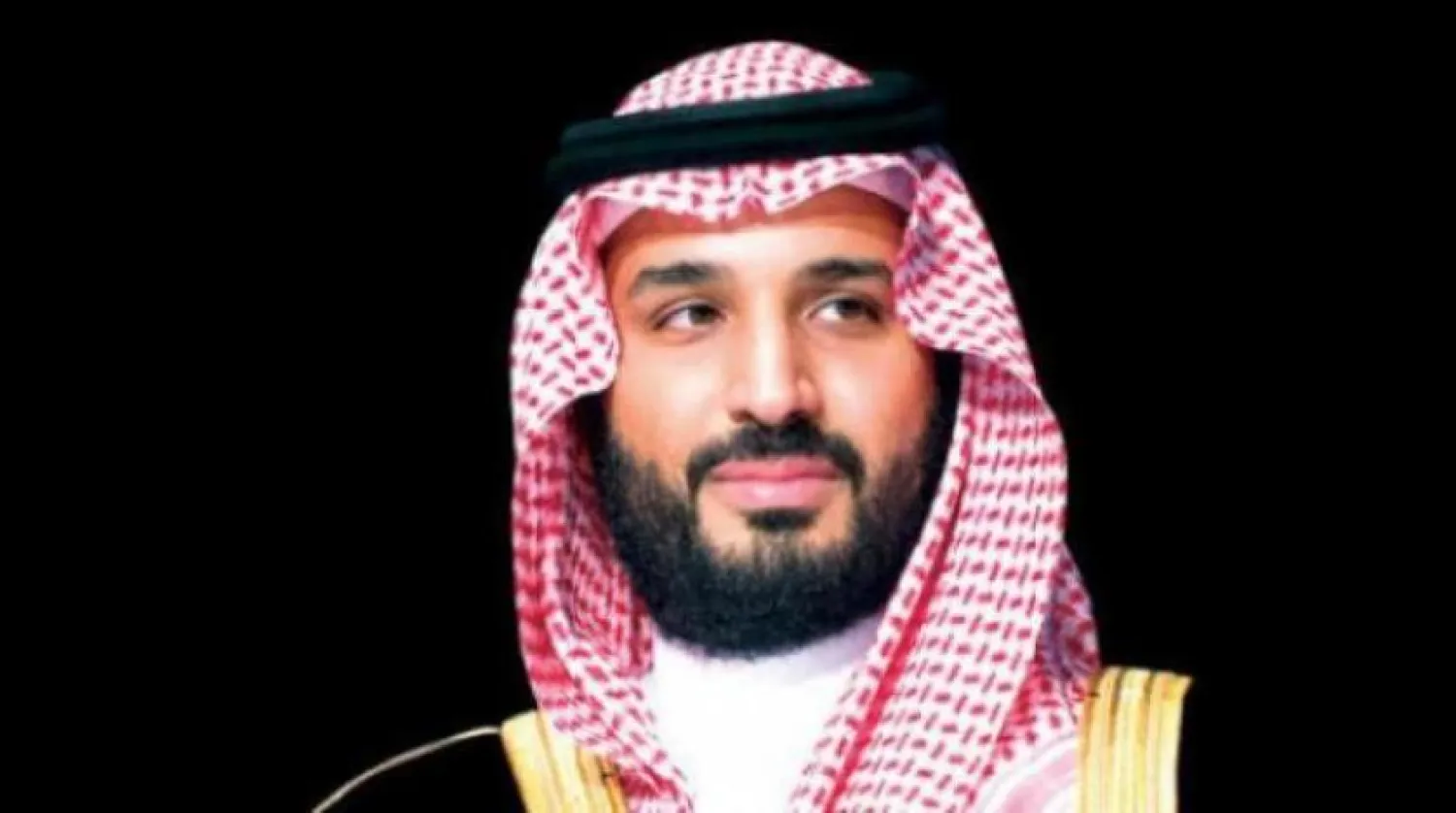
Crown Prince Mohammed bin Salman bin Abdulaziz
TT

Saudi Crown Prince: Personal Status Law Will Contribute to Family Stability

Crown Prince Mohammed bin Salman bin Abdulaziz

Crown Prince Mohammed bin Salman bin Abdulaziz said that the Personal Status Law, which was approved by the Council of Ministers on Monday, was derived from the provisions and objectives of the Islamic Shariah and took into account the latest legal trends and modern international judicial practices.

He added that the law would contribute to improving the condition of family and children, and rein in the discretionary power of the judge to eliminate discrepancy in judicial rulings.

The Crown Prince noted that the introduction of a personal status system reflected the leadership’s commitment to development and reform and constituted a major qualitative leap in efforts to preserve and protect human rights, family stability, women’s empowerment and the promotion of rights.

He emphasized that the system addressed in a comprehensive manner all problems facing families and women, and carefully organized personal status issues. The law will enter into force 90 days after its publication in the Official Gazette.

The new personal status system reflected Saudi Arabia’s endeavor to modernize its organizational and legislative structure, in line with Vision 2030, and the development of procedures related to raising the efficiency of systems, improving the quality of life, enhancing integrity, upgrading services and protecting human rights.

The new reforms included setting the marriage age at 18 years, confirming a woman’s right to alimony, proving her right to annul the marriage contract by unilateral will as the case may be.

In remarks to Asharq Al-Awsat, Saudi lawyer Muthanna al-Qusair said that the personal status system highlighted the importance of the family in the structure of Saudi society.

“The system clarifies, through more than 250 articles, all the provisions related to engagement, marriage, spouses’ rights, the effects of the marriage contract, alimony, separation between spouses, divorce, and dissolution of the marriage contract, as well as custody, provisions of guardianship, inheritance, and other,” al-Qusair said.

“It will have an impact on addressing family disputes quickly and effectively, by setting a very clear system of rights and duties, which leads to the achievement of prompt justice,” he added.

The personal status system aims to control the discretionary power of the judiciary, reduce differences in rulings, expedite the settlement of family disputes, and oversee relations between family members and protect their rights, especially the rights of children and women.

Dr. Walid Al-Samaani, Minister of Justice and Chairman of the Supreme Judicial Council, valued the issuance of the Personal Status Law, which he said was based on the objectives of Islamic Sharia, and relied on the best judicial practices and modern studies, in order to keep pace with changes and respond to challenges.

He stressed that the personal status system will contribute to the speedy completion of family-related cases, enhance the predictability and stability of judicial rulings and reduce their discrepancy.



Arab, Muslim States Alarmed by Israeli Plan to Move Gazans to Egypt

Rafah border crossing (Reuters file photo)
TT

Arab, Muslim States Alarmed by Israeli Plan to Move Gazans to Egypt

Rafah border crossing (Reuters file photo)

Saudi Arabia, Egypt, Jordan, the United Arab Emirates, Indonesia, Pakistan, Türkiye and Qatar said on Friday they were deeply concerned over Israeli statements about opening the Rafah crossing in one direction to push Gaza residents into Egypt.

In a joint statement, the foreign ministers of the eight countries underlined their total rejection of any attempt to displace the Palestinian people from their land.

They said full adherence was needed to US President Donald Trump’s plan, which called for opening the Rafah crossing in both directions, safeguarding freedom of movement and preventing any resident of the enclave from being forced to leave.

The ministers said conditions must be created for Palestinians to remain on their land and to take part in rebuilding their homeland within an integrated vision to restore stability and improve humanitarian conditions.

The ministers reiterated their appreciation for Trump’s commitment to establishing peace in the region, saying it was important to move forward with the plan and carry out all its requirements without delay or obstruction in order to achieve security and peace and to strengthen the foundations of regional stability.

They called for a full and lasting ceasefire, an end to civilian suffering, and unrestricted humanitarian access into Gaza. They also urged the start of early recovery and reconstruction efforts and the creation of conditions that would allow the Palestinian Authority to resume its responsibilities in the territory, paving the way for a new phase of security and stability in the region.

The ministers affirmed their countries’ readiness to continue working and coordinating with the United States and all relevant regional and international parties to ensure full implementation of Security Council Resolution 2803 and all related resolutions.

They said the objective was to provide an environment conducive to achieving a just, comprehensive and sustainable peace in line with international legitimacy and the two state solution, leading to the establishment of an independent Palestinian state on the June 4, 1967 borders, including the occupied territories in Gaza and the West Bank, with East Jerusalem as its capital.


Saudi FM, Qatari PM Co-Chair Coordination Council Executive Committee Meeting

Prince Faisal bin Farhan and Sheikh Mohammed Al Thani co-chair the Executive Committee meeting of the Saudi-Qatari Coordination Council. SPA
TT

Saudi FM, Qatari PM Co-Chair Coordination Council Executive Committee Meeting

Prince Faisal bin Farhan and Sheikh Mohammed Al Thani co-chair the Executive Committee meeting of the Saudi-Qatari Coordination Council. SPA

Saudi Minister of Foreign Affairs Prince Faisal bin Farhan bin Abdullah met on Thursday with Qatari Prime Minister and Minister of Foreign Affairs Sheikh Mohammed bin Abdulrahman bin Jassim Al Thani in Riyadh.

The meeting reviewed bilateral relations, aspects of cooperation, and ways to develop them in a manner that meets the aspirations of the leaderships and peoples of the two countries.

Following the meeting, Prince Faisal and Sheikh Mohammed co-chaired the Executive Committee meeting of the Saudi-Qatari Coordination Council.

They reviewed the strong fraternal relations and ways to enhance them at bilateral and multilateral levels. They also discussed strengthening cooperation through several initiatives that would elevate relations to broader prospects.

Both sides praised the cooperation and coordination among the committees and working groups formed under the coordination council, stressing the importance of maintaining this level of progress to serve the mutual interests of both nations and their peoples.

The Executive Committee Secretariat presented an overview of the council’s activities and its committees over the past period, along with the latest updates and preparatory work for the eighth meeting of the Saudi-Qatari Coordination Council.

At the end of the meeting, the two ministers signed the minutes of the Executive Committee of the Saudi-Qatari Coordination Council.


Albudaiwi: GCC is a Global Investment Magnet, Driven by Stability and Economic Strength

Secretary General of the Gulf Cooperation Council Jasem Mohamed Albudaiwi. GCC
TT

Albudaiwi: GCC is a Global Investment Magnet, Driven by Stability and Economic Strength

Secretary General of the Gulf Cooperation Council Jasem Mohamed Albudaiwi. GCC

Secretary-General of the Gulf Cooperation Council (GCC) Jasem Albudaiwi stated that the strategic geographical location, political stability, and strong economic foundations of the Gulf states, coupled with the acceleration of Gulf integration projects, make the GCC a global destination attractive for investment and a key platform for international partnerships.

These factors, he added, enhance the status of the council states as a major player in shaping the future of the global economy, reported the Saudi Press Agency on Thursday.

The secretary-general's remarks were made during his participation in the opening session of the seventh Milken Institute Middle East and Africa Summit, held in Abu Dhabi, United Arab Emirates.

Reviewing global economic transformations, Albudaiwi emphasized that the Gulf economy is undergoing a strong and sustainable phase, reflecting the success of economic reforms and strategic investments in future sectors.

He said that the Gross Domestic Product (GDP) of the GCC states reached approximately $2.3 trillion in 2024, positioning the council states in ninth place globally and accounting for 63% of the total Arab economy. He added that the contribution of non-oil sectors exceeded 76% of the GDP, an indicator reflecting the success of economic diversification policies.

Albudaiwi also pointed to the strength and stability of the GCC financial sector, which boasts a market value exceeding $4.2 trillion, banking assets amounting to $3.5 trillion, and reserves approaching $800 billion. This is in addition to sovereign wealth funds exceeding $4.8 trillion, a fact that solidifies the council states' position as a key player in enhancing global economic stability, he stressed.

The secretary-general revealed that the GCC states are negotiating free trade agreements (FTAs) with numerous international partners, including the United Kingdom, China, Türkiye, Japan, Indonesia, New Zealand, Pakistan, and Korea. These negotiations aim to enhance trade and investment flows, diversify income sources, and open new markets for Gulf products, thereby elevating competitiveness and reducing consumer prices within the GCC states.

Regarding artificial intelligence, he confirmed that the GCC states treat AI as a fundamental pillar for economic and social transformation.

The General Secretariat has adopted several regulatory frameworks and guiding principles, including the Guiding Framework for AI Ethics (2024), the General Framework for AI Applications in Public Services (October 2025), and the General Framework for Climate Forecasting and Disaster Management using AI (October 2025). Furthermore, the comprehensive Gulf Strategy for Artificial Intelligence is set to be adopted in December 2025.