


US Says North Korea Testing New ICBM System

This photo released on January 17, 2022 shows a missile launched in North Korea, according to state media. KCNA via Reuters
TT

US Says North Korea Testing New ICBM System

This photo released on January 17, 2022 shows a missile launched in North Korea, according to state media. KCNA via Reuters

Two recent missile tests conducted by North Korea were of a new intercontinental ballistic missile (ICBM) system, the Pentagon said Thursday, marking what one US official called a "serious escalation" that will be punished with fresh sanctions.

According to North Korea, the February 26 and March 4 tests were focused on developing a reconnaissance satellite, but the Pentagon said rigorous analysis concluded they were actually experimental precursors to a likely full-range ICBM launch, AFP said.

Any such launch would mark the end of a self-imposed moratorium Pyongyang has had in place since 2017 and send military tensions soaring on the Korean peninsula and beyond.

The North has carried out three ICBM tests; the last in November 2017 of a Hwasong-15 -- deemed powerful enough to reach Washington and the rest of the continental United States.

Pentagon spokesman John Kirby said the recent two tests "involved a new intercontinental ballistic missile system" that Pyongyang had first showcased at a military parade in October 2020.

While neither launch displayed ICBM range or capability, they were clearly intended "to evaluate this new system before conducting a test at full range in the future, potentially disguised as a space launch," Kirby said.

South Korea confirmed the US assessment, saying the two countries -- key security allies in the region -- "had decided to make the assessment public judging that the international community needs to make a united stance" against Pyongyang.

Japan's defense ministry said it had also reached the same conclusion, adding that the February launch had an altitude of up to 600km (370 miles) and travelled about 300km, while the March launch had an altitude of up to 550km and also travelled about 300km.

It called the tests a "threat to peace and security... that can never be tolerated."

Prior to its ICBM tests in 2017, the North had carried out a series of powerful rocket launches that it insisted were part of a wider civilian space program.

Those launches were made from the Sohae Satellite Launching Station on the northwest coast, and North Korea's official KCNA news agency reported Friday that leader Kim Jong Un visited the facility and ordered that it be expanded and modernized -– a move that will only fuel speculation of an imminent, disguised ICBM test.

- Fresh sanctions -
North Korea is already under biting international sanctions over its missile and nuclear weapons program.

But a senior US official said that the latest tests were a "serious escalation" and the Treasury would announce fresh measures on Friday to help prevent Pyongyang accessing "foreign items and technology" to advance that program.

Such measures underline that the North's "unlawful and destabilizing activities have consequences" and that diplomatic negotiations are the only viable path forward for Pyongyang, the official said, speaking on condition of anonymity.

Kirby said Washington "remains committed to a diplomatic approach" but "will take all necessary measures to ensure the security of the United States and our allies."

Japan's Prime Minister Fumio Kishida was asked about the possibility of further sanctions as he spoke to reporters following the US announcement. 

"As for future measures, (Japan) will consider them from the perspective of diplomacy and sanctions while cooperating with the US and South Korea," he said.

- Nine weapons tests so far -
When the new ICBM was unveiled at the 2020 parade, military analysts said it appeared to be the largest road-mobile, liquid-fueled missile anywhere in the world -- and likely designed to carry multiple warheads in independent re-entry vehicles (MIRVs).

North Korea watchers regularly caution that the devices Pyongyang puts on show at its parades may be mock-ups or models, and there is no proof they work until they are tested.

Pyongyang has been abiding by its moratorium on testing ICBMs and nuclear weapons since Kim embarked on a flurry of high-profile diplomatic engagement with then US president Donald Trump in 2017.

Talks later collapsed and diplomacy has languished ever since, despite efforts by the administration of US President Joe Biden to offer fresh negotiations.

The North started hinting in January that it might lift the moratorium, and it has conducted nine weapons tests this year, including of banned hypersonic and medium range ballistic missiles.

Pyongyang has also carried out several rocket launches that were condemned by the United States and others as disguised long-range ballistic missile tests.

A fresh ICBM launch would be an early challenge for South Korea's new president-elect, Yoon Suk-yeol, who has vowed to take a hard line with the North's provocations.

Yoon has not ruled out the possibility of dialogue with Pyongyang, but analysts say his hawkish position puts him on a completely different footing and significantly reduces the prospect of substantive engagement.


Iran's Supreme Leader Briefs Military Chief on 'New Guiding Measures'

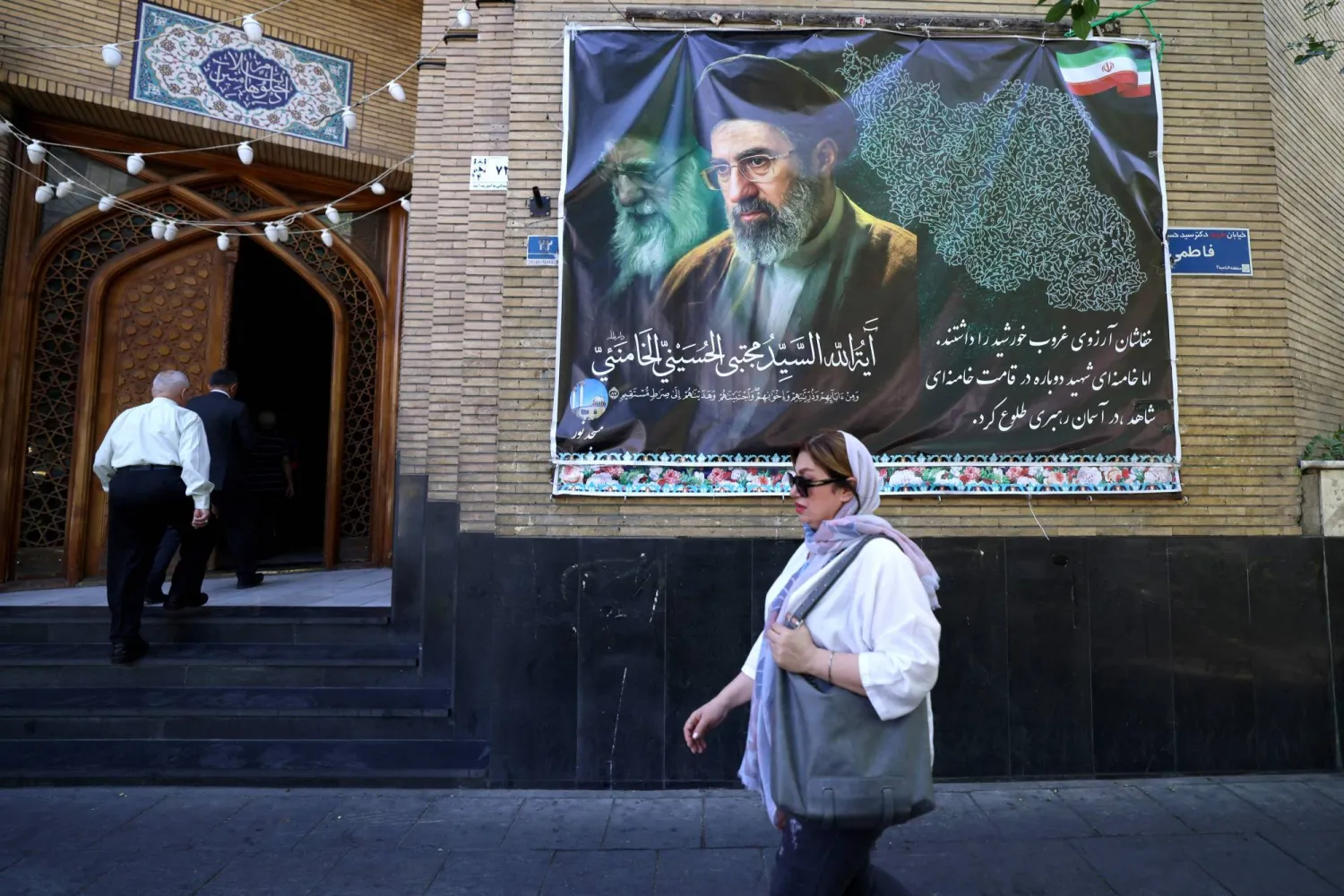
An Iranian woman walks a mosque decorated with a banner depicting Iran's current leader Mojtaba Khamenei, in the capital Tehran on May 9, 2026. (Photo by ATTA KENARE / AFP) /
TT

Iran's Supreme Leader Briefs Military Chief on 'New Guiding Measures'

An Iranian woman walks a mosque decorated with a banner depicting Iran's current leader Mojtaba Khamenei, in the capital Tehran on May 9, 2026. (Photo by ATTA KENARE / AFP) /

The head of Iran's armed forces unified command met Supreme Leader Mojtaba Khamenei and received from him "new guiding measures to pursue military operations and ‌firmly confront ‌adversaries", the ‌semi-official Fars ⁠news reported on ⁠Sunday.

The Fars report said that Ali Abdollahi, who commands the Khatam al-Anbiya Central ⁠Headquarters, had briefed ‌Khamenei ‌on the readiness of ‌the country’s armed ‌forces. It did not say when their meeting took place, Reuters said.

"The ‌armed forces are ready to confront any ⁠action ⁠by the American-Zionist (Israeli) enemies. In case of any error by the enemy, Iran's response will be swift, severe, and decisive," Abdollahi was reported as saying.


Iran Responds to US Peace Proposal as Drones Hit Gulf

Vessels in the Strait of Hormuz, Musandam, Oman, May 8, 2026. REUTERS/Stringer
TT

Iran Responds to US Peace Proposal as Drones Hit Gulf

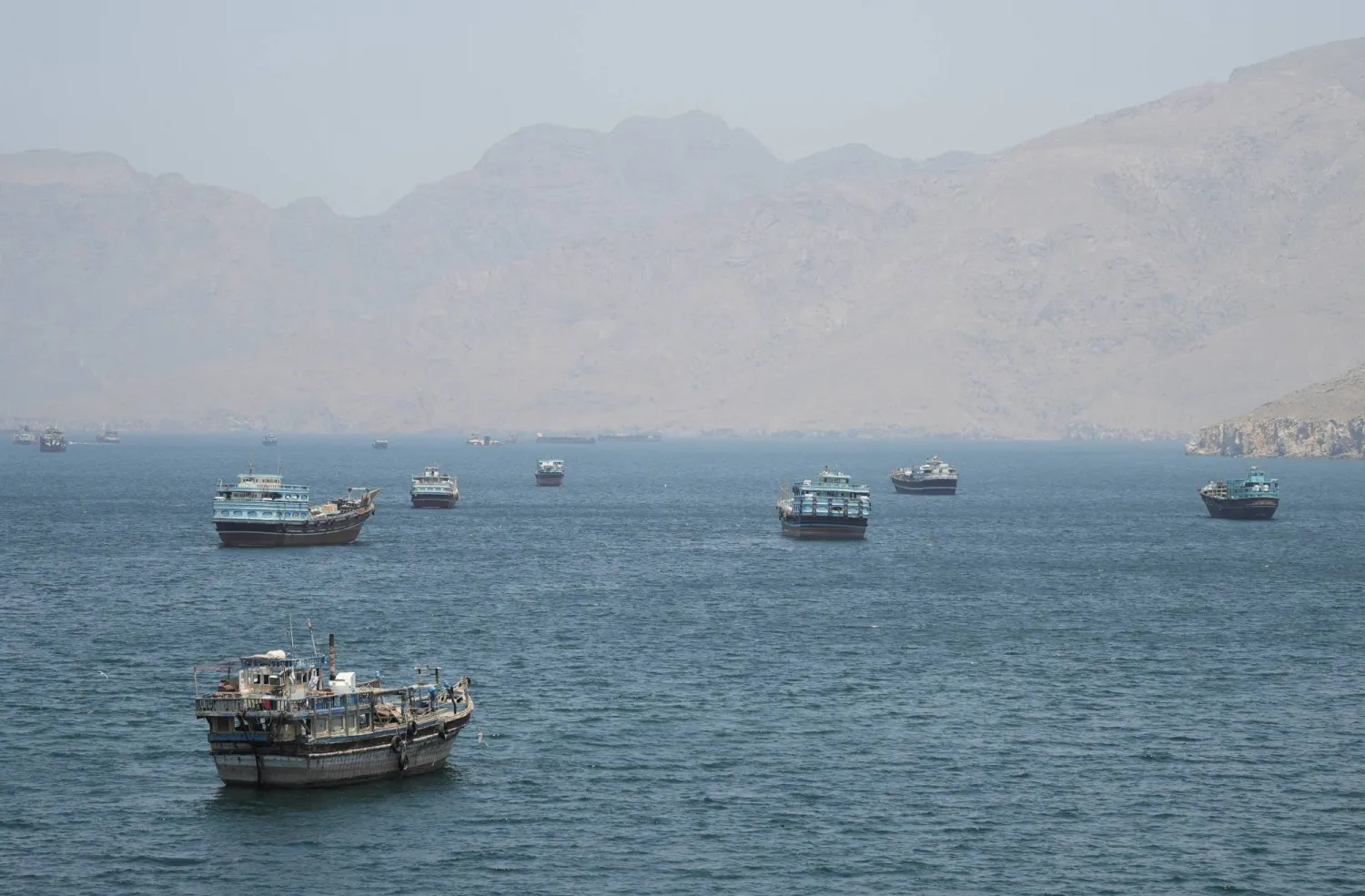
Vessels in the Strait of Hormuz, Musandam, Oman, May 8, 2026. REUTERS/Stringer

Iran responded to Washington's latest peace proposal on Sunday, after drones threatened several Gulf region targets and Tehran warned it would not hold back from retaliating against any new US strikes. 

According to state broadcaster IRIB, Tehran's response, passed to Pakistani mediators, focuses on ending the war "on all fronts, especially Lebanon" -- where Israel has kept up its fight with Iran-backed Hezbollah -- as well as on "ensuring shipping security". 

US President Donald Trump had said he was expecting Iran's reply by Friday, but as the wait dragged on, the ceasefire in the Gulf came under increasing strain, including from Sunday's drone strikes, one of which hit and damaged a freighter sailing towards a port in Qatar. 

The United Arab Emirates accused Iran of being behind another attack that targeted its territory in what would be, if confirmed, only the second strike on a Gulf country since the start of the month-old truce. 

"We will never bow down to the enemy, and if there is talk of dialogue or negotiation, it does not mean surrender or retreat," Iranian President Masoud Pezeshkian said on X Sunday. 

Tehran's military chief Ali Abdollahi, meanwhile, met the country's supreme leader Mojtaba Khamenei and received "new directives and guidance for the continuation of operations to confront the enemy", according to Iranian state television. 

- 'Restraint over' - 

Qatar's defence ministry said a freighter arriving in the country's waters from Abu Dhabi was hit by a drone on Sunday off the port of Mesaieed. 

The United Kingdom Maritime Trade Operations centre said the bulk carrier reported being struck by an unknown projectile. 

"There was a small fire that has been extinguished, there are no casualties. There is no reported environmental impact," it said. 

There was no immediate claim of responsibility, but Iran's Fars news agency reported that "the bulk carrier that was struck near the coast of Qatar was sailing under a US flag and belonged to the United States". 

In a social media post on Sunday, the spokesman for the Iranian parliament's national security commission warned the United States: "Our restraint is over as of today." 

"Any attack on our vessels will trigger a strong and decisive Iranian response against American ships and bases," Ebrahim Rezaei said. 

Iran's Revolutionary Guards had threatened the day before to target US interests in the Middle East if its tankers came under fire -- as they did on Friday when a US fighter jet fired on and disabled two Iran-flagged vessels in the Gulf of Oman. 

- Drone strikes - 

The United Arab Emirates said that its territory had also come under attack, and called out Iran by name. 

"UAE air defense systems successfully engaged two UAVs launched from Iran," the defense ministry said, in a social media post. 

Iran's neighbor Kuwait also reported an attempted attack. 

"At dawn today, the armed forces detected a number of hostile drones in Kuwaiti airspace, which were dealt with in accordance with established procedures," the military posted. 

In Seoul, defense ministry spokesman Park Il told reporters that a South Korean cargo vessel had been hit on Monday and was damaged by fire before making its way to port in Dubai. 

"On May 4, two unidentified aircraft struck the outer plate of the port-side ballast tank at the stern of the HMM Namu at roughly one-minute intervals, causing flames and smoke," he said. 

Iran has choked off the Strait of Hormuz -- a vital route out of the Gulf for oil, gas and fertilizer, seeking to wield economic leverage over the United States and its allies. 

The US Navy, meanwhile, is blockading Iran's ports, at times disabling or diverting ships heading to and from them. 

Iran has set up a payment mechanism to extract tolls from shipping crossing the strait, but US officials have stressed it would be "unacceptable" for Tehran to control what had been an international waterway and the route of a fifth of the world's oil exports. 


Ukraine Reports Battlefield Clashes, Drone Strikes Despite Ceasefire

In this photo provided by Ukraine's 93rd Kholodnyi Yar Separate Mechanized Brigade press service, a Ukrainian soldier prepares an FPV drone to fire towards Russian positions in Druzhkivka, Donetsk region, Ukraine, Thursday, May 7, 2026. (Iryna Rybakova/Ukraine's 93rd Mechanized Brigade via AP)
TT

Ukraine Reports Battlefield Clashes, Drone Strikes Despite Ceasefire

In this photo provided by Ukraine's 93rd Kholodnyi Yar Separate Mechanized Brigade press service, a Ukrainian soldier prepares an FPV drone to fire towards Russian positions in Druzhkivka, Donetsk region, Ukraine, Thursday, May 7, 2026. (Iryna Rybakova/Ukraine's 93rd Mechanized Brigade via AP)

Ukrainian officials reported ‌on Sunday Russian drone strikes and nearly 150 battlefield clashes over the past 24 hours despite a US-brokered ceasefire between Kyiv and Moscow.

US President Donald Trump said on Friday that Russia and Ukraine had agreed to a three-day ceasefire from May 9 to May 11, as a broader peace effort to end the more than four-year-old war has stalled.

One person was killed ‌and three ‌people were wounded in Russian strikes ‌on ⁠Ukraine's southeastern Zaporizhzhia ⁠region, governor Ivan Fedorov said on Sunday morning.

In the northeastern Kharkiv region, governor Oleh Syniehubov said eight people, including two children, were wounded in drone attacks on the regional capital and nearby settlements.

Seven people including a child were ⁠wounded in the southern Kherson region ‌by Russian drone ‌and artillery strikes since early Saturday, regional governor Oleksandr Prokudin ‌said on Sunday.

A child was also wounded ‌and infrastructure damaged in Russian attacks on the southeastern Dnipropetrovsk region, said regional head Oleksandr Hanzha.

Separately, Kyiv's air force said Russia had launched 27 long-range drones ‌at Ukraine overnight - a lower number than usual - but that air defenses had ⁠downed ⁠all of them.

In its morning report, Ukraine's General Staff said 147 clashes had taken place along the front line.

Despite the reports, Ukrainian officials have not publicly commented on any violations of the US-brokered ceasefire, which was also meant to include a swap of 1,000 prisoners of war from each side.

Earlier this week, Russia and Ukraine had each announced separate ceasefires - starting on Friday and Wednesday respectively - but quickly accused one another of breaking them.