


Ukrainian Models Who Swapped Milan Catwalks for War Aid

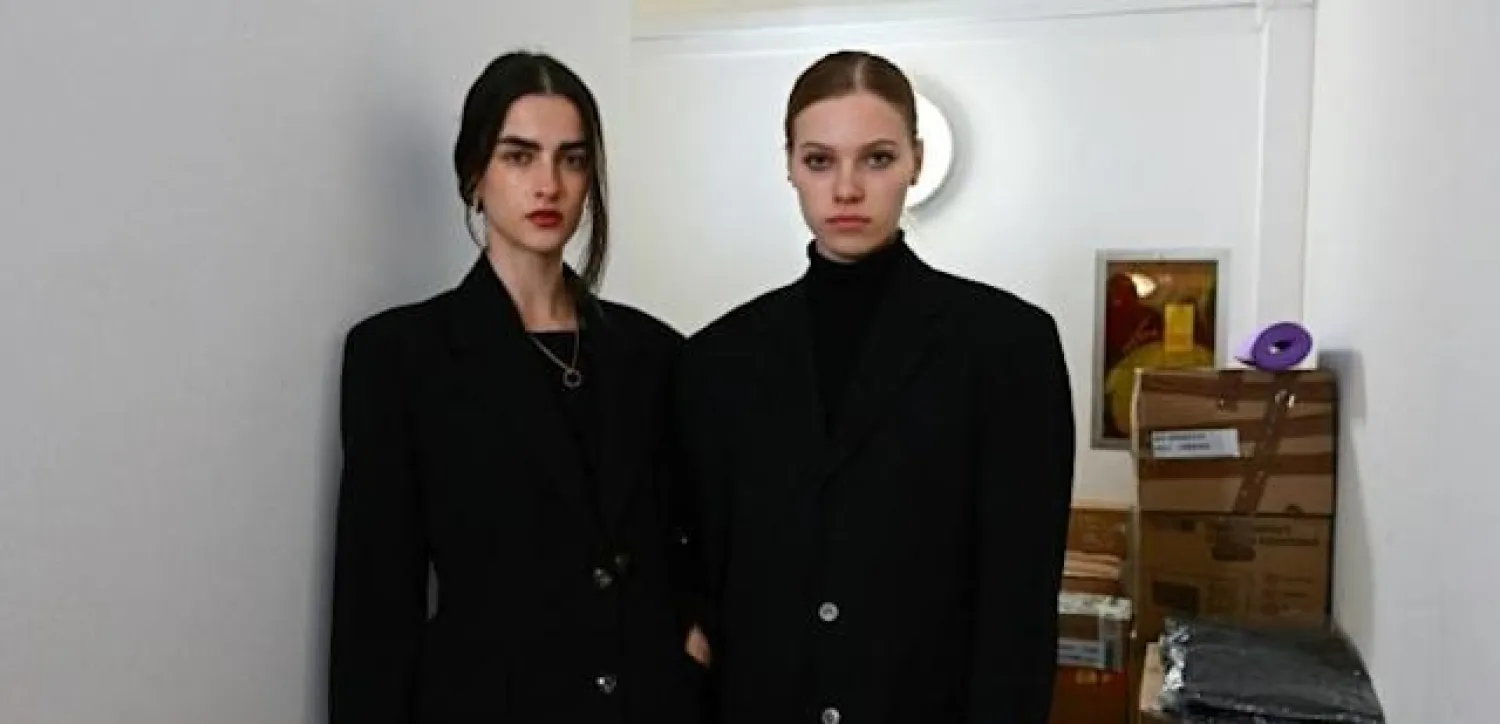
When Valya Fedotova's family fled Ukraine, her father stayed behind with the cat. MIGUEL MEDINA AFP
TT

Ukrainian Models Who Swapped Milan Catwalks for War Aid

When Valya Fedotova's family fled Ukraine, her father stayed behind with the cat. MIGUEL MEDINA AFP

Ukrainian model Bogdana Didenko Nevodnik was in Milan for fashion week when Russia invaded. Unable to return home afterwards, she now sorts aid parcels in the Italian city for her war-torn country.

"I felt it was a bit stupid, unreal, to be on the catwalk when people are dying. I was ashamed and had the feeling that the spectators didn't really care," the 22-year-old told AFP.

Every time air raid sirens sound at night in the river port city of Kamianske, her home, Didenko Nevodnik is woken by a smartphone app set up to warn her. She lives the war minute by minute, from a distance.

At first, her instinct was to "return by the first train or bus" to her home, just upstream of the central city of Dnipro.

But she was dissuaded by her husband, a young surgeon in Ukraine, and her family.

Now, her long, dark hair tied at the nape of her neck, she works long hours alongside some 20 other volunteers, sorting through aid packages left in the small courtyard of the Ukrainian consulate in Milan.

Colorful children's drawings saying "No to war!" bedeck the entrance, above bouquets of flowers.

Cars and lorries load and unload parcels of food, medicine, batteries and toys destined for the war zone.

'Killing machines'
"I would risk my life for Ukraine," says Didenko Nevodnik, who is dressed from head to toe in black and models for major brands around the world. "If necessary, I would join the army".

She took boxing classes as a teenager and says, "I always had a fighting spirit". She was also "a good shooter" with a gun because "we practiced on targets in our spare time".

"The Russian military who invaded my country are terrorizing our people. They want to destroy us.

"They show to the whole world that they are just animals. They have no humanity inside. They are just killing machines," she said.

"They are destroying maternity hospitals with pregnant women. What kind of strategic objective is that?"

Another Ukrainian model, Valya Fedotova, who is also volunteering, says she was on the verge of tears during her Milan show -- which also happened to be her fashion week debut.

"But you can't cry on the catwalk. I get paid for it and I can send the money to my family in Ukraine".

'Still in shock'
The 20-year-old shares a flat with six other Ukrainian models, all stuck in Milan.

"I couldn't sleep. I'm still in shock", says Fedotova, describing the night the Russians started bombing her home town of Malyn, some 100 kilometers (62 miles) from Kyiv.

She had begged her family to flee even before the town came under attack. But while her mother and two sisters took refuge with relatives near the border with Poland, her father stayed behind with the cat.

Didenko Nevodnik longs for the "stupid war" to end. "I just want to live a normal life, go home and see my family."

Former model Ivan Sokolovskyy, 28, asked his boss in Milan for time off at the start of the Russian invasion so he could do his part loading parcels onto trucks and acting as an interpreter.

"I couldn't stay home alone and watch the news. I wanted to help my people," said Sokolovskyy, who hails from Ternopil in western Ukraine.

His biggest fear is that the Chernobyl plant, site in 1986 of the worst nuclear accident in history and occupied by the Russians since February 24, will be weaponized.

"I think they will do something again in Chernobyl. That really scares me. They are that insane that they can do it," he said.



Fashion Commission, Saudi Retail Academy to Develop National Talent 

Fashion Commission, Saudi Retail Academy to Develop National Talent 
TT

Fashion Commission, Saudi Retail Academy to Develop National Talent 

Fashion Commission, Saudi Retail Academy to Develop National Talent 

The Saudi Fashion Commission signed a memorandum of understanding (MoU) with the Saudi Retail Academy to develop national capabilities and boosting specialized skills in the fashion and retail sectors, reported the Saudi Press Agency on Monday.

The MoU aims to support local talent and the creation of sustainable employment opportunities in this vital industry. It stems from the two sides’ keenness to cooperate in the fields of training and professional development.

The agreement was signed on the sidelines of the graduation ceremony of the academy’s first cohort.

The Fashion Commission focuses on developing local talent, transferring global expertise, and advancing the fashion sector in the Kingdom, while the Saudi Retail Academy is a non-profit institute and a specialized entity in training and development in the retail field and in building professional competencies and skills related to retail and sales.

The MoU aims to establish a framework for cooperation to design and implement specialized training programs that boost the readiness of national cadres and qualify them according to the highest professional standards, with a focus on developing skills in sales, customer experience, and store management to meet labor market requirement and the needs of the growing fashion sector.

Fashion Commission chief executive Burak Cakmak said that developing human capital is a fundamental pillar for the long-term growth of the Kingdom’s fashion sector.

The partnership reflects the commitment to strengthening the capabilities that form the foundation of a competitive and sustainable industry through investment in specialized skills within retail and customer experience, enabling brands to grow and supporting the sector’s confident evolution, he added.

Saudi Retail Academy chief executive Hend Al-Dhaban stressed that the partnership embodies a shared vision to empower national talent and elevate professionalism in the retail sector.

The agreement will help channel training expertise to meet the specialized needs of the fashion sector and equip young men and women with the practical skills required to succeed in the labor market, thereby boosting service quality and supporting localization targets and economic growth, she explained.

This cooperation is part of the Fashion Commission’s ongoing efforts to develop the fashion value chain through building strategic partnerships with specialized training and education entities, expanding professional opportunities for national talent, and linking education and training outputs with labor-market needs.

Through their partnership, the commission and the academy will help in building an integrated ecosystem that connects education, vocational qualification, and employment, bolstering the competitiveness of the fashion and retail sectors and supporting the objectives of Saudi Vision 2030 in empowering national cadres, localizing jobs, and improving quality of life.


Saudi 100 Brands Debuts Landmark Fashion Presentation at Saudi Cup 2026

The experience introduced global audiences to Saudi Arabia’s dynamic and growing fashion ecosystem - SPA
TT

Saudi 100 Brands Debuts Landmark Fashion Presentation at Saudi Cup 2026

The experience introduced global audiences to Saudi Arabia’s dynamic and growing fashion ecosystem - SPA

The Fashion Commission launched its Saudi 100 Brands showcase at the Saudi Cup 2026, marking a historic milestone for the world-renowned equestrian event at King Abdulaziz Racecourse in Riyadh.
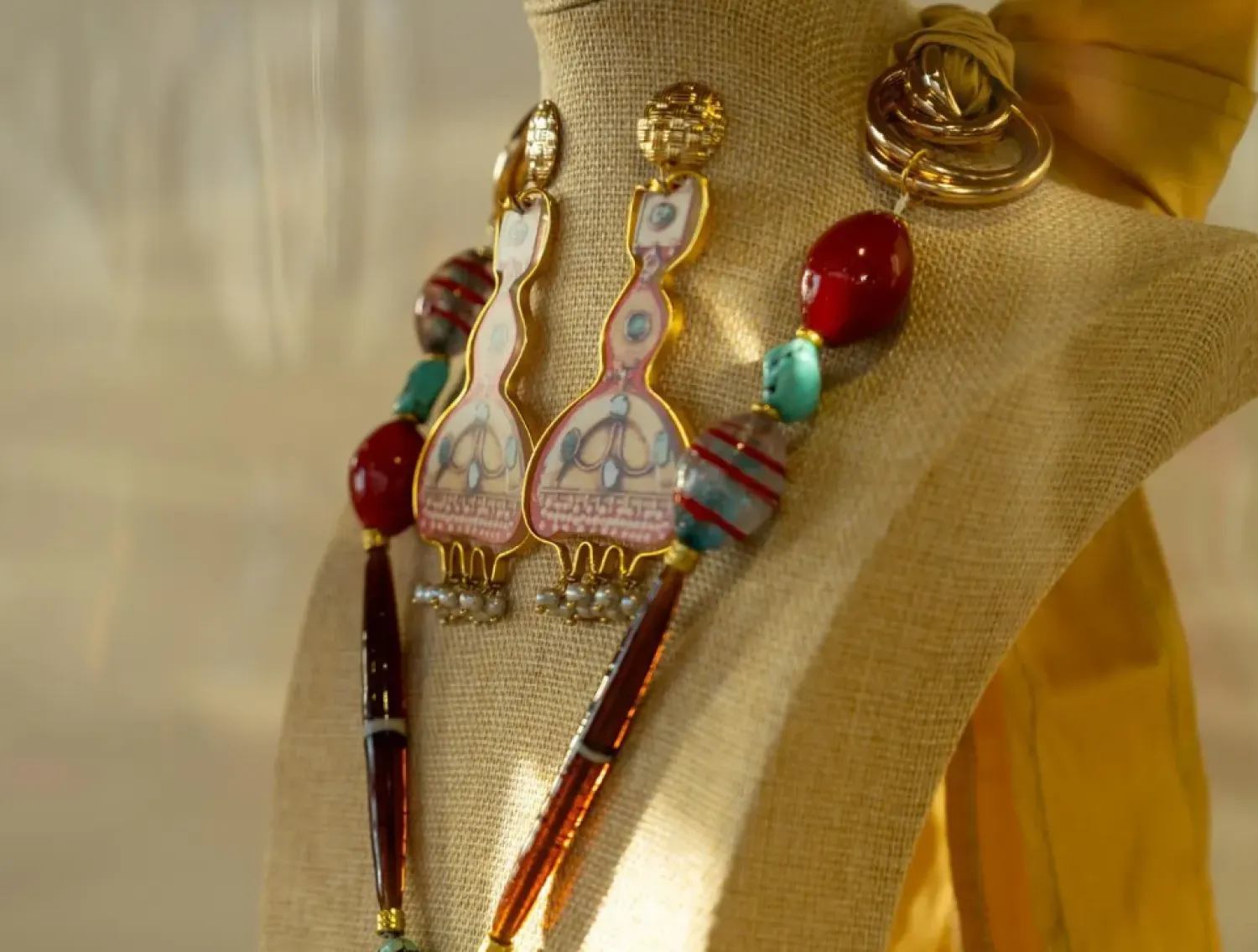
The collections celebrate Saudi heritage by blending traditional and contemporary design. Jewelry and accessory brands also exhibited throughout, providing Saudi designers with a platform to reach a broader global audience. These showcases emphasize the fusion of heritage and modern design, offering a new perspective on the Kingdom's creative identity.
The Saudi 100 Brands program, a flagship initiative of the Fashion Commission, supports emerging designers by providing tools, expertise, and platforms to grow their global presence. This collaboration with the Saudi Cup underscores the importance of celebrating cultural heritage while advancing design innovation.

Each piece in the exhibition incorporates heritage motifs, textiles, and storytelling, reimagined through innovative design to appeal to modern and international audiences.

The exhibition aims to celebrate national identity, highlight local creative talent, and present the evolving direction of Saudi fashion, SPA reported.

Visitors explored the intersection of craftsmanship and cultural expression, discovering how designers honor tradition while advancing fashion design.

The experience also introduced global audiences to Saudi Arabia’s dynamic and growing fashion ecosystem.

This participation reflects the Fashion Commission’s vision to develop a thriving fashion sector rooted in cultural heritage and global ambition. By combining cultural narratives with innovative design, the commission enables Saudi fashion to contribute to global creative industries, nurture talent, and position Saudi brands for sustained success.


L’Oreal Shares Sink as Sales Miss Forecasts 

This photo taken on February 16, 2018 shows a board with the L'Oreal logo outside of the L'Oreal plant, in Lassigny. (AFP)
TT

L’Oreal Shares Sink as Sales Miss Forecasts 

This photo taken on February 16, 2018 shows a board with the L'Oreal logo outside of the L'Oreal plant, in Lassigny. (AFP)

L'Oreal shares fell heavily on the Paris stock market on Friday after the cosmetics giant posted sales that fell short of analyst expectations, stoking fears of weakness for its luxury brands and in the key Chinese market.

While revenues rose seven percent in the fourth quarter in Europe -- still the company's biggest market -- they edged up just 0.7 percent in North America and fell five percent in North Asia, which includes China.

Overall, sales were up 1.5 percent to 11.2 billion euros ($13.3 billion) in the final quarter of 2025 -- usually when the company benefits from strong holiday-fueled buying.

This was a marked slowdown from the 4.5-percent growth seen the previous year.

On a like-for-like comparison that excludes the impact of currency fluctuations, sales rose six percent, whereas the consensus forecast was around eight percent, analysts said.

The luxury division (Luxe) in particular, which includes high-end perfumes and make-up and is L'Oreal's biggest by revenue, saw a 0.5-percent sales slide in the fourth quarter, to 4.2 billion euros.

"We think the miss, led by North Asia and Luxe, will be a concern amid a vague outlook," said David Hayes, an analyst at investment bank Jefferies.

L'Oreal's stock was down 3.2 percent in morning trading, partly recovering from a drop of more than six percent at the open.

Net profit for the full year was down 4.4 percent to 6.1 billion euros.

Chief executive Nicolas Hieronimus said when he presented the results on Thursday that L'Oreal had achieved a "solid" performance "despite a context that was at the very least volatile and unfavorable".

For 2026, he said the company had to be "cautious and humble", although he expected "the beauty market to continue its acceleration" unless there was "a new surprise".

"We're going to have to intensify our efforts in terms of innovation to energize the market and win over customers," he added.