


Turkey Hikes Gas Prices for Industry, Households

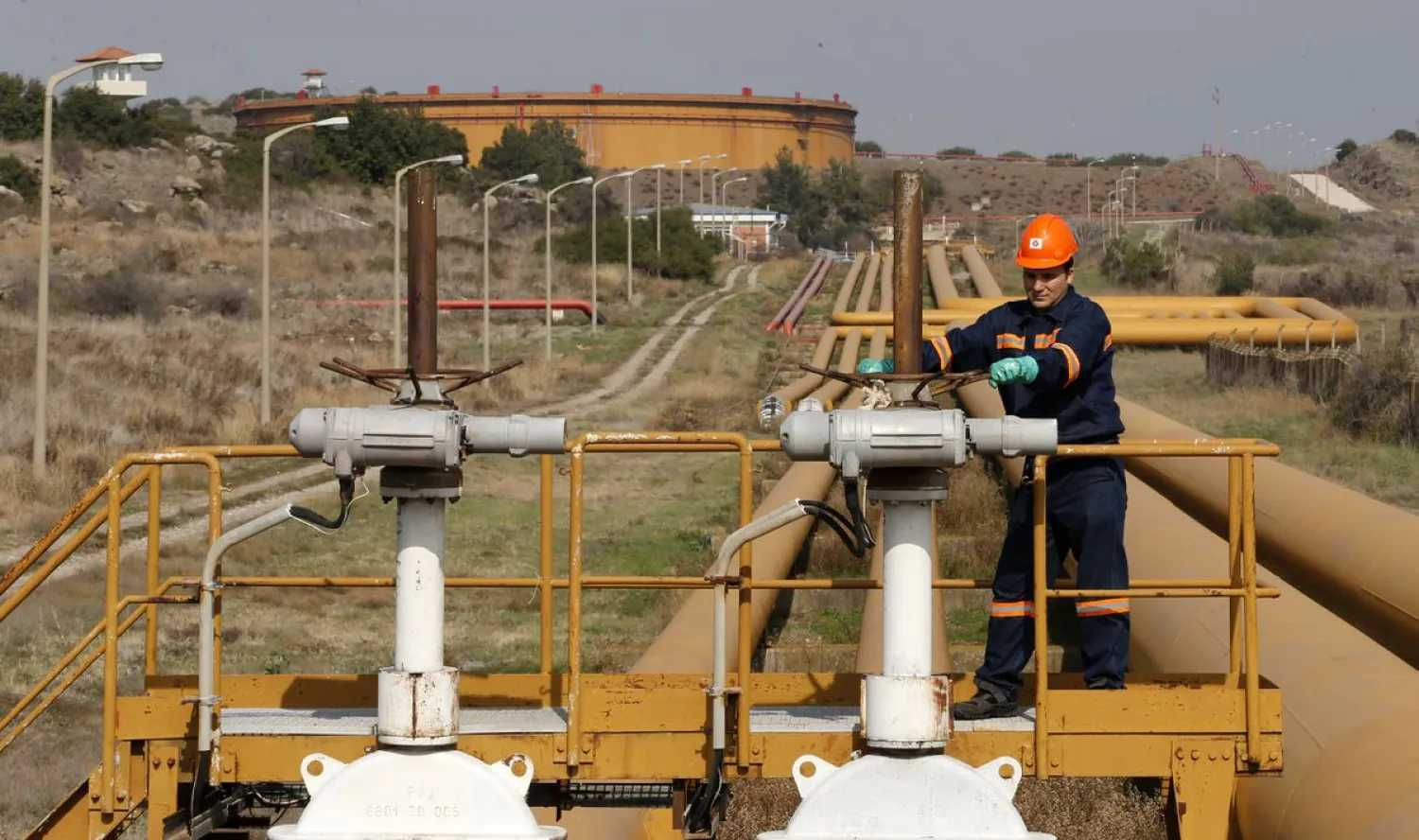
A worker checks the valve gears of pipes linked to oil tanks at Turkey's Mediterranean port of Ceyhan, which is run by state-owned Petroleum Pipeline Corporation (BOTAS), some 70 km (43.5 miles) from Adana February 19, 2014. (Reuters)
TT

Turkey Hikes Gas Prices for Industry, Households

A worker checks the valve gears of pipes linked to oil tanks at Turkey's Mediterranean port of Ceyhan, which is run by state-owned Petroleum Pipeline Corporation (BOTAS), some 70 km (43.5 miles) from Adana February 19, 2014. (Reuters)

Turkish state-owned energy importer BOTAS said late on Thursday it had raised natural gas prices for industrial facilities by 50% and those for households by 35%, raising the prospect of further stoking inflation which is expected to top 60% in March.

BOTAS also said natural gas prices for electricity production were going up by 44.3% as of April 1. It cited the global rise in energy prices as the reason for the hikes.

Turkey imports almost all of its energy needs, leaving it vulnerable to big price swings. Its energy costs started rising in September and surged 212% year-on-year in the first two months of 2022 to $16.8 billion, government data showed.

BOTAS' purchases of foreign currencies from the central bank have hit record highs in recent months due to soaring energy prices.

Economists calculate the hike to household natural gas prices will raise inflation by 55 basis points. The secondary impact of the increase in industrial natural gas prices raise the consumer price index by more than 55 basis points.

Turkey's consumer inflation, at 54.4% in February, has soared mainly due to the lira's 44% decline against the dollar last year. The depreciation steepened after a series of rate cuts from the central bank, long sought by President Tayyip Erdogan.

Recently boosted by rising commodity prices due to Russia's invasion of Ukraine, inflation in Turkey is expected to hit 61.5% in March, a Reuters poll found. It is seen dropping to 52.2% by the end of the year.



Saudi Arabia Among Top 10 Investors in Tunisia With Over $375 Mln

 Saudi Minister of Industry and Mineral Resources Bandar bin Ibrahim Alkhorayef speaks during the business forum in Riyadh (Asharq Al-Awsat)
Saudi Minister of Industry and Mineral Resources Bandar bin Ibrahim Alkhorayef speaks during the business forum in Riyadh (Asharq Al-Awsat)
TT

Saudi Arabia Among Top 10 Investors in Tunisia With Over $375 Mln

 Saudi Minister of Industry and Mineral Resources Bandar bin Ibrahim Alkhorayef speaks during the business forum in Riyadh (Asharq Al-Awsat)
Saudi Minister of Industry and Mineral Resources Bandar bin Ibrahim Alkhorayef speaks during the business forum in Riyadh (Asharq Al-Awsat)

Saudi investments in Tunisia have gathered momentum over recent years, placing the kingdom among the country’s top 10 foreign investors, with cumulative investments surpassing $375 million by the end of 2024.

The figures were disclosed at the Saudi-Tunisian Business Forum, held in Riyadh on Monday on the sidelines of the 12th session of the Saudi-Tunisian Joint Committee, where officials and business leaders met to explore ways to deepen investment ties between the two countries.

The forum was attended by Saudi Minister of Industry and Mineral Resources Bandar bin Ibrahim Alkhorayef and Tunisia’s Minister of Economy and Planning, Dr. Samir Abdelhafidh.

The forum was organized by the Ministry of Industry and Mineral Resources in cooperation with the Ministry of Investment and the Federation of Saudi Chambers, with the participation of official delegations and more than 300 representatives from the public and private sectors in both countries.

High-level visits

In his opening remarks, Alkhorayef emphasized the strength of long-standing Saudi-Tunisian relations, which are rooted in the shared vision of the two countries’ leaderships and reinforced by high-level reciprocal visits.

He said these visits had formed a cornerstone in supporting economic momentum and driving recent growth in bilateral trade.

Alkhorayef described the Saudi Tunisian Business Forum as an important milestone for enhancing investment partnerships and transforming promising opportunities into projects with tangible economic impact.

“We are betting today on investors, business leaders, and private sector champions in both countries to lead growth in promising sectors, including advanced industries, tourism, renewable energy, and mining,” he said.

“Our role as governments is to enable, legislate, and facilitate procedures, while the private sector’s role is to build, innovate, and turn these enablers into productive projects, job opportunities, and shared success stories that reflect the value and depth of the partnership, toward comprehensive economic integration based on the competitive advantages of both countries.”

Investment fundamentals

For his part, Abdelhafidh said the Saudi Tunisian Business Forum serves as a practical platform for strengthening investment partnerships, noting the steady rise in Saudi investments in Tunisia in recent years, with the kingdom among the top 10 investing countries and total investments exceeding $375 million by the end of 2024.

He said Tunisia offers competitive investment fundamentals, including a strong pool of engineering and technical talent, as well as the capacity to absorb large-scale projects, particularly in renewable energy, automotive and aerospace components manufacturing, pharmaceuticals, and the food industry.

Supply chains

In a related context, Saudi Tunisian Business Council Chairman Dr. Omar Al Ajaji highlighted the importance of the private sector’s role in strengthening economic cooperation between the two countries.

He said the forum helps business communities explore promising opportunities and opens broader horizons for integration in key sectors, particularly industry, technology, and supply chains.

Also speaking at the forum, Dr. Samir Majoul, President of the Tunisian Union of Industry, Trade, and Handicrafts, emphasized the need to create a regulatory environment conducive to investment and to establish sustainable strategic partnerships that foster trade and investment flows between the kingdom and Tunisia.

The Saudi-Tunisian Business Forum reflects the two countries’ shared vision of building effective investment partnerships that expand cooperation and economic integration, support growth in bilateral trade, align with the goals of Saudi Vision 2030, and advance comprehensive and sustainable development in both countries.


Iran's Central Bank Chief Resigns

A man walks past a sign at a currency exchange bureau as the value of the Iranian rial drops, in Tehran, Iran, December 20, 2025. (Via Reuters)
TT

Iran's Central Bank Chief Resigns

A man walks past a sign at a currency exchange bureau as the value of the Iranian rial drops, in Tehran, Iran, December 20, 2025. (Via Reuters)

Iran's central bank chief, Mohammad Reza Farzin, has resigned, the semi-official ​Nournews agency reported on Monday, citing an official at the president's office, as the country battles a slump in its rial currency and high inflation.

The rial, which has been falling as the Iranian economy has suffered from the impact of Western sanctions, fell to a ‌new record low on ‌Monday at around 1,390,000 ‌to ⁠the ​dollar, according ‌to websites displaying open market rates.

Iranian media outlets reported there had been demonstrations in the capital Tehran, mainly by shop owners, against the economic situation.

Farzin has headed the central bank since December 2022. His resignation will be reviewed by President Masoud ⁠Pezeshkian, the official added, according to Nournews.

Iranian state media reported ‌later on Monday, citing the communications ‍and information deputy ‍at the Iranian president's office, that former Economy ‍Minister Abdolnaser Hemmati will be appointed as the new central bank chief.

Iranian media have said the government's recent economic liberalization policies have put pressure on the ​open-rate currency market.

The open-rate market is where ordinary Iranians buy foreign currency, whereas businesses typically ⁠use state-regulated rates.

The reimposition of US sanctions in 2018 during President Donald Trump's first term has harmed Iran's economy by limiting its oil exports and access to foreign currency.

The Iranian economy is at risk of recession, with the World Bank forecasting GDP will shrink by 1.7% in 2025 and 2.8% in 2026. The risk is compounded by rising inflation, which hit a 40-month high of ‌48.6% in October, according to Iran's Statistical Center.


Lebanon Signs Deal to Purchase Natural Gas from Egypt

A diesel storage tank is seen at the Middle East Oil Refinery Company (MIDOR) in Alexandria, Egypt, November 7, 2018. REUTERS/Amr Abdallah Dalsh
TT

Lebanon Signs Deal to Purchase Natural Gas from Egypt

A diesel storage tank is seen at the Middle East Oil Refinery Company (MIDOR) in Alexandria, Egypt, November 7, 2018. REUTERS/Amr Abdallah Dalsh

Lebanon said Monday it plans to purchase natural gas from Egypt, seeking to reduce its reliance on fuel oil for its ageing power plants in a country hamstrung by regular electricity cuts.

The electricity sector has cost Lebanon more than $40 billion since the end of its 1975-1990 civil war, and successive governments have failed to reduce losses, repair crumbling infrastructure or even guarantee regular power bill collections.

Residents rely on expensive private generators and solar panels to supplement the unreliable state supply.

Prime Minister Nawaf Salam's office said in a statement that the memorandum of understanding between Lebanon and Egypt sought "to meet Lebanon's needs for natural gas allocated for electricity generation".

It was signed by Lebanese Energy Minister Joe Saddi and Egyptian Petroleum Minister Karim Badawi, according to AFP.

"Lebanon's strategy is first to transition to the use of natural gas, and second, to diversify gas sources," Saddi said, adding that "the process will take time because pipelines need rehabilitation".

Lebanon will "contact donor agencies to see how they can help finance the rehabilitation" of the Lebanese section of the gas pipelines, he said, adding that repair work would take several months.

President Joseph Aoun said the memorandum of understanding was "a practical and essential step that will enable Lebanon to increase its electricity production".

A statement from Cairo's petroleum and mineral resources ministry said that "Egypt is fulfilling its role in supplying Lebanon with natural gas, with the aim of supporting energy security for Arab countries".

In 2022, Lebanon signed a deal to import natural gas from Egypt and Jordan via Syria to boost power supply, but the contracts were never implemented due to financing issues and US sanctions on Syria.

Washington recently lifted it Syria measures following the fall of longtime ruler Bashar al-Assad last year.

In April, Lebanon signed a $250 million agreement with the World Bank to modernise its electricity sector.