


Study: Banana Paper Helps Fight Potato Pest

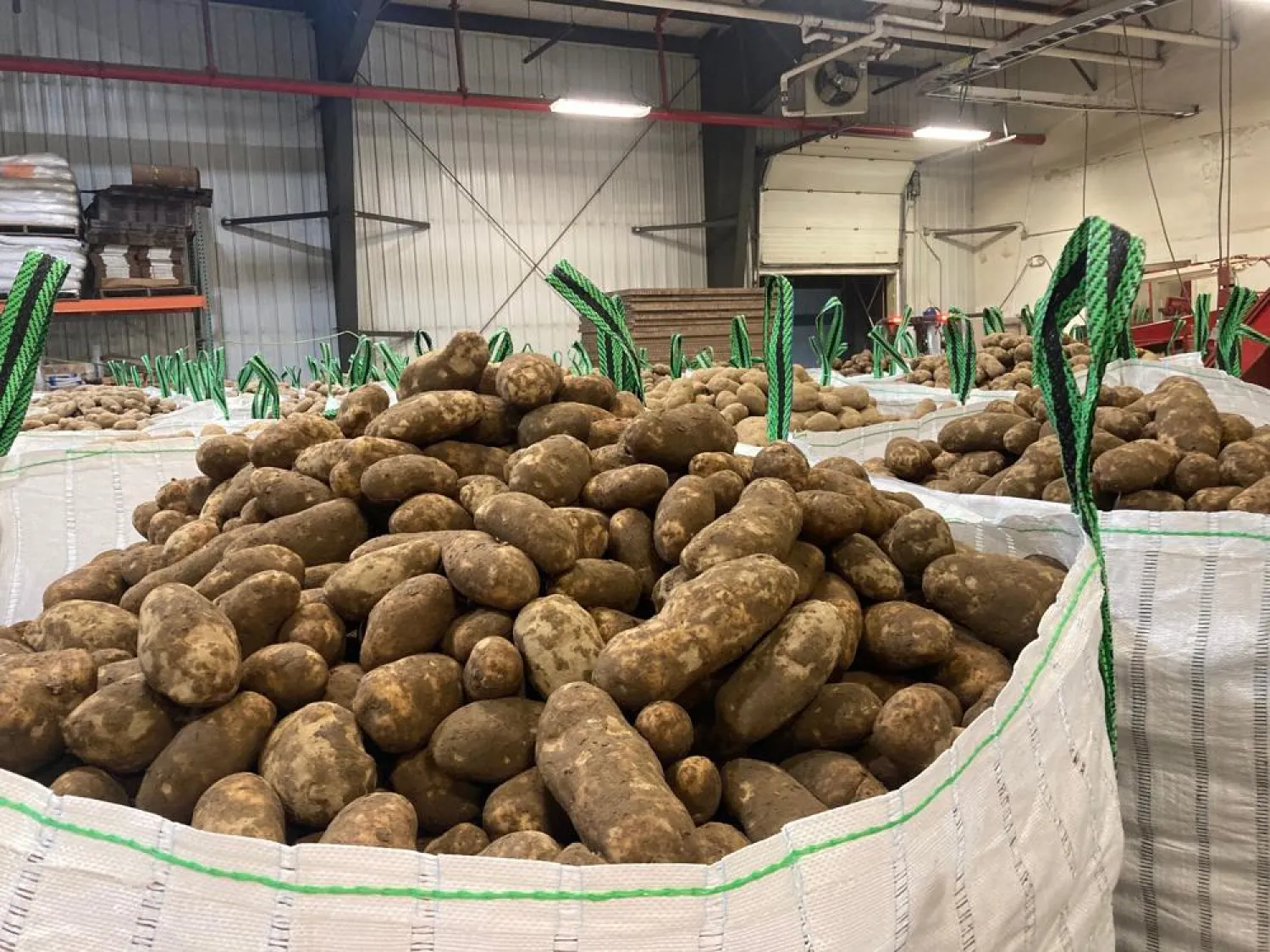
In this photo provided Jay LaJoie, russet potatoes produced by
Maine growers are packaged to be loaded on a rail car headed for
Washington State, at a warehouse owned by LaJoie Growers LLC, in Van
Buren, Maine, Jan. 17, 2022. (Jay LaJoie via AP)
In this photo provided Jay LaJoie, russet potatoes produced by Maine growers are packaged to be loaded on a rail car headed for Washington State, at a warehouse owned by LaJoie Growers LLC, in Van Buren, Maine, Jan. 17, 2022. (Jay LaJoie via AP)
TT

Study: Banana Paper Helps Fight Potato Pest

In this photo provided Jay LaJoie, russet potatoes produced by
Maine growers are packaged to be loaded on a rail car headed for
Washington State, at a warehouse owned by LaJoie Growers LLC, in Van
Buren, Maine, Jan. 17, 2022. (Jay LaJoie via AP)
In this photo provided Jay LaJoie, russet potatoes produced by Maine growers are packaged to be loaded on a rail car headed for Washington State, at a warehouse owned by LaJoie Growers LLC, in Van Buren, Maine, Jan. 17, 2022. (Jay LaJoie via AP)

A new study carried out by the University of North Carolina has found that wrapping potato seeds in biodegradable paper made from unusable parts of banana plants reduces the infestation and harmful effects of a nasty plant pathogen – a worm called the potato cyst nematode – and sharply increases potato size and yields.

During the study, published March 8 in the journal Nature Sustainability, the researchers proved that banana paper helps disrupt signals between the plant and the worm, blocking pathogen infestation and growth.

Potato seeds planted inside the paper – with and without miniscule amounts of a worm-killing chemical called abamectin – grew larger and more abundantly than potatoes planted without the paper or in fields sprayed with abamectin alone.

“We knew that the banana paper would be successful, but not to this extent. We previously had some success increasing yam yields in Benin using this ‘wrap-and-plant’ method, but nothing on the order reported here with potato,” said Charles Opperman, a co-corresponding author of the study and professor of plant pathology at North Carolina State University.

Potato cyst nematodes are a global scourge that can cause severe damage to potatoes; in some areas in Africa potato yields declined by 60% after infestation, the researchers said.

The paper was made in NC State’s Department of Forest Biomaterials from the aqueous slurry of banana waste product. “Long sheets of flexible banana paper are formed. A paper cutter is used to trim the paper into small pieces that can wrap around potato seeds; those packages are then planted,” said Tahira Pirzada, a study co-author and postdoctoral research scholar in NC State’s Department of Chemical and Biomolecular Engineering.

In field tests designed to test the banana paper’s efficacy against the potato cyst nematode, researchers in Kenya grew potatoes four different ways: wrapped in banana paper dosed with low doses of abamectin; wrapped in banana paper without abamectin; without any banana paper but in fields sprayed with abamectin; and in control fields without banana paper wraps or chemical treatment.

The results showed that the banana paper – with or without the worm-killing chemical – effectively prevented potato infestation in the field and increased potato yields and size. Potato root systems also were denser when paper was utilized.

To further test the paper’s role, the researchers also performed lab studies that exposed the pathogen to the chemicals released from the potato plant’s roots, known as the root exudate, with and without the banana paper.

Juliet Ochola, the study’s lead author who worked on the lab studies in Kenya and is now an NC State Ph.D. student in plant pathology, said the banana paper absorbed these chemicals and held them fast.

“Nematodes love these chemicals; they stimulate the nematode’s growing process and inform the nematode about the best locations to infect the plant. But the banana paper – with or without doses of abamectin – disrupts the signaling between the potato and the nematode. The nematode can’t detect those compounds, so it doesn’t grow, and it doesn’t know where to infect the plant,” Ochola said.

The researchers are currently testing the technique on other vegetable crops, and are looking to commercialize the technology, which could drive economic development in Africa.

“The beauty of this approach is that it is straightforward, inexpensive and sustainable; farmers can adopt it on a smaller scale. No chemicals are used in the paper-making process,” Pirzada said.



Citrus Harvest Season Kicks off in AlUla

The citrus harvest in AlUla is a significant agricultural and economic event  - SPA
The citrus harvest in AlUla is a significant agricultural and economic event - SPA
TT

Citrus Harvest Season Kicks off in AlUla

The citrus harvest in AlUla is a significant agricultural and economic event  - SPA
The citrus harvest in AlUla is a significant agricultural and economic event - SPA

The citrus harvest season has officially begun in AlUla Governorate, which is renowned for its agricultural production, according to SPA.

Citrus groves in AlUla cover approximately 654.57 hectares and contain around 261,826 trees, yielding about 6,545.65 tons of fruit annually.

The governorate produces a variety of delicious and nutritious citrus fruits, most notably navel oranges, citron, and sweet lemons. The citrus harvest season typically runs from December to March.

These fruits are distinguished by their high quality, attributed to the governorate's unique climate and fertile soil, resulting in exceptional flavor and high nutritional value.

The citrus harvest in AlUla is a significant agricultural and economic event that highlights the diversity of the governorate's agricultural production. It also plays a crucial role in supporting agricultural activity and promoting local products in the marketplace.


Saudi Arabia's Qassim National Park Records Third Consecutive Arabian Oryx Births

Saudi Arabia's Qassim National Park recorded the birth of an Arabian oryx for the third consecutive year. (SPA)
TT

Saudi Arabia's Qassim National Park Records Third Consecutive Arabian Oryx Births

Saudi Arabia's Qassim National Park recorded the birth of an Arabian oryx for the third consecutive year. (SPA)

Saudi Arabia's Qassim National Park in Buraidah recorded the birth of an Arabian oryx for the third consecutive year, reported the Saudi Press Agency on Monday.

The development is an important environmental milestone that reflect the ongoing success of release and reintroduction programs led by the National Center for Wildlife (NCW), which aims to preserve endangered wild species and boost biodiversity in their natural habitats.

The achievement exemplifies a pioneering collaboration between the NCW and the National Center for Vegetation Cover Development and Combating Desertification through initiatives such as vegetation enhancement, natural habitat rehabilitation, and the creation of suitable conditions for the breeding and sustainability of wild species.

Qassim National Park is one of several national parks implementing afforestation and environmental rehabilitation projects under the Saudi Green Initiative, strengthening the region’s ecological diversity and showcasing the role of national parks as models of successful environmental sustainability programs in the Kingdom.


Which Does More for Your Skin: Vitamin C or Vitamin E?

Vitamin C and vitamin E are essential for maintaining healthy, glowing skin. (University of Iowa)
TT

Which Does More for Your Skin: Vitamin C or Vitamin E?

Vitamin C and vitamin E are essential for maintaining healthy, glowing skin. (University of Iowa)

Walk down any skincare aisle, and you’ll see vitamin C and vitamin E everywhere—serums, oils, moisturizers, you name it. They’re both often credited for helping skin look its best, but when it comes to choosing vitamin C vs. vitamin E, which is better for your skin?

Dermatologists and nutritionists affirm the benefits of both vitamins. However, they said, each has a different role, and the best results are often obtained when they are used together, according to Prevention magazine.

One of the most obvious ways in which vitamin C is beneficial for skin is that it helps with the production of collagen.

“[Collagen] is important for skin structure, wound healing and firmness,” said Marissa Beck, MS, RDN, owner of REVV Health in Seattle, Washington. “It also helps protect against oxidative stress from UV light, and also pollution.”

Beyond those extremely necessary functions, there’s also evidence to suggest vitamin C may help reduce the appearance of wrinkles and raised scars, as well as assist with tightening up sagging skin.

Vitamin C also helps to brighten the skin and improve discoloration to even skin tone.

A recent study even suggested vitamin C might help reactivate genes related to skin growth and repair.

Unlike vitamin C, vitamin E is actually already produced by our body; it’s part of the sebum that serves as a barrier to help skin stay moisturized. This is also why you’ll often find vitamin E as an ingredient in popular moisturizing products. Vitamin E oil, in particular, might be useful for treating dry, flaky skin or improving symptoms of eczema.

“Vitamin E is a fat-soluble vitamin, and because of this, it works primarily within the cell membranes of the skin by helping reduce UV-induced free radical damage and supporting the skin barrier,” Beck explained. “It might also help with inflammation as an antioxidant.”

When it comes to ensuring you’re getting enough of each vitamin to support skin health, you can look to both diet and topical application.

For vitamin C, nutritionists recommend oranges, bell peppers, tomatoes, kiwi, strawberries and broccoli. To increase vitamin E intake, they suggests looking to plant-based oils such as wheat germ oil, nuts, seeds, and avocados.

Experts conclude that the two vitamins will serve best working in tandem, while keeping all the other important aspects of skin health in mind.

Of course, eating a balanced diet is important for overall health, but adding vitamin C or vitamin E-infused products to skincare routine has its own benefits.