


As EU Eyes Stopping Russian Gas Imports, Israel Sees an Opening

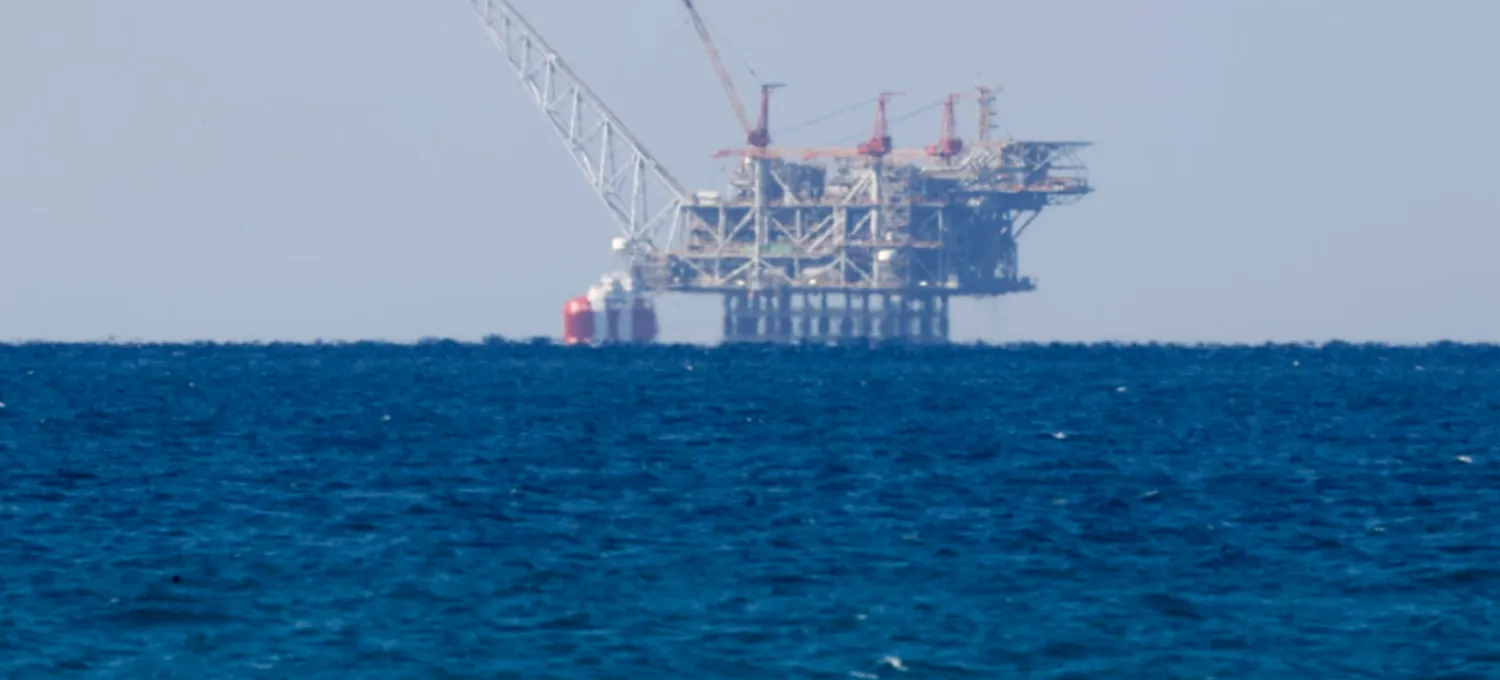
A platform on the Leviathan natural gas field, one of Israel's two major offshore fields, some of whose output is sold to Egypt and Jordan JACK GUEZ AFP/File
TT

As EU Eyes Stopping Russian Gas Imports, Israel Sees an Opening

A platform on the Leviathan natural gas field, one of Israel's two major offshore fields, some of whose output is sold to Egypt and Jordan JACK GUEZ AFP/File

As Europe aims to wean itself off Russian fossil fuel because of the Ukraine invasion, Israel hopes to help fill the gap with gas from its offshore reserves.

EU states remain divided on the time scale, but European Commission President Ursula von der Leyen has said the bloc hopes to phase out its dependency on Russian gas, oil and coal by 2027.

Israel could build one or more pipelines, potentially via Greece or Turkey, or increase the quantity of gas piped to Egypt to be liquified and shipped off, say officials and experts.

Israeli Foreign Minister Yair Lapid said after a recent visit to Athens that "the war in Ukraine stands to change the structure of the European and Middle Eastern energy market".

"We are also examining additional economic cooperation, with an emphasis on the energy market."

The Jewish state has worked for years to create gas export routes, with mixed results so far.

Turkey, whose ties with Israel have recently thawed after over a decade of rupture, has expressed new interest in a pipeline, and its energy minister is expected in Israel in the coming weeks.

During the years of diplomatic alienation from Turkey, Israel signed an accord with Greece and Cyprus in 2020 aiming to build the EastMed pipeline through those two countries from Israel to Europe.

Turkey opposed the project, and a senior US diplomat said last week it would be too expensive and take too long to build.

Energy Minister Karine Elharrar also hailed the potential for gas sales to Europe, telling the French Association of Defense Journalists that "we have the ability and we will try to do as much as we can".

With both Greece and its regional rival Turkey vying to be the conduit for the gas, Israel would have to tread carefully amid the regional alliances it wishes to uphold and strengthen.

Major gas finds in the eastern Mediterranean -- nearly 1,000 billion cubic meters (bcm) -- have in the past decade turned Israel from a natural gas importer into an exporter.

It now sells small quantities from its two major offshore fields, Leviathan and Tamar, to Egypt and Jordan.

Israel's domestic consumption over the next three decades would leave some 600 bcm available for export, said opposition lawmaker Yuval Steinitz, Israel's energy minister until last year.

"In 2016 the pipeline to Turkey was examined, including with Turkey and commercial companies," said Orit Ganor, director of natural gas international trade at Israel's energy ministry.

"The project didn't reach fruition mainly due to economic reasons."

Ganor said "the EastMed pipeline is still an option, and the company advancing it, Poseidon, is in the final stages of geophysical and geotechnical surveys of the pipe's route in our waters and those of Greece and Cyprus".

No financing has been secured for the project, which Steinitz said would cost about $6 billion and take around four years to complete.

He said there was also agreement with Cairo on a seabed pipeline from Leviathan to Egypt's liquification plants that would allow for greater exports to Europe.

Israel's Leviathan field, which would be the source for European exports, is operated by an Israeli-American consortium including NewMed Energy and US major Chevron.

NewMed Energy CEO Yossi Abu recently stated his ambition of "bringing Israeli gas to Europe and Asia".

Experts say Israel's current gas fields represent a third of potential reserves, but a means to sell future finds would be needed to encourage further exploration by private companies.

The state of Israel provides exploitation licenses and regulatory support, but does not drill for gas or build pipelines.

"There's a 'Catch-22' here," said Elai Rettig, a political scientist at Tel Aviv's Bar-Ilan university.

"You need to find a customer that will agree to pay for this very, very expensive pipeline, and they won't do it until you show them you've found enough gas to justify it.

"And you won't find enough gas to justify it until you show that there's someone to sell the gas to."

Europe's efforts to diversify gas imports began before the Ukraine war when it "experienced harsh weather and gas prices rose significantly," said Ganor, the energy ministry official.

Steinitz said a pipeline to Turkey would cost $1.5 billion and take two to three years to build.

Israel "could definitely be a serious factor in creating more independence and a wealth of energy sources for Europe," he said.

He said Israel could even export via Greece, Turkey and Egypt at the same time because "we have enough gas to export through the three channels".

Rettig stressed Israel's need for "balance" between Turkey and Greece and to "continuously talk to both sides and to reassure them that one doesn't come at the expense of the other".



Xi Pushes ‘Greater BRICS’ Economic Ties to Give Bloc Larger Global Role

Chinese President Xi Jinping attends a session on day two of the BRICS Summit in New Delhi, India, September 13, 2026. (Sputnik/Alexander Kazakov/Pool via Reuters)
TT

Xi Pushes ‘Greater BRICS’ Economic Ties to Give Bloc Larger Global Role

Chinese President Xi Jinping attends a session on day two of the BRICS Summit in New Delhi, India, September 13, 2026. (Sputnik/Alexander Kazakov/Pool via Reuters)

Chinese President Xi Jinping unveiled on Sunday initiatives in areas ranging from AI to trade to deepen cooperation among the "Greater BRICS" emerging economies, as Beijing seeks to weld the grouping into a practical platform for Global South development.

Cooperation in areas from politics and security to economics and finance are the main focus areas of the grouping, with 2026 chair India and 2027 chair China seeking wider partnership to boost its global clout.

The success of the "Greater BRICS Initiative" depends on laying a solid foundation for pragmatic cooperation, Xi told the leaders' annual summit in New Delhi, the ‌official Xinhua news agency ‌said.

"Greater BRICS" nations should further cooperate, maintain the stability of industrial ‌and ⁠supply chains, and ⁠cultivate an integrated market, Xi told the summit's closing session.

China will take the lead in establishing a BRICS AI Open Source Zone to promote cooperation on large language models, AI training and an open AI ecosystem, Xi added.

He also proposed a BRICS Special Economic Zone partnership and said China would host a BRICS Service Trade Forum next year to boost trade and investment ties.

EXPANDED ROLE FOR 'GREATER BRICS' GROUPING

BRICS has expanded to include Iran, Indonesia, Egypt, Ethiopia and the United Arab ⁠Emirates beyond an original membership of Brazil, Russia, India, China and ‌South Africa two decades ago that aimed to transform a ‌world order dominated by the United States.

In addition, 10 partner countries span emerging economies across Asia, Africa, ‌Latin America and the Middle East, broadening its reach across the Global South.

China and Russia ‌sometimes refer to this larger bloc as "Greater BRICS".

BRICS HELPS CREATE FAIRER WORLD ORDER, PUTIN SAYS

The benefits of solutions developed within BRICS should not stay limited to BRICS alone, but should be made adaptable and accessible to meet the needs of the Global South, Indian Prime Minister Narendra Modi said in ‌remarks earlier.

Russian President Vladimir Putin called BRICS a powerful driving force towards creating a new, fairer and multipolar world order, urging its members ⁠to find ways ⁠to combine the competitive advantages of their individual economies.

The summit comes amid renewed fighting in the Gulf region, with tit-for-tat attacks by the United States and Iran and Iran-backed Houthis widening the conflict by launching attacks on Saudi Arabia.

The weekend summit expressed deep concern over the continued escalation of tension in the Middle East and urged the exercise of maximum restraint.


Russian Nuclear Head Says Ukraine Attacked Fuel Trucks, Endangered Zaporizhzhia Plant

A person inspects the damage at the site of a Russian strike on a building in Zaporizhzhia, Ukraine, 12 September 2026. (EPA)
TT

Russian Nuclear Head Says Ukraine Attacked Fuel Trucks, Endangered Zaporizhzhia Plant

A person inspects the damage at the site of a Russian strike on a building in Zaporizhzhia, Ukraine, 12 September 2026. (EPA)

The head of Russia's ‌state nuclear energy corporation accused Ukraine on Sunday of attacking diesel fuel trucks, killing two Russian servicemen and deliberately jeopardizing safety at the Russian-held Zaporizhzhia nuclear power plant in Ukraine.

Alexei Likhachev said the attack took place on Friday and also resulted in injuries to other Russian soldiers.

The Zaporizhzhia plant, Europe's largest with six reactors, was seized by Russian forces in the early weeks of the Ukraine war that ‌broke out ‌in February 2022. Each side has ‌regularly accused ⁠the other of ⁠actions that endanger safety at the plant and increase the risk of a nuclear accident.

Likhachev issued a statement saying Ukrainian forces had launched "a series of combined strikes" on Friday on fuel trucks which deliver diesel to the station.

"The strikes hit very ⁠close to the perimeter of the station's ‌site," he said.

"Two servicemen ‌were killed, and a large number of Russian soldiers ‌were injured, some seriously. They were all involved ‌in supporting this purely civilian mission."

Fuel is critically important for the plant as diesel generators provide power to keep nuclear fuel in the reactors cool when the plant's ‌two external power links are down. Both were down for nearly three weeks ⁠in August ⁠and September.

Ukraine has demanded that Russia abandon the station and hand its operation back to Kyiv, a demand rejected by Moscow. The fuel currently generates no electricity.

The UN nuclear watchdog, the International Atomic Energy Agency, has stationed an observer team permanently at the station, along with Ukraine's three other working plants.

The agency has repeatedly acted as an intermediary when disputes arise and last month helped arrange a local ceasefire in order to carry out repairs and restore external power links.


Swedish Voters Go to Polls to Choose a New Parliament as Hard Right Bids for Role in Government

 Opposition leader and Sweden's Social Democratic Party leader, Magdalena Andersson, and her husband, Richard Friberg, vote during the general election in Nacka, near Stockholm, Sweden, September 13, 2026. (Reuters)
Opposition leader and Sweden's Social Democratic Party leader, Magdalena Andersson, and her husband, Richard Friberg, vote during the general election in Nacka, near Stockholm, Sweden, September 13, 2026. (Reuters)
TT

Swedish Voters Go to Polls to Choose a New Parliament as Hard Right Bids for Role in Government

 Opposition leader and Sweden's Social Democratic Party leader, Magdalena Andersson, and her husband, Richard Friberg, vote during the general election in Nacka, near Stockholm, Sweden, September 13, 2026. (Reuters)
Opposition leader and Sweden's Social Democratic Party leader, Magdalena Andersson, and her husband, Richard Friberg, vote during the general election in Nacka, near Stockholm, Sweden, September 13, 2026. (Reuters)

Voters in Sweden will head to the polls on Sunday for an election that will determine whether a conservative leader remains in charge and a hard-right party wins ministerial jobs for the first time, or whether the center-left returns to power.

Prime Minister Ulf Kristersson is seeking a second four-year term at the helm of the European Union nation that is also NATO’s newest member. Meanwhile, his predecessor hopes to win the job back.

Experts say the campaign has been fragmented and incoherent, with policy questions such as how healthcare should be organized drowned out by questions about which parties will be able to put together a government.

“Crime has come down, inflation has come down. So these topics are not really what people discuss,” said Zeth Isaksson, a sociologist in electoral behavior at Stockholm University and a political scientist at the European University Institute in Florence, Italy. “People discuss who is going to be in government, and that’s what the election is about.”

Kristersson has led Sweden since 2022 with a three-party center-right coalition. It relies on outside support from the Sweden Democrats, an anti-immigration party that has far-right roots but has moved toward the political mainstream, for a parliamentary majority. If the right is reelected, it can expect Cabinet posts this time.

He’s up against Magdalena Andersson of the center-left Social Democrats, a party that more often than not has led Swedish governments since World War II. Andersson served as prime minister from 2021 until she lost power at the last election.

There are two major political blocs: one with four parties on the right and another with four parties on the left. So the big question is less about which party wins and more about which side can form a majority. Individual parties need a minimum of 4% of the vote to win parliamentary seats.

The Sweden Democrats, who in 2022 took 20.5% of the vote to become the biggest party on the right, can expect Cabinet seats if power doesn’t change hands.

Kristersson announced in April that his conservative Moderates would allow them into government if the right has a majority — though he would remain prime minister even if the Sweden Democrats are the stronger party.

The Sweden Democrats were founded in the 1980s by people who had been active in right-wing extremist groups, including neo-Nazis. They toned down their rhetoric and expelled openly racist members under Jimmie Åkesson, who has led them since 2005 and overseen their growth from what was once a marginal party.

The Sweden Democrats' role is in focus against a background of gains for the populist right in Europe, including the first-place finish by the far-right Alternative for Germany party in a regional election there Sept. 6.

More than 8 million people in the nation of about 10.6 million are eligible to vote in the election for the 349-seat parliament, the Riksdag, which will elect the next prime minister. The Swedish Election Authority says the first preliminary results will be available around 9 p.m. local time (1900 GMT).