


Ukraine War to Curb Central Asian Economy, Oil Cushions Middle East, Says IMF

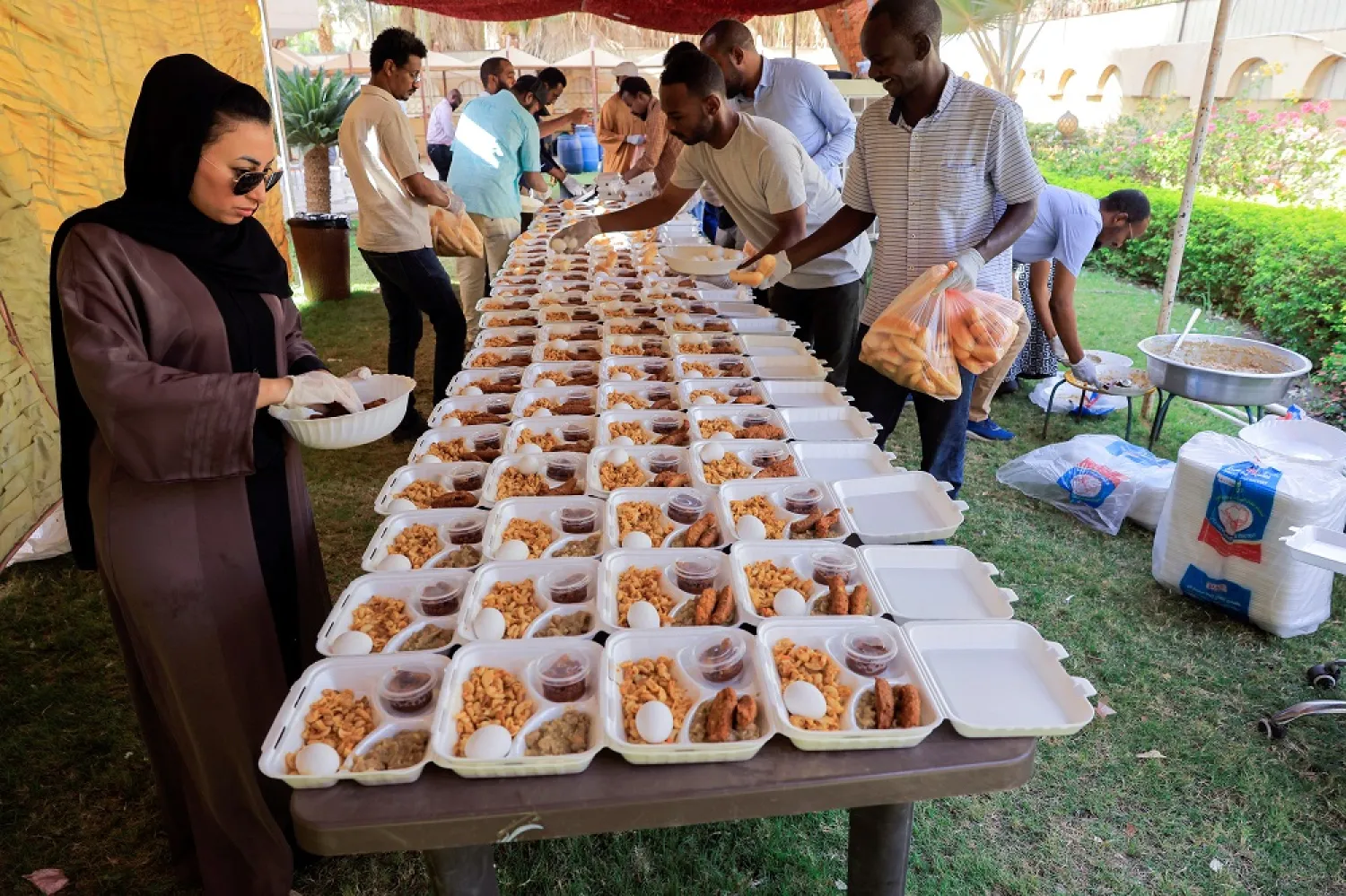
Youth volunteers prepare donated food for Ramadan breakfast in Khartoum, Sudan April 13, 2022. Picture taken April 13, 2022. (Reuters)
TT

Ukraine War to Curb Central Asian Economy, Oil Cushions Middle East, Says IMF

Youth volunteers prepare donated food for Ramadan breakfast in Khartoum, Sudan April 13, 2022. Picture taken April 13, 2022. (Reuters)

The war in Ukraine will sharply reduce economic growth in the Central Asian region in 2022, although higher oil prices will lessen the impact for the Middle East and North Africa, the International Monetary Fund said on Wednesday.

Both regions will still feel the effect of surging commodity prices, and higher wheat prices alone could increase the Middle East and Central Asia's combined external financing needs by up to $10 billion, the IMF said.

"The war in Ukraine will be the dominant factor shaping the outlook, compounding global headwinds from faster-than-expected normalization of monetary policy in advanced economies, China's slowdown and a lingering pandemic," it said.

IMF Middle East and Central Asia Director Jihad Azour told a news conference that low income countries in the region would be hardest hit because of their limited reserves and their dependence on wheat from Ukraine and Russia.

The IMF classifies Afghanistan, Djibouti, Kyrgyzstan, Mauritainia, Somalia, Sudan, Tajikistan, Uzbekistan and Yemen as low income countries in its Middle East and Central Asia region.

Azour said the region's countries face higher food costs ranging from 0.3% of GDP to 1.5% of GDP.

The IMF has loan programs with many countries in the region, he said, and that it allowed adjustments at the height of the pandemic to enable countries to increase imports of COVID-related products.

Azour said the Fund was working with the World Bank, the UN World Food Program and other institutions to see how they could jointly provide more support to countries facing hardship.

"Tackling rising global food and energy prices is vital. While allowing domestic prices to gradually increase, countries should compensate vulnerable households," he said.

Russian impact

Economic growth in the Caucasus and Central Asia is projected to slow to 2.6% in 2022 from 5.6% in 2021, due to close trade and financial links with Russia, reliance on remittances and tourism, and "exchange rate and cross-border payment spillovers".

Even oil-producing Azerbaijan's economic growth is set to slow to 2.8% in 2022, from 5.6% last year, as it relies on tourism from Russia and Ukraine, as well as wheat and fertilizer imports from the two countries, the IMF said.

Russia and Ukraine are both big producers of raw materials and supply disruptions due to the war have sent commodity prices soaring.

Inflation is seen at 10.7% in Central Asia, a result of currency depreciation pressures and commodity price surges.

"The recovery is set to lose steam for oil importers, with increasing divergence across countries, while most countries will also continue grappling with elevated inflation," the IMF said.

Growth for the Middle East and North Africa (MENA) is forecast at 5%, down from 5.8% in 2021. In the six oil producing Gulf Arab states, growth is projected to accelerate to 6.4% from 2.7% last year.

Inflation in MENA is expected to remain elevated at 13.9% due to higher food and energy prices and, in some cases, exchange rate depreciation and lax monetary and fiscal policies.

Regional oil importers such as Lebanon and Tunisia are being hit by higher commodity prices and tightening financial conditions, fueling inflation and worsening external and fiscal accounts.

But oil and gas exporters will benefit from higher energy prices, more than offsetting the impact of tightening financial conditions and lower tourism revenues, the IMF said.

The IMF's April report assumes that the price of oil will average $106.83 a barrel in 2022.

The IMF earlier this month upgraded top oil exporter Saudi Arabia's economic growth outlook to 7.6% in 2022, citing higher oil output and prices.



Taiwan Says It Has Assurances over LNG Supplies from 'Major' Country

The Taipei 101 skyscraper is seen lit up before the Earth Hour in Taipei, Taiwan, Saturday, March 28, 2026. (AP Photo/ Chiang Ying-ying)
TT

Taiwan Says It Has Assurances over LNG Supplies from 'Major' Country

The Taipei 101 skyscraper is seen lit up before the Earth Hour in Taipei, Taiwan, Saturday, March 28, 2026. (AP Photo/ Chiang Ying-ying)

Taiwan has received ‌supply assurances from the energy minister of a "major" liquefied natural gas-producing country, the island's economy minister said on Saturday, speaking about the Iran war's impact on Middle East energy imports.

Taiwan, a major semiconductor producer, had relied on Qatar for around a third of its LNG before the conflict, and has said it has secured alternate supplies for the months ahead from countries including Australia and the United States, said Reuters.

Speaking to ‌reporters in Taipei, ‌Economy Minister Kung Ming-hsin said that ‌because ⁠Taiwan has good ⁠relationships with its crude oil and natural gas suppliers, neither adjusting shipment origins nor purchasing additional spot cargoes would be a problem.

Kung said that about two weeks ago the energy minister of a certain "major energy-producing country" proactively contacted him.

The person "explained to us that they ⁠would fully support our natural gas needs. ‌If we have any ‌demand, we can let them know," he added.

"Another country even ‌said that some countries have released strategic petroleum ‌reserves, and they could also help coordinate matters if Taiwan needs assistance," Kung said.

"This shows that Taiwan has in fact earned considerable goodwill internationally through the long-term trust ‌it has built over the years," he said.

He declined to name the countries involved.

Angela ⁠Lin, ⁠spokesperson for state-owned refiner CPC, said at the same news conference that crude oil inventories were being maintained at pre-conflict levels and overall petrochemical feedstock supplies have remained stable.

CPC Chairman Fang Jeng-zen said that to reduce dependence on the Middle East, a new contract with the US will see 1.2 million metric tons of LNG supplied annually, with even more to come in the future, including eventually from Alaska.

However, Taiwan is not considering importing crude or LNG from Russia, he added.


India Says Crude Oil Supplies Secured, No Payment Issues for Iran Imports

The Indian-flagged carrier Jag Vasant, carrying liquefied petroleum gas (LPG) via the Strait of Hormuz, arrives at Mumbai Port in Mumbai, India, 01 April 2026. EPA/DIVYAKANT SOLANKI
TT

India Says Crude Oil Supplies Secured, No Payment Issues for Iran Imports

The Indian-flagged carrier Jag Vasant, carrying liquefied petroleum gas (LPG) via the Strait of Hormuz, arrives at Mumbai Port in Mumbai, India, 01 April 2026. EPA/DIVYAKANT SOLANKI

India's petroleum ministry said in a post on X on ‌Saturday ‌that the ‌country's ⁠refiners have secured their ⁠crude requirements, including from Iran, ⁠and ‌there are ‌no payment hurdles ‌for ‌Iranian imports.

India's crude oil ‌requirements remain fully secured ⁠for the coming ⁠months, the ministry added.


From Asia to the Americas: Governments Race to Contain Energy Shock

A gas station in Los Angeles, California (AFP) 
TT

From Asia to the Americas: Governments Race to Contain Energy Shock

A gas station in Los Angeles, California (AFP) 

Governments worldwide are moving swiftly to contain the fallout from a sharp rise in energy costs, as global supply disruptions linked to the US-Israeli war on Iran rattle markets.

Surging fuel and electricity prices have prompted urgent steps to protect consumers and secure supplies, with mounting pressure on economies.

In Asia, India has taken measures to safeguard domestic supply, signaling a potential review of fuel exports if needed while prioritizing the local market. Requests from neighboring countries for fuel will be met only if surplus is available.

Authorities have also barred consumers connected to piped gas networks from using liquefied petroleum gas cylinders to manage demand. New Delhi has invoked emergency powers, directing refiners to maximize cooking gas output while cutting industrial supplies to meet household needs.

South Korea is boosting domestic energy production by easing restrictions on coal-fired plants and increasing nuclear utilization to 80 percent of capacity. It is also considering additional support vouchers for vulnerable households. To bolster supply, Seoul has begun implementing a ban on naphtha exports.

China has imposed restrictions on refined fuel exports as a precaution against domestic shortages, while allowing drawdowns from fertilizer reserves to support agriculture ahead of the spring season.

In Southeast Asia, Singapore will accelerate previously announced budget support measures to ease pressure on households and businesses. Indonesia aims to increase coal output, is weighing export taxes, and plans a biofuel program using a diesel–palm oil blend. Cambodia is importing additional fuel from Singapore and Malaysia to offset shortages.

Japan will temporarily ease restrictions to expand coal-fired power generation for one year and has called for coordination through the Group of Seven and the International Energy Agency to stabilize markets. It has also asked Australia to boost liquefied natural gas output.

Elsewhere, the Philippines has suspended wholesale spot electricity trading due to price volatility and supply risks, while activating a 20 billion peso emergency fund.

Vietnam is accelerating a shift to ethanol-blended gasoline, and Australia is drawing on fuel reserves to address shortages, particularly in rural areas, while warning of prolonged economic impacts. Authorities have urged reduced fuel use, including greater reliance on public transport.

Europe acts

European Union institutions have called for temporary measures, including cuts to electricity taxes and network charges, alongside direct support for households.

Italy is considering reducing fuel levies and may impose windfall taxes on companies benefiting from the crisis. Spain is preparing aid and tax relief for households and hard-hit sectors.

In Eastern Europe, Romania has cut diesel excise duties. Serbia has reduced fees on crude oil and extended a ban on exports of oil and derivatives. Slovenia has imposed temporary limits on fuel purchases.

Greece announced 300 million euros in support for fuel and fertilizers, along with reduced maritime transport costs to ease pressure on consumers and farmers.

Americas, Africa respond

In Latin America, Argentina has postponed fuel tax increases. Brazil has scrapped federal diesel taxes, imposed a levy on oil exports and unveiled plans to support fuel imports at the state level.

In Africa, South Africa has temporarily reduced fuel taxes, Ethiopia has increased subsidies, and Namibia has cut fuel levies by 50 percent for three months. Other countries are considering similar steps.

In the Middle East and North Africa, Egypt has capped prices for unsubsidized bread and raised procurement prices for local wheat to strengthen strategic reserves.

Other measures include tax cuts in North Macedonia, energy-saving steps in Mauritius, efforts to secure additional supplies in Sri Lanka and a possible reduction in value-added tax on fuel in Poland.

The breadth of these actions underscores the scale of the global response, as governments seek to cushion households and economies from rising energy costs. Amid persistent geopolitical tensions, policymakers continue to adjust strategies to manage supply risks and price volatility.