


Top German Court Rejects Syrian's Appeal in Torture Case

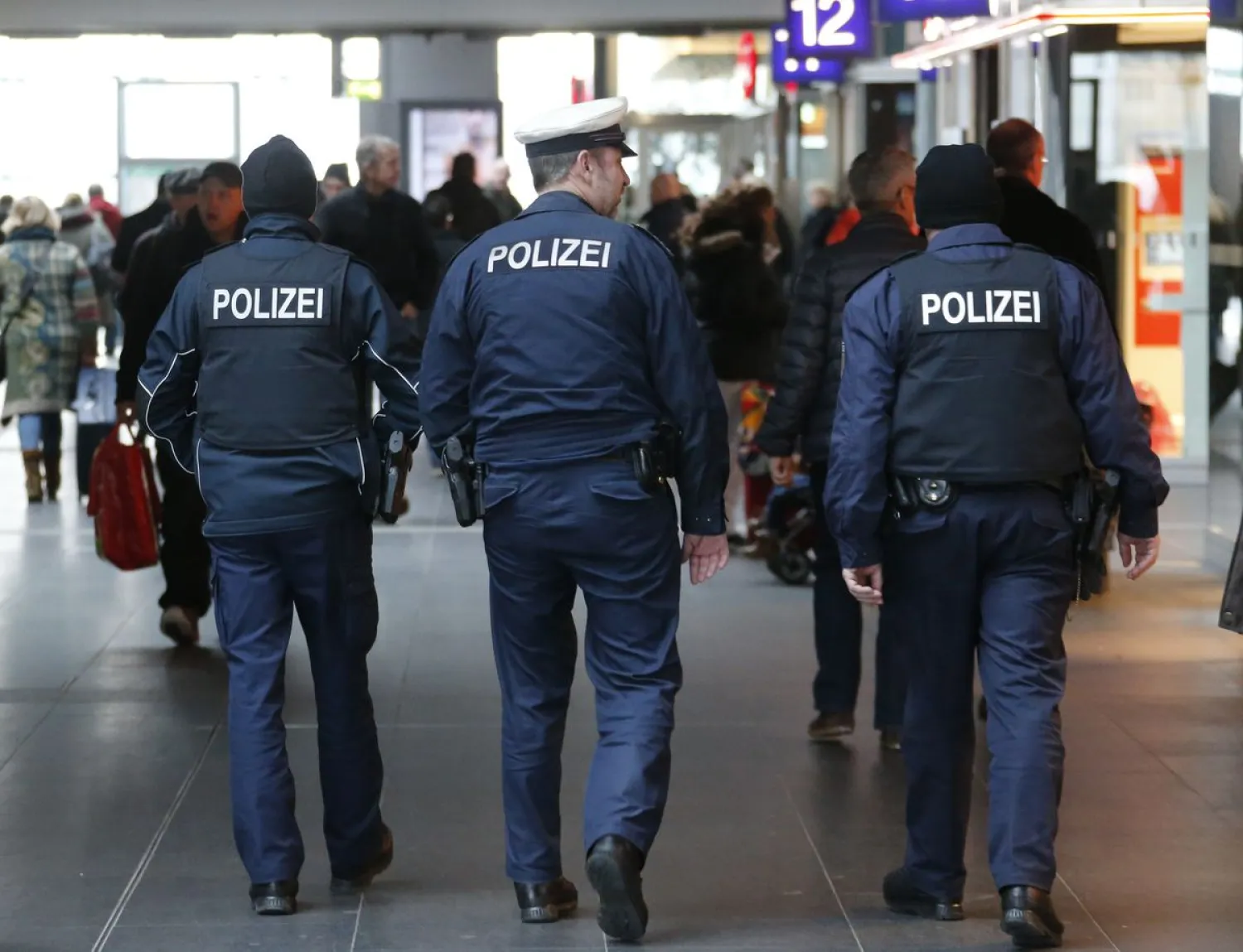
Police on patrol in Berlin. Reuters file photo
TT

Top German Court Rejects Syrian's Appeal in Torture Case

Police on patrol in Berlin. Reuters file photo

Germany's top court said Tuesday that it has rejected the appeal of a former member of Syria's secret police who was convicted last year of facilitating the torture of prisoners in his home country.

In a landmark ruling, a court in the western German city of Koblenz had convicted Eyad Al-Gharib of accessory to crimes against humanity and sentenced him to 4 1/2 years in prison. The verdict, which was the first time that a court outside Syria ruled in a case alleging Syrian government officials committed crimes against humanity, was welcomed by human rights activists and victims of President Bashar Assad’s repression.

Al-Gharib, 45, had appealed the sentence, noting that his testimony to German investigators provided significant evidence for the subsequent conviction of a second, more senior Syrian former official.

According to The Associated Press, the Federal Court of Justice said it found no legal errors in the verdict or sentence imposed by the Koblenz court, meaning that ruling cannot now be challenged.



Report: Iran Regaining Access to its Missile Facilities

A woman walks past Iranian missile models in Tehran’s Valiasr Square on April 6, 2026. (AFP)
TT

Report: Iran Regaining Access to its Missile Facilities

A woman walks past Iranian missile models in Tehran’s Valiasr Square on April 6, 2026. (AFP)

Satellite imagery has revealed that Iran has started regaining access to its underground missile facilities, reported CNN based on figures from Airbus Defence and Space.

The development casts doubt on US President Donald Trump’s claims of having all but obliterated Tehran’s arsenal, said CNN.

During the war, Israeli-US strikes put many of these complexes out of commission by blocking their entry points, trapping a large portion of Iran’s launchers and crippling its ability to fire missiles.

“Now, using just bulldozers and dump trucks, Iran is undoing the effects of a strategy that involved an enormous amount of Israeli-US firepower,” added CNN.

According to the report, since the ceasefire between Iran and the United States began, Iran has cleared at least 50 access points at 18 missile sites.

Airbus satellite images from April 10 showed efforts to remove debris from the blocked entrance to a tunnel at a missile base south of Tabriz.

Additional satellite imagery showed debris being cleared at a missile base in Khomein, where a truck was seen removing rubble from a tunnel entrance while waste-removal trucks waited nearby.

The Pentagon stands by the success of its campaign.

CNN also reported that Iran has already restarted some of its drone production during the six-week ceasefire that began in early April, one sign it is “rapidly rebuilding certain military capabilities” degraded by US-Israeli strikes, according to two sources familiar with US intelligence assessments.

Four sources told CNN that US intelligence indicates Iran’s military “is reconstituting much faster than initially estimated.”

The rebuilding of military capabilities, including replacing missile sites, launchers and production capacity for key weapons systems destroyed during the current conflict “calls into question claims about the extent to which US-Israeli strikes have degraded Iran’s military in the long term.”

While the time to restart production of different weapons components varies, some US intelligence estimates indicate Iran could fully reconstitute its drone attack capability in as soon as six months, one of the sources, a US official, told CNN.

“The Iranians have exceeded all timelines the IC had for reconstitution,” the US official said.

Trump has repeatedly threatened to resume combat operations against Iran if the two countries fail to reach a deal to end the war.

“Iran has been able to rebuild much faster than expected due to a combination of factors, ranging from support it is receiving from Russia and China to the fact that the US and Israel did not inflict as much damage as the two countries had hoped,” one of the sources told CNN.

For example, China has continued to provide Iran with components during the conflict that can be used to build missiles, two sources familiar with US intelligence assessments told CNN, though that has likely been curtailed by the ongoing US blockade.

Israeli Prime Minister Benjamin Netanyahu told CBS last week that China is giving Iran “components of missile manufacturing” but declined to elaborate further.

Chinese Foreign Ministry spokesperson Guo Jiakun denied the allegation during a press conference, calling it “not based on facts.”


Trump Insists on Red Lines as Iran Deal Remains Elusive

 Vessels anchored at the Strait of Hormuz, as seen from Musandam, Oman, May 29, 2026. (Reuters)
Vessels anchored at the Strait of Hormuz, as seen from Musandam, Oman, May 29, 2026. (Reuters)
TT

Trump Insists on Red Lines as Iran Deal Remains Elusive

 Vessels anchored at the Strait of Hormuz, as seen from Musandam, Oman, May 29, 2026. (Reuters)
Vessels anchored at the Strait of Hormuz, as seen from Musandam, Oman, May 29, 2026. (Reuters)

US President Donald Trump will only make a peace deal with Iran if it meets all of his conditions, a White House official told AFP on Friday, as questions swirled about the state of negotiations to end the war.

The White House had indicated Trump was close to a decision on a potential deal, even as Tehran insisted there was still "no final agreement" on ending the Middle East conflict.

An Iranian state media report also rebutted several key elements of Trump's characterization of the deal, with sources calling his remarks a "mixture of truth and lies."

US sources had told AFP the deal was waiting on Trump's sign-off following weeks of halting negotiations over a conflict that has engulfed the Middle East and shaken the global economy.

Trump attended a two-hour meeting in the White House Situation Room on Friday but did not reach a decision.

"President Trump will only make a deal that is good for America and satisfies his red lines," a White House official told AFP afterward.

"Iran can never possess a nuclear weapon," the official added.

Trump had announced the meeting in a lengthy social media post, reiterating long-held demands that Iran agree never to develop nuclear weapons and reopen the vital Strait of Hormuz shipping lane.

Iranian foreign ministry spokesman Esmaeil Baqaei pushed back, telling state media that Tehran "said goodbye to the language of 'must' 47 years ago."

Exchanges of messages were continuing, he added, but "no final agreement has been reached yet."

In a phone call with the Emir of Qatar, Iranian President Masoud Pezeshkian said Iran was ready to achieve a "dignified framework" to end the war, according to state news agency IRNA.

In his post, Trump said Tehran would remove mines from the Strait of Hormuz and end its blockade of the waterway with "no tolls," while the US would lift its parallel blockade of Iranian ports.

The two countries would also coordinate on removing and destroying Iran's enriched uranium, he said, adding that "no money will be exchanged, until further notice."

Iran's Fars news agency, however, cited sources as saying Tehran was demanding "the immediate release of $12 billion in frozen Iranian assets" before moving to the next phase of negotiations.

On the toll-free reopening of Hormuz, the sources said "no such clause appears in the text of the agreement," while Trump's comment on destroying Iran's nuclear material "is fundamentally baseless."

Baqaei also told state TV there were currently "no negotiations" taking place on Iran's nuclear program, as Iran's top diplomat suggested the US was holding up a deal with its approach to the talks.

- 'Telling the truth'? -

Ali, a resident of the city of Tonekabon north of Tehran, said that whatever the deal was, there would likely be more strife to come.

"Both sides are speaking in a way that keeps their supporters satisfied. It's not clear who is telling the truth," the 49-year-old said.

Hopes of an agreement had risen on Thursday after US officials voiced optimism about the diplomatic progress.

Energy markets have whipsawed this week as investors parse the chances of an agreement that could potentially resume normal shipping through the crucial Strait of Hormuz.

Washington and Tehran have accused each other of violating the truce in and around the strait as recently as this week, with US strikes on the southern Iranian port of Bandar Abbas countered by retaliatory Iranian fire.

Iranian state TV said Friday that 24 ships had transited the strait in the past 24 hours, in coordination with the Revolutionary Guards and the foreign ministry.

But it warned that "ships from hostile countries face a severe response" from Iran's military.

- Lebanon fighting -

On the war's Lebanon front, Israeli Prime Minister Benjamin Netanyahu said Friday that his country's forces had pushed deeper inside Lebanon, while Iran-backed Lebanese group Hezbollah claimed responsibility for a series of drone attacks on military targets in northern Israel, including troop gatherings and barracks.

It also said its forces were attacking Israeli troops trying to advance in the area of the medieval Beaufort fortress, near the city of Nabatieh.

The attacks came as Israeli and Lebanese military delegations held security talks in Washington, which were called "productive" by Elbridge Colby, the Pentagon's second-in-command.

Israel kept up its heavy bombardment of southern Lebanon, where the Lebanese health ministry said a rescuer was among the 11 killed.

A ceasefire between Israel and Hezbollah was supposed to have taken effect on April 17, but has never been observed.

Both sides accuse each other of violating it and justify their attacks by the other camp's alleged breaches.

Lebanon was drawn into the war in early March when Hezbollah launched rockets at Israel over the killing of Iran's supreme leader in US-Israeli attacks, prompting Israeli strikes and a ground invasion.


Putin Says It’s Too Early to Say if the Drone Which Strayed into Romania Was Russian

In this pool photograph distributed by the Russian state agency Sputnik Russia's President Vladimir Putin attends the extended-format meeting of the Supreme Eurasian Economic Council of the Eurasian Economic Union (EAEU) at the Palace of Independence in Astana on May 29, 2026. (AFP)
TT

Putin Says It’s Too Early to Say if the Drone Which Strayed into Romania Was Russian

In this pool photograph distributed by the Russian state agency Sputnik Russia's President Vladimir Putin attends the extended-format meeting of the Supreme Eurasian Economic Council of the Eurasian Economic Union (EAEU) at the Palace of Independence in Astana on May 29, 2026. (AFP)

Russian ‌President Vladimir Putin said on Friday that it was too early to say if the drone which crashed into an apartment block in Romania was Russian and suggested it could have been a Ukrainian drone.

NATO accused Moscow on Friday of reckless behavior and pledged to "defend every inch of Allied territory" after Romania said a Russian drone had crashed into ‌an apartment ‌block in the alliance member state ‌during ⁠an attack on ⁠neighboring Ukraine.

"Who in Romania says that this is a Russian drone?" Putin asked reporters at a news conference in Astana, Kazakhstan. He said he had only just heard of the incident as he had been in talks ⁠all day.

"No one can say ‌what the origin ‌of this or that drone is until an examination ‌has been carried out," he said.

Putin ‌said that Ukrainian drones had previously been spotted in Finland, Poland and in the Baltic countries.

"The first reaction was exactly the same as it ‌is now in Romania: The Russians are coming," Putin said. "Then, after a short ⁠time, ⁠it turned out that it had nothing to do with Russian drones."

Putin also pushed back against remarks by European Commission President Ursula von der Leyen, who accused Russia of crossing another line with the incident, saying that she had not examined the drone debris herself.

Putin suggested that Romania share information about what happened and potentially drone fragments so that Moscow could conduct its own investigation.