


Saudi FM Says 'Not Enough Progress' Made at Talks with Iran

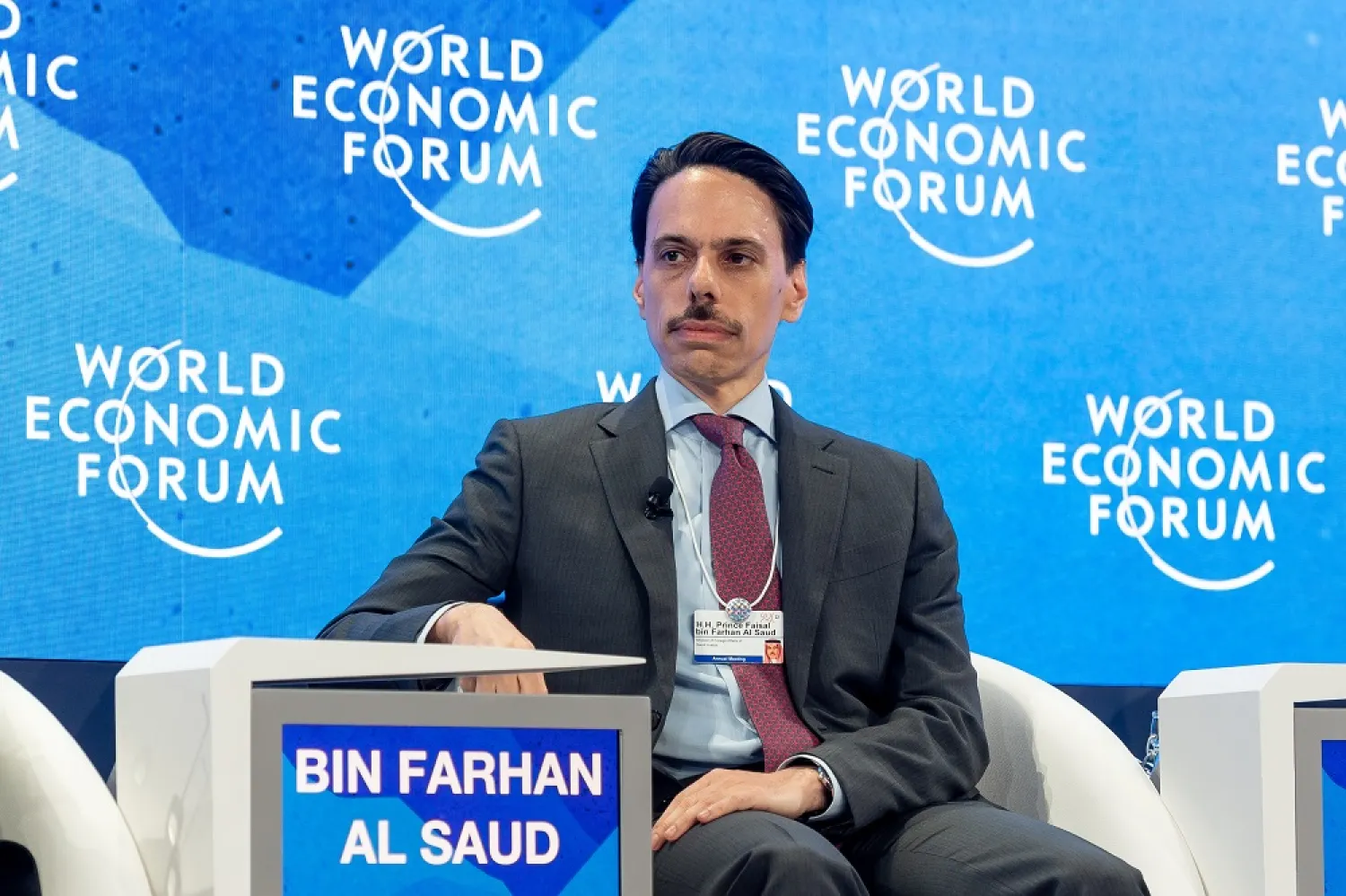
24 May 2022, Switzerland, Davos: Prince Faisal bin Farhan bin Adbullah, Minister of Foreign Affairs of Saudi Arabia, attends the "Geopolitical Outlook" session at the World Economic Forum Annual Meeting in Davos-Klosters. (World Economic Forum/dpa)
TT

Saudi FM Says 'Not Enough Progress' Made at Talks with Iran

24 May 2022, Switzerland, Davos: Prince Faisal bin Farhan bin Adbullah, Minister of Foreign Affairs of Saudi Arabia, attends the "Geopolitical Outlook" session at the World Economic Forum Annual Meeting in Davos-Klosters. (World Economic Forum/dpa)

Saudi Foreign Minister Prince Faisal bin Farhan bin Abdullah revealed on Tuesday that "some" progress has been made in talks with Iran, but it was "not enough."

"Our hands are stretched out," he told a World Economic Forum panel on security in the Middle East.

Joining Prince Faisal on the panel were his counterparts from Kuwait, Ahmed Nasser Al Sabah, and Jordan, Ayman al-Safadi, and Prime Minister of the Iraqi Kurdistan Region Masrour Barzani.

Prince Faisal said Saudi Arabia, like its fellow members in the Gulf Cooperation Council, was seeking a future that is based on hope, development and cooperation in line with the Kingdom's Vision 2030. This hope extends beyond its borders.

"Our hands are extended to Iran and we are trying to send a message that moving towards a new phase of cooperation in the region carries benefits for everyone," he stressed.

He added that this hinges on Tehran making up its mind about joining this path towards a prosperous future.

He revealed that all GCC countries hold talks with Iran and are coordinating closely.

On a nuclear deal with Tehran, the FM said it would "be potentially a good thing if it's a good deal" and reiterated Riyadh's stance that Tehran's regional activities should be addressed.

Lebanon
Turning to the recent parliamentary elections in Lebanon, Prince Faisal said: "They were the voice of the Lebanese people. We have previously stated that Lebanon needed change."

"How this change is brought about is up to them," he added.

He noted that the elections were a "strong" sign, but that it was too soon to jump to conclusions.

The elections saw Iran-backed Hezbollah and its allies lose their majority at parliament.

Change depends on the decisions the Lebanese politicians take. "Will they embark on real economic reform?" Prince Faisal asked. "Will political reform restore the authority of the state and the legitimacy of its institutions and fight corruption?"

"We hop so. We will support it if it happens," he pledged.

Jordan's FM Safadi added: "We will not allow the collapse of Lebanon. Everyone [in the region] will pay the price of that."

Syria
On Syria, he said the greatest danger his kingdom confronted in recent years was terrorism. Now, that threat is drug smuggling to Jordan and through it, to Iraq, Kuwait and Saudi Arabia.

The continuation of the current situation will deepen the crisis and with it, the suffering of the Syrian people and refugees, he warned.

Everyone agrees that the only solution in Syria is political, he added.

Safadi reiterated Amman's call to draft a mechanism that allows Arabs to play a collective role to resolve the crisis, by redefining it as a Syrian cause, not an open arena were international powers vie for interests.

Two-state solution
Asked if Saudi Arabia would consider normalizing relations with Israel, Prince Faisal replied that normalizing ties between the region and Israel carries many benefits for everyone, but "we will not be able to reap them without resolving the Palestinian cause."

He said the crisis is still at the root of instability in the region. Leaving it unresolved will embolden extremists and hardliners, he warned.

"Our priority today lies in pushing forward the peace process, which will help the Israelis, Palestinians and entire region."

Safadi, for his part, criticized the lack of political prospects to resolve the Palestinian-Israeli conflict.

"This kills hope and empowers extremists everywhere," he warned, while stressing that the two-state solution was the only solution, which would see the formation of a sovereign Palestinian state based on 1967 borders with East Jerusalem as its capital.



Saudi Crown Prince Receives Message on Bilateral Ties from President of Kazakhstan

Prince Mohammed bin Salman bin Abdulaziz Al Saud, Saudi Crown Prince and Prime Minister. (SPA file)
TT

Saudi Crown Prince Receives Message on Bilateral Ties from President of Kazakhstan

Prince Mohammed bin Salman bin Abdulaziz Al Saud, Saudi Crown Prince and Prime Minister. (SPA file)

Prince Mohammed bin Salman bin Abdulaziz Al Saud, Saudi Crown Prince and Prime Minister, received on Tuesday a written message from President of Kazakhstan Kassym-Jomart Tokayev on bilateral relations between their two countries.

The message was received by Minister of Foreign Affairs Prince Faisal bin Farhan bin Abdullah during a meeting with his Kazakh counterpart Yermek Kosherbayev in Riyadh.


Princes and Officials Take Oath Before Custodian of the Two Holy Mosques

Custodian of the Two Holy Mosques King Salman bin Abdulaziz Al Saud and other officials are seen during the ceremony in Riyadh on Tuesday. (SPA)
TT

Princes and Officials Take Oath Before Custodian of the Two Holy Mosques

Custodian of the Two Holy Mosques King Salman bin Abdulaziz Al Saud and other officials are seen during the ceremony in Riyadh on Tuesday. (SPA)

Princes and officials appointed by royal orders to their new positions took the oath of office before Custodian of the Two Holy Mosques King Salman bin Abdulaziz Al Saud in Riyadh on Tuesday.

They included Deputy Governor of Al-Baha Region Prince Fahd bin Saad bin Abdullah bin Abdulaziz bin Turki; Member of the Shura Council Prince Dr. Saad bin Saud bin Mohammed bin Abdulaziz; Deputy Governor of Madinah Region Prince Saud bin Nahar bin Saud; Deputy Governor of Northern Borders Region Prince Mohammed bin Abdullah bin Abdulaziz; and Minister of Investment Fahd Al-Saif.

They swore to be faithful to their religion, then their King and country, not to reveal any of the state’s secrets, to preserve its interests and regulations, and to perform their duties with honesty, trustworthiness, and sincerity.


Saudi Arabia Reiterates Its Categorical Rejection of Israel’s ‘State Land’ Decision in West Bank

Custodian of the Two Holy Mosques King Salman bin Abdulaziz Al Saud chairs the Cabinet meeting in Riyadh. (SPA)
TT

Saudi Arabia Reiterates Its Categorical Rejection of Israel’s ‘State Land’ Decision in West Bank

Custodian of the Two Holy Mosques King Salman bin Abdulaziz Al Saud chairs the Cabinet meeting in Riyadh. (SPA)

The Saudi government condemned on Tuesday Israel’s decision to West Bank lands as "state lands."

Reiterating its absolute rejection of these illegal measures, the Cabinet warned that they undermine peace efforts and violate the Palestinian people's inherent right to establish an independent, sovereign state within the 1967 borders, with East Jerusalem as its capital.

Custodian of the Two Holy Mosques King Salman bin Abdulaziz Al Saud chaired the Cabinet session that was held in Riyadh.

The Cabinet congratulated citizens and Muslims on the advent of the holy month of Ramadan, expressing gratitude for the Kingdom's honor in caring for the two holy mosques and their visitors.

The Cabinet highlighted the success of the Hajj and Umrah seasons, noting that the Kingdom welcomed 19.5 million international pilgrims and Umrah performers in 2025, setting new records that reflect rapid progress toward the goals of Vision 2030 and the Pilgrim Experience Program.

The Cabinet described the Kingdom's Founding Day celebration on February 22 as an expression of pride in the Saudi state's nearly three-century history, underscoring the foundations of justice, unity, and development established by leaders and citizens throughout history to ensure the nation remains a global leader in all fields.

The Cabinet was briefed on recent talks between Saudi Arabia and various nations, which focused on strengthening bilateral and multilateral cooperation and boosting coordination to foster regional and international security, stability, and prosperity.

The session further reviewed the Kingdom's economic, cultural, and social activities, stressing the state's commitment to social solidarity and giving. This includes continued support for the sixth National Campaign for Charitable Work, set to begin on Friday.

The Cabinet commended the success of the third World Defense Show held in Riyadh under the Custodian of the Two Holy Mosques' patronage, during which strategic partnerships, agreements, and memoranda of understanding were signed to localize military technologies and strengthen local supply chains in alignment with Vision 2030 objectives.