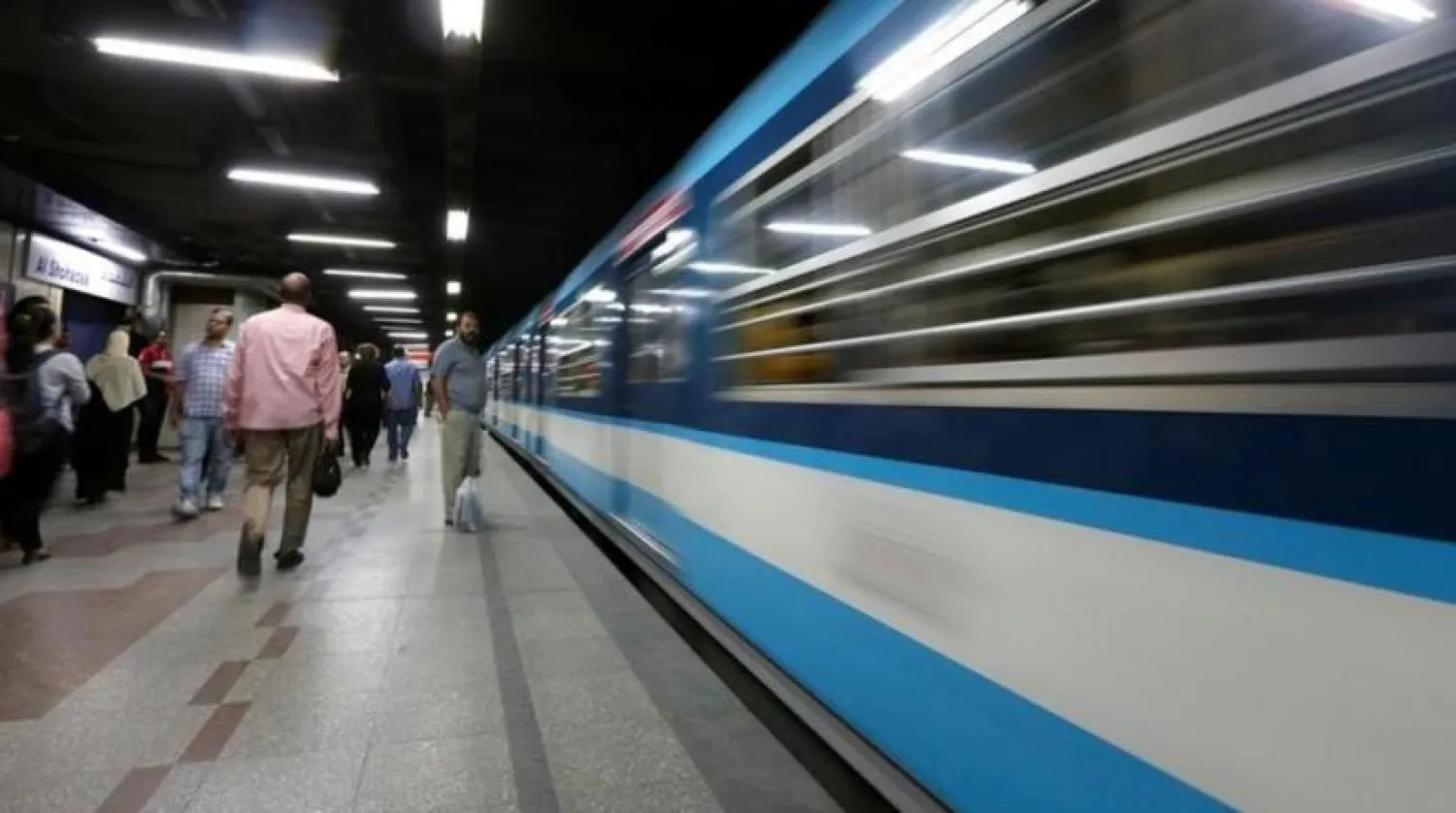
Siemens Mobility Wins $8.7 Billion High-speed Rail Deal in Egypt

The project is part of Egypt's extensive transport infrastructure investments over the past few years. Reuters
TT

Siemens Mobility Wins $8.7 Billion High-speed Rail Deal in Egypt

The project is part of Egypt's extensive transport infrastructure investments over the past few years. Reuters

Egypt has signed a contract with industrial manufacturing company Siemens' rail and traffic unit and its consortium partners to build about 2,000 kilometers of high-speed railways, the German group said on Saturday.

The deal between Egypt's National Authority for Tunnels (NAT) and a consortium of Siemens Mobility, Orascom Construction and Arab Contractors will create the world's sixth largest high-speed rail system, Reuters quoted Siemens as saying.

"It is the biggest order in the history of Siemens", Siemens Chief Executive Roland Busch said in a statement.

The project is part of Egypt's extensive transport infrastructure investments over the past few years.

Once completed, Egypt's high-speed network will consist of three rail lines: the one to link its Red Sea and Mediterranean coasts Siemens had dubbed a "Suez Canal on rails" in September, and the two lines announced on Saturday.

Siemens added that its subsidiary's share in the project is worth 8.1 billion euros ($8.69 billion) and includes the initial contract of 2.7 billion euros for the first line signed in September.


Saudi Stock Market Opens Its Doors to Direct Foreign Investment

Traders watch a screen at the Saudi stock market. (Reuters)
TT

Saudi Stock Market Opens Its Doors to Direct Foreign Investment

Traders watch a screen at the Saudi stock market. (Reuters)

When trading opened on this Sunday, Saudi Arabia’s stock exchange marked more than the start of a routine session. The day signaled a pivotal shift in the Kingdom’s financial history, as the market formally opened to direct foreign investment, positioning it as a destination for global capital and one of the most consequential milestones in Saudi Arabia’s economic transformation.

With the removal of long-standing restrictions and pre-qualification requirements, the Saudi market is moving beyond its earlier status as an ambitious emerging exchange. It is now seeking to stand shoulder to shoulder with advanced global markets, backed by a robust regulatory framework and an increasingly confident investor base.

Analysts say the reforms could pave the way for deeper liquidity, broader participation, and an eventual climb toward the 17,000-point level for the benchmark index.

Market specialists view the move as reinforcing Saudi Arabia’s appeal as an international investment hub and as a vote of confidence in the market’s regulatory maturity and capacity to absorb large capital inflows.

Expectations are that the changes will help attract long-term, strategic foreign investors, raise trading activity, and enhance market depth. Optimistic forecasts point to gains over the next two years, driven by anticipated interest in sectors such as banking, petrochemicals, and technology.

Sweeping regulatory reform

The decision by the Capital Market Authority in January to abolish the Qualified Foreign Investor regime and dismantle the framework governing swap agreements marked a fundamental regulatory overhaul rather than a technical adjustment.

The new rules allow non-resident foreign investors to access the main market directly, removing historic barriers and simplifying the process of opening and operating investment accounts.

Regulators say the reforms are aimed at attracting long-term capital that supports not only liquidity, but also higher standards of governance and transparency in line with global best practices.

The changes are part of a broader strategy to make the Saudi market more accessible to international investors, including Gulf Cooperation Council (GCC) residents and individuals with prior ties to the region.

Market gains ahead of the shift

The market has already reacted positively. Hamad Al-Olayan, chief executive of Villa Capital, told Asharq Al-Awsat that the benchmark index gained nearly 1,000 points in January alone, following the announcement of the regulatory changes.

“This rally comes ahead of foreign participation,” Al-Olayan said, noting that many listed companies had seen their share prices decline over the past two years. “Current investors are unlikely to sell strong stocks at these low levels, and recent sessions have seen concentrated buying in companies with solid balance sheets and promising outlooks.”

Key sectors in focus

Al-Olayan described the Saudi market as the strongest in the region, citing a stream of positive assessments from global banks and advisory firms, as well as optimistic growth projections for the Saudi economy in 2026.

He said the market continues to be anchored by two core sectors: banking, which plays the leading role, and petrochemicals, which remain attractive despite near-term challenges. Recent asset sales by SABIC in Europe and the United States—transactions that drew foreign investors—underscore sustained international confidence in Saudi companies.

Momentum has also been building around the Saudi Arabian Mining Company (Maaden), supported by rising global prices for gold, silver, and other metals. Al-Olayan noted that international investors increasingly favor companies with strategic assets, including Saudi Aramco and Maaden.

Toward advanced-market status

Mohamed Hamdy Omar, chief executive of G World, described the move as “a historic step that strengthens the Saudi market’s position as an emerging exchange steadily progressing toward developed-market status.”

He said the decision reflects strong regulatory and economic confidence and builds on earlier reforms following the market’s inclusion in major global indices.

Omar expects foreign inflows to build gradually from the second half of 2026, with clearer effects on trading volumes and prices emerging in 2027.

While short-term volatility linked to portfolio rebalancing is possible, he stressed that the medium- and long-term outlook remains firmly positive.

Key figures

Despite market volatility in 2025 driven by geopolitical tensions, global economic uncertainty, and oil price swings, foreign ownership in Saudi equities climbed to SAR 590 billion ($157.3 billion) by the end of the third quarter of the year, up from SAR 498 billion ($132.8 billion) a year earlier.

Total trading value reached SAR 1.30 trillion ($346.7 billion) in 2025, underscoring the market’s resilience and growing international appeal.


Egypt Eyes Role for Its Companies in Angola’s Lobito Development Corridor

The Egyptian president during his meeting with his Angolan counterpart in Guinea last July (Egyptian Presidency).
TT

Egypt Eyes Role for Its Companies in Angola’s Lobito Development Corridor

The Egyptian president during his meeting with his Angolan counterpart in Guinea last July (Egyptian Presidency).

Cairo is seeking a role for Egyptian companies in projects to be implemented under Angola’s Lobito Development Corridor, while also coordinating to convene the next edition of the Egyptian–Angolan Business Forum at the earliest opportunity.

The move came during a phone call on Saturday between Egypt’s Minister of Foreign Affairs, Badr Abdelatty, and his Angolan counterpart, Tete António, in which the two ministers discussed ways to support and strengthen bilateral relations and coordinate positions on issues of mutual interest.

Abdelatty praised the “growing momentum in Egyptian–Angolan relations and the shared commitment to enhancing political understanding and consultation to push these ties to broader horizons.”

He stressed the importance of building on the outcomes of the Joint Committee meeting held in Angola last December, in a way that advances bilateral relations across political, economic, and investment fields. He also reiterated Egypt’s interest in cooperation in regional connectivity and transport, infrastructure, renewable energy, and the pharmaceutical industry.

The Egyptian foreign minister visited Angola’s capital, Luanda, last December, where he inaugurated the Egyptian–Angolan Business Forum on the sidelines of the first session of the Joint Committee between the two countries.

At the time, he said the forum reflected the strength of relations between Egypt and Angola and the shared political will of both leaderships to elevate economic cooperation into a cornerstone of the bilateral partnership. He underscored the need to boost trade volumes and mutual investments and to capitalize on available potential and opportunities.

Trade between Egypt and Angola rose in 2024 to $34.2 million, up from $21.3 million in 2023, according to figures released by Egypt’s Central Agency for Public Mobilization and Statistics (CAPMAS) in April 2025.

CAPMAS said in a report that Egyptian exports to Angola reached $34.1 million in 2024, compared with $21.3 million in 2023, while Egyptian imports from Angola amounted to $73,000 in 2024, up from $21,000 a year earlier.

Dr. Naglaa Marei, professor of political science and an expert on African affairs, stressed the importance of coordination between Egypt and Angola ahead of the upcoming African Union Summit, noting that the continent faces multiple challenges.

These include instability in the Horn of Africa and the Red Sea region against the backdrop of the Sudanese crisis, tensions between Ethiopia and Eritrea over access to the Red Sea, and the renewed violence and conflict in Ethiopia’s Tigray region.

Speaking to Asharq Al-Awsat, Marei said Egyptian–Angolan relations have recently seen numerous official visits and bilateral meetings, as well as the convening of the Joint Committee last December — developments that have contributed to advancing political, economic, and investment cooperation between the two countries.


Bitcoin Falls Below $80,000, Continuing Decline as Liquidity Worries Mount

FILE PHOTO: Representation of Bitcoin cryptocurrency in this illustration taken September 10, 2025. REUTERS/Dado Ruvic/Illustration/File Photo
TT

Bitcoin Falls Below $80,000, Continuing Decline as Liquidity Worries Mount

FILE PHOTO: Representation of Bitcoin cryptocurrency in this illustration taken September 10, 2025. REUTERS/Dado Ruvic/Illustration/File Photo

Bitcoin, the world's largest cryptocurrency by market value, was down by 6.53% at $78,719.63 at 12:48 p.m. ET (1748 GMT) on Saturday, continuing its decline from the previous session.

On Friday, bitcoin fell to as low as $81,104, the lowest since November 21, while the US dollar gained after former Federal Reserve Governor Kevin Warsh was selected as the next Fed chair. Some investors and traders are concerned he might tighten ‌up on ‌cash in the financial system.

Warsh ‌has ⁠called for ‌regime change at the central bank and wants, among other things, a smaller Fed balance sheet, Reuters reported.

Bitcoin ⁠and other cryptocurrencies have been regarded as beneficiaries of a large balance sheet, ‍having tended to rally while the Fed greased money markets with liquidity - a support for ‌speculative ‌assets.

Brian Jacobsen, chief economist ⁠at Annex Wealth Management in Menomonee Falls, Wisconsin, said the Fed's "bloated ‌balance sheet combined with heavy-handed ‍bank regulation" had kept liquidity ‍trapped on Wall Street instead of flowing to ‍Main Street, helping fuel bubbles in assets such as bonds, crypto, metals and meme stocks.

Ether also fell 11.76% to $2,387.77 on Saturday afternoon. Cryptocurrencies have been struggling for direction since tumbling last year, having been left behind by big rallies in gold and stocks.

"Sometimes these ⁠price adjustments feed on themselves," Jacobsen said, adding that Friday’s abrupt drop had reminded people of the risks. He said it was "possible, if not likely, that we see more selling over the next few days."

Cryptos are having a rough time in what was once hoped to be a golden era of flows and friendly regulation under President Donald Trump. Market-leading bitcoin has lost a third of its value since striking record ‌highs in October last year.