Seven Arab States Could Face Food Crisis in Absence of Urgent Solutions

Arab countries could face a food shortage crisis if they do not address the existing challenges. (Asharq Al-Awsat)
TT

Seven Arab States Could Face Food Crisis in Absence of Urgent Solutions

Arab countries could face a food shortage crisis if they do not address the existing challenges. (Asharq Al-Awsat)

Seven Arab countries are expected to face a stifling food crisis if they don’t address their political and economic crises to face external challenges, topped by the Russian-Ukrainian war and the high cost of shipping from traditional food-exporting countries.

All these outstanding issues and plans to address the food crisis in the Arab world will be presented at a meeting in Tunisia later this month, as part of the activities of the Higher Coordination Committee for Joint Arab Action.

The event includes a financing mechanism for many programs that push for developing the agricultural and livestock sector, while expanding the rain-fed agriculture, which is spread in many of the Arab League member states.

Prof. Ibrahim Adam El-Dukhiri, the Director General of the Arab Organization for Agricultural Development (AOAD) at the Arab League, said the economic situation in some of the Arab states is the reason behind this threat.

In other countries, including oil countries, the political situation and instability are evident and reduce their appropriate utilization of the available resources.

The fragile political and security situation in the seven countries, which he didn’t reveal, exacerbates the food security problems and complicates any solution reached in this regard.

These problems will not affect the food sector only, Dukhiri noted, but they will rather afflict all their economic activities.

He stressed that the internal and foreign investments will decrease as a result of the overall situation in these countries.

He suggested resolving these issues as a major step to address the economic challenges, including the food crisis.

Dukhiri also pointed out that the climate change and the development level will affect many countries, including those that have rain-fed crops, who will face many troubles at the beginning and end of each season.

The senior official affirmed that the impact of the war in Ukraine will not be temporary, expecting that the situation will deteriorate by next year.

Dukhiri underscored the need for quick intervention, stressing that inaction will led to food shortages in many countries.

He pointed out that the cost of shipping has remarkably increased in various traditional food producing countries, including Argentina, Brazil, and Australia.

He shed light on the complexities and political differences that prevail in many European countries.

Some ports may refuse to receive specific products, leading to a surge in prices, he said, warning that the situation will become out of control.

Commenting on the AOAD’s role to help these countries, Dukhiri said their agricultural ministers are currently developing strategies to avoid this crisis.

They requested help from the organization, in terms of training, rehabilitation, studies, and plans, the official said, affirming that it is providing the optimal support.

The organization will propose in Tunis a program to address this issue, namely the Arab Sustainable Food Security Program, in which the financing mechanism is clarified and will be available to all.

“We will share with the Arab community the organization’s vision and arrangements, which include plans that can be implemented quickly, including Arab investments, and there are programs that need more time to be completed,” he told Asharq Al-Awsat.

The strategy includes three main and integrated factors, mainly the restructuring of the prevailing agricultural systems to become more efficient, as well as the hydroponic systems to increase the efficiency of water use.

The second factor is the expansion of rain-fed agriculture, especially that there are large areas in the Arab world where reasonable levels of self-sufficiency could be reached.

The third factor, according to Dukhiri, is the livestock component, which needs some arrangements in the process of feeding the animals.

He affirmed that this factor can reduce the effects of the import crisis.


Türkiye TPAO, Shell Sign Deal to Carry out Exploration Work offshore Bulgaria

A Shell logo is seen at a gas station in Buenos Aires, Argentina, March 12, 2018. (Reuters)
TT

Türkiye TPAO, Shell Sign Deal to Carry out Exploration Work offshore Bulgaria

A Shell logo is seen at a gas station in Buenos Aires, Argentina, March 12, 2018. (Reuters)

Türkiye Petrolleri (TPAO) has signed a partnership agreement with Shell to carry out exploration work in Bulgaria's maritime zone, the Turkish energy ministry and British oil major said on Wednesday.

European Union member Bulgaria, which had been totally dependent on Russian gas until 2022, has been seeking to diversify its gas supplies and find cheaper sources, Reuters reported.

TPAO and Shell will jointly explore the Khan Tervel block, located near Türkiye's Sakarya gas field, and will hold a five-year licence in Bulgaria's exclusive economic zone, Minister Alparslan Bayraktar said.

Shell will continue as operator of the block, while TPAO will take a 33% interest in the licence, a Shell spokesperson said.

Since the start of this year, TPAO has signed energy cooperation agreements with ExxonMobil, Chevron and BP for possible exploration work in the Black Sea and the Mediterranean.

In April, Shell signed a contract with Bulgaria's government to allow the oil major to explore 4,000 square metres in the block.


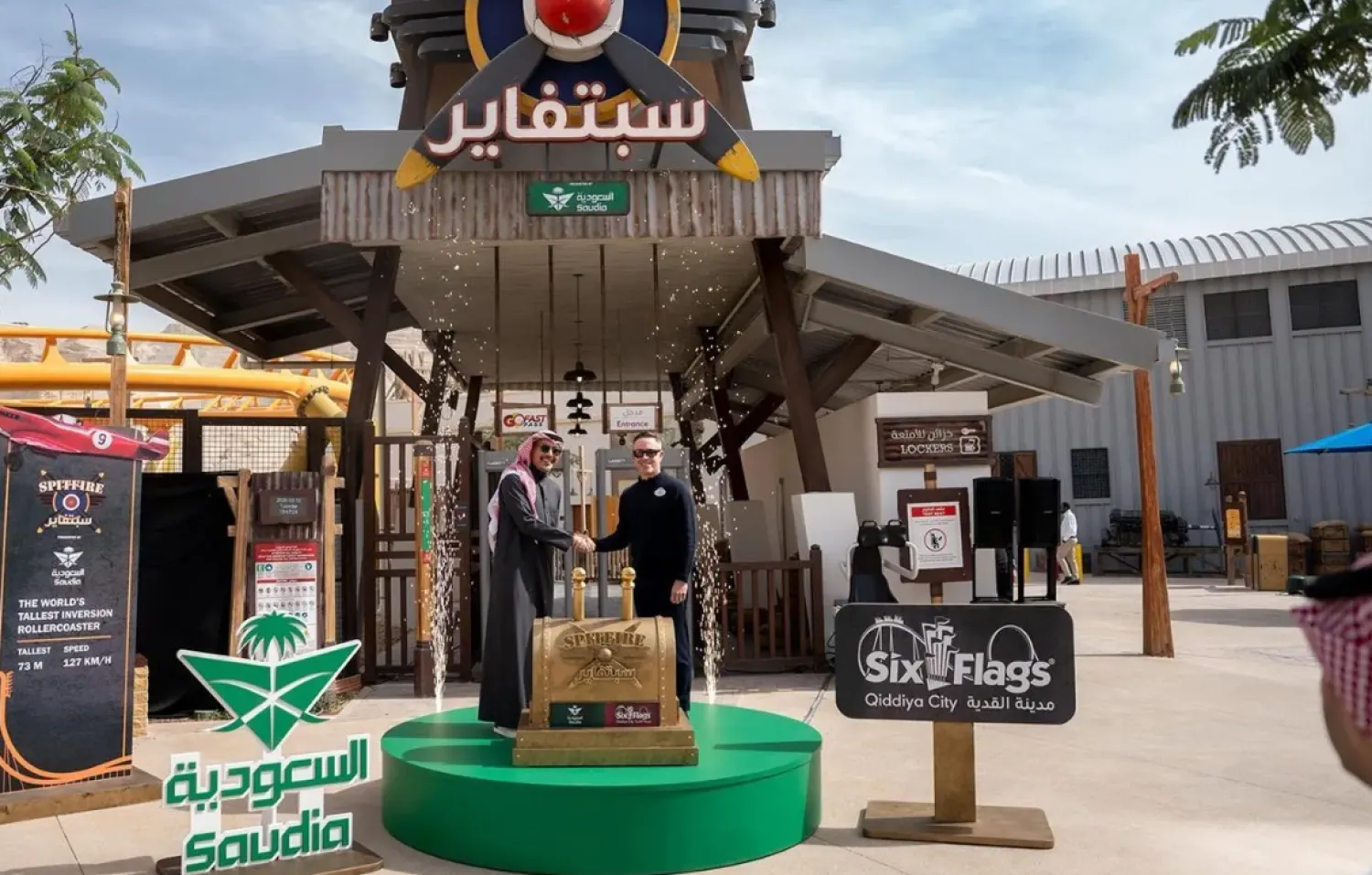
Saudia Signs Strategic Partnership Agreement with Six Flags and Aquarabia Qiddiya City

udia will develop special travel packages designed to enable visitors to experience world-class attractions - SPA
TT

Saudia Signs Strategic Partnership Agreement with Six Flags and Aquarabia Qiddiya City

udia will develop special travel packages designed to enable visitors to experience world-class attractions - SPA

Saudia Airlines has signed a five-year strategic partnership with Six Flags and Aquarabia Qiddiya City, becoming the official premier partner exclusively in the airline category.

As part of the partnership, Saudia will develop special travel packages designed to enable visitors to experience world-class attractions. The collaboration also brings the spirit of Six Flags and Aquarabia Qiddiya City to the skies through special aircraft branding across Saudia’s fleet, SPA reported. 

Chief Marketing Officer of Saudia Group Khaled Tash said in a press release: "Saudia is committed to supporting national development projects as part of its contribution to Vision 2030, aligned with our strategy to bring the world to the Kingdom. Partnerships of this scale with national partners play a key role in positioning Saudi Arabia as a leading global destination for entertainment and tourism."

Park President of Six Flags and Aquarabia Qiddiya City Brian Machamer added: "Our partnership with Saudia not only reflects a shared ambition to connect the Kingdom to the world through world-class entertainment experiences, but strengthens our ability to attract visitors from around the world and realize our vision of setting a new global benchmark for immersive, world-class theme park entertainment and reinforcing Saudi Arabia’s growing presence on the global tourism stage."

Six Flags Qiddiya City sets a new benchmark for exceptional entertainment regionally and globally. Spanning six iconic themed lands, the theme park takes visitors on an immersive journey across 28 rides and attractions designed to world-class standards. Beyond the scale and diversity of its offerings, Six Flags Qiddiya City stands out for pushing the boundaries of engineering and entertainment, featuring five exclusive, record-breaking rides that have redefined global benchmarks. Leading these innovations is Falcons Flight, the roller coaster that has captured global attention as the fastest, tallest, and longest in the world.

Aquarabia Qiddiya City delivers a distinctive aquatic entertainment experience, offering 22 rides and water attractions, along with a man-made river designed for both relaxation and family-friendly water fun. For guests seeking privacy and elevated comfort, Aquarabia features 91 luxury cabanas, positioning the destination as a fully integrated leisure offering that redefines water-based entertainment to the highest international standards.

Located in the Tuwaiq Mountains near Riyadh, Qiddiya City is an emerging destination bringing together entertainment, sports, and culture. Six Flags and Aquarabia Qiddiya City form part of its entertainment offering.


Moody’s Establishes Regional HQ in Riyadh, Deepening Presence in Region

(FILES) Signage for Moody's Corporation is displayed at their headquarters at 7 World Trade Center on March 18, 2025 in New York City. (Photo by ANGELA WEISS / AFP)
TT

Moody’s Establishes Regional HQ in Riyadh, Deepening Presence in Region

(FILES) Signage for Moody's Corporation is displayed at their headquarters at 7 World Trade Center on March 18, 2025 in New York City. (Photo by ANGELA WEISS / AFP)

Moody’s Corporation announced that it has established its regional headquarters in Riyadh, reflecting ongoing commitment to support the development of the Kingdom’s capital markets and economy.

“This investment aligns to the Kingdom's Vision 2030 initiative and underscores its dynamism and growth,” Moody’s said in a statement this week.

The new regional headquarters marks an expansion of Moody’s presence in Saudi Arabia, where the company first opened an office in 2018, and reflects its longstanding commitment to the Middle East.

“The headquarters will strengthen Moody’s engagement with Saudi institutions and enable broader access to Moody’s decision grade data, analytics and insights,” said the statement.

“Our decision to establish a regional headquarters in Riyadh reflects our confidence in Saudi Arabia’s strong economic momentum, as well as our commitment to helping domestic and international investors unlock opportunities with our expertise and insights,” said President and Chief Executive Officer of Moody’s Rob Fauber.

“We are well positioned to provide the analytical capabilities and market intelligence that investors and institutions need to navigate evolving markets across the Middle East,” the statement quoted him as saying.

Mahmoud Totonji will lead the regional headquarters as General Manager.