Grundberg in Muscat to Pressure Houthis to End Taiz Siege, Open Roads

United Nations envoy for Yemen Hans Grundberg speaks during a news conference in Sanaa, April 13, 2022. (Reuters)
TT

Grundberg in Muscat to Pressure Houthis to End Taiz Siege, Open Roads

United Nations envoy for Yemen Hans Grundberg speaks during a news conference in Sanaa, April 13, 2022. (Reuters)

UN Envoy for Yemen Hans Grundberg is racing to garner approval for extending the humanitarian truce between the Yemeni government and the Houthi militias. However, the government is insisting on Houthis lifting the siege of Taiz and complying with their obligations under the truce.

On Tuesday, Grundberg met with the spokesman of the Houthi group and its chief negotiator, Muhammad Abdul Salam Fleitah. The two met in the presence of Omani officials in the Sultanate’s capital, Muscat.

According to his office, Grundberg stressed “the need to reopen roads in Taiz and other areas of Yemen, to renew the armistice, and to take serious steps towards ending the conflict in a comprehensive manner.”

While the Yemeni government confirms that it has fulfilled all its obligations regarding the implementation of the two-month truce that began on April 2, Houthis are still blockading Taiz.

The Yemeni government has complied with the terms of the armistice, reopened Sanaa airport to commercial flights, as well as having permitted the flow of fuel to the port of Hodeidah.

Grundberg on Monday held meetings with the country's Presidential Leadership Council (PLC) in the southern port city of Aden. This is the third visit within a month for the UN envoy to the Yemeni interim capital.

“Rashad Muhammad Al-Alimi, Chairman of the PLC, along with the two Vice-Presidents of the PLC, Aidarous Al-Zubaidi, and Dr. Abdullah Al-Alimi, met today, Monday, the Special Envoy of the Secretary-General of the United Nations, Hans Grundberg, on his third visit this month to the temporary capital Aden,” reported state news agency, Saba.

Al-Alimi and his two deputies were briefed by the UN envoy on the developments of the ongoing efforts to implement the truce, and the opportunities to extend it and build on it to push the militias towards a comprehensive and just peace in accordance with the agreed local, regional and international references.

Grundberg presented the results of the first phase of negotiations, regarding the opening of the crossings of Taiz and other provinces, in which the Houthis continued their intransigence and their failure to implement the terms of the truce related to opening roads in Taiz and other provinces in order to alleviate the suffering of the Yemeni people.

During the meeting, the PLC chairman stressed the importance of pushing the militia to fulfill its obligations under the truce agreement, including opening all crossings, and paying employees’ salaries from the revenues of oil derivatives ships arriving at the ports of Hodeidah.

Al-Alimi affirmed the continued support of the leadership and the legitimate government for the UN efforts to implement the terms of the truce, and to provide more initiatives to alleviate the human suffering of the Yemeni people, and not to compromise on any of their rights guaranteed under the constitution and relevant international laws.


Israel Keen to Attack Iran’s Regional Proxies before they Can Join the War

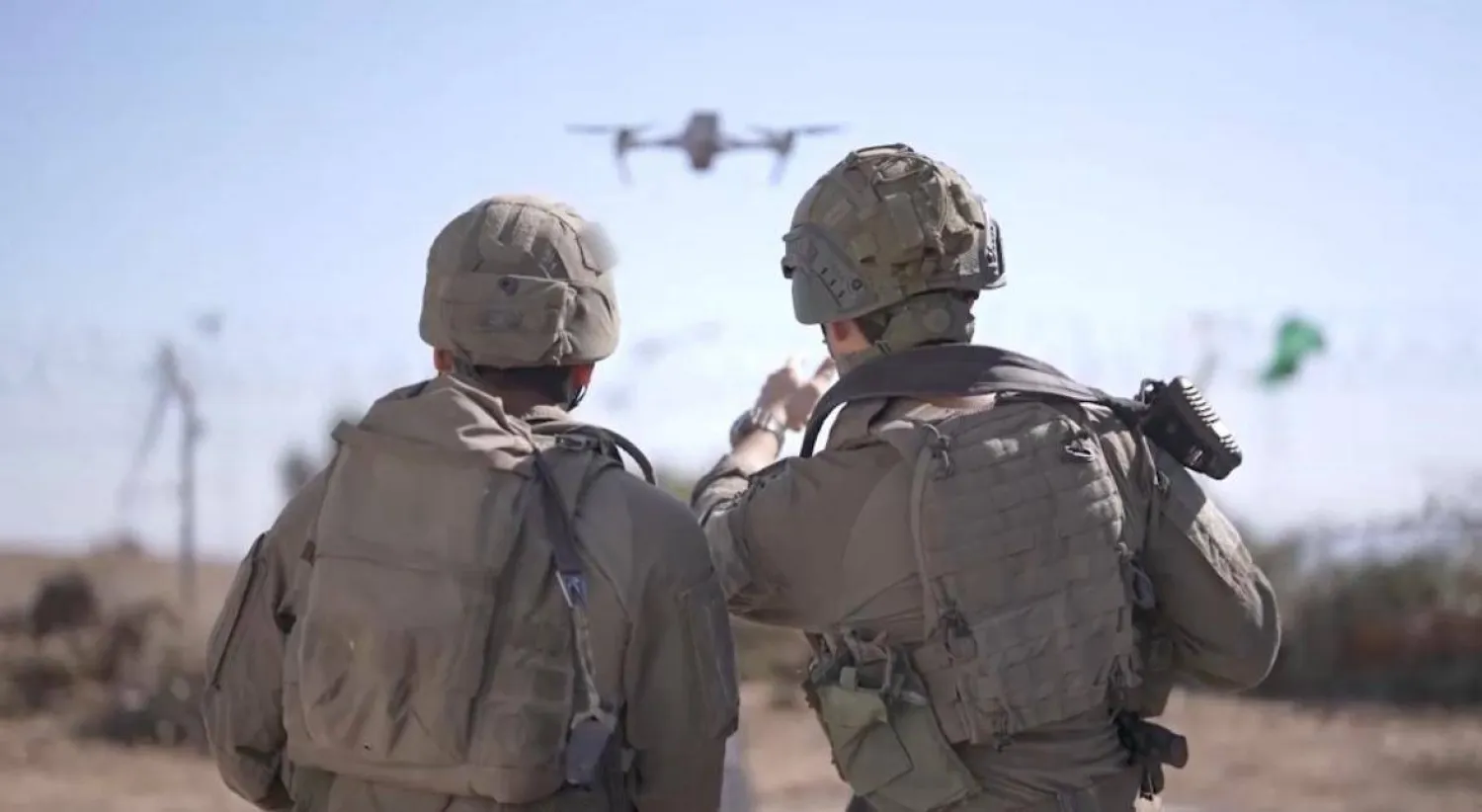
Two Israeli soldiers launch a drone. (Israeli Army)
TT

Israel Keen to Attack Iran’s Regional Proxies before they Can Join the War

Two Israeli soldiers launch a drone. (Israeli Army)

The Israeli army is preparing to carry out “massive and unprecedented” strikes against groups backed by Iran, including the Houthis in Yemen, Hezbollah in Lebanon and armed factions in Iraq, should they join a potential war in the region, revealed Israeli military sources.

Iran is applying great pressure on these groups to take part in any upcoming conflict because the regime in Tehran concluded that their staying on the sidelines during the 12-day June war in 2025 was a strategic error, the sources said according to Israeli estimates.

Israeli Prime Minister Benjamin Netanyahu had on Thursday warned Iran that his country is making its own preparations for possible Iranian missile strikes in response to any US action.

“We are prepared for any scenario,” he said, adding that if Iran attacks Israel, “they will experience a response they cannot even imagine.”

A military source said the Houthis pose a “direct threat not just to Israel, but to the whole world.” He accused the Houthis of impeding international trade in the Red Sea.

Even though the Houthis are not firing at all ships, they are still a threat to everyone, added the source. The militants are producing weapons and possess advanced technology, he warned, comparing them to a “dangerous ticking timebomb that must be swiftly neutralized.”

Israeli and foreign experts revealed that Iran is providing large financial support to its allied armed groups in the region in order for them to join a war should US President Donald Trump act on his threat to strike Iran.

In 2025, Iran allotted a billion dollars to these groups so that they can carry out rocket attacks against Israel.

It remains to be seen if these groups will respond to Iran’s pressure. Israeli estimates believe that the Kataib Hezbollah in Iraq are unlikely to join a war, while Hezbollah and the Houthis are more prepared to do so.

Israel has turned to mediators to warn these parties that any attack against it will be met with a “massive and unprecedented response.”

In Lebanon, the sources said that the military operations Israel is carrying out against Hezbollah and other armed groups are aimed at undermining the party’s efforts to bolster its combat abilities.

They acknowledged, however, that the Israeli military establishment senses that Hezbollah is rebuilding its capabilities at a faster pace than Israel’s operations at reining it in.

The Houthis, meanwhile, have a relatively greater margin of independence, but they are always ready to take part in any regional war to shift attention away from the situation inside Yemen, said Israeli estimates.

The Houthis are receiving Iranian funds to boost their military capabilities and produce more weapons. They also continue to smuggle weapons to Hamas in Gaza. Israel also accuses them of extorting several countries, whereby they pledge not to attack their ships in exchange for money.

The Houthis are ultimately fully supportive of Iran’s goals despite the blows they have been dealt by Israel. The Houthis are suffering from a drop in combat abilities. The pace of their training of fighters has also dropped, while their airports have been damaged in Israeli attacks and the Houthis are facing difficulties in rebuilding them.

Despite the losses, the Houthis are still a threat. They possess heavy long-range missiles and drones and still have the ability to shut Israel’s southern Eilat port.


Iraqi Confusion Over Allegations of US Warning of Sanctions

The Coordination Framework faces a dilemma after nominating Nouri al-Maliki for Prime Minister (INA)
TT

Iraqi Confusion Over Allegations of US Warning of Sanctions

The Coordination Framework faces a dilemma after nominating Nouri al-Maliki for Prime Minister (INA)

Iraqi Foreign Minister Fuad Hussein said that the authorities have received an oral message from Washington, “clearing and explicitly” hinting at possible sanctions if former prime minister Nouri al-Maliki was named to head the new government.

The Iraqi Ministry of Foreign Affairs said in a statement on Thursday that Hussein, who also serves as Deputy Prime Minister, had discussed in a televised interview the nature of cooperation and joint work with the US, particularly with regard to the formation of the upcoming government, without addressing the threat of sanctions, which led to “confusion in media coverage.”

The ministry stated that the US message included two main points. The first referred to the possibility of imposing sanctions on “certain individuals and institutions” if the largest bloc in parliament held onto its current nominee for the PM’s post, while the second addressed the standards for joint cooperation, mainly the nature of the upcoming government.

The ministry’s clarifications come amid increasing US warnings against selecting al-Maliki to head the government. The US State Department affirmed that Washington’s position is “firm and resolute,” and that his selection would force Washington to reassess its relationship with Iraq.

The Coordination Framework, which includes ruling Shiite parties, is divided over al-Maliki’s nomination, and attempts are being made to persuade him to withdraw his candidacy to preserve the unity of the alliance.

The Sunni Sovereignty Alliance, led by Khamis al-Khanjar, expects al-Maliki to take the initiative to withdraw his nomination to spare the country economic sanctions.

Fahd al-Rashed, a senior figure in the Sunni alliance, told Shafaq News that al-Maliki is expected to step aside given “his concern for the country’s interests.”

“We have no objection to al-Maliki personally,” al-Rashed added, “but we fear the repercussions of US reservations over the candidate, including threats of economic sanctions.”


Israeli Settlers Kill 19-year-old Palestinian-American

Mourners carry the body of Palestinian-American Nasrallah Muhammad Jamal Abu Siyam, 19, who according to the Palestinian Health Ministry was shot by settlers on Wednesday night, during his funeral in the West Bank village of Mukhmas, east of Ramallah, Thursday, Feb. 19, 2026. (AP Photo/Nasser Nasser)
TT

Israeli Settlers Kill 19-year-old Palestinian-American

Mourners carry the body of Palestinian-American Nasrallah Muhammad Jamal Abu Siyam, 19, who according to the Palestinian Health Ministry was shot by settlers on Wednesday night, during his funeral in the West Bank village of Mukhmas, east of Ramallah, Thursday, Feb. 19, 2026. (AP Photo/Nasser Nasser)

Israeli settlers in the occupied West Bank shot and killed a Palestinian-American during an attack on a village, the Palestinian Health Ministry and a witness said Thursday.

Raed Abu Ali, a resident of Mukhmas, said a group of settlers came to the village Wednesday afternoon where they attacked a farmer, prompting clashes after residents intervened. Israeli forces later arrived, and during the violence armed settlers killed 19-year-old Nasrallah Abu Siyam and injured several others.

Abu Ali said that the army shot tear gas, sound grenades and live ammunition. Israel's military acknowledged using what it called “riot dispersal methods” after receiving reports of Palestinians throwing rocks but denied that its forces fired during the clashes, The Associated Press said.

“When the settlers saw the army, they were encouraged and started shooting live bullets,” Abu Ali said. He added that they clubbed those injured with sticks after they had fallen to the ground.

The Palestinian Ministry of Health confirmed Abu Siyam's death from critical wounds sustained Wednesday afternoon near the village east of Ramallah.

Abu Siyam’s killing is the latest in a surge in violence in the occupied West Bank. Israeli forces and settlers killed 240 Palestinians last year, according to the United Nations Office for the Coordination of Humanitarian Affairs. Palestinians killed 17 Israelis over the same period, six of whom were soldiers. The Palestinian Authority’s Wall and Settlement Resistance Commission said Abu Siyam was the first Palestinian killed by settlers in 2026.

Mukhmas and its surrounding area — most of which lies under Israeli civil and military administration — have become a hot spot for settler attacks, including arson and assaults, as well as the construction of outposts that Israeli law considers illegal.

The Israeli military said late Wednesday that unnamed suspects shot at Palestinians, who were later evacuated for medical treatment. It did not say whether any were arrested.

Abu Siyam's mother told The Associated Press that he was an American citizen, making him the second Palestinian-American to be killed by Israeli settlers in less than a year.

A US embassy spokesperson said they “condemn this violence."

Palestinians and rights groups say authorities routinely fail to prosecute settlers or hold them accountable for violence.

UN says Israel's acts in West Bank may be ethnic cleansing

The UN human rights office on Thursday accused Israel of war crimes and said practices that displace Palestinians and alter the demographic composition of the occupied West Bank “raise concerns over ethnic cleansing.”

The Office of the High Commissioner for Human Rights, citing findings collected November 2024 to October 2025, said Israel was engaged in “concerted and accelerating effort to consolidate annexation” while maintaining a system “to maintain oppression and domination of Palestinians.”

Residents of Palestinian villages and herding communities have been increasingly displaced as Israeli settlements and outposts expand. Since the start of the Israel–Hamas war, the Israeli rights group B’Tselem says about 45 Palestinian communities have been emptied out completely amid Israeli demolition orders and settler attacks.

Additionally, the office said Israeli military operations in the northern West Bank “employed means and methods designed for warfare” including lethal airstrikes and forcibly transferring civilians from their homes. It also said Israel “forbade” residents from returning to their homes in northern West Bank refugee camps. The operation, which Israel said was aimed against militants, displaced tens of thousands of Palestinians.

The report also accused Palestinian security forces of using unnecessary lethal force in the same areas, killing at least eight people, and noted that the Palestinian Authority had engaged in “intimidation, detention and ill-treatment of journalists, human rights defenders and other individuals deemed critical of its rule.”

Neither Israel’s Foreign Ministry nor the Palestinian Authority responded to requests for comment. Israel has repeatedly accused the UN rights office of anti-Israel bias.

Last year, the UN human rights monitor warned of what it called “an unfolding genocide in Gaza” with “conditions of life increasingly incompatible with (Palestinians’) continued existence.” Their report on Thursday also warned of demographic shifts in Gaza raising concerns of ethnic cleansing.

Report finds imprisoned Palestinian journalists were tortured

The Committee to Protect Journalists said that dozens of Palestinian journalists who were detained in Israel during the war in Gaza experienced conditions including physical assaults, forced stress positions, sensory deprivation, sexual violence and medical neglect.

CPJ documented the detention of at least 94 Palestinian journalists and one media worker during the war, from the West Bank, Gaza and Israel Thirty are still in custody, CPJ said.

Half of the journalists, the report found, were never charged with a crime and were held under Israel’s administrative detention system, which allows for suspects deemed security risks to be held for six months and can be renewed indefinitely.

Israel’s prison services did not immediately respond to a request for comment about the report, but rejected a similar report in January about conditions for Palestinian prisoners as “false allegations,” contending it operates lawfully, is subject to oversight and reviews complaints.

UN development chief says removing Gaza rubble will take 7 years

The vast destruction across Gaza will take at least seven years just to remove the rubble, according to the United Nations Development Program.

Alexander De Croo, the former Belgian prime minister who just returned from Gaza, said that the UNDP had removed just 0.5% of the rubble and people in Gaza are experiencing “the worst living conditions that I have ever seen.”

De Croo said 90% of Gaza’s 2.2 million people live in “very, very rudimentary tents” in the middle of the rubble, which poses health dangers and a danger from exploding weapons.

He said UNDP has been able to build 500 improved housing units, and has 4,000 more that are ready, but estimates the true need is 200,000 to 300,000 units. The units are meant to be used temporarily while reconstruction takes place. He called on Israel to expand access for goods and items needed for reconstruction and the private sector to begin development.