
Report: UAE, Saudi Arabia, Egypt Are Region's FDI Hubs

A general view of Dubai, the UAE. (WAM)
TT

Report: UAE, Saudi Arabia, Egypt Are Region's FDI Hubs

A general view of Dubai, the UAE. (WAM)

The United Arab Emirates, Saudi Arabia and Egypt were ranked the first three, respectively, in the Arab world in attracting Foreign Direct Investment (FDI) for 2021, with investments topping $45 billion.

FDI inflows to Arab countries, which rose by 42% in 2021, amounted to about $53 billion, 6.3% of which represented the total inflows to developing countries and 3.3% of the total global inflows that stood at about $1.58 trillion.

Asharq Al-Awsat obtained a copy of an annual report released by the Arab Investment and Export Credit Guarantee Corporation (Dhaman) that studied the volume of FDI in the region.

It showed that the first five countries accounted for more than 96% of the total inflows.

The UAE topped the list by attracting $20.7 billion, followed by Saudi Arabia with $19.3 billion, then Egypt with $5.1 billion.

Oman came fourth with $3.6 billion, while Morocco was fifth with $2.2 billion.

Data released in the United Nations Conference on Trade and Development (UNCTAD) World Investment Report 2022 indicated that FDI balances received by Arab countries increased in late 2021 by about $53 billion, representing 5.4% compared to 2020, from $958 billion dollars to more than one trillion dollars in 2021.

The first three countries accounted for about 56.5% of the total cumulative balances.

Saudi Arabia topped the Arab ranking in cumulative balances inflows with $261 billion and a share of 26% of the Arab total FDI inflows, followed by the UAE with a value of $171.6 billion and a 17% share, then Egypt with a value of $137.5 billion and 13.6% share.

Meanwhile, FDI outflows from Arab countries to various world countries rose by 46% to $52 billion.

Saudi Arabia and the UAE contributed to about 90% of these outflows, with shares amounting to 46.1% and 43.5%, respectively. Kuwait came third with 7%.

In this context, FDI balances issued by Arab countries increased by 10.2% to $543.4 billion by late 2021. The UAE, Saudi Arabia and Qatar accounted for 76.5% of the total balances, with shares amounting to 39.6%, 27.9% and 8.8%, respectively, followed by Kuwait with a 6.6% share.

In terms of cross-border merger and acquisition deals that the Arab countries concluded in 2021, the report showed that the value of sales deals in 12 Arab countries amounted to about $30 billion, with a 4.1% share of the global total value of $728 billion.

These deals were mainly focused in Saudi Arabia, Kuwait and the UAE with 81.5%, 13.6% and 5.1%, respectively.

The value of purchase deals for 12 Arab countries amounted to more than seven billion dollars, to which the UAE contributed with $6.1 billion and an 86.6% share of the total deals in the Arab region.


Climate Deal Collapses in Chaotic End to COP31

 COP31 President Murat Kurum officially closes the 2026 UN Climate Change Conference (COP31) in Antalya, Türkiye, November 22, 2026. (Reuters)
COP31 President Murat Kurum officially closes the 2026 UN Climate Change Conference (COP31) in Antalya, Türkiye, November 22, 2026. (Reuters)
TT

Climate Deal Collapses in Chaotic End to COP31

 COP31 President Murat Kurum officially closes the 2026 UN Climate Change Conference (COP31) in Antalya, Türkiye, November 22, 2026. (Reuters)
COP31 President Murat Kurum officially closes the 2026 UN Climate Change Conference (COP31) in Antalya, Türkiye, November 22, 2026. (Reuters)

The COP31 climate talks ended in failure Sunday as a contentious deal collapsed over fossil fuels and the summit stretched into record overtime in Türkiye.

The final agreement was dramatically rejected in a chaotic finale to a UN climate summit which ran two days over schedule, underscoring the strains on diplomacy in an increasingly fractured world.

UN Secretary-General Antonio Guterres, who urged nations to send fossil fuels "the way of the dinosaurs" during a fiery appearance at COP31, expressed deep dismay as the talks broke down.

"I share the very profound frustration of all those who expected governments to rise to the moment the climate crisis demands," the outgoing UN chief said in a statement.

COP31 negotiations chair Chris Bowen, who unsuccessfully sought to broker consensus among nearly 200 nations, conceded he could not overcome what he called "unbridgeable red lines".

"Unfortunately, we were unable to reach agreement on a cover decision... And that's disappointing. Very disappointing," Bowen, who is Australia's climate minister, told a throng of reporters.

More than 49 hours after the summit was supposed to end, COP31 President and Turkish Environment Minister Murat Kurum banged the gavel to conclude the marathon talks.

Bowen said the summit backdrop was "the most complicated and fraught geopolitical environment in living memory" as soaring energy prices and fallout from the Middle East war complicated the search for unity.

Under pressure to show progress in a year of climate-linked disasters from Europe to Nepal, Bowen sought an overarching "cover decision" to prove countries were still united in tackling the crisis.

But his plan unraveled as familiar fault lines emerged over fossil fuels.

The negotiations stalled as oil-producing states blocked any mention of phasing out fossil fuels in the final deal.

"We will not endorse a cover decision... that does not even mention fossil fuels, which is the key driver of climate change," said Ireland's climate minister, Darragh O'Brien, whose country holds the rotating EU presidency.

Panama, Vanuatu and the Marshall Islands also objected and as the deal imploded, COP31 became the longest climate summit on record.

- Falling short -

The outcome revived memories of the failed Copenhagen summit of 2009 and raised fresh doubts about the effectiveness of climate diplomacy.

"It certainly fell short today," said UN climate chief Simon Stiell, describing progress over the marathon fortnight of negotiations in Antalya as "limited".

"The world cannot afford a repeat."

Frustrated by the inertia, countries are pushing ahead outside the COP process.

Around 60 countries joined a first-of-its-kind conference in April on phasing out fossil fuels while several nations at COP31 unveiled their own plans to exit coal, oil and gas.

In a last-ditch bid for compromise, COP31 hosts Türkiye and Australia could only muster a veiled reference to fossil fuels in the final text.

But the pact also took fire for retaining a call to expand carbon capture -- a costly technology championed by the fossil fuel industry.

"We believe that climate change requires all solutions on the table," said Mohammad Ayoub, a climate negotiator for oil giant Saudi Arabia.

Facing blowback over the fossil fuels omission, Türkiye and Australia tried to rally support behind a global goal to electrify the world economy.

They said "electrification" could cut heat-trapping emissions and bolster energy security but the target was ultimately torpedoed, along with the rest of the doomed Antalya Pact.

- 'Profound disappointment' -

Countries lamented a missed opportunity to reinforce the Paris agreement's 1.5C target, which scientists expect the world to overshoot in a few years as carbon-cutting goals fall short.

The summit also widened fault lines over science, with a fight over the work of the Intergovernmental Panel on Climate Change (IPCC) spilling into the negotiations.

"We are profoundly disappointed by the substance of the cover decision," said UK climate negotiator Kate Hughes.

"It moves us backwards on the science... It is a lowest common denominator where it should have been, instead, presenting bold collective ambition on climate action."

As always, the summit laid bare the divide between major polluters driving climate change and smaller nations bearing the brunt of its impact.

Developing nations pushed for a $120 billion target climate goal which disappeared from the failed deal.


Inflation, Economic Growth and the Mood of US Consumers in Focus This Week

People shop at a grocery store in Brooklyn in New York City, US, Dec. 12, 2025. (AFP)
TT

Inflation, Economic Growth and the Mood of US Consumers in Focus This Week

People shop at a grocery store in Brooklyn in New York City, US, Dec. 12, 2025. (AFP)

Inflation has become the current that runs through almost all corners of the US economy and there will be more on that front this week.

A key report on inflation will headline a holiday-shortened week, along with a look at the latest gauge of consumer confidence. High prices on everything from groceries to gasoline are changing consumer behavior and there is pressure on policy makers to act.

The data on prices arrives ahead of the next meeting of rate-setters at the Federal Reserve, the unofficial start of the holiday shopping season, as well as Thanksgiving, which may be uncomfortably expensive this year given rising prices for food.

Here’s a look at some of the key reports coming in the week ahead.

US consumer confidence is being tested

Business group The Conference Board on Tuesday will release its consumer confidence survey for November. Economists expect it to show that confidence remains low as inflation puts more pressure on budgets. Overall, consumer confidence is down sharply from two years ago.

The wide-ranging and unpredictable US trade war with much of the world prompted price increases and made planning ahead difficult for both consumers and businesses.

The US war with Iran that started in 2026 fueled inflation throughout the year by curtailing the flow of oil through the Strait of Hormuz and raising energy prices. Higher prices for oil and gasoline boosted shipping costs for a wide range of goods.

The high cost of energy, goods and services has been notably referenced by write-in responses to the monthly consumer confidence surveys.

Inflation data could tip balance toward higher borrowing costs

An inflation update is expected to provide more details on what most Americans know — things have become expensive. The US will release the October personal consumption expenditures report, or PCE, on Wednesday.

The data carries a lot of weight because it is the preferred measure of inflation used by the Federal Reserve, which is attempting to bring inflation down to its target rate of 2%.

Inflation has been rising at a sharp rate since the US and Israel attacked Iran early this year fueling a surge in energy prices. Higher gasoline prices have eaten up a bigger portion of household budgets. Higher costs for shipping and warehousing goods because of soaring diesel prices are leaching into the broader economy.

The Fed's main tool in fighting inflation is raising interest rates and that makes something else more expensive — borrowing money. The central bank is expected to raise its benchmark interest rate at its next meeting to cool down the economy. It's a tough balancing act because the Fed's other mandate is maximum employment. Higher rates can make employers less likely to hire.

The US economy is motoring along

The US Department of Commerce on Wednesday will release an update on the nation's economic growth during the third quarter. The first read showed gross domestic product grew at 3.4% during the third quarter. GDP is a measure of the nation's output of goods and services.

The economy has proven resilient despite inflation. Economic growth accelerated from the 2.2% increase in the second quarter.

Much of that growth has been driven by an AI investment boom, but that is a sector that has been rattled in recent weeks. The tech-heavy Nasdaq tumbled more than 8% last week, with particularly sharp declines to end the week.

Low-hire, low-fire employment in the US

The latest weekly update on unemployment claims, which are a proxy for layoffs, will be released Wednesday in a scheduling shift ahead of the Thanksgiving holiday. Economists watch this weekly report closely because it can provide signals about where the job market is headed.

Claims have remained at historically low levels amid a broader jobs market that has remained a strong point in an economy pressured by rising inflation. Layoffs remain modest by historic standards.


US Seeks Answers on Nvidia’s Sale of Chips to China, Bessent Says

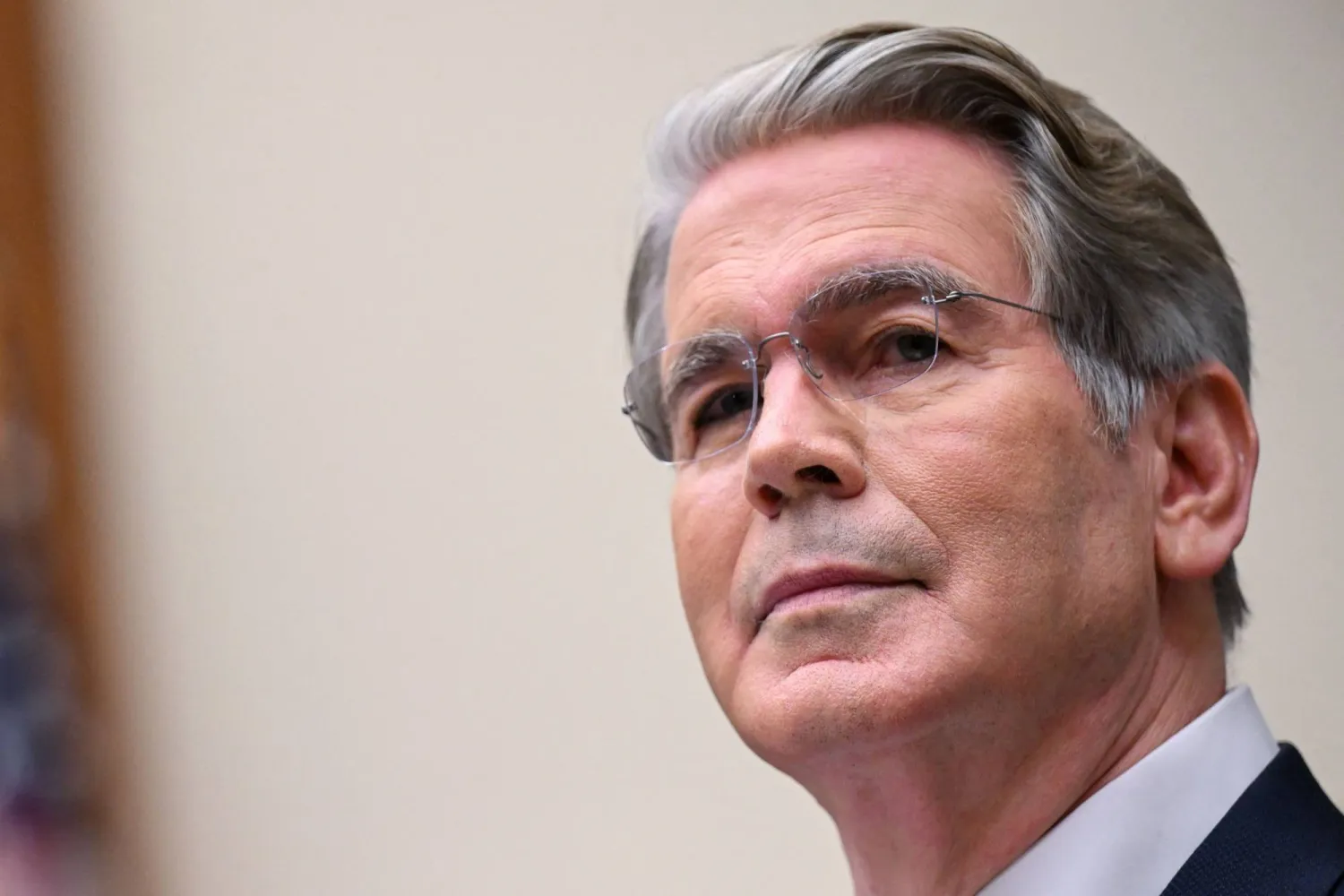
US Treasury Secretary Scott Bessent testifies during a House Financial Services Committee hearing on the state of the international financial system on Capitol Hill in Washington, DC, on September 15, 2026. (AFP)
TT

US Seeks Answers on Nvidia’s Sale of Chips to China, Bessent Says

US Treasury Secretary Scott Bessent testifies during a House Financial Services Committee hearing on the state of the international financial system on Capitol Hill in Washington, DC, on September 15, 2026. (AFP)

US Treasury Secretary Scott Bessent said on Sunday that the Trump administration still needs information on Nvidia's chip sales and ‌will find ‌out who led ‌compliance ⁠at the company ⁠formerly led by Jensen Huang, who resigned following an affair with a ⁠suspected Chinese spy.

"We've ‌been ‌in touch ‌with the temporary ‌management, with the lead directors, with their lawyers, and we ‌do need answers... it behooves Nvidia ⁠to ⁠move quickly on this because we want to know what the culture was," Bessent told CBS' "Face the Nation" program.