UAE to Hold Second Auction of Dirham T-Bonds Worth $408Mln

The UAE will continue to implement its plan to issue local bonds for 2022 through more subsequent periodic auctions. (WAM)
TT

UAE to Hold Second Auction of Dirham T-Bonds Worth $408Mln

The UAE will continue to implement its plan to issue local bonds for 2022 through more subsequent periodic auctions. (WAM)

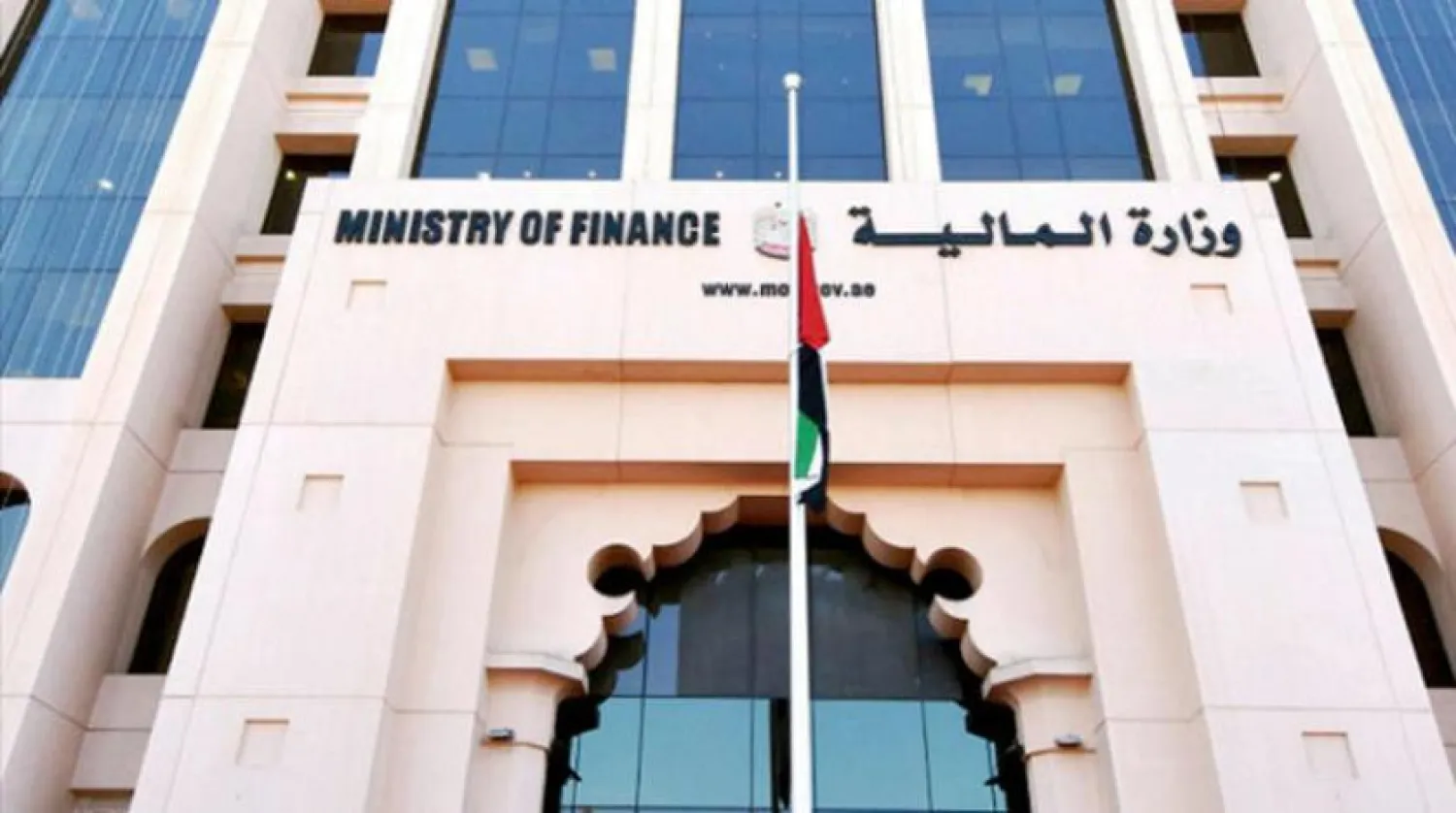
The UAE Finance Ministry said Saturday that a second auction of federal treasury bonds (T-Bonds) would be held on June 20.

The auction size will be AED1.5 billion ($408 million) distributed over two tranches: a two-year tranche valued at AED 750 million and a three-year tranche valued at AED750 million ($204 million).

It explained that the re-opening of bonds will be exercised in this auction to increase the volume of individual bonds issued with the aim of improving liquidity in the secondary market.

The first auction of the AED denominated T-Bonds program witnessed a wide turnout from local and international investors, with a total issuance of AED1.5 billion ($408.3 million) divided into two tranches - of two and three years – and a uniform coupon rate fixed at 3.01% and 3.24%, respectively.

The UAE will continue to implement its plan to issue local bonds for 2022 through more subsequent periodic auctions.

The conventional T-bonds will be denominated in UAE dirhams to develop the local bonds debt market.

It aims to develop the mid-term yield curve, with tranches of two and three years, and in principle of five years as well, while 10-year tranches will be issued at a later time.

The auction, represented by the Ministry of Finance as the issuer, in collaboration with the Central Bank of the UAE (CBUAE) as the issuing and payment agent, is part of the AED9 billion ($2.4 billion) T-Bonds issuance program for 2022, the ministry announced in May.

The first auction of the dirham denominated UAE T-Bonds, with a benchmark auction size of AED1.5 billion ($400 million), drew bids worth AED9.4 billion ($2.5 billion), an oversubscription of 6.3 times.

Sheikh Maktoum bin Mohammed bin Rashid Al Maktoum, Deputy Ruler of Dubai, Deputy Prime Minister and Minister of Finance, said then that the success of the first auction is part of strengthening the UAE’s economic competitiveness and supporting the sustainability of economic growth.


Restart of Offshore Rigs Revives Saudi Energy Supply Chains

An offshore rig operated by Arabian Drilling (Company) 
TT

Restart of Offshore Rigs Revives Saudi Energy Supply Chains

An offshore rig operated by Arabian Drilling (Company) 

Saudi Arabia is gradually restoring operational capacity in its offshore drilling sector after ADES Holding and Arabian Drilling announced on consecutive days that they were resuming operations at offshore rigs temporarily suspended because of regional developments.

The restart brings a significant portion of the offshore fleet back into service, providing greater visibility over drilling activity and reviving demand across a broad network of suppliers, logistics providers and technical services.

Offshore rigs are specialized facilities used to drill oil and gas wells at sea. They house the equipment, systems and technical crews needed for drilling and well control, as well as well maintenance and rehabilitation and other operations related to field development and production.

Their operations require a continuous flow of equipment, spare parts, drilling materials and chemicals, along with maintenance, safety, catering and personnel transport services. Supply vessels carry much of these requirements from ports and logistics bases to offshore worksites.

Restarting a rig therefore also restores demand across a wide range of related activities, from transport, ports and warehousing to equipment, maintenance and engineering services.

ADES, followed by Arabian Drilling

ADES Holding, a company backed by Saudi Arabia’s Public Investment Fund, was the first to announce that it had received notices to resume operations at all its offshore rigs temporarily suspended in the Kingdom. The company said utilization of its contracted jack-up rigs exceeded 90%, supported by strong day rates.

ADES said the resumption provided greater visibility over regional activity and underscored the resilience of the Gulf offshore drilling market, noting that the suspensions stemmed from regional developments rather than weak demand.

ADES Holding CEO Mohamed Farouk noted that the development reflected an improvement in the regional situation and the readiness of the company’s teams to resume operations, while stressing that the safety of employees and assets remained its top priority.

The company maintained its 2026 EBITDA guidance at SAR 4.50 billion to SAR 4.87 billion ($1.20 billion to $1.30 billion), supported by the group’s scale and geographic reach across 123 rigs, as well as operating synergies from its acquisition of Shelf Drilling.

The following day, Arabian Drilling announced that it had received notices to resume operations at its remaining suspended offshore rigs and said it expected offshore fleet utilization to reach 100% by the end of the third quarter of 2026.

The company said the restart reflected the continued recovery in offshore drilling activity, with full fleet utilization marking an important milestone that would strengthen its operational readiness and ability to meet market demand.

Arabian Drilling had announced in July that three offshore rigs temporarily suspended because of regional conditions could resume operations. The suspensions were precautionary measures taken in coordination with clients and relevant parties, with safety given priority.

Restarting an entire ecosystem

Logistics expert Hassan Al-Heliel told Asharq Al-Awsat that the return of the rigs should not be viewed simply as bringing drilling assets back into service, but as restarting an integrated ecosystem stretching from suppliers and manufacturers to warehouses and ports, and ultimately to offshore rigs and well sites.

An offshore rig, he explained, is the final link in a vast supply chain encompassing spare parts, equipment, consumables and drilling chemicals, as well as maintenance, inspection, calibration, safety services, catering and the transport of workers and equipment.

The rigs also depend on a network of supply vessels linked in turn to land transport, ports, warehouses and logistics support bases. Restarting a rig therefore means renewed demand for an entire network of onshore services.

Rig activity is not limited to drilling new wells, but also includes well maintenance and rehabilitation, specialized drilling and services related to the development and production of oil and gas fields.

Beneficiaries range from logistics companies, land and marine transport operators, warehouses, ports and cargo handlers to suppliers of equipment, spare parts, chemicals and safety systems, as well as maintenance, engineering and support-service providers.

Opportunity for local content

The economic impact of the restart could also create broader opportunities for Saudi companies to localize a larger share of the offshore drilling value chain.

These include manufacturing spare parts and components locally, expanding maintenance and repair capabilities, establishing specialized supply centers, localizing technical services and developing Saudi companies capable of providing integrated solutions for offshore rigs.

Al-Heliel said local content should not be measured solely by purchases from Saudi companies, but also by the domestic economy’s ability to meet critical requirements and ensure continuity of operations.

Expanding local manufacturing and services would reduce exposure to international shipping risks, freight-rate volatility, long lead times and geopolitical disruptions, strengthening the resilience of energy-sector supply chains.

Companies combining quality, speed and local capacity could gain a competitive advantage, Al-Heliel underlined, because offshore drilling competition is not determined by price alone. A supplier able to deliver a critical component or service on time may be more valuable than a cheaper supplier requiring weeks to do so, particularly given the high cost of rig downtime.

Readiness determines the pace

Restarting a rig typically begins with technical assessments and inspections of key equipment and systems, followed by checks on crew readiness and the availability of spare parts and materials.

Companies must then restore logistical readiness by preparing warehouses and supply bases and ensuring that land and marine transport and supply vessels are available. If a rig needs to be repositioned, it must be moved to the operating site before safety and operational tests are conducted and activities gradually resume.

The process can be relatively quick if a rig is in good condition and requires no major maintenance, but may take several weeks if repairs, re-equipping or relocation are necessary.

“The timing of the restart is not determined by the rig alone, but by the readiness of the supply chain around it,” Al-Heliel stated. Technical readiness, he added, is insufficient unless spare parts, operating materials and marine services are available when needed.

With ADES and Arabian Drilling returning their offshore rigs to operation, the impact extends beyond drilling companies themselves, reactivating an economic cycle involving suppliers, manufacturers, transport companies, ports, warehouses and technical and engineering services.

The restart also gives Saudi companies an opportunity to capture a greater share of energy-sector spending through expanded local manufacturing and services while building faster, more resilient supply chains.


Gold Nears $4,400 on Weaker Dollar, Reduced Fed Rate-hike Bets

Gold bracelets on display for sale at a gold shop in Istanbul's Grand Bazaar (AFP)
TT

Gold Nears $4,400 on Weaker Dollar, Reduced Fed Rate-hike Bets

Gold bracelets on display for sale at a gold shop in Istanbul's Grand Bazaar (AFP)

Gold drifted higher on Monday, supported by a weaker dollar and recent soft economic data that reduced expectations for a US interest rate hike next month. Spot gold rose 0.4% to $4,391.49 per ounce by 0520 GMT.

Prices hit a more-than-two-month high last week. US gold futures for December delivery edged 0.3% higher to $4,448.40, Reuters reported.

The US dollar index was down 0.2%, making greenback-priced metals ⁠more affordable for ⁠other currency holders.

"Gold has taken the ball and run with it to start the week, with soft inflation numbers keeping the US dollar under pressure and giving gold extra headroom to push towards the $4,400 level," said Tim Waterer, chief market analyst at KCM Trade.

"A sustained ⁠move above $4,500 would likely need additional dollar weakness or a clearer pullback in energy prices."

An unexpected decline in US nonfarm payrolls in July, coupled with data showing only mild consumer price inflation, has reduced expectations that the US Federal Reserve will raise interest rates next month.

Traders are now pricing in a 30% chance of a September rate hike, down from 47% a month earlier, CME's FedWatch Tool showed.

Lower interest rates reduce the opportunity ⁠cost of ⁠holding non-yielding bullion, enhancing its appeal to investors.

Markets are now awaiting minutes of the Fed's July meeting, due on Wednesday, for further clues on policymakers' monetary stance.

On the geopolitical front, US President Donald Trump's envoys met with Egyptian, Qatari and Turkish mediators in Cairo on Sunday, a diplomatic source said, aiming to advance his Gaza peace plan, even as Israel pressed on with airstrikes in the enclave.

Among other metals, spot silver rose 1.4% to $65.57 per ounce. Platinum fell 0.1% to $1,746.43, while palladium gained 1.4% to $1,331.10.


Oil Rises as US-Iran Peace Talks Stall, Hormuz Shipping Slows

WINK, TEXAS - AUGUST 13: In an aerial view, oil storage tanks are seen at the rail-fed diesel base, Exxon/Mobil Wink Transloading facility on August 13, 2026 in Wink, Texas. Brandon Bell/Getty Images/AFP
TT

Oil Rises as US-Iran Peace Talks Stall, Hormuz Shipping Slows

WINK, TEXAS - AUGUST 13: In an aerial view, oil storage tanks are seen at the rail-fed diesel base, Exxon/Mobil Wink Transloading facility on August 13, 2026 in Wink, Texas. Brandon Bell/Getty Images/AFP

Oil prices rose on Monday as fading expectations of a US-Iran peace breakthrough and slower tanker traffic through the Strait of Hormuz reinforced geopolitical risk concerns in the market.

Brent crude futures rose as much as 1% to $89.40 per barrel and were last trading up 72 cents at $89.20 by 0229 GMT. The US West Texas Intermediate crude ⁠futures rose 44 cents ⁠to $82.83 a barrel, Reuters reported.

Both contracts gained more than 5% last week following attacks on tankers operated by Abu Dhabi National Oil Company in the Hormuz strait and on a Saudi Aramco refinery.

Over the weekend, Iranian Foreign Minister Abbas Araghchi said Iran had not decided to resume talks with the US ⁠while US President Donald Trump urged Americans to accept slightly higher gasoline prices while the conflict continues.

"Oil prices have now rebounded almost completely from the lows seen in early August, as hopes for a more permanent resolution between the US and Iran have faded and geopolitical risk premiums have returned to the market," said Priyanka Sachdeva, head of market insights for Phillip Nova in Singapore.

"However, I see limited upside from here unless we get clear evidence of renewed aggression in the ⁠Strait of ⁠Hormuz, particularly material damage to tankers or oil infrastructure," she said.

Shipping through the Strait of Hormuz slowed over the weekend, data showed on Monday, following attacks on tankers.

Five commodity vessels transited the strait on Saturday, with none registered for Sunday, ship-tracking data from Kpler showed, versus 31 for the prior weekend.

The United Arab Emirates accused Iran of attacking a third vessel operated by ADNOC that was transiting the strait on Friday, the Emirati state news agency WAM reported, after blaming it for two other incidents involving ADNOC vessels in the strait on Thursday evening.