


Saudi Project to Develop Quality of E-Commerce Data

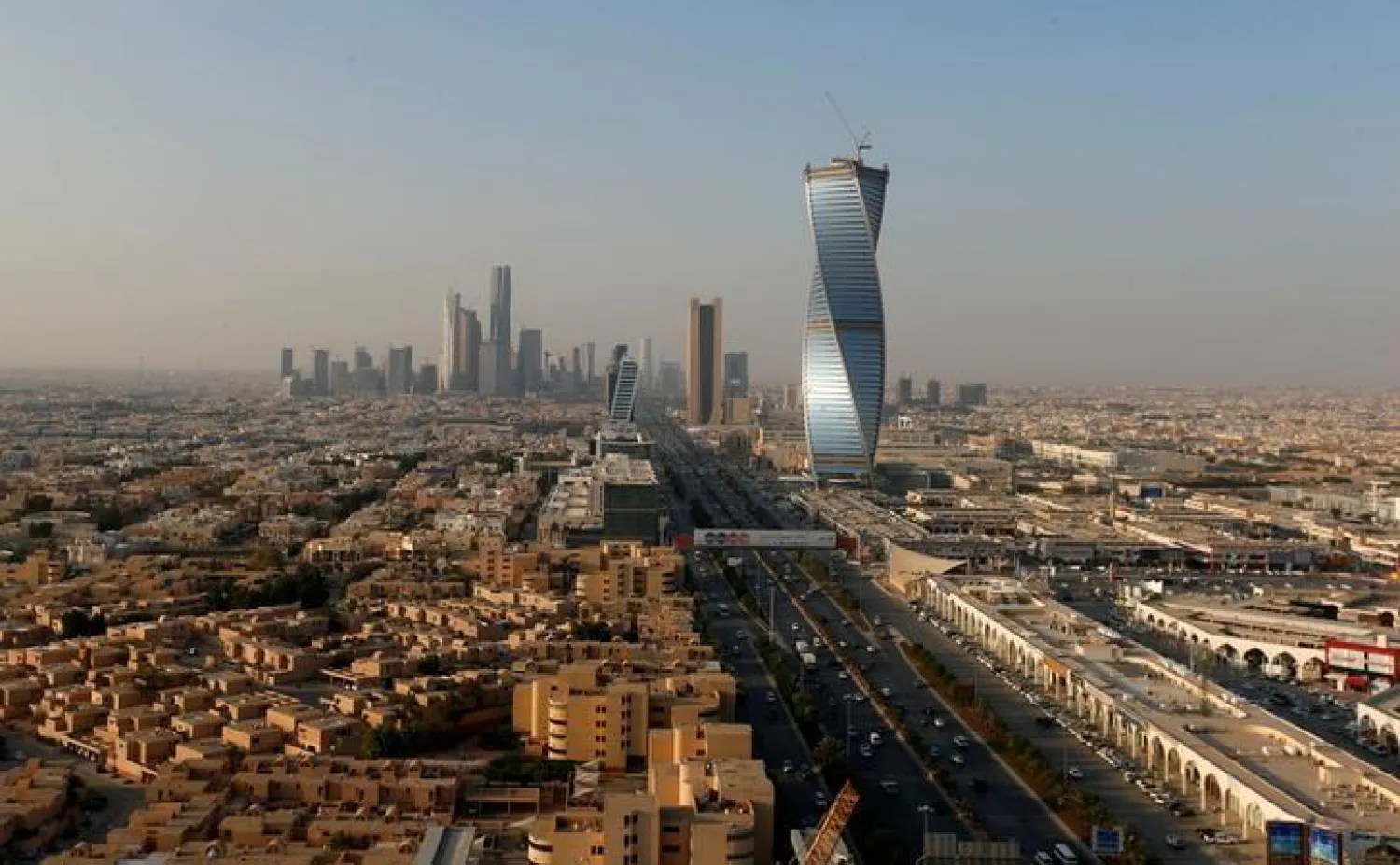
Buildings are seen in Riyadh, Saudi Arabia, December 18, 2017. REUTERS/Faisal Al Nasser
TT

Saudi Project to Develop Quality of E-Commerce Data

Buildings are seen in Riyadh, Saudi Arabia, December 18, 2017. REUTERS/Faisal Al Nasser

Considering the growth of e-commerce and the desire to improve the mechanism of data collection related to the sector, Saudi authorities informed all banks in the Kingdom of the need to abide by the operational framework and technical and operational rules for the data quality development project.

The Saudi Central Bank has confirmed that all banks must complete requirements mentioned in the operational framework and the technical and operational rules related to the data quality project, with a commitment to share data based on the transmission mechanism agreed upon by Saudi Payments.

The Central Bank emphasized the need for commitment of all parties to what was stipulated in the Personal Data Protection Law regarding saving, collecting, processing, and sharing personal data.

Last year, Saudi Payments (Mada), which operates under the supervision of the Saudi Central Bank, granted permission to fintech Neo Leap to handle transactions through its payment system.

Saudi Arabia-based Neo Leap offers full financial transactions services, from POS to store services, cashier, payment gateway, and e-wallets.

Thanks to the technical authorization issued through the Saudi Payments permit center, Neo Leap can now provide advanced services for card payments to the individual and business sectors. Some of the services include secure storage of card data, support for pre-authorized transactions, and processing recurring payments.

Saudi Payments was established as a wholly owned subsidiary of the Saudi Central Bank with the mandate to continue the Central Bank’s legacy by continuing to develop secure, interoperable national payment infrastructure, serving banks and fintechs equally, and providing the required standardization to ensure all providers have a level playing field.

The Saudi Minister of Commerce Majid Al-Qasabi had recently revealed the growth of e-commerce in his country to exceed 32% annually, noting that the Kingdom is one of the top 10 developing countries in the field of e-commerce.




Saudi Arabia Records Slowest Inflation Since February 2025

A supermarket in Saudi Arabia (SPA) 
TT

Saudi Arabia Records Slowest Inflation Since February 2025

A supermarket in Saudi Arabia (SPA) 

Saudi Arabia’s annual inflation eased noticeably in January, rising 1.8 percent year on year, the slowest pace since February last year, signaling positive momentum for the domestic economy.

According to official data, inflation in January 2026 was driven mainly by higher housing, water, electricity, gas and other fuel prices, which rose 4.2 percent. Transport costs increased 1.5 percent, while restaurant and accommodation services rose 1 percent.

Housing rents remain the largest contributor to inflation, with actual rents climbing 5.2 percent annually.

Economists said January’s slowdown points to greater price stability and easing living costs, reflecting government measures to support growth.

Osama bin Ghanem Al-Obaidi, an advisor and professor of international commercial law, said the 1.8 percent annual rate is the lowest among G20 countries. While housing and utilities remain the largest contributors, he noted that rent increases are now less intense than in recent months.

Al-Obaidi added that inflation control in Saudi Arabia remains effective, with relative price stability supporting consumer purchasing power and easing pressure on low-income households. He said January’s data reflects growing market stability, with pressures in some categories contained by demand.

Economist Ahmed Al-Shahri, for his part, noted that the moderation in inflation boosts confidence and encourages investment and broader economic activity. He attributed the improvement to government efforts to ensure economic stability and advance sustainable development, underscoring the effectiveness of fiscal and economic policies.

Al-Shahri highlighted housing and rental measures introduced under the direction of Crown Prince and Prime Minister Mohammed bin Salman, noting their significant impact. Despite the 1.8 percent annual rise, he said inflation remains low by historical standards, indicating that price pressures are gradually easing after post-pandemic global shocks and supply-chain disruptions.

Category Breakdown

Transport prices rose 1.5 percent year on year, driven by a 6 percent increase in passenger transport services. Restaurant and accommodation prices increased 1 percent, reflecting higher food and beverage services. Personal care and other goods and services surged 7.9 percent, led by higher jewelry and watch prices. Insurance and financial services rose 3.3 percent, while food and beverages edged up 0.2 percent.

Furniture and household equipment prices fell 0.3 percent, and health prices dipped 0.1 percent.

On a monthly basis, the consumer price index rose 0.2 percent in January compared with December 2025, supported by higher housing, transport and restaurant prices, while food and beverages declined 0.6 percent.


Gold Drops over 1% as Thin Trading, Profit‑taking Weigh

An Indian woman tries on gold jewelry at a jewelry store in Bangalore (EPA)
TT

Gold Drops over 1% as Thin Trading, Profit‑taking Weigh

An Indian woman tries on gold jewelry at a jewelry store in Bangalore (EPA)

Gold prices dropped on Monday, pressured by thin trading volumes as US and China markets remained shut due to local public holidays, while some traders booked profits after last session's 2.5% jump.

Spot gold fell 1.1% to $4,986.32 per ounce by 0550 GMT. US gold futures for April delivery lost 0.8% to $5,005.60 per ounce.

"Gold has given back some of Friday's post-CPI ‌gains today due to ‌thinner trading conditions and a lack ‌of ⁠fresh upside catalysts," said ⁠Tim Waterer, KCM chief analyst, referring to the US consumer price inflation data. He also pointed to profit-taking on the day.

US markets are closed for the Presidents' Day holiday, while markets in China are closed for the Lunar New Year holiday. The US CPI rose 0.2% in January after an unrevised 0.3% gain in December, ⁠the Labor Department's Bureau of Labor Statistics said ‌on Friday.

Economists polled by Reuters ‌had forecast the CPI to increase by 0.3%. Federal Reserve Bank of ‌Chicago President Austan Goolsbee said on Friday that interest rates could ‌go down, but noted that services inflation remained high.

Market participants anticipate the central bank to hold interest rates at its next meeting on March 18. Still, they are pricing in 75 basis points in rate ‌cuts this year, with the first expected in July, according to data compiled by LSEG.

Non-yielding ⁠bullion tends ⁠to do well in low-interest-rate environments. "It will likely require the dollar to resume its downtrend for gold to make a push in the direction of $6,000 before year-end," Waterer said.

On the geopolitical front, the US military is preparing for the possibility of a weeks-long operation against Iran should President Donald Trump authorize an attack, two US officials told Reuters, in what could become a far more serious conflict than previously seen between the countries.

Spot silver lost 2.4% to $75.64 per ounce, after a 3% fall earlier in the session. The white metal rose 3.4% on Friday. Spot platinum slipped 0.8% to $2,045.11 per ounce, while palladium shed 0.7% to $1,673.52.


Saudi Arabia Elected President of Arab Housing and Reconstruction Council Executive Office

Saudi flags seen in Riyadh (SPA)
TT

Saudi Arabia Elected President of Arab Housing and Reconstruction Council Executive Office

Saudi flags seen in Riyadh (SPA)

The Council of Arab Ministers of Housing and Reconstruction announced Saudi Arabia’s election as President of the Executive Office of the council for the 2026-2027 term during its 42nd session held in Doha.

During the meeting, the council also approved the theme for Arab Housing Day 2026, proposed by the Kingdom, which focuses on community resilience, building adaptive communities, promoting urban sustainability, and enhancing the readiness of Arab cities to address future challenges.

The council seeks to strengthen Arab coordination in housing and construction and to leverage the diverse expertise of member states in developing housing policies and urban planning, supporting balanced urban development across the Arab region.

Through its presidency of the Executive Office, the Kingdom will support joint Arab cooperation initiatives and promote the exchange of technical and regulatory expertise in urban planning and the development of real estate systems and legislation, helping Arab countries create more efficient and sustainable housing environments.

The adoption of the 2026 Arab Housing Day slogan reflects a shared Arab stance on building communities capable of adapting to economic, environmental, and social changes, and providing adequate housing that improves the quality of life in Arab cities.