UK By-elections Pose Fresh Threat to Boris Johnson

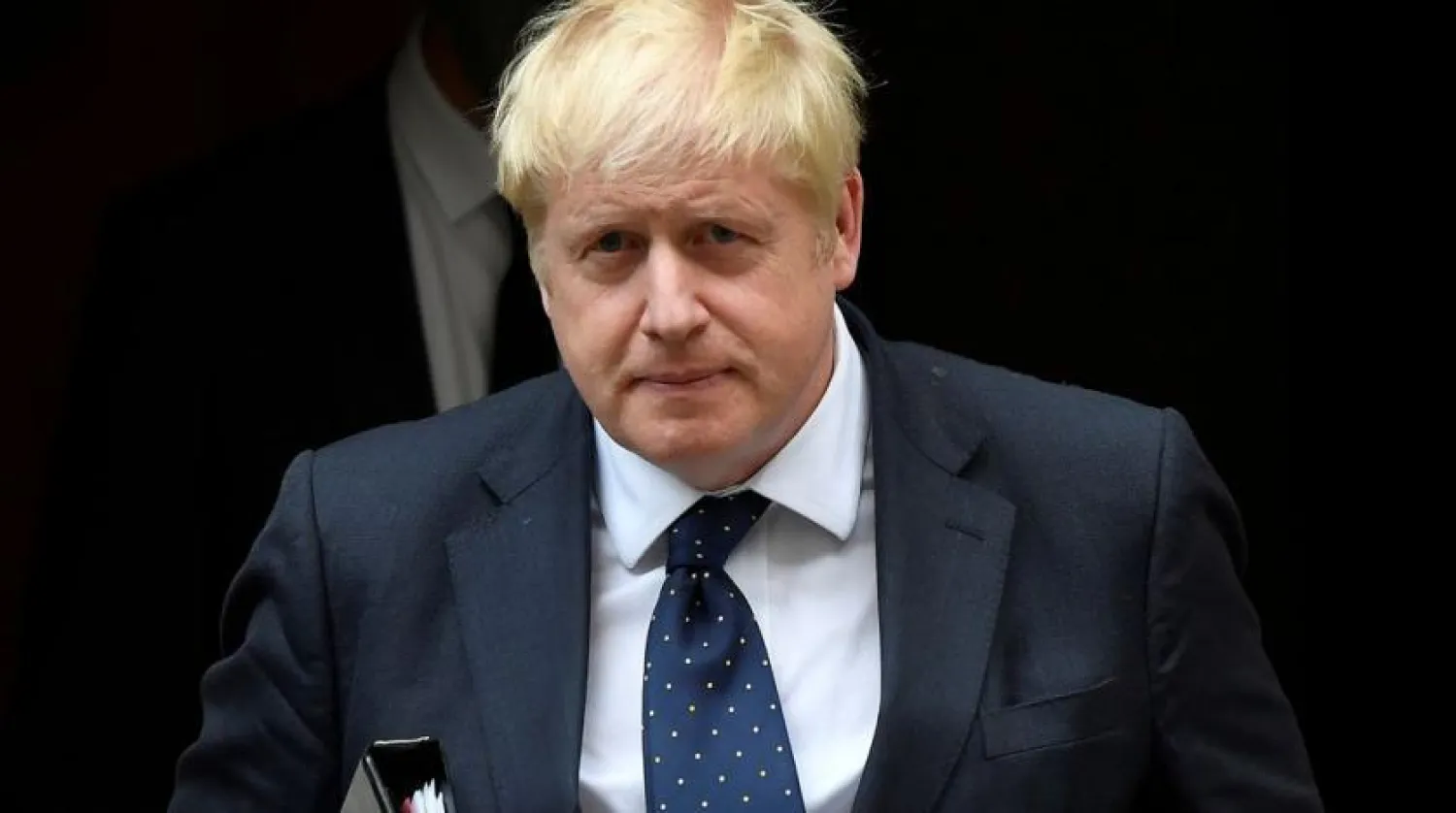
British Prime Minister Boris Johnson. (Reuters)
TT

UK By-elections Pose Fresh Threat to Boris Johnson

British Prime Minister Boris Johnson. (Reuters)

Voters head to the polls on Thursday in two closely watched UK by-elections that risk renewing pressure on beleaguered Prime Minister Boris Johnson following months of scandals and setbacks.

His ruling Conservatives are tipped to lose both contests, for the parliamentary seats of Tiverton and Honiton in southwest England and Wakefield in the north, after both Tory MPs resigned in disgrace, AFP said.

Tiverton and Honiton's MP Neil Parish quit after admitting watching pornography on his phone in the House of Commons, while Wakefield's Imran Ahmad Khan was jailed for sexually assaulting a teenage boy.

The votes come just weeks after Johnson narrowly survived an attempt by his own lawmakers to oust him as party leader and prime minister.

The June 6 vote among Conservative MPs saw more than 40 percent of the parliamentary party desert him, leaving him severely weakened and struggling to reset his turbulent tenure in power.

Johnson has spent months fighting for his survival after a series of controversies including the "Partygate" saga led many Tories to question whether he should remain as leader.

Various opinion polls have shown the public think he lied about Covid lockdown-breaking events at Downing Street and should resign.

Even before the controversy erupted last December, the 58-year-old Brexit architect saw the loss of two once-safe seats in by-elections last year.

He then scored dismally in May's local elections.

Defeat in the true blue Tory heartland of Tiverton and Honiton, and in Wakefield, which Johnson snatched in 2019 from the main opposition Labor party for the first time since the 1930s, could see his position challenged again.

- 'Madness' -
Parish, who described his actions as an indefensible moment of "total madness", won a more than 24,000 majority in Tiverton and Honiton in 2019.

There, the small opposition Liberal Democrats are hopeful of picking up the seat in rural Devon after overturning similarly large majorities in two other historically safe Tory seats in 2021.

Wakefield, near Leeds, was one of dozens of so-called Labor "red wall" seats that Johnson took in 2019 on a promise to "get Brexit done" and address glaring regional economic inequalities.

But it could now flip back due in part to Johnson's waning popularity.

"Anything is better than the Tory Party, as far as I'm concerned -- especially Boris Johnson," long-time Labor voter Stephen, a 61-year-old hospitality worker, told AFP this week.

- 'Partygate' and prices -
The polls come with Britain gripped by 40-year highs in inflation and a cost-of-living crisis that has seen prices soar for everyday essential such as energy, petrol and food.

Strikes this week by railway workers -- some of the biggest seen in Britain in decades -- have added to the sense of crisis.

Some in Wakefield said they expected that to weigh as heavily on voters' minds as the Downing Street parties saga.

"I think people will be affected by 'Partygate'," said David, a retired medical consultant.

"But I think the main thing we're going to be affected by is being hit by the inflation and the rising cost of living from the point of view of heating, energy and the knock-on effect on food prices and transport."

The contest there also comes with risks for Labor, which needs to secure seats like Wakefield if it is to win the next general election due by 2024.

Labor leader Keir Starmer, a sober-minded former lawyer who has been trying to rebuild the center-left party after the shattering 2019 defeat, has been criticized for failing to connect with voters, particularly in its former heartlands.

Anything less than a convincing win in Wakefield is likely to be seized upon by his critics as further evidence of his inability to complete the rebuild and return the party to power after 12 years in opposition.


Le Pen Says France Will No Longer Aid Ukraine ‘Financially’ if Elected

Marine Le Pen (C), the far-right National Rally (RN) party's candidate for the 2027 French presidential election, visits the "Made in France" fair at the Porte de Versailles exhibition center in Paris, France, 13 November 2026. (EPA)
TT

Le Pen Says France Will No Longer Aid Ukraine ‘Financially’ if Elected

Marine Le Pen (C), the far-right National Rally (RN) party's candidate for the 2027 French presidential election, visits the "Made in France" fair at the Porte de Versailles exhibition center in Paris, France, 13 November 2026. (EPA)

Marine Le Pen on Monday said that France would provide no further financial aid to Ukraine if she is elected president next year, after a meeting with Kyiv's ambassador in Paris.

"The state of France's public finances would no longer allow the country to provide financial assistance to Ukraine in the coming months," Le Pen said in a statement, while insisting France would honor existing commitments, including toward a 90-billion-euro ($100-billion) European Union loan.

Le Pen is currently ahead in polls in the race to succeed President Emmanuel Macron next year, as the war sparked by Russia's 2022 full-scale invasion of Ukraine grinds towards its fifth anniversary.

She has faced criticism over past links to Russia, which included a 2017 meeting in the Kremlin with President Vladimir Putin and her party taking a loan from a Russian bank that it paid off in full in 2023.

But she has opposed the invasion and, at her talks in Paris with Ukrainian ambassador Vadym Omelchenko, Le Pen made clear her "unwavering support for Ukraine since the beginning of the conflict".

The statement said the talks -- the first such between Le Pen and the Ukrainian ambassador -- were "cordial".

While financial aid would be cut, Le Pen told the ambassador that "France would continue to support Ukraine through donations of equipment, humanitarian aid and much more active diplomacy".

The statement said there was a "frank discussion" on the future of the conflict, with Le Pen stressing that "the pursuit of peace -- though a difficult goal to achieve -- must remain a priority for all".

She also asked the ambassador to tell President Volodymyr Zelensky she is ready to meet in "either Paris or Brussels". However, there was no mention of the candidate making the journey to Kyiv after Zelensky invited her to visit the Ukrainian capital.

Le Pen's opponents have expressed alarm that by emphasizing the importance of ending the war swiftly, she could force Ukraine to capitulate on unfavorable terms.

"If Russia imposes its will on a European nation through brutality, all of Europe is weakened," Macron wrote on Facebook at the weekend.

Taking aim at Le Pen, he said: "Let us be clear: those who seek to limit the resources available to Ukraine are, in effect, pushing for an unjust peace -- one that would leave Ukraine permanently vulnerable, and, by extension, leave Europe vulnerable as well."


Trump Says He Might Meet with North Korea’s Kim Jong Un in China

US President Donald Trump and North Korean leader Kim Jong Un shake hands before their one-on-one chat during the second US-North Korea summit at the Metropole Hotel in Hanoi, Vietnam February 27, 2019. (Reuters)
TT

Trump Says He Might Meet with North Korea’s Kim Jong Un in China

US President Donald Trump and North Korean leader Kim Jong Un shake hands before their one-on-one chat during the second US-North Korea summit at the Metropole Hotel in Hanoi, Vietnam February 27, 2019. (Reuters)

US President Donald Trump said on Monday he might meet with North Korean leader Kim Jong Un in China this week, an announcement that could dramatically reshape his upcoming trip through East Asia if it occurs.

The president, who met the North Korean leader several times during his 2017-2021 term, including once in the Korean Demilitarized Zone, has previously expressed ‌interest in ‌another meeting during his current term. Senior ‌US ⁠officials, however, have previously ⁠said he has no immediate plans to do so.

Moreover, Trump has repeatedly previewed meetings with Kim that never took place, including during a trip to Asia last year. North Korea, whose mission to the United Nations did not immediately respond to a ⁠request for comment, has publicly indicated it ‌has no intention of ‌meeting with the US president at this time.

Trump told reporters ‌while departing the White House en route to ‌the Philippines and China that any meeting would occur in China, and that the North Korean leader's presence was ultimately up to Chinese President Xi Jinping.

"(Xi) was here a ‌month ago, and we're also going to meet with (Russian) President Putin, and we ⁠may ⁠meet with Kim Jong Un also," Trump said.

"So that'll be good. We have a chance to accomplish a lot."

Trump has indicated he will meet with Putin and Xi during his trip, but US officials and analysts have played down the possibility of a meaningful agreement emerging from any trilateral sit-down.

Among the possible topics of conversation, Trump and others have said, are Russia's invasion of Ukraine, counterproliferation and the war in Iran.


Third US Aircraft Carrier Arrives in Middle East

This US Navy handout photograph released by US Naval Forces Central Command on November 4, 2026, shows the Nimitz-class aircraft carrier USS Theodore Roosevelt (CVN 71) sails alongside Royal Australian Navy Supply-class replenishment oiler HMAS Stalwart (A304). (AFP / NAVCENT Public Affairs / US Navy)
TT

Third US Aircraft Carrier Arrives in Middle East

This US Navy handout photograph released by US Naval Forces Central Command on November 4, 2026, shows the Nimitz-class aircraft carrier USS Theodore Roosevelt (CVN 71) sails alongside Royal Australian Navy Supply-class replenishment oiler HMAS Stalwart (A304). (AFP / NAVCENT Public Affairs / US Navy)

The USS Theodore Roosevelt aircraft carrier arrived in the Middle East on Sunday, media reports said, bringing the number of American carrier strike groups in the region to three.

The deployment, which was reported by the National News and Axios journalist Barak Ravid, comes as fighting reignites in the region, with Iran claiming a drone attack on Bahrain on Sunday, ending a lull in strikes in the war.

Iran also fired drones at Bahrain on Friday -- the first strikes since September against countries in the energy-rich Gulf, which has been targeted several times in the conflict that erupted in February.

US President Donald Trump plans to discuss the war at a trilateral meeting with his Chinese and Russian counterparts Xi Jinping and Vladimir Putin this week, an official said Friday.

Months of diplomacy have failed to resolve the war, which began with US-Israeli strikes that killed Iran's supreme leader Ali Khamenei.