


Turkish Inflation Seen Above 78% in June, Just Below 70% at End-2022

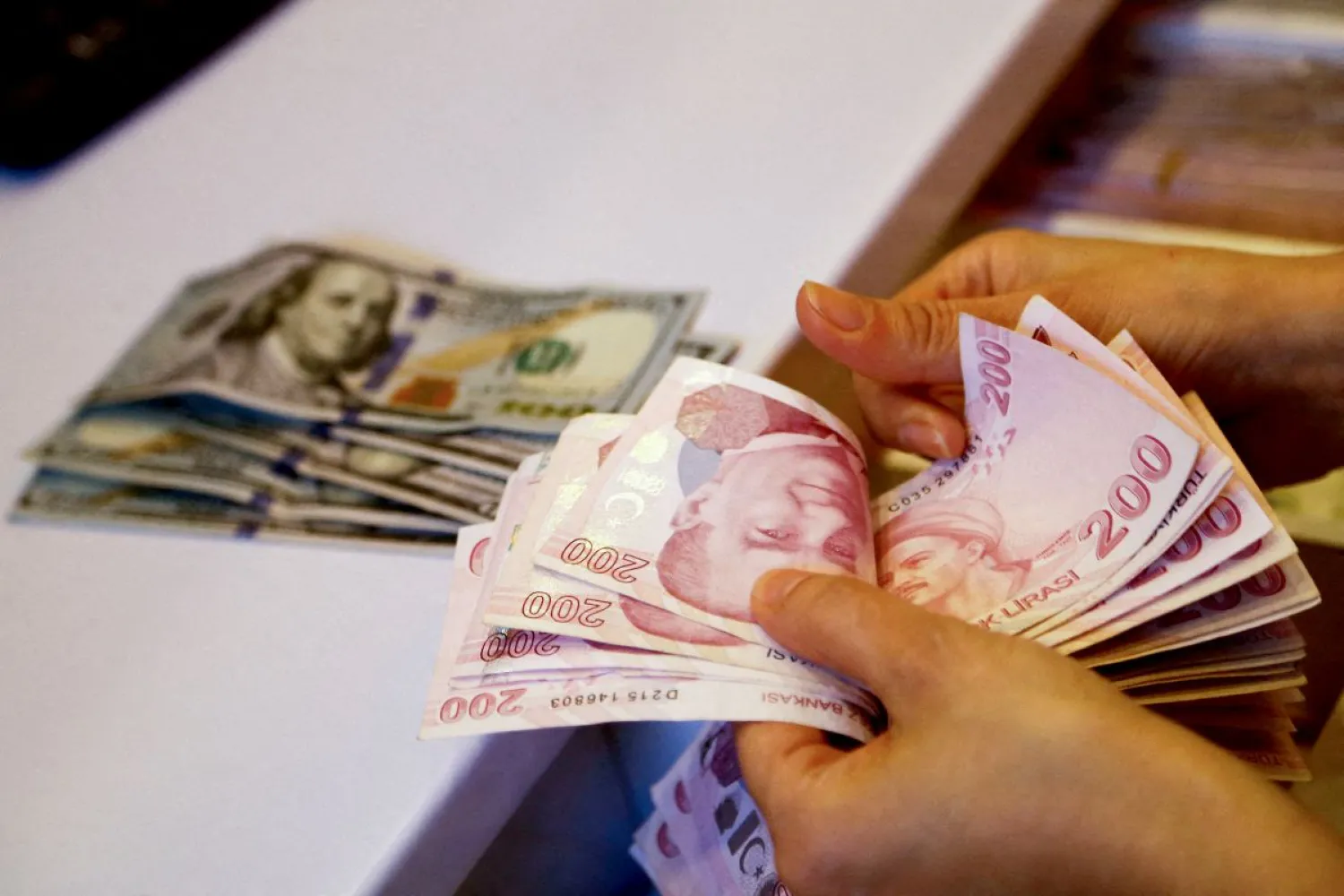
A money changer counts Turkish lira banknotes at a currency exchange office in Ankara, Turkey September 27, 2021. REUTERS/Cagla Gurdogan
TT

Turkish Inflation Seen Above 78% in June, Just Below 70% at End-2022

A money changer counts Turkish lira banknotes at a currency exchange office in Ankara, Turkey September 27, 2021. REUTERS/Cagla Gurdogan

Turkey's inflation is expected to rise above 78% in June and it was seen declining to just below 70% by end-2022, a Reuters poll showed on Tuesday, as pricing behavior deteriorates across the board due to a weak currency and a loose monetary policy.

Inflation has surged since last autumn, when the lira slumped after the central bank gradually cut its policy rate by 500 basis-points to 14%, in an easing cycle sought by President Recep Tayyip Erdogan.

It has been further stoked this year by the economic fallout from Russia's invasion of Ukraine, as well as the lira's continued decline. The currency shed 44% against the dollar last year, and was down 24% this year before recovering some losses in recent days.

The median estimate of 12 economists who participated in the Reuters poll for annual inflation in June was 78.35%, with forecasts ranging between 72.30% and 81.80%.

That would make it the highest reading since September 1998, when annual inflation was 80.4% and Turkey was battling to end a decade of chronically high inflation.

The median of nine economists for the monthly figure stood at 5.38%, in a range of 3.50% and 6.80%.

Inflation was seen falling only to 69.50% by the end of the year, according to the median estimate of 18 economists, with forecasts between 60.33% and 120%.

The median for the year-end stood at 63.5% in the previous Reuters poll conducted in May.

Citi said it continues to see a broad-based deterioration in price dynamics, while soaring producer prices continue to exert pressure on consumer prices, further clouding the outlook.

"We expect annual inflation to remain elevated until November (averaging over 80% y-o-y) before moving towards 65% y-o-y in December on the back of strong base effects," it said.

The government has said inflation will fall with the new economic program, which prioritizes low rates to boost production and exports and aims to achieve a current account surplus.

Erdogan said on Monday that he expects inflation to come down to "appropriate" levels by February-March next year, while the central bank said it would drop to 42.8% by end-2022.

Opposition lawmakers and economists have questioned the reliability of the Turkish Statistical Institute's (TUIK) figures, claims TUIK has dismissed. Polls show Turks believe inflation is far higher than official data.

Saudi Arabia Launches First Endowment Fund for Environmental, Water and Agricultural Sustainability

The launch of the Namaa Endowment Fund (Asharq Al-Awsat)
TT

Saudi Arabia Launches First Endowment Fund for Environmental, Water and Agricultural Sustainability

The launch of the Namaa Endowment Fund (Asharq Al-Awsat)

Saudi Arabia has launched its first endowment fund dedicated to advancing environmental, water and agricultural sustainability, reinforcing efforts to strengthen the Kingdom’s non-profit sector and long-term development.

Minister of Environment, Water and Agriculture Eng. Abdulrahman Al-Fadhli on Tuesday inaugurated the Namaa Endowment Fund at the ministry’s headquarters, in the presence of senior officials and stakeholders.

The fund is designed to support economic and social development goals, address community needs, increase the non-profit sector’s contribution to GDP, and promote sustainable management of environmental, water and agricultural resources.

Al-Fadhli said the fund represents a new model of institutional endowment work and a practical mechanism to expand developmental impact while ensuring the sustainability of non-profit initiatives.

Developed in partnership with the General Authority for Awqaf, the fund aims to build assets commensurate with its ambitions, enabling higher returns and a wider impact over the long term.

It will pursue carefully structured investments that balance financial performance with developmental outcomes, with the potential to own or benefit from real estate assets that can be used by non-profit organizations.

Encouraging Private-Sector Participation

Al-Fadhli added that the ministry, in cooperation with the General Authority for Awqaf, the Capital Market Authority and AlAhli Capital, will support the fund and encourage contributions from the private sector, business leaders and the wider public.

Contributions will be made through a licensed digital platform under strict financial governance. He called on all segments of society to contribute in support of sustainable development across the environment, water and agriculture sectors.

Namaa will finance endowment initiatives within the ministry’s ecosystem, including the non-profit institutions Reef, Morooj and Saqaya. Its focus areas include water provision and conservation, afforestation, biodiversity protection, vegetation cover, the circular economy, sustainable agriculture and irrigation, and reducing food loss and waste.

Emad Alkharashi, Governor of the General Authority for Awqaf, announced an initial contribution of SAR100 million, describing it as a foundation for a sustainable endowment model.

He said the fund combines the legacy of endowments with modern investment practices to protect natural resources, strengthen food security and ensure lasting developmental impact.

Alkharashi added that the partnership with the ministry maximizes results and positions the fund as a model for directing endowments toward high-impact, long-term priorities through a transparent, well-governed institutional framework.


Makkah Gears Up for Ramadan with Tourism Drive, Record Hospitality Growth  

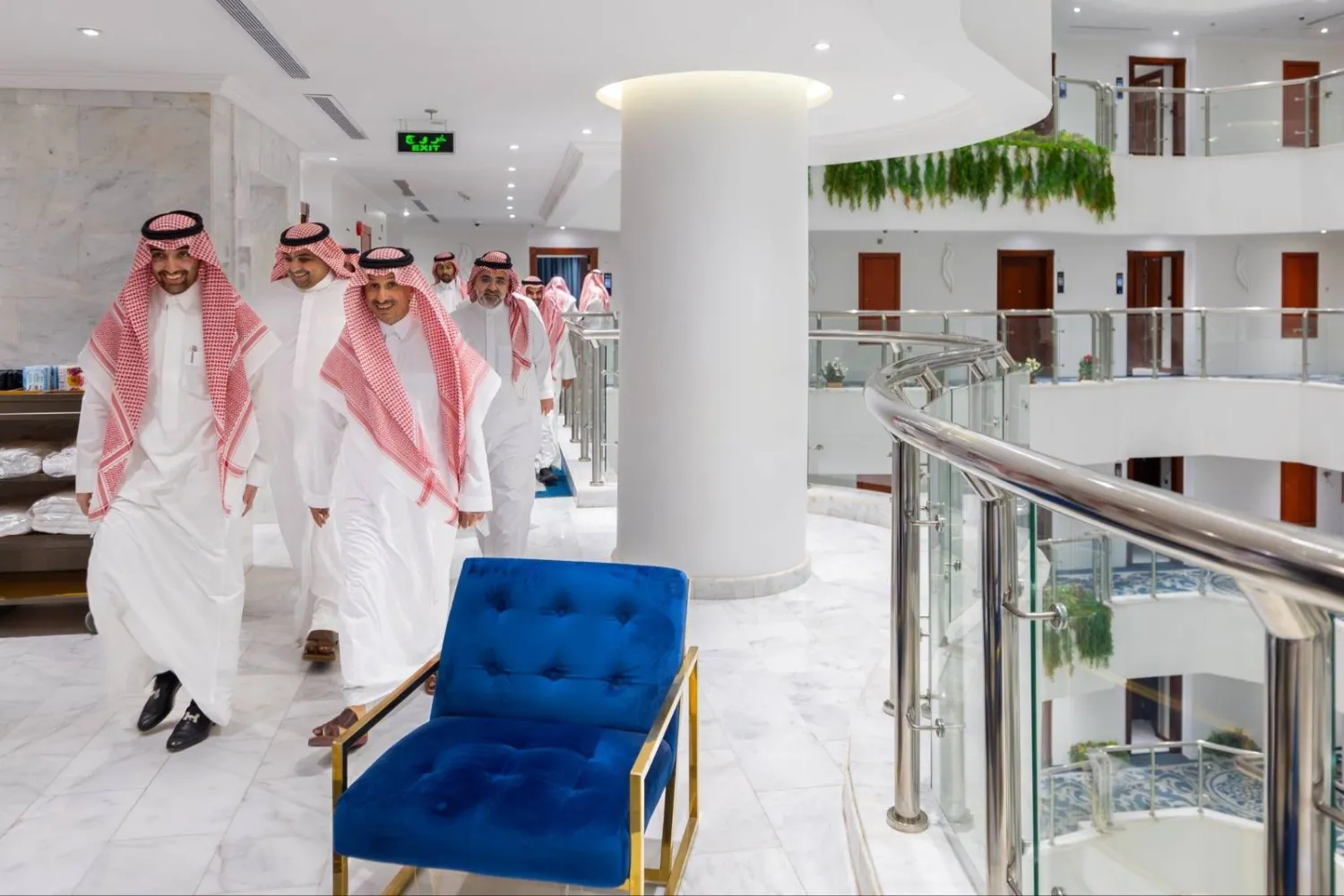
Tourism Minister Ahmed Al-Khateeb and other officials during his inspection tour on Tuesday. (Asharq Al-Awsat)
TT

Makkah Gears Up for Ramadan with Tourism Drive, Record Hospitality Growth  

Tourism Minister Ahmed Al-Khateeb and other officials during his inspection tour on Tuesday. (Asharq Al-Awsat)

Saudi Arabia’s Ministry of Tourism has raised the readiness of Makkah’s hospitality sector to its highest level ahead of the holy month of Ramadan, stressing that serving pilgrims and visitors remains a top national priority.

Makkah is preparing to receive worshippers and visitors amid a marked expansion in hospitality capacity. The city now has more than 2,200 licensed accommodation facilities, reflecting growth of 35 percent over the past year. The number of licensed hotel rooms has exceeded 380,000, up 25 percent, while total domestic and inbound tourism spending is projected to surpass SAR 143 billion ($38.1 billion) in 2025.

The wider Makkah region recorded unprecedented performance indicators last year, both in visitor numbers and tourism spending, underscoring sustained growth and operational readiness.

Total domestic and international visitors exceeded 50 million, marking a 14 percent increase compared with 2024.

Tourism Minister Ahmed Al-Khateeb announced the figures during an annual inspection tour on Tuesday, stressing that the indicators reflect a major expansion in accommodation capacity and record growth in visitor numbers.

The tour included inspections of temporary lodging facilities designated for pilgrims, part of a proactive plan to increase capacity during peak seasons, alongside early preparations for the upcoming Hajj.

Vision 2030 targets surpassed

Official data has shown that Saudi Arabia has exceeded its Vision 2030 targets for the Umrah. The number of pilgrims arriving from abroad rose from 8.5 million in 2019 to more than 18 million in 2025, surpassing the original goal of 15 million by 2030.

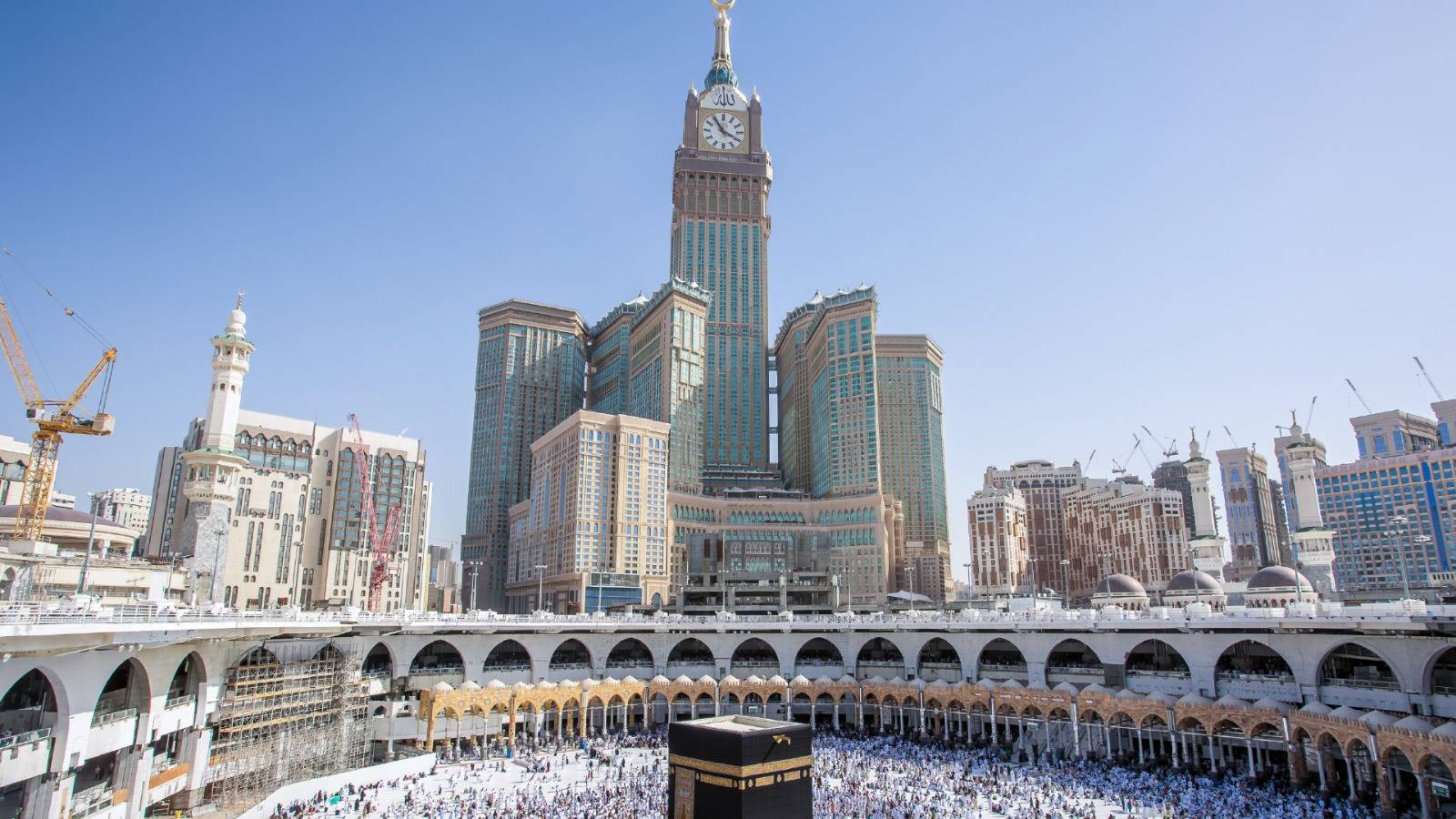
A number of hotels surrounding the Grand Mosque in Makkah. (General Authority for Awqaf)

Service quality indicators improved as well, with pilgrim satisfaction reaching 94 percent, exceeding Vision 2030 benchmarks.

Workforce development kept pace with demand, as the number of licensed tour guides rose to more than 980, a 23 percent increase.

Masar Mall project

Al-Khateeb announced a joint financing agreement between the Tourism Development Fund and the Arab National Bank with Hamat Holding to support the Masar Mall project. The development carries a total cost of SAR 936 million (about $250 million).

The project is expected to become the largest shopping center in Makkah with the capacity to accommodate around 20 million visitors annually.

Its location near the Haramain High-Speed Railway station and a direct pedestrian link to the Grand Mosque are expected to strengthen the city’s commercial and tourism infrastructure.

Jeddah: Gateway to pilgrims

Meanwhile, Jeddah continues to consolidate its position as a complementary destination to Makkah and a primary gateway for pilgrims, while also expanding its role as a coastal tourism hub.

The city welcomed more than 13 million domestic and international visitors in 2025, a 10 percent increase from 2024. Tourism spending reached SAR 28 billion ($7.47 billion), up 6 percent year on year.

Jeddah’s hospitality sector also expanded, with more than 500 licensed facilities and over 33,000 licensed rooms.

The city is currently developing 46 tourism projects valued at SAR 21 billion ($5.6 billion) and expected to add more than 11,000 hotel rooms and further strengthen its tourism infrastructure and economic value.


ECB President Lagarde Reportedly Plans to Quit Before Macron's Term Ends

FILE PHOTO: European Central Bank (ECB) President Christine Lagarde addresses the press following the ECB's Governing Council meeting, at the ECB headquarters in Frankfurt, Germany, February 5, 2026. REUTERS/Jana Rodenbusch/File Photo
TT

ECB President Lagarde Reportedly Plans to Quit Before Macron's Term Ends

FILE PHOTO: European Central Bank (ECB) President Christine Lagarde addresses the press following the ECB's Governing Council meeting, at the ECB headquarters in Frankfurt, Germany, February 5, 2026. REUTERS/Jana Rodenbusch/File Photo

European Central Bank President Christine Lagarde plans to leave her job before next year's French presidential election to allow Emmanuel Macron to have an input into picking her successor, the Financial Times reported on Wednesday.

Lagarde's term is due to end in October 2027 but some fear that the far right may win the French presidential race ‌in the spring of ‌2027, complicating the selection for the ‌new ⁠leader of Europe's most ⁠important financial institution.

Citing a person familiar with the matter, the FT said Lagarde has not yet decided on the exact timing of her departure but was keen on Macron and German Chancellor Friedrich Merz to be the key deciders in who succeeds her. Macron cannot run again for a third term.

"President Lagarde is ⁠totally focused on her mission and has not ‌taken any decision regarding the end ‌of her term," Reuters quoted an ECB spokesperson as saying.

The FT report comes only ‌a week after Bank of France Governor Francois Villeroy de Galhau ‌said he would step down in June this year, more than a year before the end of his term, allowing Macron to name his replacement before the presidential election that the far-right could win.

While it ‌will be up to all leaders from the 21-nation euro zone to pick Lagarde's successor, ⁠past practice ⁠suggests that any successful candidate must have both German and French support to clinch the role.

There are no formal candidates for the job yet but several names have been floating among ECB circles as potential ECB presidents. The most prominent among these are former Dutch central bank chief Klaas Knot and Bank for International Settlements General Manager Pablo Hernandez de Cos.

Lagarde's non-renewable term at the ECB runs until October 31, 2027. Prior to heading the ECB, she was managing director of the International Monetary Fund from 2011 to 2019 and before that, the French finance minister.
