


Northwest Syria Fears Catastrophe as Cross-border Aid at Risk

A road sign that reads "Welcome to Bab al-Hawa crossing" is seen at Bab al-Hawa crossing at the Syrian-Turkish border, in Idlib governorate, Syria June 10, 2021. REUTERS/Khalil Ashawi
TT

Northwest Syria Fears Catastrophe as Cross-border Aid at Risk

A road sign that reads "Welcome to Bab al-Hawa crossing" is seen at Bab al-Hawa crossing at the Syrian-Turkish border, in Idlib governorate, Syria June 10, 2021. REUTERS/Khalil Ashawi

Residents of embattled northwest Syria warned Saturday of a deepening humanitarian crisis following a Russian veto at the UN Security Council that threatens to end cross-border aid deliveries critical to their survival.

Friday's veto of a resolution that would have extended authorization for UN aid deliveries through the Bab al-Hawa crossing on the Syrian-Turkish border by one year came on the eve of the Muslim Eid al-Adha holiday.

It cast a pall over celebrations and has left residents of Syria's last major opposition bastion increasingly worried, at time when humanitarian needs have reached record levels and hunger rates are at their highest since the start of the conflict in 2011, according to the UN.

"Russia has destroyed our houses, ravaged our children and forced us into displacement... now, it wants to close the (aid) crossing," said Ftaym, a 45-year-old displaced Syrian living in a camp in Idlib province.

"If the Bab al-Hawa crossing closes, cutting us off from the relief and supplies that are delivered to us, then we will die," said the mother of 14 children.

The cross-border mechanism at Bab al-Hawa, which has been in effect since 2014, is set to expire Sunday.

It is the only crossing through which UN assistance can be brought into the rebel-held northwest without navigating areas controlled by Syrian government forces.

More than 4,600 aid trucks, carrying mostly food, have crossed Bab al-Hawa so far this year, helping some 2.4 million people, according to the UN's Office for the Coordination of Humanitarian Affairs (OCHA).

On Saturday, Bab al-Hawa was closed because of the Eid al-Adha holiday, an AFP correspondent at the crossing said.

Silence has prevailed over the border area since a final aid convoy crossed over on Friday at noon.

"Everyone knows most camp residents are completely dependent on this aid," said Abdulsalam Youssef, a displaced Syrian who lives in a makeshift Idlib settlement.

Russia's veto spells a "catastrophe for me", he added.

The Sunday deadline still leaves time for members of the Security Council to keep the crossing open.

Diplomats said the council's non-permanent members may propose a nine-month extension to try to break the impasse.

But Syrians in Idlib are skeptical of Moscow, which has backed repeated campaigns by the Damascus government against the opposition enclave.

Russia's veto exemplifies a "siege and famine policy that Russia resorts to across Syria", charged Mazen Allouch, an official at the Bab al-Hawa crossing.

Failure to extend the authorization would "serve as a prelude to an uncontrollable famine that would directly threaten food security of more than four million people" living in Syria's northwest, he told AFP.

The number of Syrians who lack access to sufficient food stands at a record 12.4 million, or nearly 60 percent of the population, the UN says.

The UN's cross-border operations, including medical aid deliveries, are a key lifeline for Idlib's crumbling health sector, which has been battered by years of fighting between rebels and regime forces.

Already dwindling donor funds have caused dire shortages of medicine and equipment.

A failure to renew the UN's authorization "will lead to the total collapse of the health sector," said Salem Abdane, Idlib's health director.

It will lead to "the closure of 21 hospitals, 12 medical centers, and will stop several projects, including vaccinations," the official said, warning of an "increase in death rates and disease".

Moscow's move also triggered alarm from senior UN officials and aid groups who had lobbied Security Council members for the year-long cross-border aid clearance.

"I hope the Security Council will meet again soon and agree on a way forward," said Mark Cutts, UN deputy regional humanitarian coordinator for the Syria crisis.

"Failure to renew the resolution for cross-border aid will be a catastrophe for over four million people in northwest Syria," he told AFP.

David Miliband, president of the International Rescue Committee, said Syria's "already extreme crisis is set to move to a humanitarian catastrophe" without sufficient alternatives to cross-border aid.
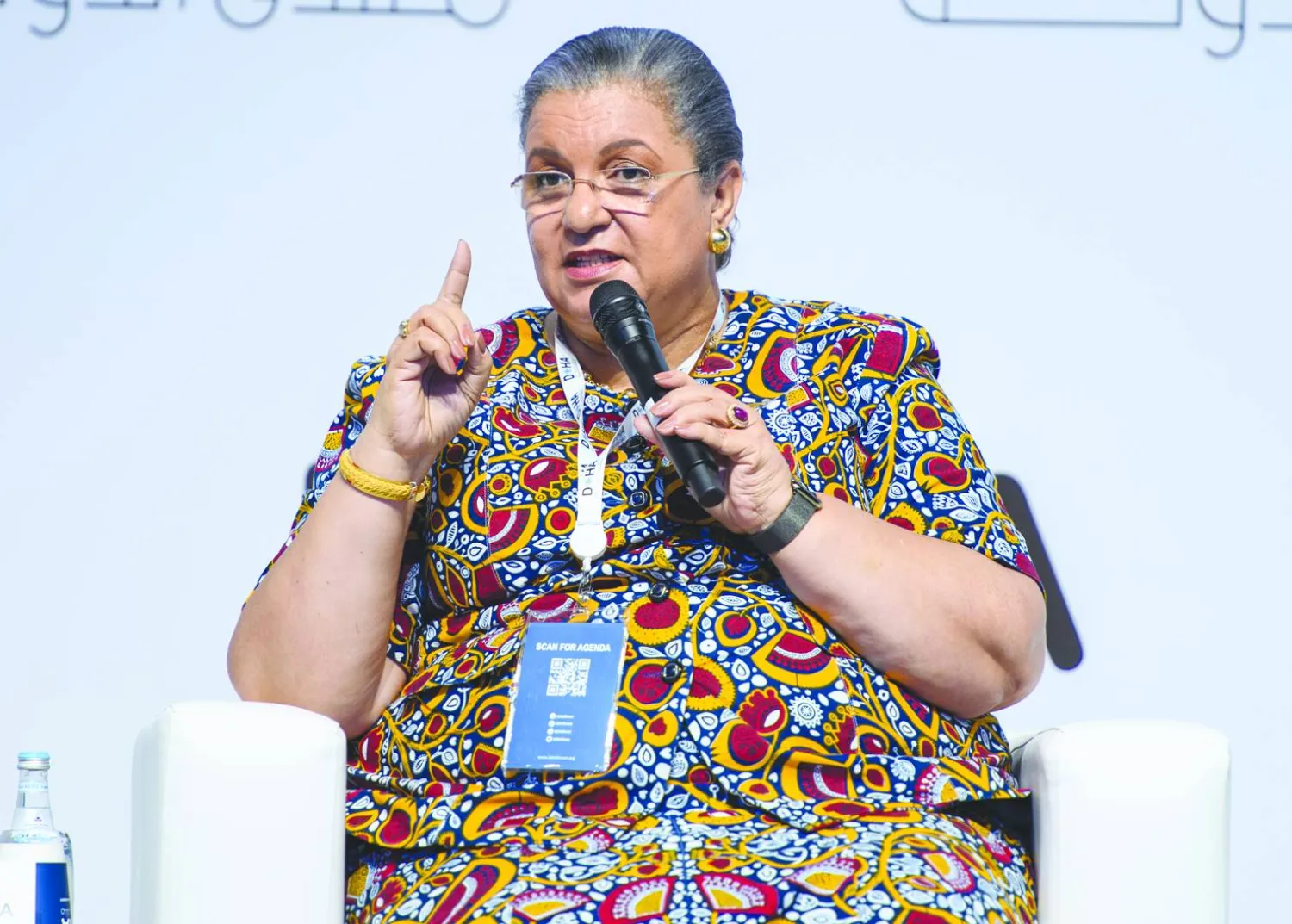



Tetteh: Despite UN Engagement, No Progress in Libya Roadmap

Head of the United Nations Support Mission in Libya Hanna Tetteh Getty)
TT

Tetteh: Despite UN Engagement, No Progress in Libya Roadmap

Head of the United Nations Support Mission in Libya Hanna Tetteh Getty)

The UN’s top envoy for Libya, Hanna Tetteh, has informed the Security Council that despite active United Nations engagement, the Libyan House of Representatives and the High Council of State have failed to make progress on the first steps of the agreed political roadmap, including establishing a mechanism to select the board of the High National Elections Commission (HNEC) and advancing electoral legislation.

Briefing the Council in New York on Wednesday, the Special Representative of the Secretary-General said: “Their inability to use their agreed mechanism and follow-on unilateral actions has further eroded their credibility."

Tetteh added that Libyan public perceptions reflect a growing belief that the bodies are “unable or unwilling” to deliver.

She told Council members that she has begun consultations with key actors on an alternative two-step approach aimed at restoring momentum. Should a smaller group of Libyan representatives fail to agree on the roadmap’s milestones, she warned, a broader convening would be required. “We cannot wait indefinitely,” she emphasized.

The UN envoy also issued a stark warning about escalating tensions within Libya’s judicial system.

She said “contradictory, parallel judicial decisions put into jeopardy the unity of the legal and judicial systems,” cautioning that the situation “is a red line that if crossed can undermine the unity of the state.”

She urged Libyan leaders to refrain from further escalatory steps and called on the Council to hold accountable those taking actions that threaten to fracture the judiciary.

Tetteh also warned that transnational criminal networks continue to expand, turning Libya into a major transit hub for drug trafficking and sustaining illicit economies linked to corruption and armed groups.


Damascus, in Cooperation with Baghdad, Foils Plot to Smuggle Drugs Abroad

Quantities of Captagon prepared for smuggling abroad- SANA
TT

Damascus, in Cooperation with Baghdad, Foils Plot to Smuggle Drugs Abroad

Quantities of Captagon prepared for smuggling abroad- SANA

Syrian authorities said they have thwarted an attempt to smuggle a large shipment of drugs out of the country.

The Syrian Narcotics Directorate said on Wednesday it seized approximately 400,000 captagon pills, weighing about 65 kilograms, during an operation in Homs province in central Syria.

The drugs would have been smuggled to other countries, the Syrian Arab News Agency (SANA) reported. Two suspects were arrested on suspicion of managing a drug-trafficking network operating across borders.

The operation was carried out in coordination with Iraq’s General Directorate for Narcotics and Psychotropic Substances Control, SANA quoted a Syrian Interior Ministry statement as saying.

Earlier this month, the Syrian Narcotics Directorate conducted a joint security operation with the Iraqi authorities targeting an international drug-trafficking network, and seizing about 300,000 Captagon pills. Two people were also arrested.


How Gaza Armed Gangs Recruit New Members

Security personnel guard trucks carrying aid as they arrive in Rafah, amid the ongoing conflict between Israel and the Palestinian Islamist group Hamas, in the southern Gaza Strip January 17, 2024. (Reuters)
TT

How Gaza Armed Gangs Recruit New Members

Security personnel guard trucks carrying aid as they arrive in Rafah, amid the ongoing conflict between Israel and the Palestinian Islamist group Hamas, in the southern Gaza Strip January 17, 2024. (Reuters)

As Hamas moves to strike armed gangs operating in areas of the Gaza Strip under Israeli army control, the groups are responding with defiance, stepping up efforts to recruit young men and expand their ranks.

Videos posted on social media show training exercises and other activities, signaling that the gangs remain active despite pressure from Hamas security services.

Platforms affiliated with Hamas security say some members have recently turned themselves in following mediation by families, clans and community leaders. The gangs have not responded to those statements. Instead, they occasionally broadcast footage announcing new recruits.

Among the most prominent was Hamza Mahra, a Hamas activist who appeared weeks ago in a video released by the Shawqi Abu Nasira gang, which operates north of Khan Younis and east of Deir al-Balah.

Mahra’s appearance has raised questions about how these groups recruit members inside the enclave.

Field sources and others within the security apparatus of a Palestinian armed faction in Gaza told Asharq Al-Awsat that Mahra’s case may be an exception. They described him as a Hamas activist with no major role, despite his grandfather being among the founders of Hamas in Jabalia.

His decision to join the gang was driven by personal reasons linked to a family dispute, they said, not by organizational considerations.

The sources said the gangs exploit severe economic hardship, luring some young men with money, cigarettes and other incentives. Some recruits were heavily indebted and fled to gang-controlled areas to avoid repaying creditors.

Others joined in search of narcotic pills, the sources said, noting that some had previously been detained by Hamas-run security forces on similar charges. Economic hardship and the need for cigarettes and drugs were among the main drivers of recruitment, they added, saying the gangs, with Israeli backing, provide such supplies.

Resentment toward Hamas has also played a role, particularly among those previously arrested on criminal or security grounds and subjected to what the sources described as limited torture during interrogations under established procedures.

According to the sources, some founders or current leaders of the gangs previously served in the Palestinian Authority security services.

They cited Shawqi Abu Nasira, a senior police officer; Hussam al-Astal, an officer in the Preventive Security Service; and Rami Helles and Ashraf al-Mansi, both former officers in the Palestinian Presidential Guard.

These figures, the sources said, approach young men in need and at times succeed in recruiting them by promising help in settling debts and providing cigarettes. They also tell recruits that joining will secure them a future role in security forces that would later govern Gaza.

The sources described the case of a young man who surrendered to Gaza security services last week. He said he had been pressured after a phone call with a woman who threatened to publish the recording unless he joined one of the gangs.

He later received assurances from another contact that he would help repay some of his debts and ultimately agreed to enlist.

During questioning, he said the leader of the gang he joined east of Gaza City repeatedly assured recruits they would be “part of the structure of any Palestinian security force that will rule the sector.”

The young man told investigators he was unconvinced by those assurances, as were dozens of others in the same group.

Investigations of several individuals who surrendered, along with field data, indicate the gangs have carried out armed missions on behalf of the Israeli army, including locating tunnels. That has led to ambushes by Palestinian factions.

In the past week, clashes in the Zaytoun neighborhood south of Gaza City and near al-Masdar east of Deir al-Balah left gang members dead and wounded.

Some investigations also found that the gangs recruited young men previously involved in looting humanitarian aid.