


Paris Seeks to Build Strategic Partnership with Riyadh in Energy, Aviation

 French Ambassador to Saudi Arabia Ludovic Pouille (Saad al-Dossary)
French Ambassador to Saudi Arabia Ludovic Pouille (Saad al-Dossary)
TT

Paris Seeks to Build Strategic Partnership with Riyadh in Energy, Aviation

 French Ambassador to Saudi Arabia Ludovic Pouille (Saad al-Dossary)
French Ambassador to Saudi Arabia Ludovic Pouille (Saad al-Dossary)

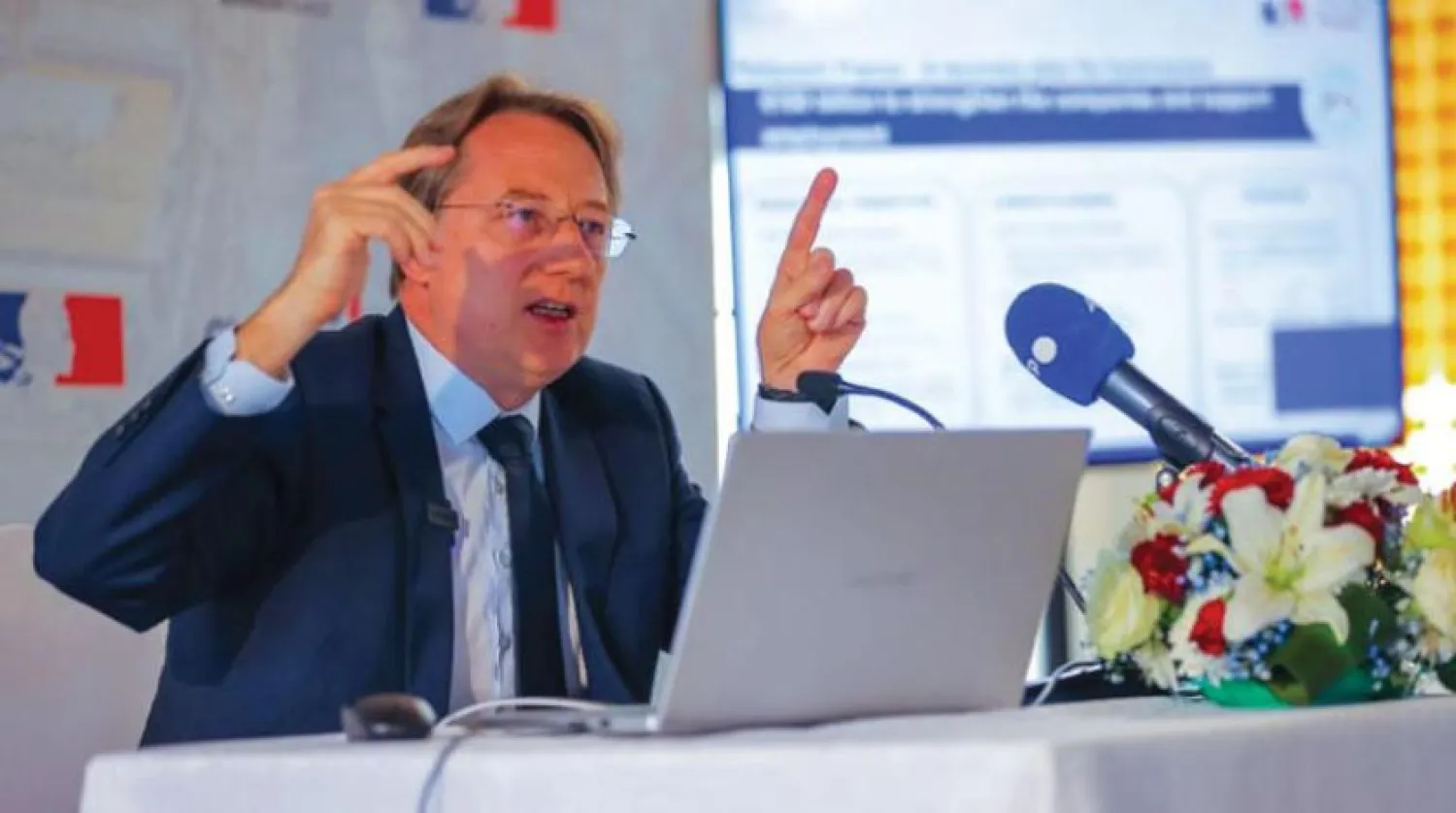
French Ambassador to Saudi Arabia Ludovic Pouille said that his country was seeking to build a strategic partnership with the Kingdom that includes several vital sectors, including aviation and energy.

“The strategic partnership that we intend to build with the Kingdom is twofold, as our ambition is not only to increase the presence of French companies in the Saudi market, but we also want our Saudi partners, whether public institutions or private companies, to explore the richness and plurality of investment opportunities in the French economy,” Pouille told Asharq Al-Awsat.

Referring to figures published by Eurostat – a dissemination database that provides official statistics on the European Union, EU member states and sub-state regions – Pouille said that the Kingdom owned 25 percent of French companies in the Middle East.

He added that the number of subsidiaries in the Kingdom controlled by French companies was 135, equivalent to 40% of the subsidiaries controlled by European companies. Those employ more than 13,300 workers and generate nearly 4 billion euros.

Pouille explained that French companies were implementing important and large projects in the Kingdom, especially in the sectors of energy, water, waste treatment, transportation, aviation and construction, noting that large French groups enjoy a particularly good position in the field of renewable energies and the water sector.

With regards to large projects such as NEOM, the Red Sea, Qiddiya and AlUla, the French ambassador noted that French companies would work on basic infrastructure, airports, roads, bridges and roads leading to different sites, with funding from the Public Investment Fund.

He added that public-private partnerships were proposed through tenders to develop income-generating facilities in terms of electricity, water, waste and communications.

According to Pouille, many French companies, whether large groups or small and medium-sized companies, are participating in the construction and operation of future accommodation and catering facilities, leisure and entertainment amenities, cultural spaces and commercial areas.

Pointing to figures released by the Bank of France, the diplomat said that the balance of French direct investment in Saudi Arabia amounted to nearly 3 billion euros, according to data in early 2021, mainly concentrated in the energy sector.

This represents 25 percent of French foreign direct investment in the Middle East, he underlined.

Meanwhile, Pouille said that the balance of Saudi foreign direct investment in France amounts to only 600 million euros, which is equivalent to 4.5 percent of FDI by Middle Eastern countries in France. Qatar accounts for 53 percent and the UAE 19 percent, with investments mainly focusing on real estate and the hotel sector.

“We believe that these mutual investment volumes are below their capacity, and that they should grow in the coming years, especially in the context of the strategic partnership between our two countries,” he stated.



China Expresses 'Gratitude' after 3 Ships Transit Hormuz Strait

FILE - Ships sail through the Arabian Gulf toward the Strait of Hormuz as the sun sets in the United Arab Emirates Monday, March 23, 2026. (AP Photo, File)
TT

China Expresses 'Gratitude' after 3 Ships Transit Hormuz Strait

FILE - Ships sail through the Arabian Gulf toward the Strait of Hormuz as the sun sets in the United Arab Emirates Monday, March 23, 2026. (AP Photo, File)

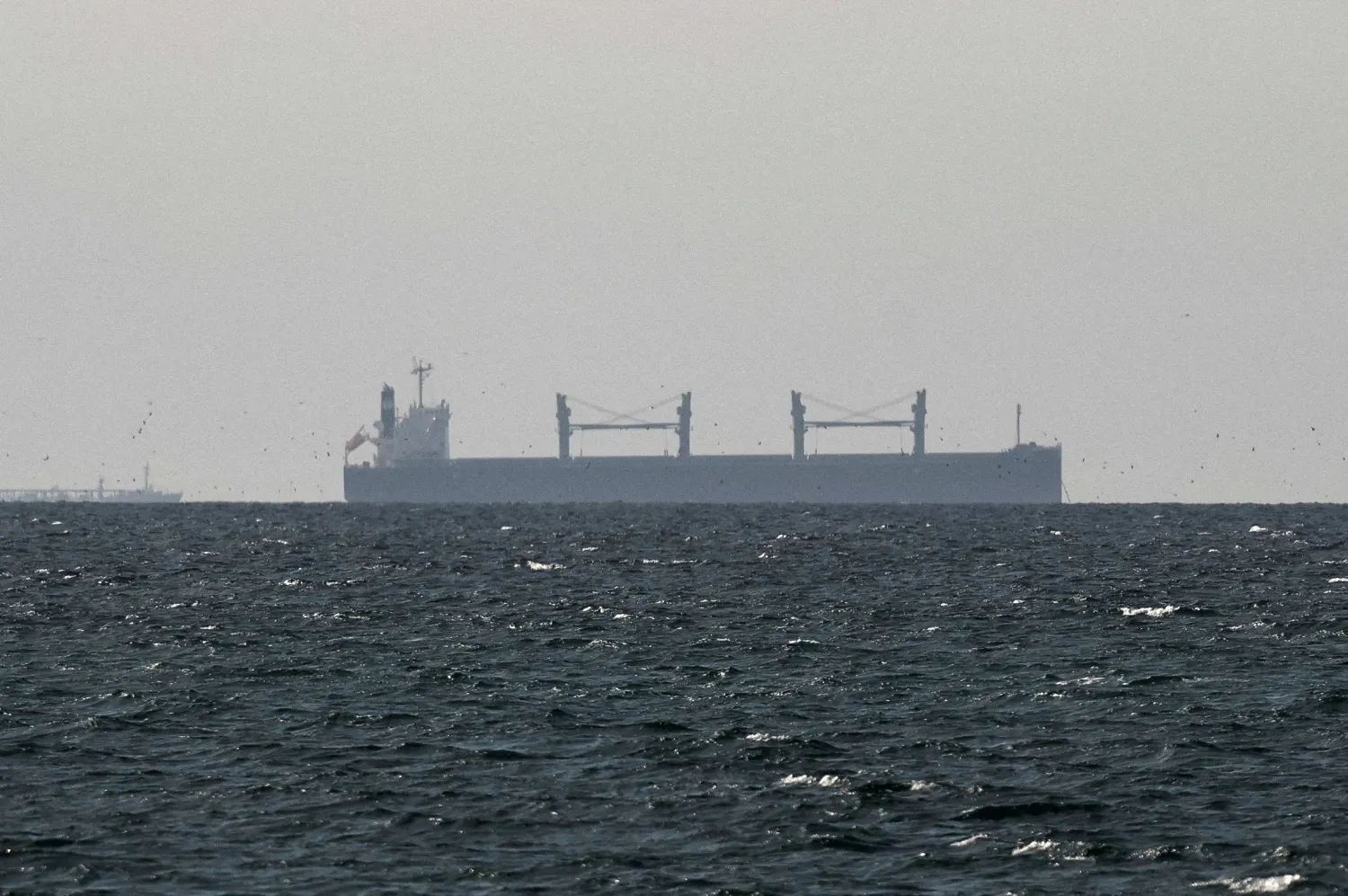
Beijing expressed "gratitude" on Tuesday as it said three Chinese ships had transited the crucial Strait of Hormuz, which Iran has all but closed during the war in the Middle East.

"Following coordination with relevant parties, three Chinese vessels recently transited the Strait of Hormuz; we express our gratitude to the relevant parties for the assistance provided," foreign ministry spokeswoman Mao Ning told a regular press conference.

Mao did not offer ‌details about the ‌Chinese ships.

Ship-tracking data showed two Chinese container ships sailed through the Strait of ⁠Hormuz on Monday ⁠on their second attempt to leave the Gulf after turning back on Friday.

The vessels sailed in close formation out of the strait and into open waters, data on the MarineTraffic platform showed.

"Both vessels successfully crossed on a second attempt today, marking the first container vessels to leave the Persian Gulf since the start of the conflict, excluding Iranian flag vessels," said Rebecca Gerdes, data analyst with Kpler, which owns MarineTraffic.

"Both vessels are steaming at an elevated speed toward the Gulf of Oman at the moment."

Officials from China's COSCO, the shipping group that operates ⁠the two vessels, did not respond to requests for comment. COSCO had said in a March 25 client advisory, that it had resumed bookings for general cargo containers for shipments from Asia to the Gulf including the United Arab Emirates, Saudi Arabia, Bahrain, Qatar, Kuwait and Iraq.

Iran has launched attacks on Gulf shipping and threatened more, stranding hundreds of vessels and 20,000 seafarers inside the Gulf.


UNDP: Arab Countries May Lose Up to $194 Billion from Iran War

FILE PHOTO: A cargo ship in the Gulf, near the Strait of Hormuz, as seen from northern Ras al-Khaimah in United Arab Emirates, March 11, 2026. REUTERS/Stringer/File Photo
TT

UNDP: Arab Countries May Lose Up to $194 Billion from Iran War

FILE PHOTO: A cargo ship in the Gulf, near the Strait of Hormuz, as seen from northern Ras al-Khaimah in United Arab Emirates, March 11, 2026. REUTERS/Stringer/File Photo

The military escalation in the Middle East, now into its fifth week, may cost economies in the region from 3.7 to 6 percent of their collective Gross Domestic Product (GDP), a staggering loss of $120-194 billion, a new United Nations study found.

“Coupled with an estimated rise in unemployment of up to 4 percentage points or 3.6 million jobs lost—more than the total jobs created in the region in 2025, these reversals will push up to 4 million people into poverty,” according to an analysis by the United Nations Development Programme (UNDP), which was released early Tuesday.

The assessment - “Military Escalation in the Middle East: Economic and Social Implications for the Arab States region” - exposes the concerning reality of structural vulnerabilities characteristic to the region, which enable a short lived military escalation to generate profound and widespread socio economic impacts that may persist over a long-term.

The agency said it had studied a number of different scenarios to determine how the conflict, which began on Feb. 28, might affect countries in the region. The report’s authors indicated that the damage could be profound, even if the war ends relatively soon.

“A short-lived military escalation in the Middle East could generate profound and widespread socio-economic impacts across the Arab States region,” they said.

“Since the escalation began, maritime security risks and attacks on tankers have sharply curtailed shipping activity through the Strait of Hormuz,” said the study.

The Strait remains the world’s most critical maritime energy chokepoint, it added.

It warned that even limited military escalation or accidental incidents affecting the Strait can rapidly destabilize global energy markets and trigger sharp price movements.

The study added that simulations suggest that the military escalation could generate substantial but uneven macroeconomic impacts across the Arab States region.

Simulations indicate the Gulf Cooperation Council countries would experience macroeconomic impacts. GDP is projected to decline between 5.2 percent under the moderate disruption scenario and 8.5 percent under the most severe scenario.

The Levant region (Iraq, Lebanon, Jordan and Syria) could experience significant macroeconomic losses across all scenarios. Compared to the No-War scenario GDP is projected to decline between 5.2 percent and 8.7 percent.

These translate into between approximately 2.8 and 3.3 million additional people pushed into poverty.

The Human Development Index (HDI) declines by approximately –0.2 to –0.4 percent, corresponding to a loss of roughly half a year to nearly one year of human development progress. These impacts are most pronounced in the Levant, where losses translate into setbacks of around one to one and a half years.

According to the study, the war could also have significant implications for the region’s monetary, fiscal and financial conditions.

“The region’s central banks may therefore need to raise interest rates and intervene in foreign currency markets to contain foreign exchange and inflationary pressures and to provide liquidity support to banks,” it said.


Türkiye Cenbank Chief Says 'Natural' to Use Gold amid War Fallout

The Central Bank of Türkiye sold $22 billion in foreign government bonds from its foreign exchange reserves since February 27 (Reuters)
TT

Türkiye Cenbank Chief Says 'Natural' to Use Gold amid War Fallout

The Central Bank of Türkiye sold $22 billion in foreign government bonds from its foreign exchange reserves since February 27 (Reuters)

Türkiye's central bank chief said market fallout from the Iran war hurts its fight against inflation, and in such situations it is a "natural choice" to turn to gold-based transactions to support liquidity.

Fatih Karahan, the governor, said in an interview with state-owned Anadolu Agency that the bank is determined to maintain ‌the needed tight ‌policy to continue Türkiye's disinflation ‌process, ⁠which began in ⁠2024 but slowed recently.

Annual inflation edged up to 31.5% last month and year-end expectations have risen since the war began a month ago, largely due to soaring global energy prices, Reuters reported.

In response, the ⁠central bank has halted its ‌easing cycle with ‌the main rate at 37%, lifted its overnight ‌rate by about 300 basis points to ‌near 40%, and undertaken heavy sales and swaps of forex and gold reserves to support the lira currency.

Total reserves have dropped ‌by roughly $55 billion over the last month. Over the last two ⁠weeks, ⁠the central bank has begun swapping or selling billions of dollars' worth of gold reserves.

"Using gold-backed transactions during periods when foreign exchange liquidity needs to be supported is a perfectly natural choice," Karahan was quoted as saying by Anadolu on Tuesday.

He said the central bank is pursuing a "proactive, flexible, and controlled" approach to its reserve-management and liquidity tools.