


Indonesian VP to Asharq Al-Awsat: We will Invite Russia, Ukraine Presidents to G20 Summit

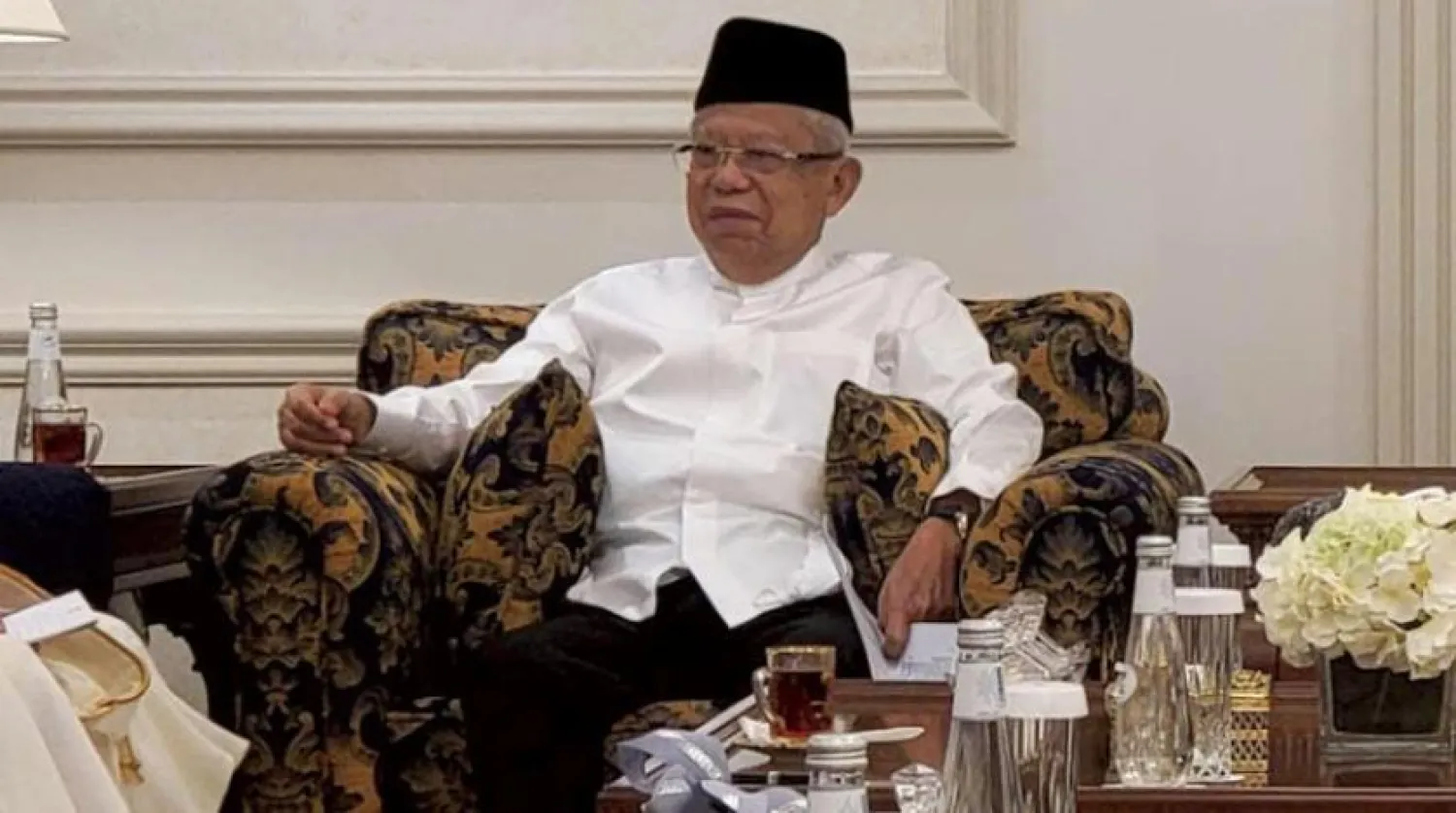
Indonesian Vice President Maaruf Amin (Asharq Al-Awsat)
TT

Indonesian VP to Asharq Al-Awsat: We will Invite Russia, Ukraine Presidents to G20 Summit

Indonesian Vice President Maaruf Amin (Asharq Al-Awsat)

Indonesian Vice President Maaruf Amin stressed that the ongoing Russian-Ukrainian conflict creates geopolitical division, slows global economic development, and increases the prices of essential commodities.

Indonesia is one of the G20 countries and the group's president for 2022. It presents itself as a neutral and fair country, prioritizing global interests.

In an interview with Asharq Al-Awsat from the holy sites after performing the Hajj, Amin said President Joko Widodo's visit to Ukraine and Russia aimed to bridge peace efforts between the two countries.

He asserted that Indonesia is optimistic that there will be concrete steps to move forward and end the war.

The VP acknowledged that the G20 Summit was full of geopolitical challenges, stressing his country's commitment to extending an invitation to the Russian President despite the objection of many member states.

Indonesia also invited Ukraine's President to attend and participate in the G20 Summit to find solutions for the global economic recovery.

Amin said that the world is facing multiple crises due to climate change and geopolitical dynamics, which created the food and energy crisis that impacted the rising prices and increased economic inflation.

Indonesia sees the importance of managing geopolitical dynamics so that all parties can sit together and open dialogue for an inclusive global recovery.

The G20 Summit in Indonesia will be held on the island of Bali from November 15-16, under the theme of "Recover Stronger, Recover Together."

Amin explained three main priorities to be highlighted at the Summit: global health infrastructure, digital economic transformation, and sustainable energy transformation.

He explained there are about 441 events in 25 Indonesian cities and regions, in addition to 20 meetings at the ministerial and central bank governor levels, 17 sessions at the level of Sherpa and Sherpa deputy, 63 meetings at the level of the working group, and 90 engagement group level meetings.

Amin pointed out that the Summit's activities will be implemented through the Bubble System amid COVID-19 precautionary measures, reiterating that it is imperative for each party participating to strictly adhere to health protocols and policies set by the Indonesian government.

Indonesia will ensure that the G20 Summit is the main forum for international economic cooperation to discuss the priorities of the agendas.

Addressing Saudi-Indonesian relations, the VP stressed his country's strategic relationship with Saudi Arabia, acknowledging at the same time that his country benefits from the Indonesian Hajj and Umrah system to maximize economic cooperation and marketing of Indonesian products in the Kingdom.

Amin stressed that Riyadh was and always will be a strategic partner for Jakarta.

“The Indonesian-Saudi trade reached $5.5 billion,” Amin said, recalling that diplomatic relations date back to 1947.

He asserted the importance of Widodo's visit to Saudi Arabia between 2015 and 2019 and the visit of the Custodian of the Two Holy Mosques, King Salman, to Indonesia in 2017.

Amin explained many opportunities to develop the economic system of Hajj and Umrah for Indonesia within Vision 2030.

He said that the Hajj Financial Management Agency (BPKH) focuses on increasing the use of Hajj management funds by exploring investments in the Middle East through the involvement of Indonesian SMEs.

The Vice President explained that the Kingdom allows Indonesia the largest quota of Hajj and Umrah pilgrims annually.

Before the coronavirus pandemic, Jakarta was allowed to send 230,000 pilgrims annually, dropping to 10,151 pilgrims, while Saudi Arabia receives one million pilgrims annually.

Amin pointed out that Indonesia pays an amount of money reused for Hajj and Umrah operations, some of which goes to small and medium-sized companies in the field.

He pointed out that his country's government enhances the needs of the Saudi economy through Hajj Financial Management, including projects to establish housing for Indonesian Hajj and Umrah pilgrims.

Bilateral trade and investment movements still face some problems, said Amin, asserting that they will be addressed and solved.

Jakarta sees the importance of concluding the comprehensive bilateral agreement with Riyadh, adding that his country just concluded the comprehensive economic partnership agreement with the United Arab Emirates.

Amin added that between January and December 2021, Indonesia's exports to the Kingdom amounted to $1.5 billion, a 12.78 percent increase, compared to the same period in 2020.

Indonesia imports a third of its crude oil needs from the Kingdom.

Bilateral relations between the two countries face challenges that need to be resolved to move forward with the strategy of long-term relations and promote mutual benefit and reciprocity, asserted Amin.


Saudi Arabia: Houthi Projectile Falls in Jazan’s Al-Tuwal, Injures Two, Damages Mosque

A mosque in Al-Tuwal, Jazan, was damaged in the attack. (Asharq Al-Awsat)
TT

Saudi Arabia: Houthi Projectile Falls in Jazan’s Al-Tuwal, Injures Two, Damages Mosque

A mosque in Al-Tuwal, Jazan, was damaged in the attack. (Asharq Al-Awsat)

Saudi Arabia's General Directorate of Civil Defense said on Saturday civil defense teams in the Al-Tuwal Governorate in the Jazan Region “responded to an incident involving a projectile launched by the terrorist Houthi militia, resulting in two injuries and material damage to a mosque, several buildings, and vehicles.”

The directorate stressed that the “targeting of civilian objects is a flagrant violation of international humanitarian law”, adding that the established procedures for such incidents were carried out.

The attack “is a reflection of the criminal terrorist extremist militia that rejects all peace efforts and is a threat to regional and international security and stability.”

Damaged is sustained to a building following the Houthi attack. (SPA)

Iraqi militias struck the East-West pipeline on Thursday, reflecting the terrorist groups’ reckless practices.

Attacks on places of worship reflect the nature of terrorist groups that disregard the sanctity of places of worship and international laws that protect civilian areas.

Saudi Arabia has stressed its right to take all necessary measures to defend its sovereignty and national gains, and security of its citizens and residents in line with international law.

The Yemeni government reiterated on Saturday its strong condemnation of the repeated Houthi attacks on Saudi Arabia.

Two people were injured in the attack. (Asharq Al-Awsat)

It said launching those attacks from Yemen is a violation against the interests of the Yemeni people and exposes the foreign agenda followed by the Iran-backed Houthis.

It expressed its appreciation for Saudi Arabia’s sincere stances and political, economic, humanitarian and military support it offers Yemen and its legitimate leadership.


Several Countries, Regional Organizations Condemn Attacks on Saudi Arabia’s East-West Oil Pipeline

File photo of the Saudi flag/AAWSAT
TT

Several Countries, Regional Organizations Condemn Attacks on Saudi Arabia’s East-West Oil Pipeline

File photo of the Saudi flag/AAWSAT

Several countries and regional organizations have condemned attacks targeting Saudi Arabia’s East-West oil pipeline, voicing solidarity with the Kingdom and rejecting attacks on critical energy infrastructure.

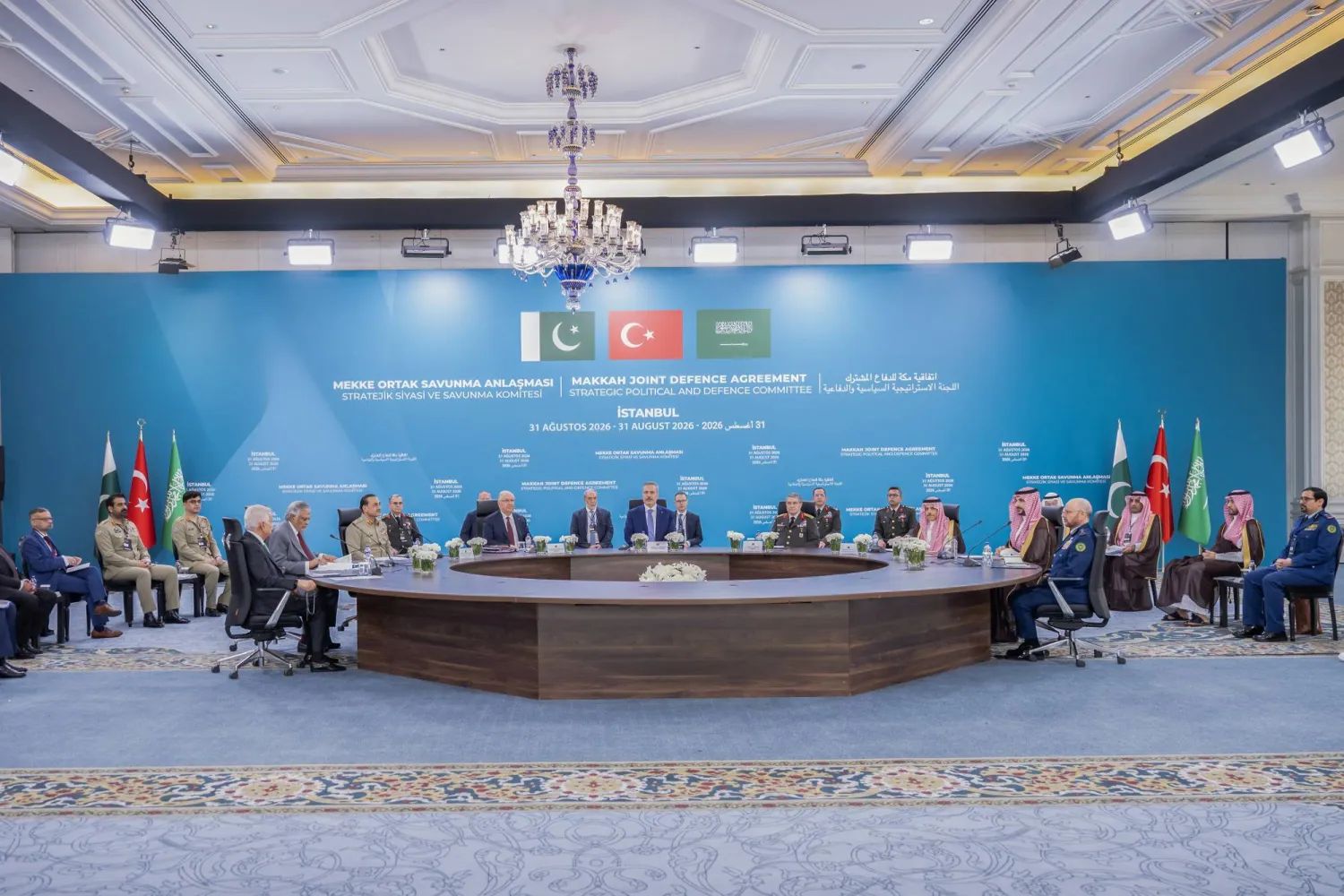
Türkiye, the Yemeni Cabinet strongly condemned the drone attacks launched from Iraqi territory targeting the East-West oil pipeline in Riyadh and Madinah regions of Saudi Arabia, the Saudi Press Agency reported on Saturday.

In a statement, the Turkish ministry of foreign affairs affirmed Türkiye's support for Saudi Arabia's sovereignty and territorial integrity, commending the Kingdom's restraint and its efforts to avoid escalating tensions in the region.

The ministry renewed its call for an immediate end to such attacks, which threaten regional security and stability, and urged all parties to refrain from any steps that could further escalate tensions.

The Yemeni Cabinet reiterated the government's strong condemnation of the renewed Houthi attacks on Saudi Arabia, affirming Yemen's full solidarity with the Kingdom and its legitimate right to safeguard its security, citizens, and national resources.

During a meeting held Sunday in Aden and chaired by Prime Minister Dr. Shaya Al-Zindani, the cabinet stressed that the use of Yemeni territory as a platform for attacks against Saudi Arabia constitutes an assault on the interests of the Yemeni people before posing a threat to neighboring countries and reflects the nature of the foreign agenda under which the Houthi militia operates.

The Yemeni Cabinet also expressed the government's appreciation for Saudi Arabia's steadfast positions and for the political, economic, military, and humanitarian support the Kingdom provides to Yemen and its legitimate leadership.

Also, Sudan, Palestine, The Arab League issued statements condemning the attacks. 


Attacks from Iraq on East-West Pipeline Draw Strong Condemnations

Saudi Aramco logo. Reuters
TT

Attacks from Iraq on East-West Pipeline Draw Strong Condemnations

Saudi Aramco logo. Reuters

Attacks on a key Saudi oil pipeline launched from Iraqi territory drew on Saturday strong condemnations from many countries and organizations.

The Saudi Foreign Ministry blamed the attacks on the East-West pipeline in the Riyadh and Madinah regions on several drones that came from Iraq and, in a statement, said the Kingdom would not retaliate to give the Iraqi government “an opportunity to take the necessary measures.”

For its part, the Iraqi government strongly condemned the attacks, reiterating its categorical rejection of any aggression that threatens the Kingdom's security, stability, or bilateral relations.

Iraqi Prime Minister and Commander-in-Chief of the Armed Forces Ali Al-Zaidi ordered an immediate investigation to determine the circumstances of the strikes and identify the perpetrators.

In a statement carried by the Iraqi News Agency, Spokesperson for the Commander-in-Chief of the Armed Forces Sabah Al-Numan emphasized that Baghdad will take strict legal action against anyone implicated in the assault, stressing that the state will not tolerate activities that jeopardize Iraq's national security or its ties with brotherly nations.

Al-Numan voiced appreciation for Saudi Arabia's measured response and constructive engagement with Baghdad's efforts to de-escalate tensions, noting that this stance underscores Riyadh's commitment to regional stability and bilateral cooperation.

He reaffirmed that Iraq's territory and airspace will not serve as a launchpad for hostile actions against any state. He reiterated Baghdad's dedication to upholding state sovereignty, good neighborliness, and regional diplomacy, ensuring relations with neighboring nations foster mutual stability rather than conflict.

Also, UAE, Qatar, Bahrain, Jordan, Oman, Egypt, Libya, Syria, Lebanon, Pakistan, OIC, the Arab Parliament, the Gulf Cooperation Council (GCC) and the Muslim World League (MWL) were quick to condemn the attacks.

The separate statements all stressed full solidarity with Saudi Arabia and backed all measures taken by the Kingdom to safeguard its territory.