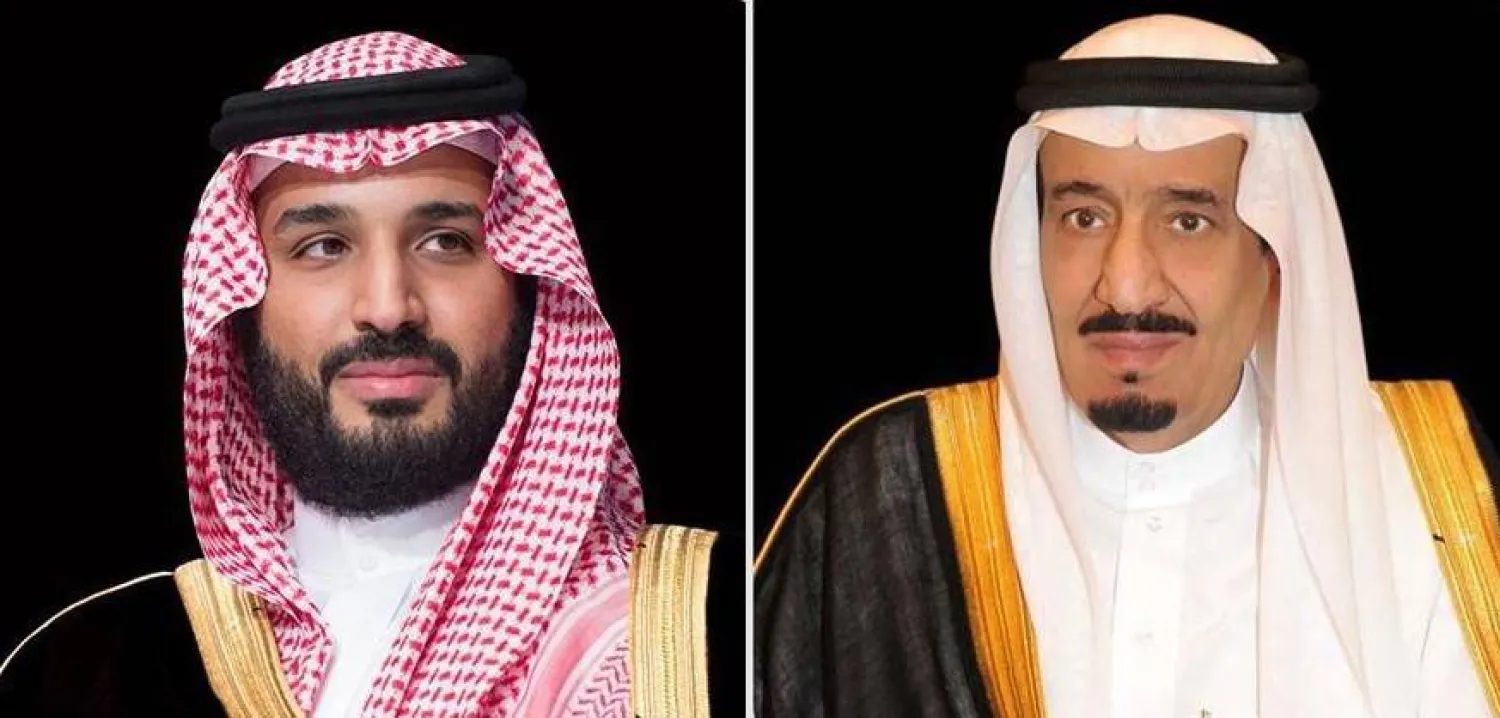
A joint Saudi-US statement reviewed aspects of the strategic partnership between Saudi Arabia and the US over the coming decades with the aim of advancing their mutual interests and a common vision for a more peaceful, secure, prosperous, and stable Middle East.
This came following the visit of President Joe Biden to Jeddah and meeting with the Custodian of the Two Holy Mosques, King Salman bin Abdulaziz, and Crown Prince Mohammed bin Salman.
The joint statement stressed the importance of continuing to strengthen the strategic partnership to serve the interests of the governments and peoples of the Kingdom and the US.
The two sides also emphasized the pivotal role this historic partnership has played in promoting regional stability and prosperity.
The two leaders stressed that the Saudi-US partnership has been a cornerstone of regional security over decades, and affirmed that the two countries share a vision of a more secure, stable, and prosperous region, interconnected with the world.
The following is the text of the Jeddah Communique:
At the invitation of the Custodian of the Two Holy Mosques, King Salman bin Abdulaziz Al Saud, President Joseph Biden conducted an official visit to the Kingdom of Saudi Arabia July 15-16, 2022.
Following the meeting with King Salman, President Biden and Crown Prince Mohammed bin Salman held an official meeting, attended by senior officials from both sides.
The two sides reviewed in detail the many shared priorities that contribute to the partnership between Saudi Arabia and the United States.
At the end of this meeting, the two sides issued this communique outlining the strategic partnership between the Kingdom of Saudi Arabia and the United States over the coming decades with the aim of advancing their mutual interests and advancing a common vision for a more peaceful, secure, prosperous, and stable Middle East.
Strategic Partnership
The two sides reviewed the historical relations and partnership between Saudi Arabia and the US that was established nearly eight decades ago with the meeting between King Abdulaziz Al Saud and President Franklin Roosevelt on board the USS Quincy.
They underscored the importance of continuing to strengthen their strategic partnership to serve the interests of the governments and peoples of the Kingdom and the US.
The two sides also emphasized the pivotal role this historic partnership has played in promoting regional stability and prosperity.
The two leaders stressed that the Saudi-US partnership has been a cornerstone of regional security over decades, and affirmed that the two countries share a vision of a more secure, stable, and prosperous region, interconnected with the world.
The two sides affirmed the importance of resolving international disputes through peaceful and diplomatic means, and alleviating humanitarian crises through economic and financial support to the region’s countries most in need.
They affirmed the importance of the principles of sovereignty and territorial integrity. They stressed the need for supporting governments in the region facing threats from terrorists or proxy groups backed by outside powers.
The two sides noted the historic ties between the peoples of the Kingdom of Saudi Arabia and the US. They welcomed, in this regard, extending the validity of business and tourism visas to ten years to facilitate closer people-to-people ties and economic cooperation.
The two sides then reviewed cooperation and achievements in the following areas:
Energy Security and Climate Cooperation
The two sides underscored the importance of strategic economic and investment cooperation, particularly in light of the current crisis in Ukraine and its consequences, and reaffirmed their commitment to a stable global energy market.
The US welcomed Saudi Arabia’s commitment to support global oil markets balancing for sustained economic growth. Both sides decided to consult regularly on global energy markets in the near- and long-term, as well as work together as strategic partners in climate and energy transition initiatives, recognizing Saudi Arabia’s leading role in the future of energy.
The US commended the Saudi Green Initiative and Middle East Green Initiative, and welcomed Saudi Arabia’s participation at the recent Major Economies Forum on Energy and Climate, joining of the Global Methane Pledge, its status as a founding member of the Net-Zero Producers Forum, and the Kingdom’s announcement to meet 50 percent of its electricity generation from renewables by 2030.
The two sides welcomed the finalization of a Partnership Framework for Advancing Clean Energy, with substantial investments in clean energy transition and addressing climate change, with particular focus on renewable energy, clean hydrogen, human capacity-building in the nuclear energy field, and cooperation in nuclear-regulatory aspects, carbon capture utilization and sequestration, development of sustainable materials, and other initiatives under the Circular Carbon Economy Framework, where Saudi Arabia aims to be a global leader.
Partnership for Global Infrastructure and Investment (PGII)
The two sides emphasized that the energy transition and the national security of both countries require stable and diversified supply chains, and in this regard, the US welcomed Saudi Arabia’s support for the Partnership for Global Infrastructure and Investment, which President Biden announced at the G7 Summit on June 26, 2022.
Through this historic partnership, the US and Saudi Arabia aim to strategically invest in projects that support digital connectivity, supply chain sustainability, and climate and energy security focused on low- and middle-income countries.
Security and Defense
President Biden strongly affirmed the US’ continued commitment to supporting Saudi Arabia’s security and territorial defense, and facilitating the Kingdom’s ability to obtain necessary capabilities to defend its people and territory against external threats.
The two sides underscored the need to further deter Iran’s interference in the internal affairs of other countries, its support for terrorism through its armed proxies, and its efforts to destabilize the security and stability of the region, reiterating the importance of preventing Iran from acquiring a nuclear weapon.
Both sides stressed the importance of preserving the free flow of commerce through strategic international waterways like the Bab al-Mandab and the Strait of Hormuz.
They welcomed the newly-established Combined Task Force 153 with a focus on the Red Sea’s Bab al-Mandab passageway and further deterring illicit smuggling into Yemen.
They also welcomed Saudi Arabia’s assumption of command of Combined Task Force 150, which reinforces shared maritime security objectives in the Gulf of Oman and North Arabian Sea.
To improve and streamline the exchange of information in the maritime domain, cooperation between the Royal Saudi Naval Forces and Combined Task Force 153 will be enhanced in the regionally-networked coordination center led out of the US Fifth Fleet Headquarters in Bahrain.
The US also emphasized the growing cooperation between the Royal Saudi Naval Forces and US Fifth Fleet’s Task Force 59, which leads an expanding fleet of cutting edge, integrated unmanned surface vessels using artificial intelligence to improve maritime security and domain awareness in support of regional security.
5G/6G Open-RAN Cooperation
The two sides welcomed a new Memorandum of Cooperation that will connect US and Saudi technology companies in the advancement and deployment of 5G using open radio access networks, enable the development of 6G through similar technologies, an advance partnership in cloud infrastructure and related technologies.
The partnerships built under the MOU confirms Saudi Arabia’s leadership as a regional hub for 5G deployments and 6G future developments.
Cybersecurity
The two sides emphasized their mutual cooperation in the field of cybersecurity and its importance to protect the vital interests and national security of both countries.
The US and Saudi Arabia welcomed the recent signing of memoranda of understanding on cybersecurity cooperation and decided to continue strengthening real-time information sharing, building human and technical capabilities, and cybersecurity industry development.
Space Exploration
The two sides further welcomed the enhancement of cooperation in all fields of space exploration, including human spaceflight, earth observation, commercial and regulatory development, and responsible behavior in outer space.
President Biden welcomed the Saudi Arabia signing of the Artemis Accords and applauded the Kingdom for affirming its commitment to the responsible, peaceful, and sustainable exploration and use of outer space.
Development of Tiran Island
President Biden welcomed the arrangements by Saudi Arabia to remove the Multinational Force and Observers (MFO) from the Island of Tiran, including the removal of US troops there as part of the MFO mission, while preserving and continuing all existing commitments and procedures in the area. This area of the Red Sea will now be developed for tourism and economic purposes, contributing to a more secure, peaceful, and prosperous region.
Expanding Overflights
Within the framework of Saudi Arabia’s keenness to fulfill its obligations under the Chicago Convention of 1944, which stipulates non-discrimination between civil aircraft used in international air navigation, the Saudi General Authority for Civil Aviation (GACA) announced its decision to open the Kingdom’s airspace for all air carriers that meet the requirements of GACA to fly over the Kingdom’s airspace.
The US welcomed this announcement, which will enhance global air connectivity and help cement the Kingdom’s position as a global hub connecting Africa, Asia, and Europe.
Vision 2030
The US welcomed the Vision 2030, its blueprint for transformative economic and social reforms, and its efforts to increase women’s economic participation and promote interfaith dialogue.
Saudi Arabia welcomed greater US private sector investment in the Kingdom, as well as increasing Saudi investments in the US private sector for the benefit of both countries.
The US side welcomed Saudi Arabia’s bid to host World Expo in 2030, and other events to be held over the course of that milestone year, the culmination of Vision 2030 reform program.
The Saudi side noted the importance for the region of the World Cup being hosted by Qatar later this year and welcomed the United States serving as host for the World Cup in 2026.
Regional Cooperation
The two sides then addressed particular regional and global issues, including:
Yemen:
Both sides affirmed their strong support for the UN-brokered truce in Yemen and stressed the importance of extending the truce and making progress to transform the truce into a lasting peace agreement.
President Biden expressed his appreciation for the role King Salman and Crown Prince Mohammed bin Salman have played in achieving and renewing the truce.
The two sides stressed their long-stated goal to end the war in Yemen and called on the international community to take a unified position calling on the Houthis to return to peace talks under the auspices of the UN based on the three references, including UN Security Council Resolution 2216 (2015). Only a political agreement between the Yemeni parties can durably resolve the conflict and reverse the dire humanitarian crisis.
The two sides also affirmed their support for Yemen’s Presidential Leadership Council and thanked the Council for its commitment to the truce and steps that have improved the lives of Yemenis across the country, including facilitating fuel imports and restarting flights from Sanaa.
They also stressed the need to remove all impediments to the flow of essential goods and delivery of aid inside Yemen, and the importance of the Houthis opening the main roads to Taiz, Yemen’s third largest city which has been under siege conditions since 2015.
Saudi Arabia and the US encouraged all regional actors to fully support the truce, which has resulted in the longest period of peace in Yemen in six years.
Saudi Arabia welcomed the US’ support of the truce and its contribution to the efforts to advance the political process in Yemen.
Iraq
President Biden welcomed the leading role played by Saudi Arabia in strengthening relations with Iraq, and the historic agreements to be signed on the margins of the Jeddah Security and Development Summit on July 16, 2022, to link the electricity networks of Saudi Arabia and the Gulf Cooperation Council (GCC) countries to the Iraqi grid, in order to provide Iraq and its people with new and diversified electricity sources.
The Palestinian cause
Regarding the Palestinian cause, the two sides underscored their enduring commitment to a two-state solution, wherein a sovereign and contiguous Palestinian state lives side-by-side in peace and security with Israel, as the only way to resolve the Israeli-Palestinian conflict in accordance with the internationally-recognized parameters and the Arab Peace Initiative.
The leaders noted their determination to remain closely coordinated on efforts to encourage the parties to demonstrate, through policies and actions, their commitment to a two-state solution.
The US and Saudi Arabia welcomed all efforts that contribute to reaching a just and comprehensive peace in the region.
Syria
The two sides reiterated their commitment to preserving the unity, stability, and territorial integrity of Syria and expressed their support for the efforts of the Special Envoy of the UN Sec-Gen to reach a political solution to the conflict consistent with the formula outlined in the UN Security Council Resolution 2254 (2015), stressing at the same time the need to prevent renewed of violence, to maintain established ceasefires, and to allow the unhindered delivery of humanitarian aid to all Syrians in need.
Lebanon
The two sides affirmed their continued support for Lebanon’s sovereignty, security and stability, and their support for the Lebanese Armed Forces that protect its borders and resist the threats of violent extremist and terrorist groups.
They also noted the importance of forming a Lebanese government and implementing comprehensive structural political and economic reforms to ensure that Lebanon overcomes its political and economic crisis, and that it does not become a launching point for terrorists, drug smuggling, or other criminal activities that threatens the stability and security of the region.
They emphasized the importance of the control of the government of Lebanon over all Lebanese territory, including with reference to fulfilling the provisions of the relevant UN Security Council resolutions and the Taif Accord, and for it to exercise full sovereignty, so there will be no weapons without the consent of the government of Lebanon or authority other than that of the government of Lebanon.
Ukraine
The two sides underscored that a rules-based order lies at the heart of international security, emphasizing the importance of the respect for international law, territorial integrity, and national sovereignty.
They reaffirmed the principles as set forth in the March 2, 2022, UN General Assembly Resolution ES-11/1, endorsed by all GCC members.
The leaders reaffirmed their commitment to providing critical assistance to the Ukrainian people, and to ensure the unhindered export of grain and wheat products to alleviate the global food crises, which threatens to acutely impact a number of Middle Eastern and African states.
Sudan
The two sides underscored the importance of the dialogue between Sudanese parties and reviving the political process.
They commended the efforts made by the UN Mission to support the return to the foundations of a political solution in Sudan, and expressed their satisfaction with the active role of the Quad for Sudan, wishing Sudan and its people peace and prosperity.
Libya
Both sides affirmed their support for the Libyan people as they engage in the UN-brokered political process to prepare for presidential and parliamentary elections as soon as possible.
They expressed their full support for the Libyan ceasefire agreement concluded on October 23, 2020 and the Libyan call for the complete departure of foreign forces, foreign fighters, and mercenaries without further delay, in accordance with United Nations Security Council Resolution 2570 (2021).
Afghanistan
The two sides stressed the need to support Afghanistan’s security and to address the threat posed by Afghanistan-based terrorists.
They also underscored the importance of continuing to support humanitarian assistance to Afghanistan.
They expressed support for addressing the needs and promoting the rights of the Afghan people including the rights of women and girls to education and enjoyment of the highest attainable standard of health and, for women, the right to work.
Counter-terrorism
The two sides underscored the importance of confronting terrorism and violent extremism. They expressed their continued commitment to countering al-Qaeda and ISIS, stemming the flow of foreign fighters, countering violent extremist propaganda, and cutting off terrorist financing streams.
The two sides highlighted the joint efforts through the Terrorist Financing Targeting Center, which is based in Saudi Arabia.
They reviewed and commended the exceptional success of the Global Coalition to Defeat ISIS, established in Jeddah in 2014, and stressed the need for this coalition to continue, and to make long-term and multi-year efforts to return both detained ISIS fighters and the tens of thousands of ISIS family members from northeastern Syria to their home countries.
They welcomed the next Global Coalition to Defeat ISIS ministerial meeting to be held in Saudi Arabia in early 2023.
Conclusion
The two sides decided to expand and strengthen bilateral cooperation in all areas discussed in this meeting, prior to the next annual Strategic Dialogue between Saudi Arabia and the United States to be held in the Kingdom later this year. This Jeddah Communique should form the basis of work going forward to consolidate and enhance the strategic partnership between the two countries.
Jeddah, Saudi Arabia