EU Promises More Ukraine War Aid; Calls for Sanctions Unity

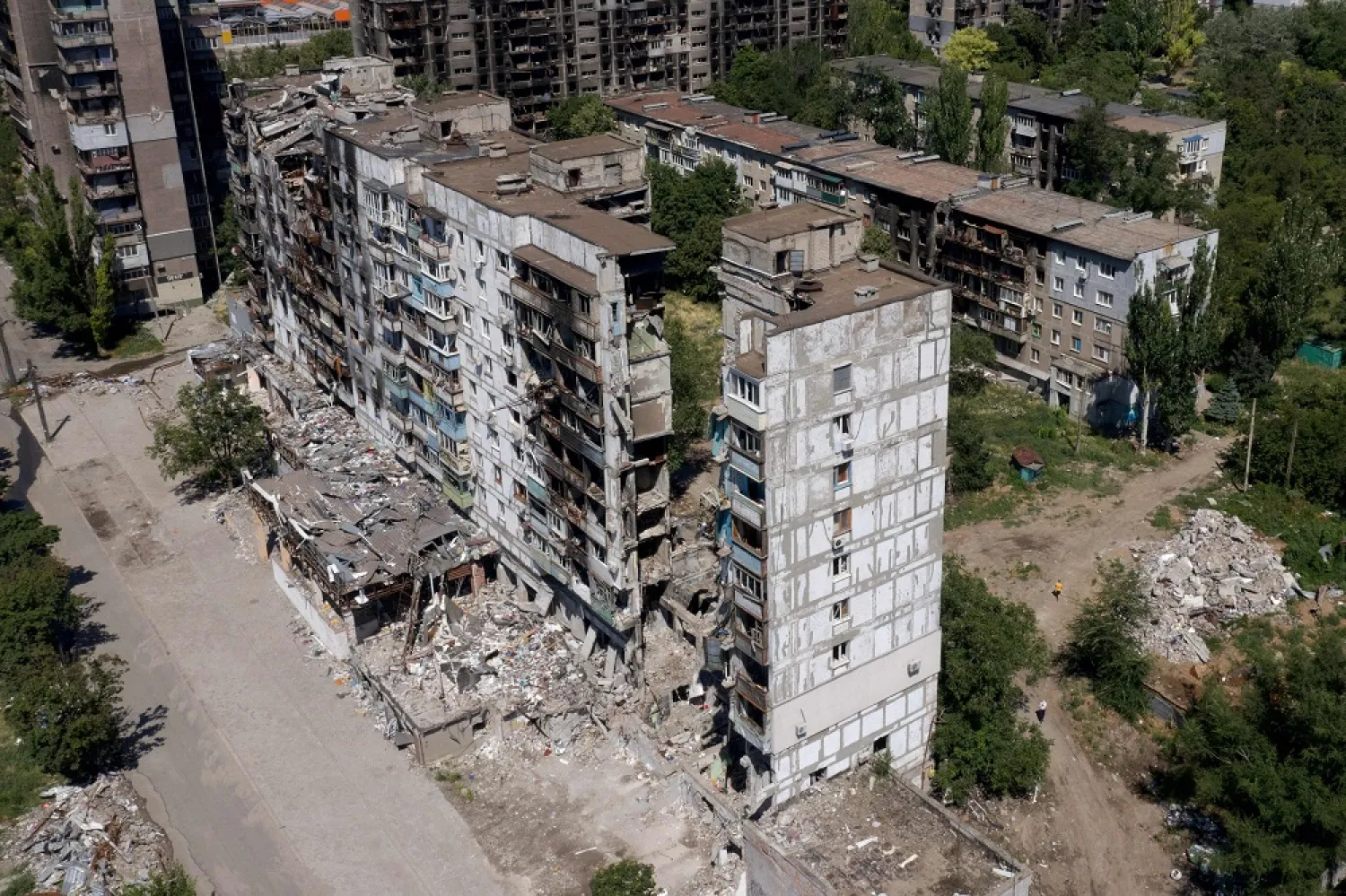
 This aerial picture taken on July 13, 2022, shows destroyed buildings and residents in the yard in the city of Mariupol, amid the ongoing Russian military action in Ukraine. (AFP)
This aerial picture taken on July 13, 2022, shows destroyed buildings and residents in the yard in the city of Mariupol, amid the ongoing Russian military action in Ukraine. (AFP)
TT

EU Promises More Ukraine War Aid; Calls for Sanctions Unity

 This aerial picture taken on July 13, 2022, shows destroyed buildings and residents in the yard in the city of Mariupol, amid the ongoing Russian military action in Ukraine. (AFP)
This aerial picture taken on July 13, 2022, shows destroyed buildings and residents in the yard in the city of Mariupol, amid the ongoing Russian military action in Ukraine. (AFP)

European Union foreign ministers promised another 500 million euros in military aid to Ukraine’s war chest to beef up the defense of the nation as the bloc's foreign policy chief exhorted member states not to waver in their commitment to sanctions against Russia.

The aid decision came after a video debriefing on the latest developments by Ukrainian Foreign Minister Dmytro Kuleba, who said he was "grateful" for the new funds, which brings the EU total to 2.5 billion euros but still urged the 27 nations to provide more.

"If anything needs to be continued, it is weapons deliveries," said Lithuanian Foreign Minister Gabrielius Landsbergis, insisting it was also essential to secure the port of Odesa enough to make sure grain shipments could resume. "And anybody who can who can do that, obviously, this is the main industrial countries of the Western world. They have to step up with that."

What remains essential within the bloc, EU foreign policy chief Josep Borrell said, was a unity of purpose to believe that the major package of sanctions targeting Moscow will work, even if the immediate effects on the battleground aren't always visible.

"Ukraine needs more arms," Borrell said. "We will provide them. The war will continue."

Borrell lashed out at critics claiming that measures on anything from oil sanctions to monetary measures were counterproductive and hurting the EU more than Russia itself.

So even after he pleaded over the weekend for "strategic patience" when it came to sanctions to take hold, Borrell clearly lost patience with critics like Hungarian Prime Minister Viktor Orbán who last week claimed the EU had not only shot itself in the foot but also in the lungs with the six packages of sanctions.

"There is a big debate about "are the sanctions effective? Are the sanctions affecting us more than Russia," Borrell said. "Some European leaders have been saying that the sanctions were an error, were a mistake."

"They don’t have eyes? They don’t look to the graphs? They don’t consider figures?" Borrell asked in staccato rhythm, pointing to economic figures showing that the impact on Russia was bigger than on the EU.

The EU is struggling with the circumstances because the imposition of sanctions against Russia comes at a time of surging inflation, runaway energy and food prices and the continued impact of the pandemic, all of which already dampen the EU’s economic outlook.

He said Russian President Vladimir Putin was using such narratives to try to spread division within the bloc.

"I am sure Putin is counting on the democratic fatigue. I’m sure he believes that democracies are weak," Borrell said.

"European societies cannot afford fatigue," Borrell said. "They took the decisions on restrictive measures on the Russian economy, and they have to stick to it."

At the same time the EU is finetuning existing sanctions and assessing a ban on Russian gold, which is Moscow's second-largest export industry after energy. The Group of Seven leading industrial nations last month already committed to a gold ban, arguing that Russia has used its gold to back up its currency to circumvent the impact of several rounds of sanctions that nations around the world had already imposed on Moscow after its Feb. 24 invasion of Ukraine.


Le Pen Says France Will No Longer Aid Ukraine ‘Financially’ if Elected

Marine Le Pen (C), the far-right National Rally (RN) party's candidate for the 2027 French presidential election, visits the "Made in France" fair at the Porte de Versailles exhibition center in Paris, France, 13 November 2026. (EPA)
TT

Le Pen Says France Will No Longer Aid Ukraine ‘Financially’ if Elected

Marine Le Pen (C), the far-right National Rally (RN) party's candidate for the 2027 French presidential election, visits the "Made in France" fair at the Porte de Versailles exhibition center in Paris, France, 13 November 2026. (EPA)

Marine Le Pen on Monday said that France would provide no further financial aid to Ukraine if she is elected president next year, after a meeting with Kyiv's ambassador in Paris.

"The state of France's public finances would no longer allow the country to provide financial assistance to Ukraine in the coming months," Le Pen said in a statement, while insisting France would honor existing commitments, including toward a 90-billion-euro ($100-billion) European Union loan.

Le Pen is currently ahead in polls in the race to succeed President Emmanuel Macron next year, as the war sparked by Russia's 2022 full-scale invasion of Ukraine grinds towards its fifth anniversary.

She has faced criticism over past links to Russia, which included a 2017 meeting in the Kremlin with President Vladimir Putin and her party taking a loan from a Russian bank that it paid off in full in 2023.

But she has opposed the invasion and, at her talks in Paris with Ukrainian ambassador Vadym Omelchenko, Le Pen made clear her "unwavering support for Ukraine since the beginning of the conflict".

The statement said the talks -- the first such between Le Pen and the Ukrainian ambassador -- were "cordial".

While financial aid would be cut, Le Pen told the ambassador that "France would continue to support Ukraine through donations of equipment, humanitarian aid and much more active diplomacy".

The statement said there was a "frank discussion" on the future of the conflict, with Le Pen stressing that "the pursuit of peace -- though a difficult goal to achieve -- must remain a priority for all".

She also asked the ambassador to tell President Volodymyr Zelensky she is ready to meet in "either Paris or Brussels". However, there was no mention of the candidate making the journey to Kyiv after Zelensky invited her to visit the Ukrainian capital.

Le Pen's opponents have expressed alarm that by emphasizing the importance of ending the war swiftly, she could force Ukraine to capitulate on unfavorable terms.

"If Russia imposes its will on a European nation through brutality, all of Europe is weakened," Macron wrote on Facebook at the weekend.

Taking aim at Le Pen, he said: "Let us be clear: those who seek to limit the resources available to Ukraine are, in effect, pushing for an unjust peace -- one that would leave Ukraine permanently vulnerable, and, by extension, leave Europe vulnerable as well."


Trump Says He Might Meet with North Korea’s Kim Jong Un in China

US President Donald Trump and North Korean leader Kim Jong Un shake hands before their one-on-one chat during the second US-North Korea summit at the Metropole Hotel in Hanoi, Vietnam February 27, 2019. (Reuters)
TT

Trump Says He Might Meet with North Korea’s Kim Jong Un in China

US President Donald Trump and North Korean leader Kim Jong Un shake hands before their one-on-one chat during the second US-North Korea summit at the Metropole Hotel in Hanoi, Vietnam February 27, 2019. (Reuters)

US President Donald Trump said on Monday he might meet with North Korean leader Kim Jong Un in China this week, an announcement that could dramatically reshape his upcoming trip through East Asia if it occurs.

The president, who met the North Korean leader several times during his 2017-2021 term, including once in the Korean Demilitarized Zone, has previously expressed ‌interest in ‌another meeting during his current term. Senior ‌US ⁠officials, however, have previously ⁠said he has no immediate plans to do so.

Moreover, Trump has repeatedly previewed meetings with Kim that never took place, including during a trip to Asia last year. North Korea, whose mission to the United Nations did not immediately respond to a ⁠request for comment, has publicly indicated it ‌has no intention of ‌meeting with the US president at this time.

Trump told reporters ‌while departing the White House en route to ‌the Philippines and China that any meeting would occur in China, and that the North Korean leader's presence was ultimately up to Chinese President Xi Jinping.

"(Xi) was here a ‌month ago, and we're also going to meet with (Russian) President Putin, and we ⁠may ⁠meet with Kim Jong Un also," Trump said.

"So that'll be good. We have a chance to accomplish a lot."

Trump has indicated he will meet with Putin and Xi during his trip, but US officials and analysts have played down the possibility of a meaningful agreement emerging from any trilateral sit-down.

Among the possible topics of conversation, Trump and others have said, are Russia's invasion of Ukraine, counterproliferation and the war in Iran.


Third US Aircraft Carrier Arrives in Middle East

This US Navy handout photograph released by US Naval Forces Central Command on November 4, 2026, shows the Nimitz-class aircraft carrier USS Theodore Roosevelt (CVN 71) sails alongside Royal Australian Navy Supply-class replenishment oiler HMAS Stalwart (A304). (AFP / NAVCENT Public Affairs / US Navy)
TT

Third US Aircraft Carrier Arrives in Middle East

This US Navy handout photograph released by US Naval Forces Central Command on November 4, 2026, shows the Nimitz-class aircraft carrier USS Theodore Roosevelt (CVN 71) sails alongside Royal Australian Navy Supply-class replenishment oiler HMAS Stalwart (A304). (AFP / NAVCENT Public Affairs / US Navy)

The USS Theodore Roosevelt aircraft carrier arrived in the Middle East on Sunday, media reports said, bringing the number of American carrier strike groups in the region to three.

The deployment, which was reported by the National News and Axios journalist Barak Ravid, comes as fighting reignites in the region, with Iran claiming a drone attack on Bahrain on Sunday, ending a lull in strikes in the war.

Iran also fired drones at Bahrain on Friday -- the first strikes since September against countries in the energy-rich Gulf, which has been targeted several times in the conflict that erupted in February.

US President Donald Trump plans to discuss the war at a trilateral meeting with his Chinese and Russian counterparts Xi Jinping and Vladimir Putin this week, an official said Friday.

Months of diplomacy have failed to resolve the war, which began with US-Israeli strikes that killed Iran's supreme leader Ali Khamenei.