US Doubts Khamenei Wants a Nuclear Agreement

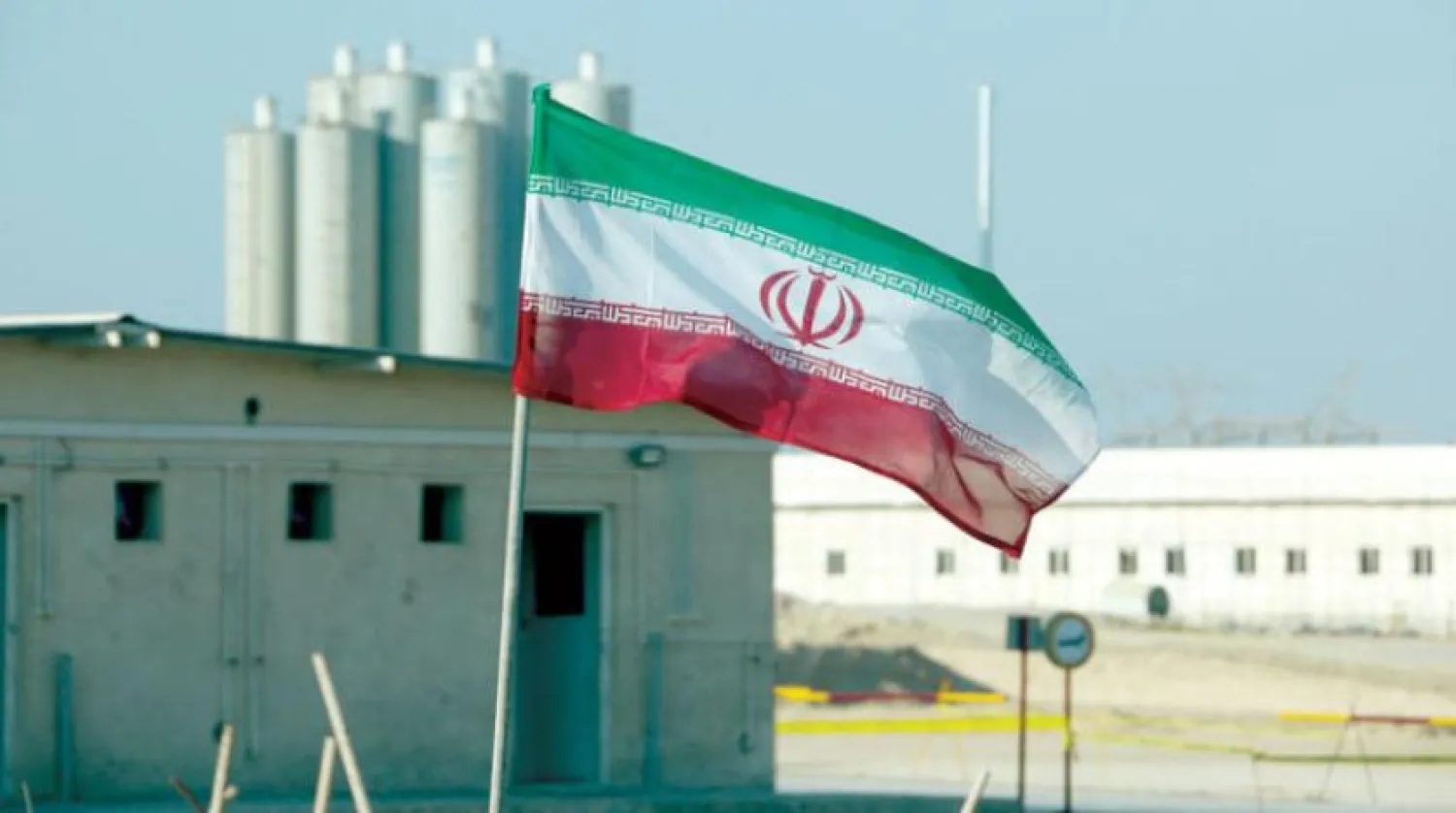
Bushehr nuclear facility in southern Iran (AFP)
TT

US Doubts Khamenei Wants a Nuclear Agreement

Bushehr nuclear facility in southern Iran (AFP)

The US Undersecretary of State for Political Affairs, Victoria Nuland, said she doubts the Iranian leadership wants to return to the nuclear agreement, saying if the Supreme Leader Ali Khamenei "doesn't take the deal, we're going have to increase the pressure, of course."

Nuland recalled the benefits Iran could reap if it agreed to the deal US President Joe Biden offered.

Speaking at the Aspen Security Forum, Nuland said it is up to Iran to agree to the deal that has been on the table.

"It would get their oil back on the market. It would get them some relief from some of the sanctions that have come on. But for so far, they haven't chosen to go in that route," she stated, adding that Iranians are paying the price with high prices and inflation.

Nuland suggested that Tehran is still interested in reaching an agreement, noting that "they haven't thrown over the table yet" and "they haven't walked away when they could have done that over these many months where the deal has been ready and sitting there."

Meanwhile, the head of MI6, Richard Moore, recently said that the Joint Comprehensive Plan of Action (JCPOA) is "the best means still available" to curb Iran's nuclear ambitions, adding that he is skeptical that Khamenei would agree to it.

"I'm not convinced we're going to get there," Moore said at the forum.

"It could be a bit academic having that discussion because I don't think the supreme leader of Iran wants to cut a deal, so the Iranians won't want to end the talks either so that they could run on for a bit."

Moore argued that even if the deal did pass, there would still be "plenty of work" because Iran continues to work at "destabilizing activity around our region."

"What they're doing in Iraq, in Syria, even down in Yemen through sponsoring the Houthis," he said.

"They're still assassinating or attempting to entrap dissidents overseas, so there's plenty to do."

CIA Director William Burns noted that under the nuclear deal, "which the last administration pulled out of several years ago, that breakout time to produce that amount of fissile material was a little more than a year."

He said Friday that the "same breakout time can be measured not in a year-plus, but weeks."

Meanwhile, Tasnim Agency said Saturday that the repeatedly setting of deadlines by Western powers for Iran to reach a nuclear agreement has become an "empty threat."

Tasnim ridiculed Western diplomats and governments for repeatedly threatening that just a few weeks were remaining for concluding a deal to revive the 2015 nuclear deal or else they would walk away from the negotiations.

"Setting deadlines has been one of the main tactics used by Westerners" in nuclear talks, Tasnim said, "but they used it so often that today it has turned into an empty threat."

Tasnim cited for the first time Washington's deadline in December 2021, when National Security Adviser Jake Sullivan said that the US and others had not publicly set a date on the calendar, "but behind closed doors, there is a deadline, and it's not far away."

In the coming weeks, the participants in the Vienna talks will discover "whether Iran is ready for a diplomatic solution."

In February, US State Department spokesman Ned Price said that time had become "very, very short" to restore the JCPOA, arguing that once Iran reached a certain degree of enrichment, there would be no point in returning to the nuclear deal.

CNN quoted US officials saying three weeks are left to reach an agreement.

The Biden administration believes it has until the end of February to salvage the Iran nuclear agreement, otherwise, the US will have to change tack and launch aggressive efforts to prevent Tehran from obtaining a nuclear weapon, according to three administration officials.

After 11 months of talks in Vienna, negotiations stalled in early March, but Western governments continued to say there were still "a few weeks" to salvage the deal while Iran continued to enrich uranium to 60 percent.

In July, the US refused to give a deadline saying the time to conclude that negotiations would be when Iran's nuclear program was technically determined to have passed the point when restoration made sense.


Le Pen Says France Will No Longer Aid Ukraine ‘Financially’ if Elected

Marine Le Pen (C), the far-right National Rally (RN) party's candidate for the 2027 French presidential election, visits the "Made in France" fair at the Porte de Versailles exhibition center in Paris, France, 13 November 2026. (EPA)
TT

Le Pen Says France Will No Longer Aid Ukraine ‘Financially’ if Elected

Marine Le Pen (C), the far-right National Rally (RN) party's candidate for the 2027 French presidential election, visits the "Made in France" fair at the Porte de Versailles exhibition center in Paris, France, 13 November 2026. (EPA)

Marine Le Pen on Monday said that France would provide no further financial aid to Ukraine if she is elected president next year, after a meeting with Kyiv's ambassador in Paris.

"The state of France's public finances would no longer allow the country to provide financial assistance to Ukraine in the coming months," Le Pen said in a statement, while insisting France would honor existing commitments, including toward a 90-billion-euro ($100-billion) European Union loan.

Le Pen is currently ahead in polls in the race to succeed President Emmanuel Macron next year, as the war sparked by Russia's 2022 full-scale invasion of Ukraine grinds towards its fifth anniversary.

She has faced criticism over past links to Russia, which included a 2017 meeting in the Kremlin with President Vladimir Putin and her party taking a loan from a Russian bank that it paid off in full in 2023.

But she has opposed the invasion and, at her talks in Paris with Ukrainian ambassador Vadym Omelchenko, Le Pen made clear her "unwavering support for Ukraine since the beginning of the conflict".

The statement said the talks -- the first such between Le Pen and the Ukrainian ambassador -- were "cordial".

While financial aid would be cut, Le Pen told the ambassador that "France would continue to support Ukraine through donations of equipment, humanitarian aid and much more active diplomacy".

The statement said there was a "frank discussion" on the future of the conflict, with Le Pen stressing that "the pursuit of peace -- though a difficult goal to achieve -- must remain a priority for all".

She also asked the ambassador to tell President Volodymyr Zelensky she is ready to meet in "either Paris or Brussels". However, there was no mention of the candidate making the journey to Kyiv after Zelensky invited her to visit the Ukrainian capital.

Le Pen's opponents have expressed alarm that by emphasizing the importance of ending the war swiftly, she could force Ukraine to capitulate on unfavorable terms.

"If Russia imposes its will on a European nation through brutality, all of Europe is weakened," Macron wrote on Facebook at the weekend.

Taking aim at Le Pen, he said: "Let us be clear: those who seek to limit the resources available to Ukraine are, in effect, pushing for an unjust peace -- one that would leave Ukraine permanently vulnerable, and, by extension, leave Europe vulnerable as well."


Trump Says He Might Meet with North Korea’s Kim Jong Un in China

US President Donald Trump and North Korean leader Kim Jong Un shake hands before their one-on-one chat during the second US-North Korea summit at the Metropole Hotel in Hanoi, Vietnam February 27, 2019. (Reuters)
TT

Trump Says He Might Meet with North Korea’s Kim Jong Un in China

US President Donald Trump and North Korean leader Kim Jong Un shake hands before their one-on-one chat during the second US-North Korea summit at the Metropole Hotel in Hanoi, Vietnam February 27, 2019. (Reuters)

US President Donald Trump said on Monday he might meet with North Korean leader Kim Jong Un in China this week, an announcement that could dramatically reshape his upcoming trip through East Asia if it occurs.

The president, who met the North Korean leader several times during his 2017-2021 term, including once in the Korean Demilitarized Zone, has previously expressed ‌interest in ‌another meeting during his current term. Senior ‌US ⁠officials, however, have previously ⁠said he has no immediate plans to do so.

Moreover, Trump has repeatedly previewed meetings with Kim that never took place, including during a trip to Asia last year. North Korea, whose mission to the United Nations did not immediately respond to a ⁠request for comment, has publicly indicated it ‌has no intention of ‌meeting with the US president at this time.

Trump told reporters ‌while departing the White House en route to ‌the Philippines and China that any meeting would occur in China, and that the North Korean leader's presence was ultimately up to Chinese President Xi Jinping.

"(Xi) was here a ‌month ago, and we're also going to meet with (Russian) President Putin, and we ⁠may ⁠meet with Kim Jong Un also," Trump said.

"So that'll be good. We have a chance to accomplish a lot."

Trump has indicated he will meet with Putin and Xi during his trip, but US officials and analysts have played down the possibility of a meaningful agreement emerging from any trilateral sit-down.

Among the possible topics of conversation, Trump and others have said, are Russia's invasion of Ukraine, counterproliferation and the war in Iran.


Third US Aircraft Carrier Arrives in Middle East

This US Navy handout photograph released by US Naval Forces Central Command on November 4, 2026, shows the Nimitz-class aircraft carrier USS Theodore Roosevelt (CVN 71) sails alongside Royal Australian Navy Supply-class replenishment oiler HMAS Stalwart (A304). (AFP / NAVCENT Public Affairs / US Navy)
TT

Third US Aircraft Carrier Arrives in Middle East

This US Navy handout photograph released by US Naval Forces Central Command on November 4, 2026, shows the Nimitz-class aircraft carrier USS Theodore Roosevelt (CVN 71) sails alongside Royal Australian Navy Supply-class replenishment oiler HMAS Stalwart (A304). (AFP / NAVCENT Public Affairs / US Navy)

The USS Theodore Roosevelt aircraft carrier arrived in the Middle East on Sunday, media reports said, bringing the number of American carrier strike groups in the region to three.

The deployment, which was reported by the National News and Axios journalist Barak Ravid, comes as fighting reignites in the region, with Iran claiming a drone attack on Bahrain on Sunday, ending a lull in strikes in the war.

Iran also fired drones at Bahrain on Friday -- the first strikes since September against countries in the energy-rich Gulf, which has been targeted several times in the conflict that erupted in February.

US President Donald Trump plans to discuss the war at a trilateral meeting with his Chinese and Russian counterparts Xi Jinping and Vladimir Putin this week, an official said Friday.

Months of diplomacy have failed to resolve the war, which began with US-Israeli strikes that killed Iran's supreme leader Ali Khamenei.