


New Book Explores Egyptian-Ottoman Campaign on Hejaz, Nejd

New Book Explores Egyptian-Ottoman Campaign on Hejaz, Nejd
TT

New Book Explores Egyptian-Ottoman Campaign on Hejaz, Nejd

New Book Explores Egyptian-Ottoman Campaign on Hejaz, Nejd

In his new book, Researcher Dr. Ismail al-Salamat, explores the campaign of Turkish commander Ahmed Tusun Pasha known as ‘Tusun Pasha’ (second son of Muhammad Ali of Egypt) in the Arabian Peninsula, mainly Hejaz and Nejd in 1811 AD.

Few researches studied this campaign despite its significance in the political and military history of the first Saudi state that emerged in the heart of the Arabian Peninsula and resisted all the invasive campaigns.

Dr. Salamat’s book “Tusun Pasha’s Campaign against Saudis” presents a study with a historical narrative style that avoids illusions and emotions. It provides the details and results of this Egyptian-Turkish military campaign against the Saudi state; discusses its political, religious, and military incentives with a description of its launch from Egypt to Yanbu; and records all its military, political, and social events in Hejaz and Nejd including the injury of its commander, Ahmed Tusun Pasha in the Battle of Al-Safra and his defeat against the Saudi army, his return to Egypt, and death there.

Salamat explains that the first Saudi state was founded amidst local and foreign opposition that led to battles and conflicts, and highlights its strength in defeating its opponents inside and outside the Arabian Peninsula through the Saudi army’s attacks on Iraq and Syria. According to the researcher, “the local and foreign enemies of the Saudi state, especially in Iraq, cooperated in campaigns launched by the Ottoman Empire from Iraq.”

The author believes that these campaigns highlighted the loyalty of the resistant groups that joined the Saudi army to fight the Iraqi army in 1211 AD, and “the honorable, popular stance backing the first Saudi state against the local and foreign campaigns.”

Salamat also explored the situation in Syria at the time. Saudi Arabia led by Abdelaziz bin Muhammad Al Saud used to receive some Zakat money from the Syrian desert, which indicates that the Saudi ruler had some influence there. Then, several Saudi campaigns headed to Syria, but the Vilayet of Syria failed to resist it. Therefore, the Ottoman Empire assigned Ahmed Tusun Pasha to lead a campaign in Hejaz to undermine the first Saudi state. The author writes that Tusun Pasha used bribes to gain the support of locals and tribes, exploiting the hard economic circumstances that dominated the country at the time.

The book cites the facts of Tusun Pasha’s campaign and how it didn’t achieve its goals. The conflicting parties were convinced that the war will have catastrophic consequences for both, so, they signed a reconciliation agreement and a truce. After the reconciliation, Tusun returned to Cairo, but the truce fell after almost one year, when Abdullah bin Saud launched wide-scale campaigns against the regions and tribes that backed Mohammed Ali Pashsa, who, in turn, realized that he had to launch a new campaign to Nejd and Hijaz, and assigned his son, Ibrahim Pasha as the leader, knowing that Tusun can’t destroy the Saudi state.

The author believes that this campaign was a response to the geographic expansion of the emerging Saudi state, which comprised most of the Arabian Peninsula. The Ottoman Empire, which represented the Islamic world at the time, acknowledged the danger that threats it influence, and decided to fight the first Saudi state. And when they realized they cannot undermine it with the help of their proxies in Iraq and Syria, they decided to send their armies to fight.



Lucian Freud Sue Tilley Portrait Could Fetch $47 Million at Auction

Sue Tilley, a model for British painter Lucian Freud, speaks in front of Freud's painting of her, titled "Sleeping by the Lion Carpet" during an interview in Sotheby's auction house in London, Thursday, May 28, 2026. (AP)
TT

Lucian Freud Sue Tilley Portrait Could Fetch $47 Million at Auction

Sue Tilley, a model for British painter Lucian Freud, speaks in front of Freud's painting of her, titled "Sleeping by the Lion Carpet" during an interview in Sotheby's auction house in London, Thursday, May 28, 2026. (AP)

A painting of Sue ‌Tilley, who found fame after artist Lucien Freud depicted her in the nude, will be auctioned next month with a price estimate of up to $47 million.

"Sleeping by the Lion Carpet" (1995-1996) is the last of four portraits the late British artist painted of Tilley or "Big Sue", a benefits supervisor and considered among his greatest works.

Depicting her naked and sleeping in an armchair, the painting has been part of businessman Joe Lewis's family collection since 1996. It is being offered at auction for the ‌first time at Sotheby's ‌with a price estimate of £25 million ‌to £35 ⁠million ($33.56 million to $46.99 ⁠million)

"It's made my life exciting," Tilley told Reuters on Friday at Sotheby's in London.

"I think that people can't believe that such a fat woman would take her clothes off and let someone paint her... I'm not really a vain person... everybody in the world is all different, all different shapes ⁠and sizes, so it's nice to have a ‌nice big one up there."

The ‌four canvases of Tilley, which Freud painted between 1993 and 1996, "are widely ‌regarded not only as the artist’s greatest body of ‌work, but also among the most important, most radical and most powerful paintings of the human figure in the entire history of art," Sotheby's said.

Among the four, "Benefits Supervisor Sleeping" (1995), showing Tilley sleeping on a ‌sofa, sold at auction for $33.6 million in 2008 - at the time, a record for a ⁠work by ⁠a living artist. In 2015, "Benefits Supervisor Resting" (1994), depicting Tilley sitting in the corner of a sofa with her head back, sold for $56.2 million.

"It's very rare that at auction we handle literally one of the greatest works the artist ever produced. So this is a real opportunity for a great collector and a masterpiece collector to acquire something," Oliver Barker, chairman of Sotheby's Europe, said.

"Sleeping by the Lion Carpet" will be sold as part of the "Masterpieces from the Lewis Collection" London auction on June 24.

Freud, known for his nude, fleshy portraits of family, friends and himself, died in 2011.


Festival Honoring Lithuania’s Iconic Cold Beet Soup Brings Thousands to Vilnius

"Šaltibarščiai" beetroot soup is prepared during the Pink Soup Fest 2026, an annual event celebrating the in Vilnius, Lithuania, on May 30, 2026. (AFP)
TT

Festival Honoring Lithuania’s Iconic Cold Beet Soup Brings Thousands to Vilnius

"Šaltibarščiai" beetroot soup is prepared during the Pink Soup Fest 2026, an annual event celebrating the in Vilnius, Lithuania, on May 30, 2026. (AFP)

A festival honoring Lithuania’s iconic cold beet soup brought tens of thousands of visitors Saturday to its capital city, which was fully decked out in pink.

The colorful three-day Vilnius Pink Soup Fest featured a synchronized "Pink Break" lunch of revelers from across the globe all sharing in the beet soup, known as šaltibarščiai, sitting at long tables.

Organizers estimated that more than three metric tons (6,614 lbs) of the fermented milk drink kefir, a key ingredient, would be consumed over the three days and more than 100,000 people would attend the event.

Lithuanians devour the refreshing soup during the Baltic country's short summer. Besides beets and kefir, the ingredients include boiled potatoes, eggs, cucumbers and dill.

The festival attracted an international crowd, including tourist Connor Holmes, who came from the United Kingdom after he found the event online and thought "it was completely ridiculous in the best possible way."

"Before I knew it, I was building a suit of pink knight armor, carrying a spoon instead of a sword, and decorating my shield with eggs, dill and potatoes," he said. "At that point, coming to Vilnius and seeing all this craziness myself felt like the next logical step."

The city transformed into a giant pink playground as tourists and locals alike dressed up in pink. Others celebrated in cucumber, egg and beet costumes as the city hosted a parade on land as well as along the Neris River.

Jolanta Žukienė, a teacher from Vilnius, said this year was her fourth time attending the festival. She brought her three children and her husband along on Saturday.

"I can see how the number of attractions and visitors from abroad is growing, and Vilnius is becoming a real magnet for everyone who loves good food and unique experiences," she said.

The festival is part of the city's efforts to increase tourism to the Baltic country.

"Looking at the crowds on the banks and the decorated boats, we joked that cold beet soup already dominates both land and water," said Dovilė Aleksandravičienė, director of Go Vilnius, the city's development agency. "Perhaps the air is next."


Sunken Treasures Exhibition Showcases Red Sea Maritime Heritage, Conservation Efforts

The "Sunken Treasures: The Maritime Heritage of the Red Sea" exhibition at the Red Sea Museum in Historic Jeddah documents underwater archaeological discoveries off the Saudi coast. (SPA)
TT

Sunken Treasures Exhibition Showcases Red Sea Maritime Heritage, Conservation Efforts

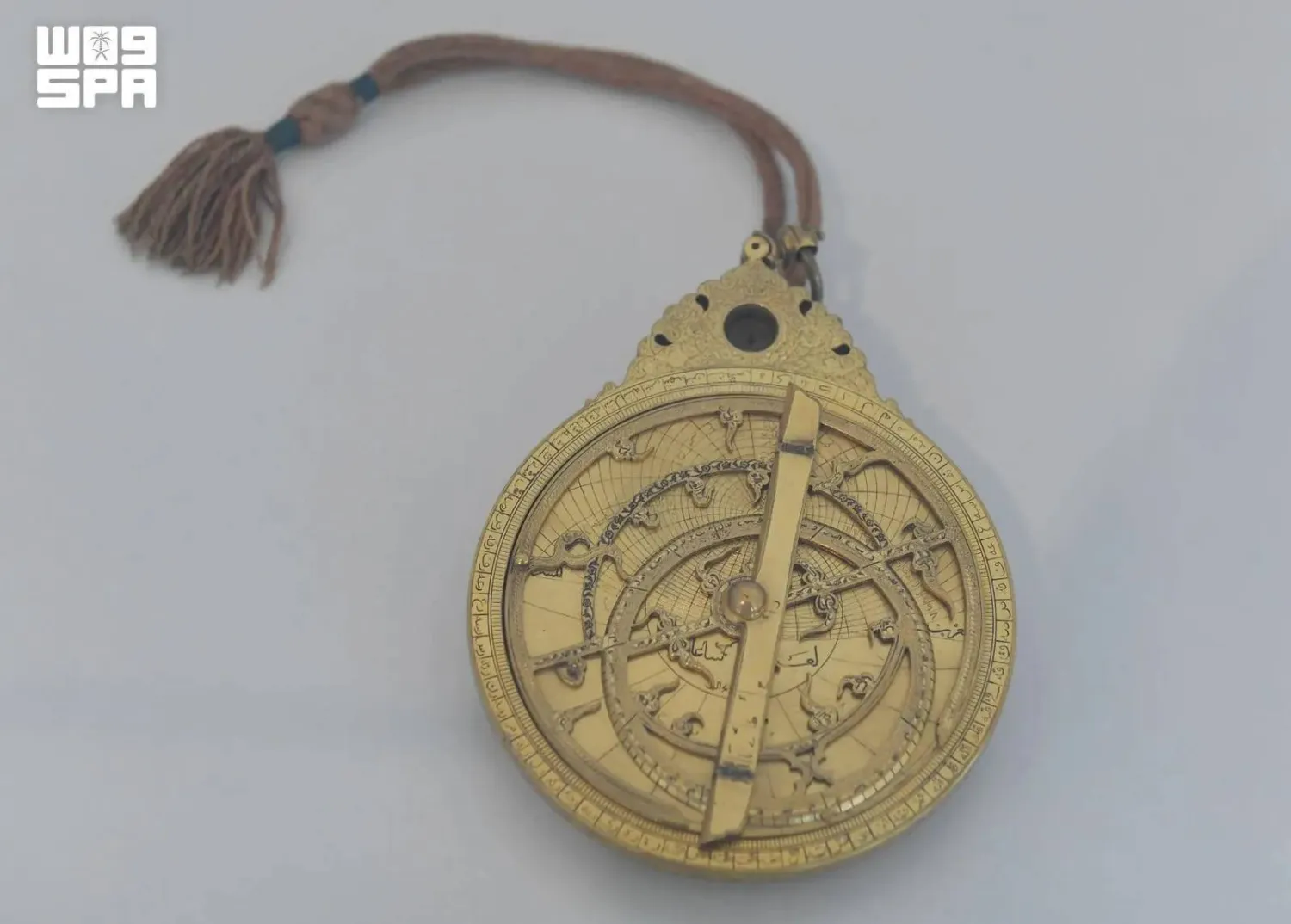
The "Sunken Treasures: The Maritime Heritage of the Red Sea" exhibition at the Red Sea Museum in Historic Jeddah documents underwater archaeological discoveries off the Saudi coast. (SPA)

The "Sunken Treasures: The Maritime Heritage of the Red Sea" exhibition at the Red Sea Museum in Historic Jeddah documents underwater archaeological discoveries off the Saudi coast. It highlights national and international partnerships, including collaboration with UNESCO, to explore, protect, and document underwater cultural heritage within an integrated ecological and cultural framework.

By showcasing these discoveries, the exhibition elevates public awareness around preserving marine history and underscores the Kingdom’s growing leadership in the field of maritime archaeology, the Saudi Press Agency said.

The exhibition illustrates the historical transformations of the Red Sea as a vital trade, pilgrimage, and communication route linking Asia, Africa, and the Mediterranean over thousands of years.

Visitors can explore documented evidence of historic shipwrecks discovered off the coastlines of Jeddah, Yanbu, Umluj, and the Farasan Islands. These sites have revealed the remains of ancient merchant vessels that succumbed to the sea during various historical periods, offering a rare glimpse into the intense maritime activity that defined the region over the centuries.

Among the displayed collections are diverse maritime archaeological finds, including stone and wooden anchors, Chinese and Islamic ceramics, ancient pottery, glassware, coins, and vintage navigational instruments used to transport goods across the waves. These artifacts reflect the historical prominence of Saudi ports and their strategic role in connecting global trade routes between the East and West.

Additionally, the exhibition highlights ongoing Saudi research, scientific documentation, and specialized training programs designed to cultivate national expertise in deep-sea conservation, ensuring these treasures are safeguarded for future generations.