


UN’s Guterres, Türkiye’s Erdogan to Meet Zelensky in Ukraine

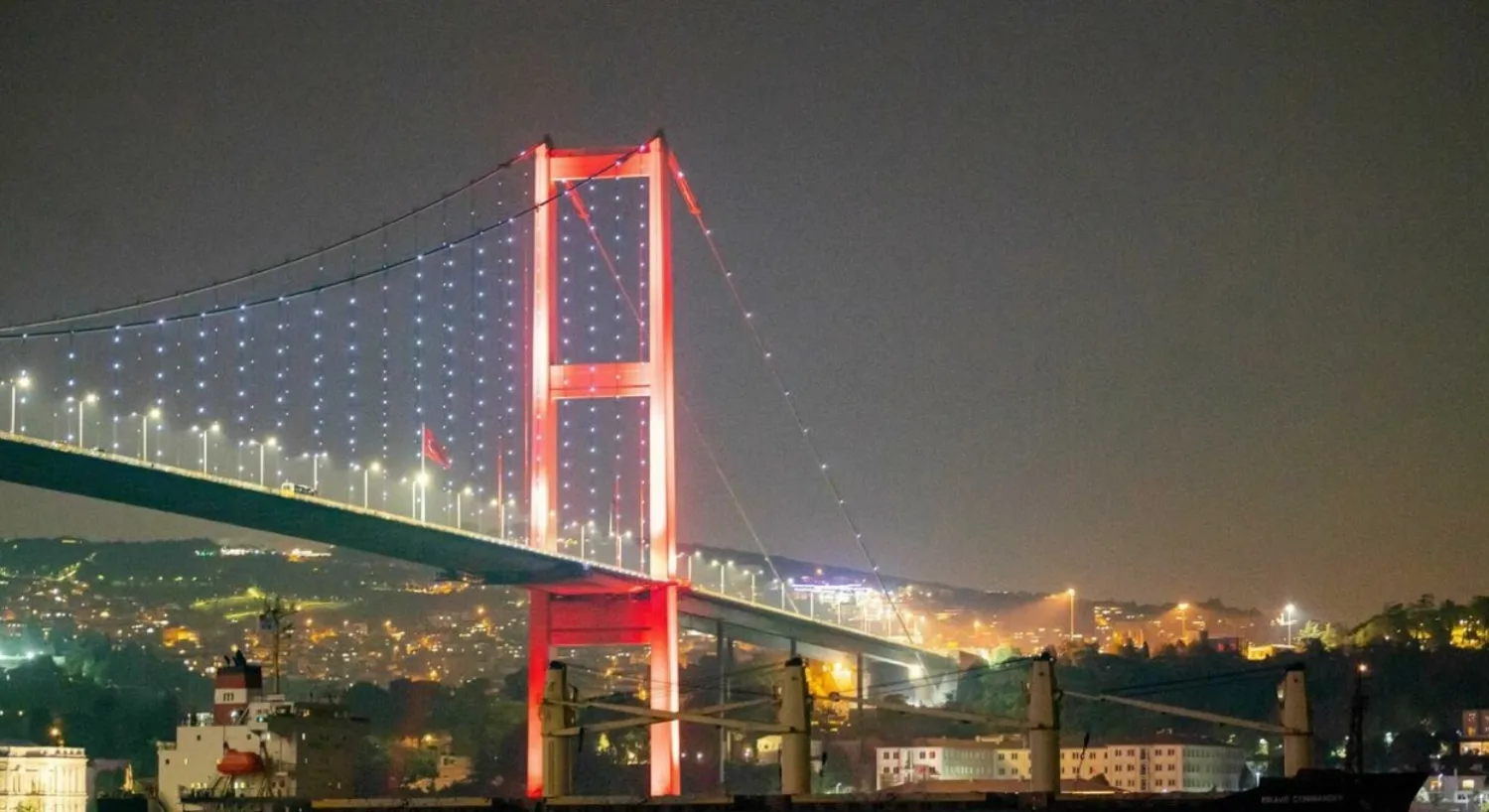
A UN-chartered freighter carrying more than 23,000 tons of Ukrainian grain sails along the Bosphorus Strait on Wednesday Yasin AKGUL AFP
TT

UN’s Guterres, Türkiye’s Erdogan to Meet Zelensky in Ukraine

A UN-chartered freighter carrying more than 23,000 tons of Ukrainian grain sails along the Bosphorus Strait on Wednesday Yasin AKGUL AFP

UN chief Antonio Guterres will meet the leaders of Ukraine and Türkiye in Lviv on Thursday, following a deal reached last month that allowed the resumption of grain exports after Russia's invasion blocked essential global supplies.

The meeting also comes a day after the head of NATO said it was "urgent" that the UN's atomic watchdog be allowed to inspect Ukraine's Zaporizhzhia nuclear power plant, where a Russian occupation has sparked concerns of a nuclear accident.

A spokesman for Guterres said that the UN chief, Ukrainian President Volodymyr Zelensky and Turkish counterpart Recep Tayyip Erdogan will discuss the grain deal, as well as "the need for a political solution to this conflict".

He added that he had "no doubt that the issue of the nuclear power plant" would be raised, AFP reported.

In his regular nightly address on Wednesday, Zelensky said Guterres had arrived and that the two would "work to get the necessary results for Ukraine".

Guterres is slated to travel on Friday to Odessa, one of three ports involved in the grain exports deal -- hammered out in July under the aegis of the UN with Ankara's mediation. He will then head to Türkiye to visit the Joint Coordination Centre, the body tasked with overseeing the accord.

According to the UN, the first half of August saw 21 freighters authorized to sail under the deal carrying more than 563,000 tons of agricultural products, including more than 451,000 tons of corn.

The first wartime shipment of UN food aid for Africa reached the Bosphorus Strait on Wednesday carrying 23,000 tons of wheat.

Zelensky touched on the Zaporizhzhia plant in his address on Wednesday, saying Ukrainian diplomats and scientists were in "constant touch" with the International Atomic Energy Agency (IAEA) with the goal of sending a mission by the watchdog to the occupied nuclear facility.

"The Russian army must withdraw from the territory of the nuclear power plant and all neighboring areas, and take away its military equipment from the plant," he added. "This must happen without any conditions and as soon as possible."

Earlier in the day, NATO Secretary General Jens Stoltenberg had told reporters in Brussels that Russia's seizure of the plant "poses a serious threat to the safety and the security of this facility (and) raises the risks of a nuclear accident or incident".

Also calling for a Russian withdrawal and inspections by the IAEA, Stoltenberg accused Moscow of using "the ground around the nuclear power plant as a staging area, as a platform, to launch artillery attacks on Ukrainian forces, and this is reckless".

Russian forces took the Zaporizhzhia plant, located in southern Ukraine, in March shortly after invading.

The plant is the largest in Europe, and the uncertainty surrounding it has fueled fears of a nuclear accident to rival Chernobyl in 1986.

Russia and Ukraine have accused each other of shelling the Zaporizhzhia installation.

Ukraine's nuclear operator Energoatom on Tuesday reported what it called an "unprecedented" cyberattack on its website, but said its operations had not been disrupted.

It added that it "was attacked from Russian territory" by a group known as "popular cyberarmy", which used more than seven million bots to attack the website for three hours.

A Russian strike in Ukraine's second city of Kharkiv on Wednesday hit a residential building that regional authorities said was being used as a dormitory for people with hearing impairments, killing seven people and wounding at least 16.

Nataliia Popova, an adviser to the head of the Kharkiv Regional Council, said that residents "couldn't even hear the air alert" and "couldn't respond to the rescuers during the rescue works".

A spokesman for the regional prosecutor's office said that the strike was believed to have been carried out with a cruise missile, and that 20 to 40 people were inside the building when it was hit.

Zelensky condemned the attack as "despicable and cynical", saying it "had no justification and shows the powerlessness of the aggressor".

Kharkiv mayor Igor Terekhov said Thursday that at least four more missiles had struck the city.




Back From Iran, Pakistani Students Say They Heard Gunshots While Confined to Campus

 A Pakistani medical student Arslan Haider waits at the airport after arriving from Tehran on a commercial flight amid the ongoing nationwide protests in Iran, in Islamabad, Pakistan, January 15, 2026. (Reuters)
A Pakistani medical student Arslan Haider waits at the airport after arriving from Tehran on a commercial flight amid the ongoing nationwide protests in Iran, in Islamabad, Pakistan, January 15, 2026. (Reuters)
TT

Back From Iran, Pakistani Students Say They Heard Gunshots While Confined to Campus

 A Pakistani medical student Arslan Haider waits at the airport after arriving from Tehran on a commercial flight amid the ongoing nationwide protests in Iran, in Islamabad, Pakistan, January 15, 2026. (Reuters)
A Pakistani medical student Arslan Haider waits at the airport after arriving from Tehran on a commercial flight amid the ongoing nationwide protests in Iran, in Islamabad, Pakistan, January 15, 2026. (Reuters)

Pakistani students returning from Iran on Thursday said they heard gunshots and stories of rioting and violence while being confined to campus and not allowed out of their dormitories in the evening.

Iran's leadership is trying to quell the worst domestic unrest since its 1979 revolution, with a rights group putting the death toll over 2,600.

As the protests swell, Tehran is seeking to deter US President Donald Trump's repeated threats to intervene on behalf of anti-government protesters.

"During ‌nighttime, we would ‌sit inside and we would hear gunshots," Shahanshah ‌Abbas, ⁠a fourth-year ‌student at Isfahan University of Medical Sciences, said at the Islamabad airport.

"The situation down there is that riots have been happening everywhere. People are dying. Force is being used."

Abbas said students at the university were not allowed to leave campus and told to stay in their dormitories after 4 p.m.

"There was nothing happening on campus," Abbas said, but in his interactions with Iranians, he ⁠heard stories of violence and chaos.

"The surrounding areas, like banks, mosques, they were damaged, set on fire ... ‌so things were really bad."

Trump has repeatedly ‍threatened to intervene in support of protesters ‍in Iran but adopted a wait-and-see posture on Thursday after protests appeared ‍to have abated. Information flows have been hampered by an internet blackout for a week.

"We were not allowed to go out of the university," said Arslan Haider, a student in his final year. "The riots would mostly start later in the day."

Haider said he was unable to contact his family due to the blackout but "now that they opened international calls, the students are ⁠getting back because their parents were concerned".

A Pakistani diplomat in Tehran said the embassy was getting calls from many of the 3,500 students in Iran to send messages to their families back home.

"Since they don't have internet connections to make WhatsApp and other social network calls, what they do is they contact the embassy from local phone numbers and tell us to inform their families."

Rimsha Akbar, who was in the middle of her final year exams at Isfahan, said international students were kept safe.

"Iranians would tell us if we are talking on Snapchat or if we were riding in a cab ... ‌that shelling had happened, tear gas had happened, and that a lot of people were killed."


Bomb Hoax Forces Turkish Airlines to Make Emergency Landing in Barcelona

A Turkish Airlines aircraft after landing at El Prat airport, in Barcelona, northeastern Spain, 15 January 2026, after Spanish security forces where alerted due to a bomb threat on board the aircraft. (EPA)
TT

Bomb Hoax Forces Turkish Airlines to Make Emergency Landing in Barcelona

A Turkish Airlines aircraft after landing at El Prat airport, in Barcelona, northeastern Spain, 15 January 2026, after Spanish security forces where alerted due to a bomb threat on board the aircraft. (EPA)

A false bomb threat delivered via an onboard mobile connection caused a Turkish Airlines flight from Istanbul to make an emergency landing at Barcelona's El Prat Airport on Thursday, Spanish police and the airline ‌said.

A Turkish ‌Airlines spokesperson ‌said ⁠earlier that ‌the plane had landed after crew detected that a passenger had created an in-flight internet hotspot which was named to include a bomb threat as the aircraft approached ⁠Barcelona.

Spain's Guardia Civil police force said ‌in a statement ‍that following a ‍thorough inspection of the aircraft ‍after its passengers had disembarked, the alert had been deactivated and no explosives had been found. Spanish airport operator AENA said El Prat was operating normally.

Police have launched ⁠an investigation to determine who was behind the hoax, the statement added.

Türkiye's flag carrier has faced previous incidents of hoax threats, usually made via written messages, that led to emergency landings over the years.


US Sanctions Iranian Officials Over Protest Crackdown

 Treasury Secretary Scott Bessent watches as President Donald Trump speaks to reporters on the South Lawn at the White House, Tuesday, Jan. 13, 2026, in Washington. (AP)
Treasury Secretary Scott Bessent watches as President Donald Trump speaks to reporters on the South Lawn at the White House, Tuesday, Jan. 13, 2026, in Washington. (AP)
TT

US Sanctions Iranian Officials Over Protest Crackdown

 Treasury Secretary Scott Bessent watches as President Donald Trump speaks to reporters on the South Lawn at the White House, Tuesday, Jan. 13, 2026, in Washington. (AP)
Treasury Secretary Scott Bessent watches as President Donald Trump speaks to reporters on the South Lawn at the White House, Tuesday, Jan. 13, 2026, in Washington. (AP)

The United States imposed sanctions Thursday on Iranian security officials and financial networks, accusing them of orchestrating a violent crackdown on peaceful protests and laundering billions in oil revenues.

Treasury Secretary Scott Bessent announced the measures in the wake of the biggest anti-government protests in the history of the republic, although the demonstrations appear to have diminished over the last few days in the face of repression and an almost week-long internet blackout.

"The United States stands firmly behind the Iranian people in their call for freedom and justice," Bessent said in a statement, adding that the action was taken at President Donald Trump's direction.

Among those sanctioned is Ali Larijani, secretary of Iran's Supreme Council for National Security, whom Washington accused of coordinating the crackdown and calling for force against protesters.

Four regional commanders of Iran's Law Enforcement Forces and Revolutionary Guard were also sanctioned for their roles in the crackdown in Lorestan and Fars provinces.

Security forces in Fars "have killed countless peaceful demonstrators" with hospitals "so inundated with gunshot wound patients that no other types of patients can be admitted," the Treasury said.

The Treasury additionally designated 18 individuals and entities accused of operating "shadow banking" networks that launder proceeds from Iranian oil sales through front companies in the UAE, Singapore and Britain.

These networks funnel billions of dollars annually using cover companies and exchange houses, as Iranian citizens face economic hardship, according to the Treasury.

The sanctions freeze any US assets of those designated and prohibit Americans from doing business with them. Foreign financial institutions risk secondary sanctions for transactions with the designated entities.

The action builds on the Trump administration's "maximum pressure" campaign against Iran. In 2025, the Treasury sanctioned more than 875 persons, vessels and aircraft as part of this effort, it said.