
As Iraqi Protesters Rally, Political Deadlock Leaves Families without Cash

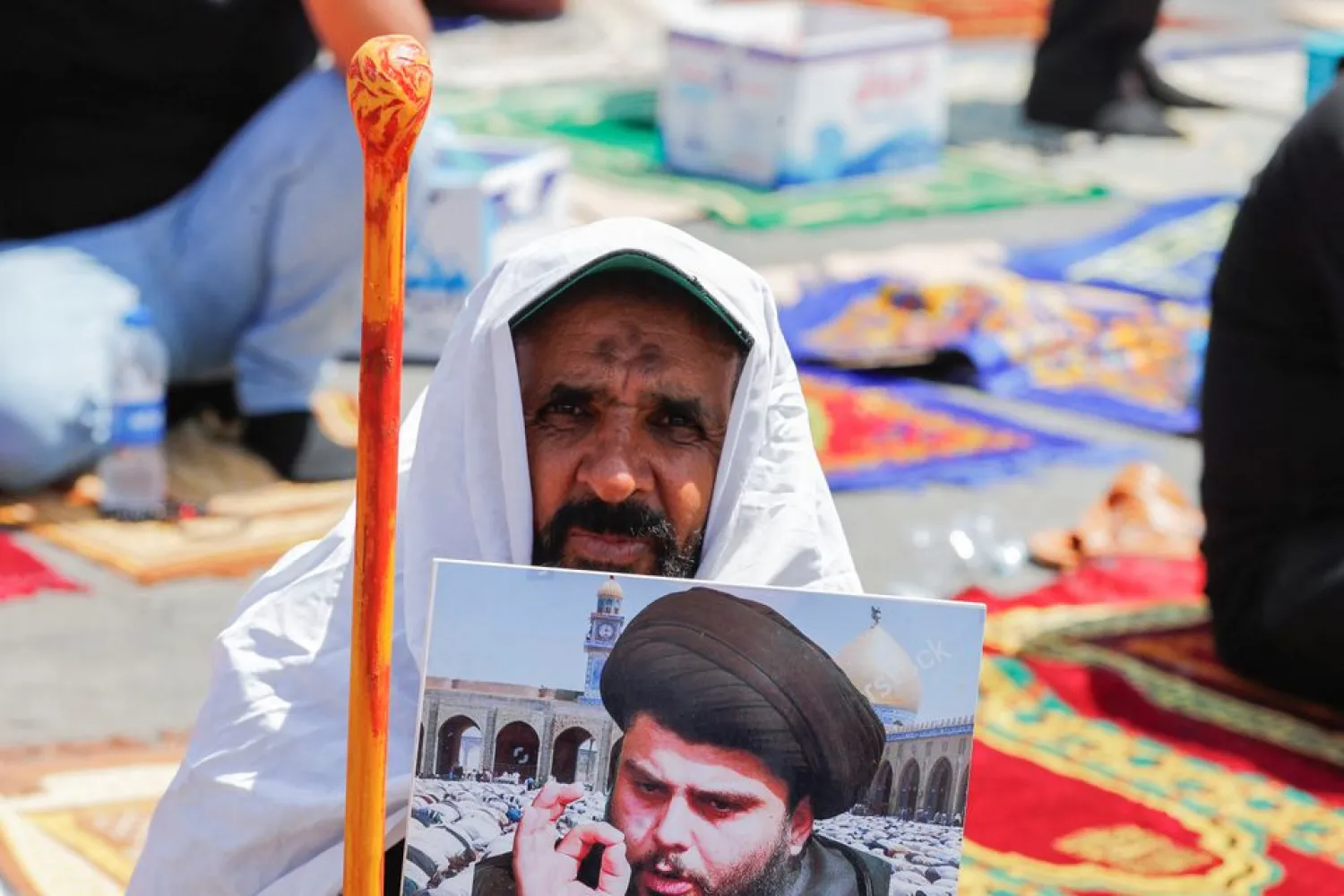
A supporter of Iraqi populist leader Moqtada al-Sadr attends the mass Friday prayer outside the parliament near the Green Zone, in Baghdad, Iraq August 19, 2022. (Reuters)
TT

As Iraqi Protesters Rally, Political Deadlock Leaves Families without Cash

A supporter of Iraqi populist leader Moqtada al-Sadr attends the mass Friday prayer outside the parliament near the Green Zone, in Baghdad, Iraq August 19, 2022. (Reuters)

Sabreen Khalil lost her husband to COVID last year, leaving her to raise seven children alone, but Iraqi government funding to help her and hundreds of thousands of families in poverty is blocked by political stalemate.

With politicians deadlocked over forming a new government since an election in October, rival Shiite factions in Baghdad on Friday continued their weeks-long protests which have prevented parliament from meeting.

The standoff has raised fears of renewed unrest in a country where militias wield significant power and is already taking a toll on the most vulnerable.

"I am a woman and all of a sudden I had to take the responsibility of seven children alone...it broke my back," Khalil said, speaking of the impact of her husband's death.

Sitting on the floor in her one-bedroom brick house in the village of Saada on the outskirts of Baghdad, she said she cannot afford treatment for her chronic illness and that her children have to skip some meals as food prices soar.

Nine months after applying for a government pension, she has received nothing from the ministry of labor and social affairs. "Every time we go they tell us 'We are waiting for a budget'," she said.

An official at the ministry said Khalil qualifies for support but confirmed there is no funding to provide it. "Our hands are tied because there is no budget," the official, speaking on condition of anonymity, told Reuters.

Her family is one of about 370,000 families who qualify for the pension but are not receiving it because of the political deadlock, the official said.

Attempt at dialogue

Iraq's 10-month standoff since the election is the longest stretch without a fully functioning government in the nearly two decades since Saddam Hussein was overthrown in a US-led invasion in 2003.

Rival Shiite groups want to see a new government formed, but disagree on the steps to achieve it.

Supporters of the powerful Shiite cleric Moqtada al-Sadr, who fought US occupation forces before emerging as the main opponent of Iran-backed Shiite militias and their political leaders, has demanded fresh elections.

Sadr was the biggest winner of last year's election but was unable to form a government along with Kurdish and Sunni parties, excluding his Iran-backed Shi'ite rivals.

Those rivals, known collectively as the Coordination Framework, say an election can only take place after a government is formed to lead a transition period during which legislation including a new election law should be passed.

"There is consensus over dissolving parliament and holding early elections, the issue is with the mechanism," a source in the caretaker government said, adding that talks were ongoing.

On Wednesday, caretaker Prime Minister Mustafa al-Kadhimi met political leaders and called on Sadr's supporters to join a national dialogue. He also called on all sides to suspend any political escalation.

Sadr did not attend the meeting, and his supporters have shown little public enthusiasm for the initiative.

"These dialogues do not serve the interest of the country... They serve your interests and your parties' interests and to keep you in power," an imam told hundreds of Sadr's followers who gathered to protest outside parliament on Friday.

Some carried portraits of Sadr and his late father, also a prominent cleric, as well as Iraqi flags.

Dozens of supporters of the Coordination Framework also protested outside the heavily protected Green Zone.

Hamdi Malik, an associate fellow at the Washington Institute and a specialist on Iraq's Shiite militias, said that despite some efforts to bridge the differences there appeared to be little prospect of swift results.

"The division is so wide that I can't see any solution and the possibility of clashes is actually increasing," Malik said.

Parliament did pass an emergency bill in June allocating billions of dollars to buy wheat, rice and gas and to pay salaries, but other government businesses have stalled.

A prominent Iraqi rights activist said the political factions were all responsible for the deadlock and ordinary Iraqis were paying the price.

"Anger is rising up among the people. Economic conditions have worsened and unemployment is on the rise," said Hanaa Edwar. Leaders are "holding dialogues to redistribute the spoils amongst politicians", she said.

Khalil meanwhile is still waiting in Saada, which means "happiness" in Arabic, for the government to come to her aid. She said the political process was not working.

"They say it's wrong if we don't vote," she said. "But elections didn't change anything."


Long-Suffering Yemeni Families Flee Renewed Fighting

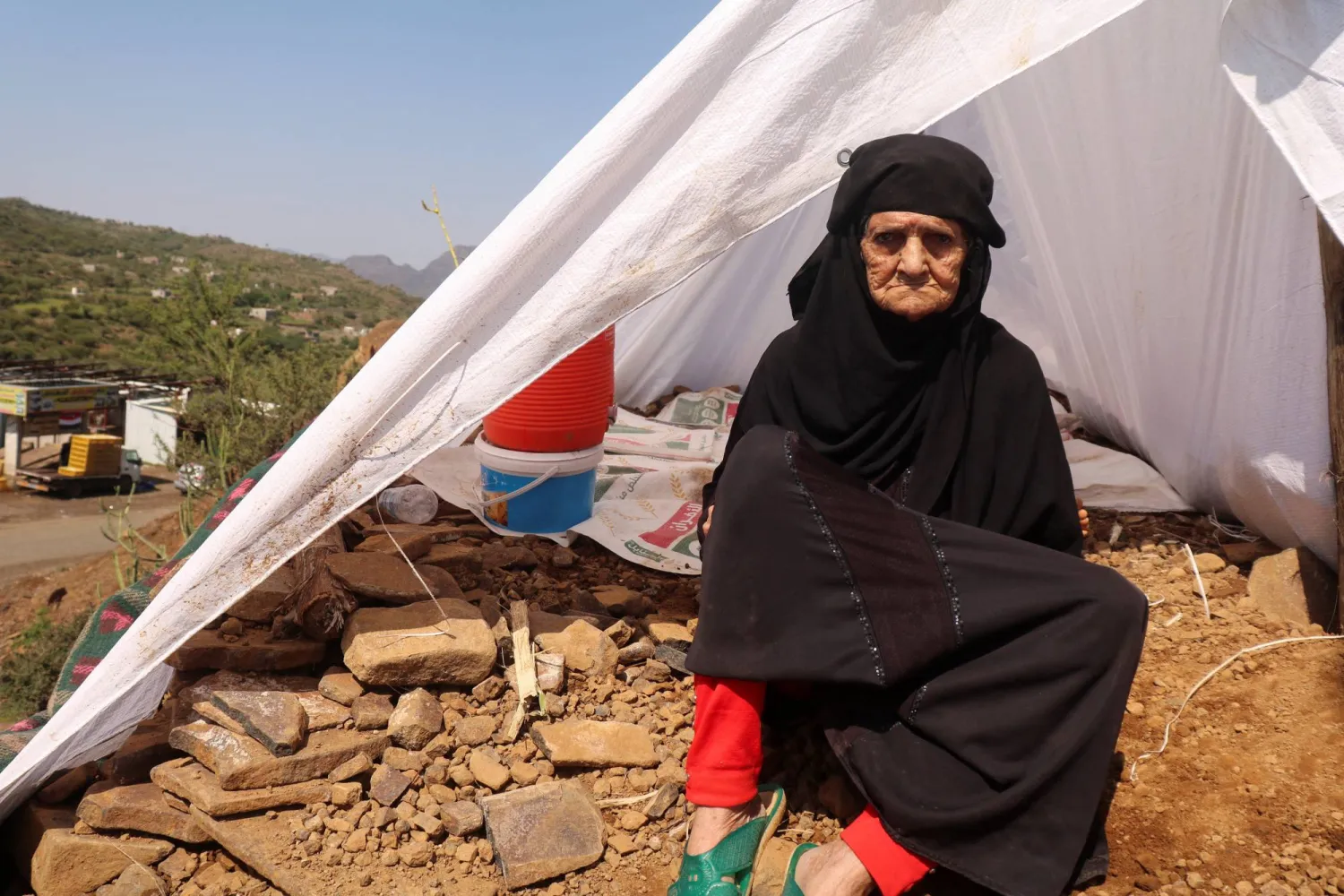
 A displaced woman sits outside her tent at a makeshift camp for people displaced by clashes between Iran-aligned Houthi fighters and Yemeni government forces, in Taiz province, Yemen September 21, 2026. (Reuters)
A displaced woman sits outside her tent at a makeshift camp for people displaced by clashes between Iran-aligned Houthi fighters and Yemeni government forces, in Taiz province, Yemen September 21, 2026. (Reuters)
TT

Long-Suffering Yemeni Families Flee Renewed Fighting

 A displaced woman sits outside her tent at a makeshift camp for people displaced by clashes between Iran-aligned Houthi fighters and Yemeni government forces, in Taiz province, Yemen September 21, 2026. (Reuters)
A displaced woman sits outside her tent at a makeshift camp for people displaced by clashes between Iran-aligned Houthi fighters and Yemeni government forces, in Taiz province, Yemen September 21, 2026. (Reuters)

As fighting escalates once again in Yemen's long-running war, thousands of families have been forced from their homes, many of them for a second or third time.

In the Al-Farsi camp in Aden, Arwa told AFP how she, her husband and their four children left Mokha on Yemen's western coast as it was seized by Iran-backed Houthi fighters.

They shared a single motorcycle to travel 200 kilometers, first to Al-Arah in the Lahj governorate and then on to Aden, temporary seat of Yemen's government.

"We couldn't find any means of transport... We stayed out in the cold and didn't have clothes to keep us warm," Arwa told AFP at the camp, where sat on the ground by a tent.

The camp currently hosts 128 families living under canvas along dirt paths where barefoot children run.

Their tents are sparsely equipped -- some bedding, cooking pots, and a few clothes and belongings that the families managed to bring with them when they ran.

It is not the first time Arwa has been forced to flee her home.

Nine years ago she left Maqbanah in Taiz governorate to head to Mokha, also because of the war.

"I hope I can find a house to live in with my children. We're exhausted by the heat, the dust and the humiliation," she said. "I hope the situation improves and we can return to our home and our families."

Armin Yedgarian, a representative of the UN High Commissioner for Refugees, said the camp was "in dire need of more support", adding that its 8,800 inhabitants included many elderly people and women with children.

International organizations, including the World Food Program, distribute meals to the displaced.

Arwa received a portion of rice to feed her children. But she regrets that her seven-year-old daughter, her only school-aged child, has not been attending class since the family was forced to head to Aden.

- No schooling -

At Aden's Al-Firdaws camp, which currently shelters about 110 families who arrived over the past two weeks, the acting representative of UNICEF's office in Yemen, Obiya Atchieng, told AFP that families' needs were not limited to food and basic supplies.

"Most of the children were enrolled in schools," he says. "Our team carried out a field visit to assess the possibility of providing education services."

Last week, UNICEF said 57,000 children had been displaced inside Yemen in just two weeks and 243 schools had been closed or suspended, affecting more than 137,000 students.

Even before the latest escalation, 3.2 million school-age children were not enrolled.

After years of relative calm, Yemen's civil war flared back to life in July against the backdrop of the broader conflict in the Middle East.

In the past 10 days, a surprise Houthi offensive enabled the group to expand its areas of control as far as the strategic Bab al-Mandeb Strait linking the Indian Ocean to the Red Sea, and by extension, the Suez Canal.

- 'Hearts beating' -

As a result of a 2022 ceasefire, those under the age of four have not previously experienced conflict of this intensity.

"The sounds of explosions were new to the children, and now any loud noise unsettles them, even if it's a motorcycle," said one 39-year-old father of two who remained in Mokha despite the Houthi takeover.

"I try to reassure them and convince them there is no danger. But even when they're in my arms, I can feel their hearts beating rapidly against my chest."

The man said he had been displaced from the city of Hodeidah eight years ago, and had no desire for it to happen again.

Noha, a housewife and mother of two children aged eight and 10, said she broke down in tears when she heard they were fleeing from Al-Khokha in western Yemen -- which the Houthis captured less than two weeks ago -- to her husband's family home in Aden.

"Because I cried, the children cried. We left in a bus with our neighbors and I haven't been able to make the children feel safe."

"Today I learned that my neighbor, a mother of six children who was in her final month of pregnancy, was also displaced and died in Aden two days after we arrived because of postpartum hemorrhage," she said.

"The newborn baby girl is in the incubator, and the other children and her husband are in a terrible, miserable state."


Trump Shattered Canada’s Old US Relationship. Carney is Building a New One in Europe

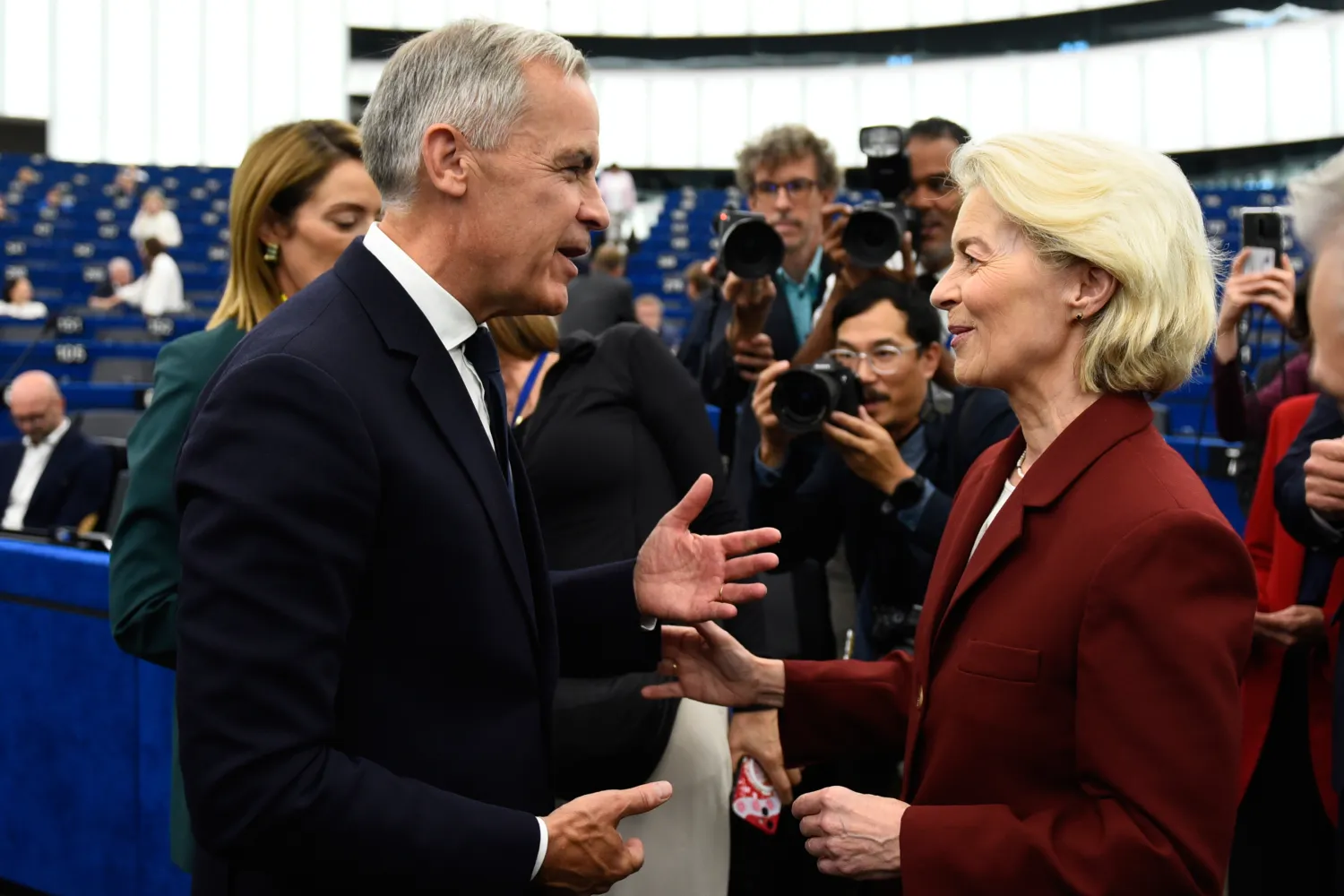
FILE- Canada's Prime Minister Mark Carney, front left, speaks with European Commission President Ursula von der Leyen at the European Parliament in Strasbourg, eastern France, Thursday, Sept 17, 2026. (AP Photo/Pascal Bastien, File)
TT

Trump Shattered Canada’s Old US Relationship. Carney is Building a New One in Europe

FILE- Canada's Prime Minister Mark Carney, front left, speaks with European Commission President Ursula von der Leyen at the European Parliament in Strasbourg, eastern France, Thursday, Sept 17, 2026. (AP Photo/Pascal Bastien, File)

For nearly four decades, Canada built its economy around closer integration with the United States. President Donald Trump has turned that dependence into leverage, imposing tariffs, threatening Canada’s sovereignty and openly seeking to pull Canadian industrial production south.

Canadian Prime Minister Mark Carney has moved on. Rather than return to trade talks or wait for the next US president to restore the old relationship, he is urgently building a future in which Canada is less dependent on America, The Associated Press said.

Last week, Carney embraced the prospect of Canada becoming the European Union’s first associate member, not as a step toward full membership, but as a way to reduce Canada’s dependence on any single country without ceding control over its own decisions.

“There is now a price to be paid for access to the United States market,” Carney said Sunday, pointing to tariffs, US investment commitments and demands for domestic policy changes.

Carney told the European Parliament on Thursday that countries need enough economic strength to keep any one power from dictating their choices.

Building options beyond the US

He carried that argument into a meeting Sunday with French President Emmanuel Macron in Saint-Pierre-et-Miquelon, the French territory just off Newfoundland’s coast.

“Canada and Europe will build an alliance for the future that will strengthen our collective resilience so we can live our lives as we choose based on the values that we share,” Carney said while standing alongside Macron.

Carney’s relentless schedule reflects the urgency of his push to build alternatives to the United States.

He began last week in Toronto hosting some of the world’s biggest investors, flew to Strasbourg, France, for European Commission President Ursula von der Leyen’s State of the European Union address, raced to Liverpool, England, to meet Britain’s new prime minister and returned to Strasbourg to address the European Parliament.

He met Macron in Saint-Pierre-et-Miquelon before flying back to Ottawa to meet Norwegian Prime Minister Jonas Gahr Støre. On Monday, he is set to open a new session of Parliament before heading to New York for the United Nations General Assembly.

Europe becomes the alternative

Trump has suggested Canada’s closer relationship with the EU could amount to a “hostile act” and threatened “very heavy tariffs” on Europe if he judged the move unfriendly.

Canada could become a test case for other middle powers trying to avoid being pushed around by larger countries. In his speech at the World Economic Forum in Davos, Switzerland, in January, Carney argued that “middle powers must act together,” warning that “if you’re not at the table, you’re on the menu.”

Støre echoed Carney on Sunday, saying tariffs should not become “a weapon to be used against countries, because we will all end up losers.”

The next major step in shaping that proposed relationship is an Oct. 29-30 Canada-EU summit in Montreal.

Unwinding 40 years of dependence

For Canada, that means undoing some of the reliance developed over nearly 40 years.

The 1989 Canada-US Free Trade Agreement and later NAFTA deepened integration, creating cross-border supply chains in autos, energy and manufacturing. Roughly 70% of Canada’s exports went to the US Europe remains nowhere close to replacing the US market.

Carney walked away from trade negotiations in August rather than accept terms he said Ottawa could not live with. The talks remain suspended, and Carney said Friday that leaving the table was the right decision.

“It was easy business, but it meant we relied too much on one economic partner,” Carney said recently. “That time is over.”

Investment chair wants to ‘crank the non-US’

Dominic Barton, Carney’s pick to chair Invest in Canada and a former global head of McKinsey & Co., said diversification does not mean abandoning the United States.

“We can’t complacently count on it,” Barton said. “It’s not about, let’s not do stuff with the US It’s let’s crank the non-US Let’s be way more ambitious on that side.”

Barton, a former Canadian ambassador to China, said Canada has been too inward-looking.

“We are not very global,” he said, calling Trump’s pressure a “jolt” Canada should use to build more global companies.

Carney wants to double non-US trade over the next decade and aims for a free-trade deal with India by year’s end. He said Canada’s tariff-free access to 1.5 billion consumers could double within six months.

Canada sells the trust America is losing

Carney is trying to turn growing doubts about the US as a predictable place to invest into a Canadian advantage. His pitch to global capital is increasingly clear: where Trump’s America uses tariffs and uncertainty as leverage, Canada offers stability, rule of law and reliability.

“The most sought after commodity today is trust,” Finance Minister François-Philippe Champagne said. “The world has changed and America has changed. And I think the world has taken notice.”

Trump may ultimately have done Canada a favor by forcing the country to confront its dependence, Barton said.

“Maybe in 20 years, we’ll thank Trump for shaking us out of our complacency,” Barton said. “Let’s use the moment.”

The ambition has limits. EU “associate membership” does not yet exist, and Europe cannot quickly replace a US market that buys nearly three-quarters of Canadian exports.

But Carney is hardly alone in concluding that Canada must rely less on the United States.

Former Conservative Prime Minister Stephen Harper, from the opposition Conservatives, said the government “had no choice but to take this path.”

That conclusion was particularly difficult for Harper as “one who has long been and known to be a great admirer of America” and who regarded Canada’s close relationship with the US as “among this country’s most precious assets.”

The current US administration now views the countries’ economic integration as incompatible with Canada maintaining its sovereignty, he said.

“Thus, to maintain that sovereignty, we must pursue diminished reliance on the United States,” Harper said. “I do find this all very sad, just as equally necessary.”


Voluntary Return or Pushed Out Against their Will? Migrants in Tunisia Go Home

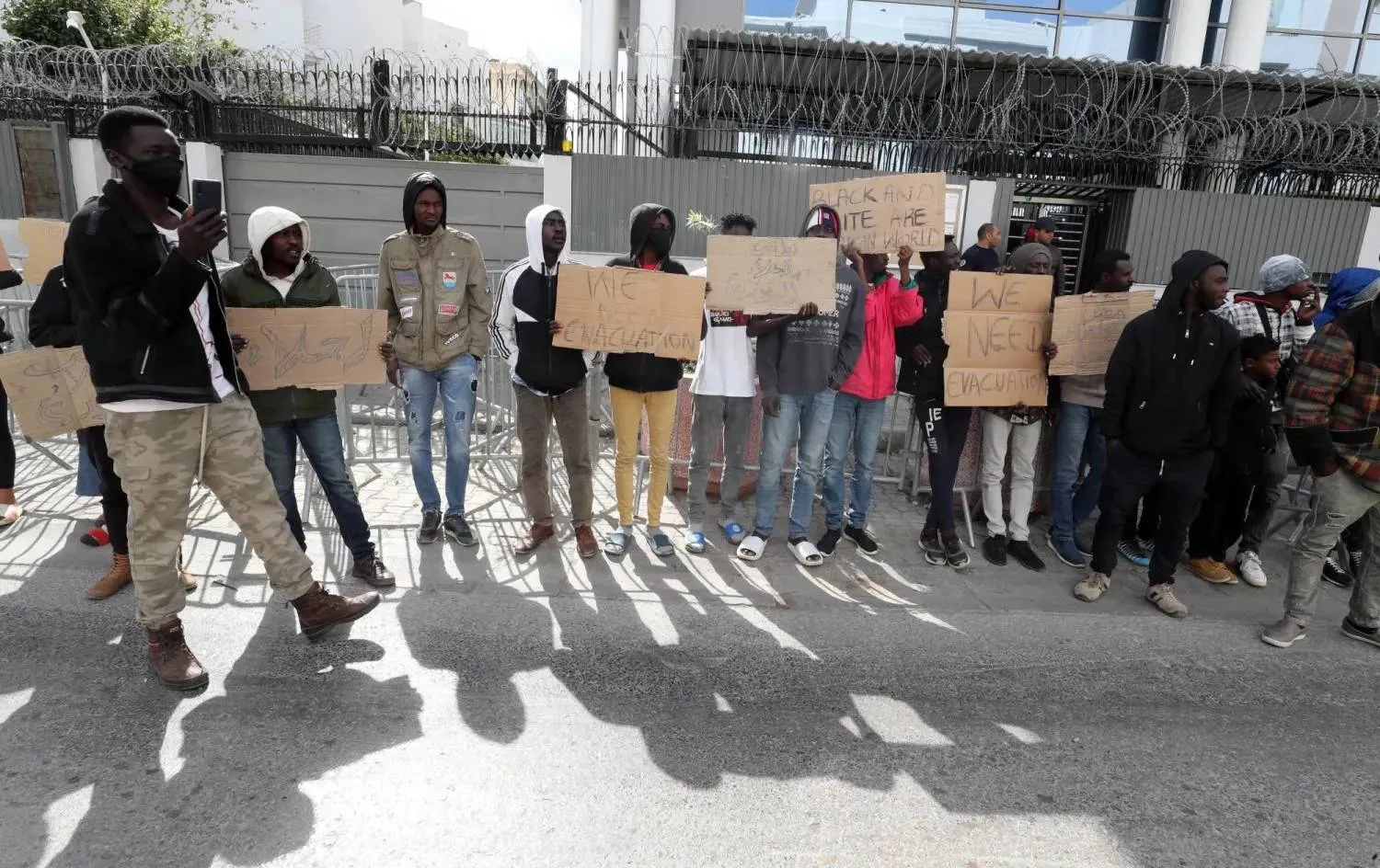
African migrants during a protest demanding to be repatriated because of the harsh conditions they are living under in Tunisia (AFP)
TT

Voluntary Return or Pushed Out Against their Will? Migrants in Tunisia Go Home

African migrants during a protest demanding to be repatriated because of the harsh conditions they are living under in Tunisia (AFP)

Less than a year after arriving in Tunisia, Michael Oppona had not planned to return to Ghana.

But, faced with increasingly harsh pressure from local authorities, he is among thousands of sub-Saharan migrants seeking to head home.

Many, like Oppona, have registered for a free return to their countries of origin.

But humanitarians say many migrants and refugees are being pushed out against their will.

Oppona, 37, had crossed the Sahara with his wife and two toddlers before arriving in Tunis but Europe proved out of reach after a 2023 deal with Tunis to curb migrant departures.

"The people here, the government... they treat us like we're not human," said Oppona, waiting for a "voluntary return" appointment near the International Organization for Migration headquarters in Tunis.

Many sub-Saharan migrants in Tunisia face increasingly harsh conditions following a speech by President Kais Saied in 2023 in which he said "hordes of illegal migrants" were posing a demographic threat.

The IOM told AFP it had helped 4,965 migrants return to their countries of origin from January 1 to August 31.

The IOM's program is separate from a namesake program run by the Tunisian government, and operates a major "return hub" near the city of Sfax.

Authorities did not respond to several requests by AFP for interviews and a visit the center.

In June, a Tunisian National Guard official told AFP that nearly 5,000 migrants had been sent to their home countries in the preceding 12 months and that "near-daily" return flights were now scheduled.

But humanitarian sources say these returns should not be considered "voluntary", arguing that socio-economic and political pressures including racism were deliberately forcing migrants to leave Tunisia.

"These are clearly expulsions," one source said.

Humanitarian sources also said migrants were at times coerced to leave even when it was unsafe for them in their home country.

"Authorities say that migrants stay at the so-called 'return hubs' for about two weeks, whereas we know that that process can take months, especially with people without documentation," one said.

The sources also said the conditions in which migrants were held were unclear, adding that some might have been sent to the wrong country.

"We've seen that more people have been arriving in Libya lately," one said.

UN experts in July said they were alarmed by an "alleged system of mass detention, expulsion and trafficking" at the Tunisia-Libya border.

Neither Tunisian nor Libyan authorities have commented on the allegations.

The humanitarian sources to whom AFP spoke also raised concerns over the lack of official information regarding the government's return program.

"We don't know how the authorities have been repatriating people who hold no documents, for example," one source said.

More than 40 global NGOs have said that refugees and migrants in Tunisia faced harsh mistreatment, including rape, according to testimonies they gathered.

In a joint statement in July, the NGOs -- including Human Rights Watch and Amnesty International -- said "refugees, asylum seekers and migrants have faced racist violence" in Tunisia, added to "arbitrary detention, collective expulsions, abuse, torture and other ill-treatment".

Their statement marked the three-year anniversary of a controversial deal the European Union signed with Tunisia to provide Tunis with financing, equipment and training to stop irregular departures.

The groups said the deal came at "a significant cost to human rights and dignity" and called the EU "complicit".

Campaigners say Tunisia's crackdown on organizations that supported migrants, compounded by the suspension of the UN refugee agency's operations in 2024, have barred thousands from receiving help.

Using pseudonyms, 24-year-old Moussa and 22-year-old Karim from Guinea also waited for an IOM "voluntary return" appointment in Tunis.

The two friends said they came to Tunis three years ago with one aim: to cross to Europe.

"But it's impossible to go now, and impossible to stay," said Karim.

Moussa said there was "more pressure now", his voice shaking.

"You're not free. The police prevent you from going anywhere -- to work or get something to eat," he said.

"So why not go back home?"