
In Normally Tranquil Town, Shock over Rushdie Attack Persists

A view of the normally tranquil Chautauqua Institution in western New York state, where British author Salman Rushdie was attacked. AFP
TT

In Normally Tranquil Town, Shock over Rushdie Attack Persists

A view of the normally tranquil Chautauqua Institution in western New York state, where British author Salman Rushdie was attacked. AFP

When Emily Sack saw a young man leap at Salman Rushdie on the stage of a cultural center in western New York state, it happened so suddenly that she barely realized she was witnessing an attack on the author's life, AFP reported.

Like many other residents of the Chautauqua Institution -- a retreat that hosts educational and cultural programs in a huge park dotted with quaint colonial homes and perched on the shores of gorgeous Lake Chautauqua -- her memory of the attack is a bit of a blur.

And yet, she was there on August 12 in the open-air amphitheater for a conference featuring Rushdie when police say Hadi Matar, a 24-year-old from New Jersey with roots in Lebanon, launched the attack that shocked much of the world.

"It was so fast," the woman in her eighties told AFP. "You know, it was almost over before it began."

Afterward, the Chautauqua Institution canceled its events for the rest of the day.

"Everybody here was totally bummed out, including me," Sack said, tears in her eyes.

The Chautauqua Institution presents itself as a beacon of diversity, tolerance and cultural, communal and religious life in the northern United States.

Founded in 1874 by two Methodist clergy, the institution became a celebrated venue for contemplative activities and conferences in the arts, education and religion.

The center's website says it is "dedicated to exploring the best in humanity."

US president Franklin Roosevelt delivered a famed speech there in 1936, just a few years before the outbreak of World War II, offering "every nation of the world the handclasp of the good neighbor."

The non-profit Chautauqua Institution operates with the support of its members and the 100,000 -- mostly older -- visitors who attend its summer festival.

Residents and visitors stroll or ride bikes across its verdant grounds through a village-like community that features its own streets and homes, magnificently maintained gardens and even its own police department and postal service.

"Indeed, it was a shock to our entire community, and I think the entire region and anyone who knows Chautauqua Institution," said Emily Morris, the center's senior vice president, fighting back sobs.

"We've been around for almost 150 years and have never had anything like this happen."

Resident David Wilson said: "It's a shame, and unfortunately I think it's emblematic of what's going on all over the world. A shame it happened here."

For most people in this peaceful and scenic area -- including county seat Mayville, where Matar appeared in court on Thursday for a hearing on charges of assault and attempted murder -- no one expected an attack that would stun the world.

Prosecutor Jason Schmidt is building the case over the assault on Rushdie, who has lived since 1989 under an Iranian threat of death over his book "The Satanic Verses."

But Schmidt acknowledged to the press that his office lacked the resources to handle such a case, which is also being probed by the Federal Bureau of Investigation.

Sack had never imagined such a thing could happen in Chautauqua.

"I hadn't thought about it before," she said. "But you know, it happens all over the world. Well, why not here? I mean, horrible as it is."

Barbara Warner, a retired Chautauqua resident also in her 80s, agreed.

"Unfortunately, these things are happening in lots of different places in the country," she said.

Wilson called the attack "quite a shock," but said he feels no less safe, as the institution continues its remaining lineup of summer activities.

The center has been criticized in US media for the apparent lack of security measures for someone as obvious a potential target as Rushdie, who is slowly recovering from his wounds in a hospital in Erie, Pennsylvania.

Morris, the Chautauqua vice president, said the center had deployed security measures around the amphitheater, including metal detectors and a ban on bags.

Guards now visibly patrol around the structure, with strict controls at entry points.

Security around Rushdie had grown less stringent during his 20 years living in the United States.

But Morris said the institution "would not have proceeded if we didn't think we had a plan appropriate to that event."

"And we're taking a very close look at that."



Trump Says ‘Very Negative Forces’ Raising Exaggerated Concerns Over AI

 A message reading "AI artificial intelligence", a keyboard, and robot hands are seen in this illustration taken January 27, 2025. (Reuters)
A message reading "AI artificial intelligence", a keyboard, and robot hands are seen in this illustration taken January 27, 2025. (Reuters)
TT

Trump Says ‘Very Negative Forces’ Raising Exaggerated Concerns Over AI

 A message reading "AI artificial intelligence", a keyboard, and robot hands are seen in this illustration taken January 27, 2025. (Reuters)
A message reading "AI artificial intelligence", a keyboard, and robot hands are seen in this illustration taken January 27, 2025. (Reuters)

US President Donald Trump said on Sunday a lot of "very negative forces" are bringing things up about AI that won't happen and said that he wanted to make sure that the United States remains the industry leader.

"We're leading China in AI. We're the most sophisticated country in the world, and frankly I want to keep it that way because whoever wins AI wins," Trump, at ‌his Ireland ‌golf course, told reporters when asked if ‌the ⁠AI industry should ⁠slow down or be more regulated.

"We could put guardrails. We can do this and that. But I think you have a lot of very negative forces that are bringing it up that shouldn't be bringing it up and they're bringing up things that won't happen."

Trump has resisted ⁠stirring concerns about AI.

His latest comments ‌come after a week of ‌concerns in the United States after two Anthropic researchers issued ‌warnings that rapidly progressing artificial intelligence could lead to the ‌extinction of the human race in the not-too-distant future.

In his second term, Trump's administration has largely embraced AI firms. These AI leaders and other technology companies have also supported Trump's initiatives.

Yet, ‌the Pentagon earlier this year warned of risks from Anthropic's model.

After the researcher warnings, ⁠some AI ⁠CEOs are pushing for slowing advancement of the models.

Anthropic CEO Dario Amodei on Saturday outlined a three-step framework intended to pace development and create more time to manage its risks.

Jacob Coxon, one of the Anthropic researchers who resigned and then issued the warnings, pushed for the US to work with other countries to ensure pace.

"I feel we need international coordination, or else we risk running the same race with China, which could be equally dangerous," Coxon said on NBC's Meet the Press.


Trump Says Zelensky ‘Has to Stop’ Attacking Russian Refineries

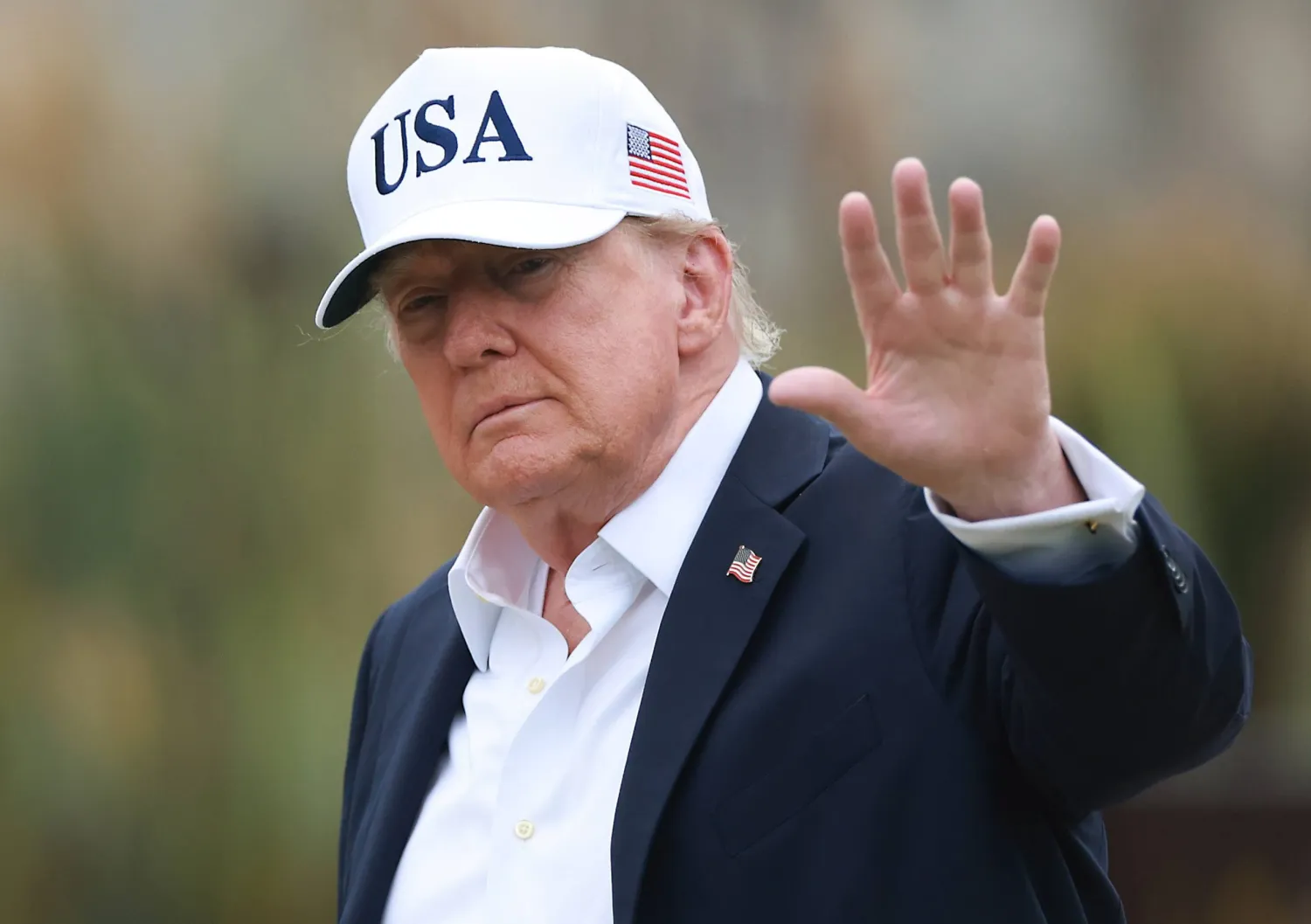
US President Donald Trump waves during a visit to Trump International Golf Links and Hotel in Doonbeg, Ireland, 13 September 2026. (EPA)
TT

Trump Says Zelensky ‘Has to Stop’ Attacking Russian Refineries

US President Donald Trump waves during a visit to Trump International Golf Links and Hotel in Doonbeg, Ireland, 13 September 2026. (EPA)

US President Donald Trump said Sunday he had warned Ukrainian President Volodymyr Zelensky to "stop knocking out diesel fuel" refineries in Russia because it was causing shortages and "hurting" other countries.

"Mr. Zelensky has to do one thing," Trump told reporters while on a visit to Ireland. "He has to stop knocking out diesel fuel in Russia.

"Let him go after targets, but not diesel fuel, because he's causing a shortage of diesel. This isn't done by the Middle East, this is done by what's happening with Russia and Ukraine."

Trump added he had spoken to Ukraine's leader about the country's stepped-up attacks on such sites over recent months.

"There are plenty of other targets. Don't hit diesel fuel because that's hurting. That's hurting the world. We don't want him to hit diesel fuel... He's hitting diesel refineries."

Ukraine has hit numerous Russian oil refineries hundreds of kilometers from its border with Russia, while Moscow has also intensified its long-range attacks in recent months, leading to a jump in civilian deaths.

Kyiv has been firing record numbers of drones at Russia, while Moscow has been launching all-time high missile attacks.

On Sunday, a Russian drone struck a Warsaw-bound passenger train from Kyiv but caused no casualties, both Warsaw and Kyiv said, as Zelensky said western regions had come under attack.

The strikes came days after US envoys visited both Moscow and Kyiv in an effort to revive talks led by Washington on ending Europe's worst conflict since World War II.

With conflict again intensifying in the Middle East, oil prices have spiked, in turn raising American fuel costs and inflation.

That has prompted speculation that the Federal Reserve will hike interest rates just as voters in the US prepare to vote in key midterm elections in November.


France Apologizes for UN Diplomatic Spat with Washington

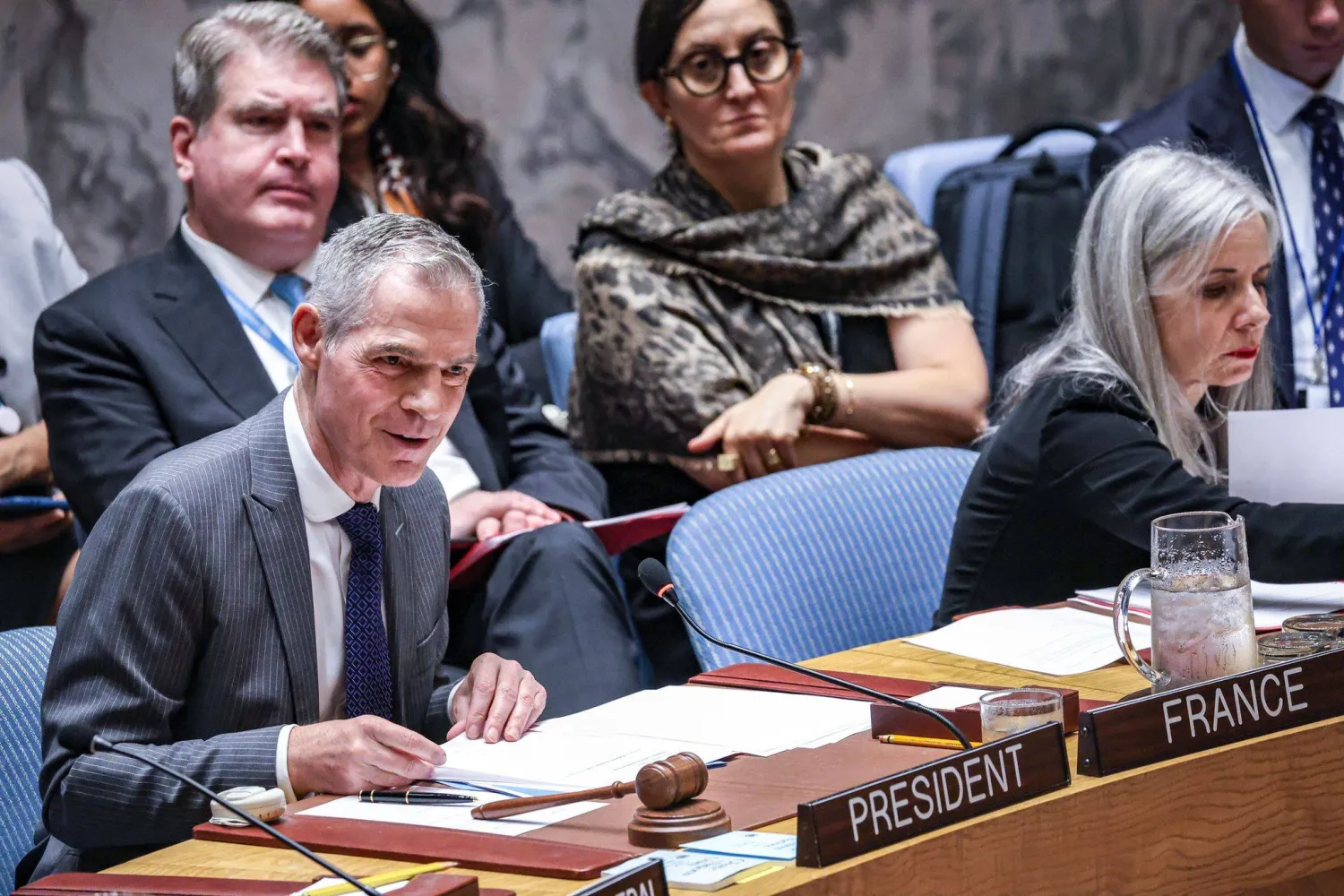
11 September 2026, US, New York: France's Permanent Representative to the UN, Jerome Bonnafont, speaks during a UN Security Council meeting marking the 25th anniversary of the 11 September 2001 terrorist attacks and examining the evolving global terrorist threat and international efforts to counter terrorism. Photo: Bianca Otero/ZUMA Press Wire/dpa
TT

France Apologizes for UN Diplomatic Spat with Washington

11 September 2026, US, New York: France's Permanent Representative to the UN, Jerome Bonnafont, speaks during a UN Security Council meeting marking the 25th anniversary of the 11 September 2001 terrorist attacks and examining the evolving global terrorist threat and international efforts to counter terrorism. Photo: Bianca Otero/ZUMA Press Wire/dpa

The French UN mission said it regretted an online post criticizing how the United States voted during a UN General Assembly meeting, with US officials telling AFP on Saturday that Washington appreciated the statement.

France's permanent mission to the UN published the apology Friday, saying it regretted a post on X criticizing the United States' commitment to human rights.

"France and the United States recently took different positions on a vote at the United Nations General Assembly. This difference concerned one vote, and not the defense of human rights," the mission said in an English statement on its website.

"Public differences of opinion on one vote do not stand in the way of close dialogue with the United States, and do not call into question our historical alliance, nor our ability to work together to advance peace, stability and prosperity, including within multilateral forums," the statement continued.

The mea culpa was well-received by Washington, which has been holding up the appointment of France's next US ambassador as a result of the dispute.

"We note and appreciate France's statement and look forward to working together to further shared values and interests," a US State Department official told AFP on condition of anonymity.

The US State Department has held up the approval of Aurelien Lechevallier, French President Emmanuel Macron's choice as France's next envoy to Washington, replacing Laurent Bili.

Lechevallier is currently French Foreign Minister Jean-Noel Barrot's chief of staff.

US approval of a choice of French envoy is usually a formality but has remained in limbo since the dispute.

On July 24, the United States was one of 10 countries to vote in the UN General Assembly against extending Volker Turk's term as UN human rights chief, joining the ranks of North Korea, Russia and Nicaragua, among others.

"The US used to be a beacon of human rights. Not anymore," the French mission wrote in a post on X after the United States strongly opposed another term by Turk, who has repeatedly questioned US policies under President Donald Trump.

The criticism was met with immediate backlash from Washington, with the US representative walking out of a UN Security Council meeting days later when France's ambassador took the floor, in protest of the comments.