S. Korea Invests $2.2 Billion in New Egypt Nuclear Plant

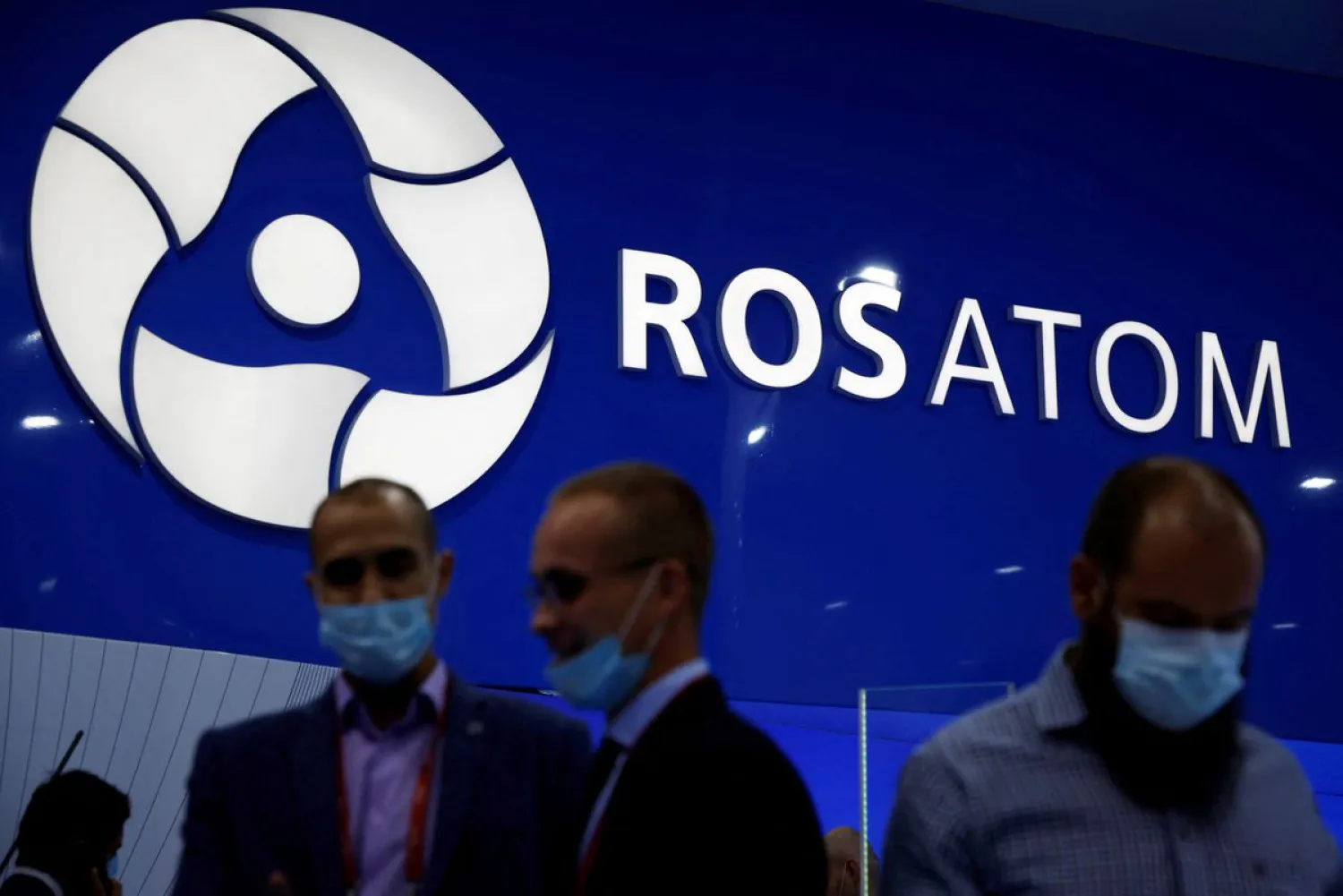
Participants are seen at the stand of Russian state nuclear agency Rosatom during the International military-technical forum "Army-2021" at Patriot Congress and Exhibition Centre in Moscow Region, Russia August 23, 2021. REUTERS/Maxim Shemetov/File Photo
TT

S. Korea Invests $2.2 Billion in New Egypt Nuclear Plant

Participants are seen at the stand of Russian state nuclear agency Rosatom during the International military-technical forum "Army-2021" at Patriot Congress and Exhibition Centre in Moscow Region, Russia August 23, 2021. REUTERS/Maxim Shemetov/File Photo

South Korea signed a $2.2 billion deal with Russia’s state-owned Rosatom to provide buildings and components for a new Egyptian nuclear plant.

S. Korea Hydro & Nuclear Power Co. won a contract to supply buildings, equipment and materials for Egypt’s El Dabaa project, according to a statement from South Korea’s energy ministry, Bloomberg reported.

The state-owned Korean company, which was selected as the sole bidder for the portion of El Dabaa project in December 2021, will construct the main and auxiliary buildings and structures of the turbine islands for the units between 2023-2029.

South Korea’s President Yoon Suk Yeol hailed the deal on his Facebook, describing it an illustration of the country’s “excellent nuclear power technology.”

"Nuclear energy does not only play an important role in meeting the increasing demand for electricity and achieving carbon neutrality but it also brings nations together," Rosatom Director for International Business Boris Arseev said at the signing ceremony.

"We at Rosatom strongly believe that nuclear cooperation must not stop in these turbulent times. On the contrary, it is of paramount importance to develop and expand it further benefitting our countries."

According to Bloomberg, Rosatom, a major global supplier in the nuclear industry, is one of the few big Russian state companies still not subject to sanctions imposed by the US and its allies over the Kremlin’s invasion of Ukraine.


Saudi Arabia Plans Global Village at Expo Site After 2030

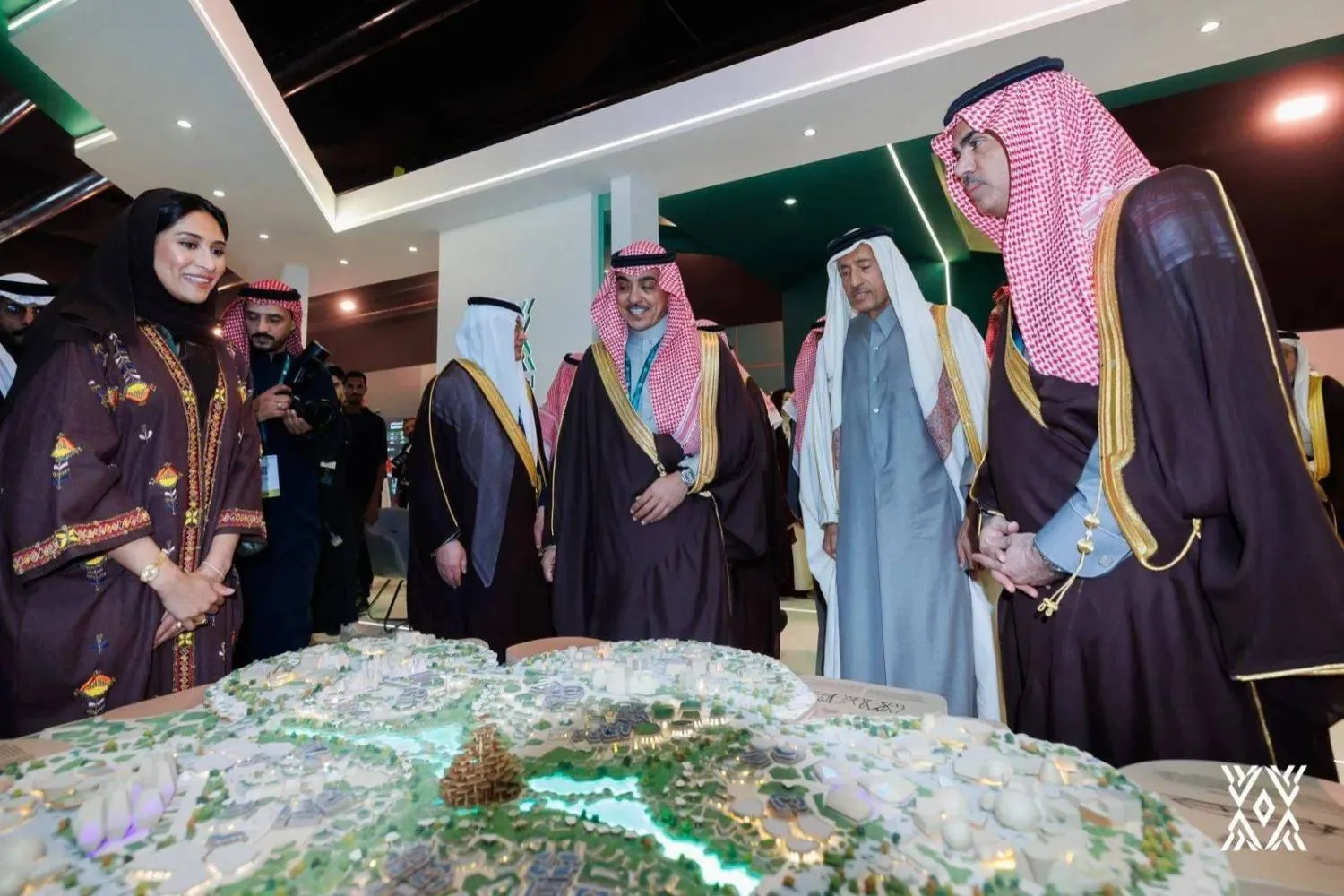
Saudi Media Minister Salman Al-Dossary visits the Expo 2030 pavilion at the Saudi Media Forum. (Asharq Al-Awsat)
TT

Saudi Arabia Plans Global Village at Expo Site After 2030

Saudi Media Minister Salman Al-Dossary visits the Expo 2030 pavilion at the Saudi Media Forum. (Asharq Al-Awsat)

Saudi Arabia plans to transform the site of Expo 2030 Riyadh into a permanent, sustainable global village once the six-month world fair ends, officials said on Tuesday, as countries begin locking in their presence at the flagship event, with eight nations, including the US, already securing pavilion space.

The details were disclosed during a media briefing for Expo 2030, held on the sidelines of the Saudi Media Forum in Riyadh.

The briefing was attended by chief executive officer of Expo 2030 Riyadh Company Talal Al-Marri and Director General of the Center for Government Communication Abdullah Al-Maghlouth, along with several officials and specialists.

Al-Marri said the site would be fully prepared by 2029, allowing participating countries to begin early preparations ahead of the opening of the global event. He added that eight countries have already reserved pavilion plots, among them the US.

Infrastructure

Work is progressing steadily to prepare the site. In 2025, the government awarded the main infrastructure development contract and deployed a fleet of heavy equipment.

Excavation and landfill works have been carried out over an area of 1.5 million square meters, and construction of hotels dedicated to the exhibition is expected to begin later this year.

The anticipated event, described by organizers as one of the largest international platforms for bringing countries together, is under the theme “The Era of Change: Together for a Foresighted Tomorrow.” The exhibition will run from October 1, 2030, to March 31, 2031.

The event, overseen by the Bureau International des Expositions (BIE), will be held on a six-million-square-meter site north of Riyadh, near King Salman International Airport.

Organizers expect more than 40 million visitors from inside and outside the Kingdom, along with broad participation from international institutions and governmental and non-governmental organizations.

Sustainable development

Expo 2030 aims to host 197 countries and 29 organizations, with more than 230 pavilions addressing significant global challenges and presenting innovative solutions to build a more sustainable future.

The exhibition is designed as a global platform for sharing ideas and expertise on the future of sustainable development and international cooperation, highlighting innovation, culture, and scientific and technological progress.

Events will include a mix of interactive exhibitions, intellectual forums, advanced technology showcases, and dialogue platforms bringing together governments, companies, non-profit organizations, and universities.

Cultural and entertainment programs reflecting the diversity of global cultures and human history will also be featured.

The site’s design draws inspiration from nature and Riyadh’s historical heritage, is built around an ancient valley, and is inspired by the concepts of the oasis and the garden to reflect harmony between nature and urban progress.

The exhibition has been planned as a fully walkable experience, with public facilities and leisure spaces carefully designed to enhance visitor comfort and engagement across pavilions and open areas.

Solar energy

Among the site’s key design features are 226 spherical pavilions, arranged to reflect the philosophy of international cooperation and cultural harmony among nations.

Shaded walkways and green gardens have also been incorporated into public spaces, providing a comfortable environment for visitors and underscoring Saudi Arabia’s commitment to sustainable environmental practices.

All participating countries will contribute to preparing the pavilions, allowing each nation to showcase its culture, achievements, and future ambitions.

Expo 2030 Riyadh is also built around sustainable environmental strategies, including solar energy, natural resource management, water treatment solutions, and waste recycling, to become one of the world’s most sustainability-focused expos.

The event’s program will address themes such as climate action, prosperity for all, and a better tomorrow, reflecting key issues on the global sustainable development agenda.

Expo 2030 Riyadh reflects the Kingdom’s ambition to position itself as a global hub for knowledge, cultural, and economic exchange. It represents a central milestone in its long-term transformation under Vision 2030, aimed at diversifying the economy and strengthening its role on the global stage.



Kuwait: KPC to Invite Int’l Oil Companies to Help Develop Offshore Oil and Gas

People cast their fishing rods on a pier in Kuwait City on January 31, 2026. (Photo by YASSER AL-ZAYYAT / AFP)
TT

Kuwait: KPC to Invite Int’l Oil Companies to Help Develop Offshore Oil and Gas

People cast their fishing rods on a pier in Kuwait City on January 31, 2026. (Photo by YASSER AL-ZAYYAT / AFP)

Kuwait's Prime Minister Ahmad Abdullah al-Ahmad al-Sabah said on Tuesday that Kuwait Petroleum Corporation plans to invite international oil companies to assist Kuwait Oil Company in developing recently announced offshore oil and ‌gas discoveries.

Al-Sabah ‌added ‌in ⁠his opening ‌remarks at the Kuwait Oil and Gas Show that KPC is in talks with global financial institutions to establish a lease ⁠and lease-back of Kuwait's domestic ‌crude oil pipeline network.

In ‍January, ‍sources told Reuters that ‍Kuwait was set to launch an oil pipeline network stake sale as soon as February in a deal that could raise up to $7 ⁠billion.

Kuwait's Oil Minister Tariq Al-Roumi told Reuters on Monday that he expects tenders for the Durra oil and gas field project, in cooperation with Saudi Arabia, to be launched this year.


Retail Leaders Forum: Consumer Spending in the Gulf Expected to Grow by 5% in 2026

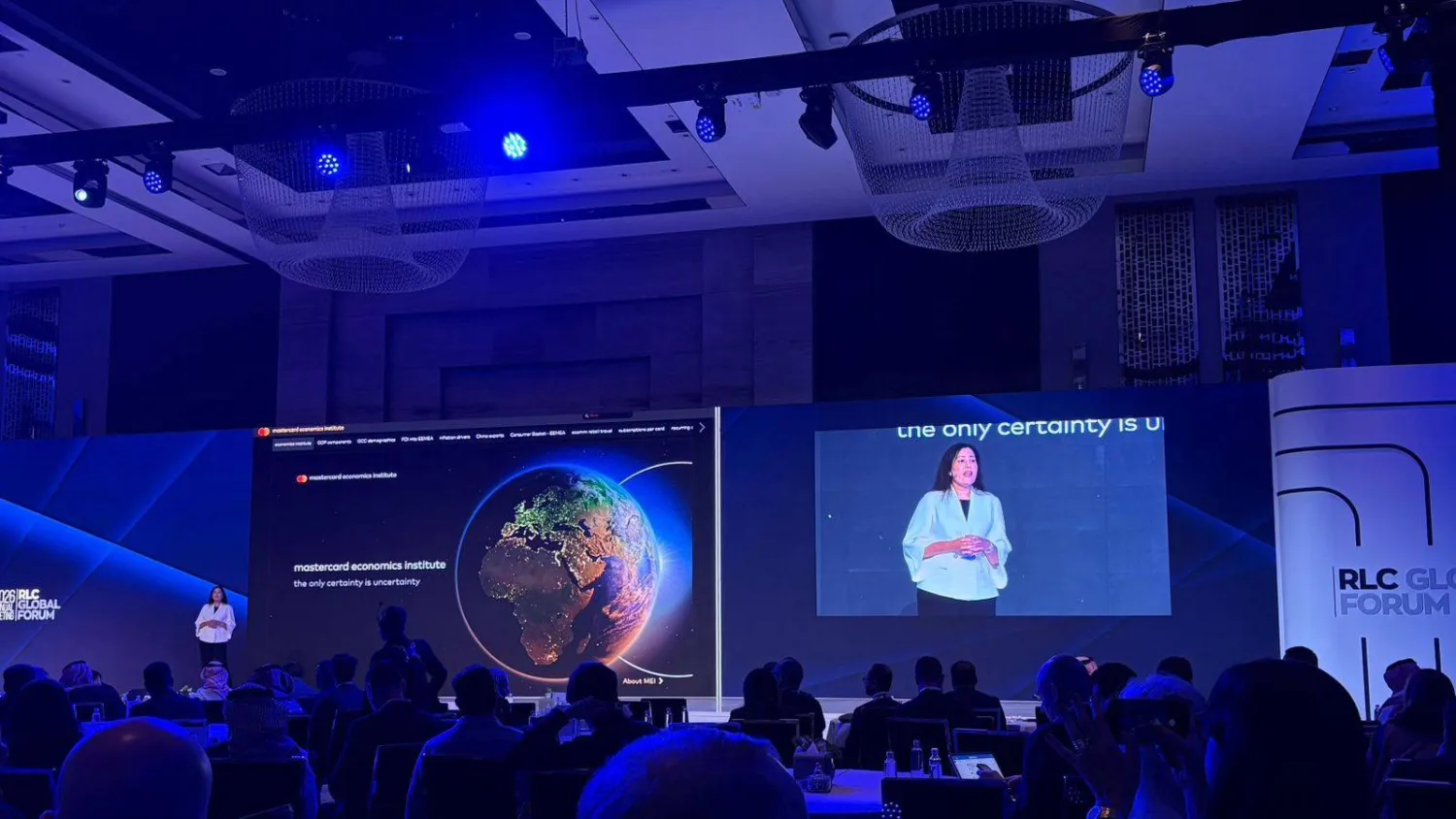
Senior Economist at the Mastercard Economics Institute, Khatija Haque, speaks at the forum (Middle East)
TT

Retail Leaders Forum: Consumer Spending in the Gulf Expected to Grow by 5% in 2026

Senior Economist at the Mastercard Economics Institute, Khatija Haque, speaks at the forum (Middle East)

Khatija Haque, Chief Economist for Europe, the Middle East, and Africa at the Mastercard Economics Institute has predicted that consumer spending in the GCC countries will grow by 5 percent in 2026.

She emphasized that this upward trajectory is driven by investment momentum, population growth, improved income, and the receding pressures of living costs that have recently strained global markets.

During her participation in the Retail Leaders Circle forum held in Riyadh, Haque touched on the profound demographic shifts in the region as one of the main drivers of demand. Saudi Arabia has recorded a population growth of about 12 percent since 2020, while the number in the UAE has increased by 22 percent. The Sultanate of Oman recorded a remarkable increase of 80 percent.

This population boom has in turn led to a steady increase in the number of new families, which has raised the basic level of local consumer spending and created huge expansion opportunities for the retail sector.

The latest data issued by the Saudi Central Bank (SAMA) showed a qualitative leap in the volume of consumer spending within the Kingdom during 2025, with total spending rising to 1569.9 billion riyals (equivalent to $418.6 billion). This figure represents a strong annual growth of 11 percent compared to 2024, in which spending recorded about 1418.4 billion riyals (about $378.2 billion).

Labor market

Regarding the labor market, she pointed out that the increased participation of women, especially in Saudi Arabia, has brought about a fundamental change in consumption patterns.

The emergence of the “dual-income family” model has strengthened overall purchasing power and directed the financial surplus towards luxury and recreational goods and services instead of being limited to necessities.

Foreign direct investment flows in the technology and renewable energy sectors have also contributed to attracting high-income competencies that tend to settle and spend in the region for the long term.

As for prices, data indicated that the Gulf countries succeeded in maintaining low inflation rates with an average of 2 percent, which gave consumers more financial space. The flow of Chinese goods at competitive prices, along with falling interest rates, helped reduce financing costs and support the purchasing power of individuals.

This shift was evident in the increased spending on travel, electronics, and fast-food sectors, in addition to the large leap in e-commerce, which is increasingly dependent on artificial intelligence technologies, according to Haque.

She added that local e-commerce in Saudi Arabia witnessed a significant leap, with its share rising from less than 10 percent in 2019 to about 30 percent during 2025 within the retail sector alone.

Haque concluded by referring to travel and luxury behaviors, as she revealed that Gulf shoppers still give priority to acquiring luxury products and global brands inside physical stores. As for foreign travel trips, clothing topped the list of purchases, especially in European markets, with a new trend towards exploring tourist destinations in Eastern Europe, Africa, and Asia, in an indicator of the diversity of consumer interests and the expansion of their spending map globally.