Political Crisis Continues in Baghdad after Bloody Clashes

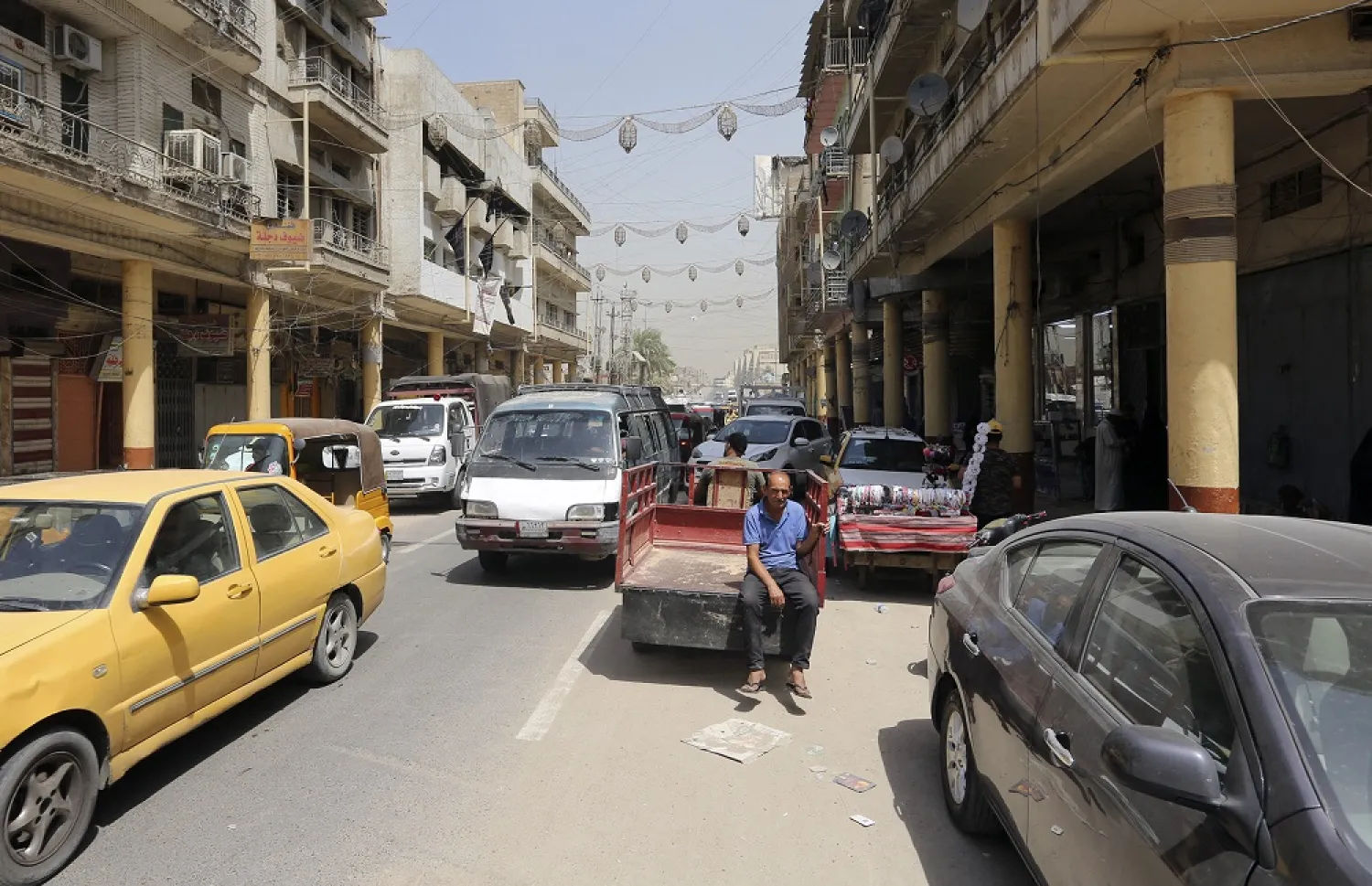
A picture shows a street in the Iraqi capital Baghdad, on August 31, 2022, as calm returns after around 24 hours of deadly violence in Iraq. (AFP)
TT

Political Crisis Continues in Baghdad after Bloody Clashes

A picture shows a street in the Iraqi capital Baghdad, on August 31, 2022, as calm returns after around 24 hours of deadly violence in Iraq. (AFP)

Iraqi paramilitary forces killed in heavy clashes with the supporters of Shiite cleric Moqtada al-Sadr were laid to rest on Wednesday as Iraq’s parliament speaker announced three days of mourning.

Normal life crept back in Baghdad after a bloody 24 hours when the supporters of Sadr clashed with Iraqi security forces inside the heavily fortified Green Zone, the seat of Iraq's government.

At least 30 people, both Sadr's loyalists and Iraqi security forces, were killed, and over 400 people were wounded after trading fire for hours this week. Sadr later called on his supporters to withdraw on Tuesday, spurring a de-escalation of hostilities.

Still, the threat of more clashes looms as the political rivalry between Sadr and his Iran-backed rivals in the Coordination Framework have not been settled. Tensions between the two camps are still palpable and a way out of Iraq's 10-month political vacuum does not appear within reach.

Both camps disagree over the appropriate mechanism to dissolve parliament and hold early elections, key demands of Sadr. His party won the 2021 federal election but was not able to reach the legislative quorum to vote in a government that excluded his Iran-friendly rivals.

Sadr's representative, who goes by the Twitter moniker Mohammed Saleh al-Iraqi, called on Iran to “rein in her camel” in Iraq — a reference to the Framework — or face the consequences. The strong language was unusual from Sadr's camp, indicating tensions are still simmering.

The statement came in response to an earlier plea from the Framework calling on the parliament to convene, a move Sadr's supporters prevented by storming the legislative assembly in July.

A funeral procession for four members of the Popular Mobilization Forces was held in Baghdad. Key leaders from the Framework attended.

Iraq's Parliament Speaker Mohammed Halbousi declared three days of mourning for those killed in the clashes, according to a statement from his office.

Shop-owners in the capital's markets said they were relieved the army lifted the curfew, fearing a drawn-out conflict would have undermined their livelihoods. Many residents said they feared a return to clashes.


Syrian Foreign Ministry Appointments Mark a Break with Diplomatic Tradition

President Ahmad al-Sharaa with Foreign Minister Asaad al-Shaibani and Interior Minister Anas Khattab last February (SANA). 
TT

Syrian Foreign Ministry Appointments Mark a Break with Diplomatic Tradition

President Ahmad al-Sharaa with Foreign Minister Asaad al-Shaibani and Interior Minister Anas Khattab last February (SANA). 

Syrian President Ahmad al-Sharaa has appointed three young deputy foreign ministers as part of efforts to restructure state institutions, breaking with a longstanding tradition of reserving senior diplomatic posts for seasoned officials.

The appointments come as many diplomats who defected from the former regime are still awaiting the resolution of their employment status.

The changes have sparked debate in political circles in Damascus over appointments to senior positions in key ministries, amid unconfirmed reports of a possible cabinet reshuffle involving sensitive portfolios and the reassignment of prominent officials.

Wael Alwan, a researcher and executive director of the Jusoor Center for Studies, told Asharq Al-Awsat that there was speculation about Interior Minister Anas Khattab taking over as head of National Security, with Maj. Gen. Abdul Qader al-Tahhan potentially succeeding him.

“There is similar talk concerning the Defense Ministry, but no precise information is available so far,” Alwan said.

He added that he had no knowledge of reports suggesting Foreign Minister Asaad al-Shaibani might be moved to another position.

An Unprecedented Move

On Saturday, al-Sharaa issued three presidential decrees, numbered 205, 206 and 207 of 2026, appointing deputy foreign ministers responsible for consular affairs, international cooperation and executive affairs, respectively.

The appointment of three deputies simultaneously is unprecedented in Syria’s diplomatic history and signals a departure from an administrative structure that has prevailed for decades.

Traditionally, the Foreign Ministry has had two permanent assistant ministers overseeing diplomatic, political and administrative affairs, alongside a deputy foreign minister.

A third assistant was occasionally appointed under exceptional circumstances, while specialized responsibilities were sometimes assigned to advisers. The two-assistant structure, however, remained the norm.

Alwan described the latest appointments as a restructuring of the ministry.

“The country’s new administration is not bound by established practices. It is completely separate from the previous system of government,” he explained.

Ordinarily, senior officials would be selected through institutional promotion, established career paths or extensive diplomatic experience, he noted.

“In a transitional government, however, things are different. Trust, in the sense of loyalty, takes precedence over competence,” Alwan said, attributing the controversial approach largely to security considerations.

Asked whether experienced diplomats who defected from the former regime could be brought back into senior positions, he acknowledged that this was possible but not essential.

Priority, he stressed, would go to trust and alignment with the current administration’s approach.

Young Appointees with Limited Experience

The three newly appointed officials were born between 1988 and 1996 and have backgrounds in public policy, law, international cooperation and administration.

Muhammad Yaqub al-Omar, born in Idlib in 1993, was appointed deputy foreign minister for consular affairs.

According to local media, he holds a master’s degree in public policy from the University of Idlib, a bachelor’s degree in political science from Al-Shamal University, and a degree in agricultural engineering from the University of Idlib.

Qutaiba Ali Kadish, born in Damascus in 1988, was named deputy foreign minister for international cooperation.

A law graduate of Damascus University, Kadish previously headed the Foreign Ministry’s international cooperation and protocol departments.

He also served as deputy minister of development and humanitarian affairs in the Syrian Salvation Government and directed its humanitarian and development projects department.

Obadah Khaled Diab, born in Damascus in 1996, was appointed deputy foreign minister for executive affairs.

He holds an executive master’s degree in development policies from the Graduate Institute of International and Development Studies in Geneva and a bachelor’s degree in foreign service, specializing in international economics, from Georgetown University.

According to the Syrian Arab News Agency (SANA), Diab previously headed the foreign minister’s office and directed the ministry’s strategic planning office.

His professional background also includes work as an information management and labor market research expert at Qatar’s Ministry of Labor and as a data specialist at the Center for Humanitarian Data of the UN Office for the Coordination of Humanitarian Affairs (OCHA).

Despite the Foreign Ministry’s decision to reinstate diplomats who defected from the former regime, and the appointment of several to head diplomatic missions in regional and international capitals, many cases remain unresolved.

A substantial number are still awaiting the settlement of their employment status and the completion of administrative reviews.

Peace Adviser Appointment Sparks Debate

The presidential appointments came alongside a separate decision by Foreign Minister Asaad al-Shaibani to name broadcaster Muzna Mamdouh al-Atrash, a native of Sweida, as an adviser for peace affairs.

Some viewed the appointment as a potential boost to national reconciliation efforts, particularly those concerning Sweida.

Others criticized the creation of what they described as a vaguely defined position covering “peace affairs.”

Critics also cited al-Atrash’s previous political positions, noting that she had supported former President Bashar al-Assad and the Syrian army’s actions during her work at state television.


Lebanon Rushes to Avert Security Vacuum as UNIFIL Mandate Nears End

UNIFIL's mission expires on December 31. (UNIFIL)
TT

Lebanon Rushes to Avert Security Vacuum as UNIFIL Mandate Nears End

UNIFIL's mission expires on December 31. (UNIFIL)

Lebanon is intensifying diplomatic efforts ahead of the expiration of the UN peacekeeping mission’s mandate in South Lebanon at the end of the year, fearing a security vacuum that could undermine its internationally recognized southern border, deprive it of independent documentation of Israeli violations and isolate residents of Christian villages in the Bint Jbeil district.

The United Nations Interim Force in Lebanon (UNIFIL) announced that its mandate would expire on December 31, under UN Security Council Resolution 2790, after which it would begin a phased withdrawal.

Diplomatic sources told Asharq Al-Awsat that the full withdrawal would take several months, with peacekeepers leaving their positions gradually rather than evacuating all three operational sectors - western, central and eastern - simultaneously. The aim is to avoid leaving entire areas without an international presence.

Lebanon’s concerns are compounded by Israel’s continued occupation of parts of the South following its advance deeper into Lebanese territory between March and June 2026 during the latest war with Hezbollah.

During that period, the Lebanese Army gradually withdrew from dozens of positions south of the Litani River, redeploying to unoccupied areas north of the virtual Yellow Line imposed by Israel that remain within UNIFIL’s area of operations.

Border markers and international monitoring

Security sources told Asharq Al-Awsat that the consequences of UNIFIL’s departure would extend beyond the immediate security situation. A principal concern is the potential loss of border markers that UNIFIL and the Lebanese Army have worked to establish since the Blue Line was identified in 2000.

The sources warned that the absence of international observers could encourage Israel to intensify violations of Lebanon’s internationally recognized border, which Israel accepted under the 1949 Armistice Agreement.

UN peacekeepers are currently the only international witnesses in occupied areas, they explained, where Lebanese state institutions, including the army and security forces, are absent amid widespread displacement and destruction.

“The only witness today in the occupied area is the United Nations force,” the sources said, describing UNIFIL as a credible international witness and a longstanding source of support for Lebanon.

Its presence allows Israeli actions and attacks to be independently documented and recorded at the United Nations, preserving an international account of the conflict that Lebanon fears losing.

“Amid Israeli claims, international accounts and documentation cannot be called into question,” the sources stressed.

They also recalled UNIFIL’s role since 2006 in assisting the Lebanese Army’s deployment south of the Litani River and supporting legitimate state institutions.

According to the sources, the mission has fulfilled its obligations under Security Council Resolution 1701, with 45 countries contributing to those efforts over the past two decades.

Christian villages face growing isolation

The sources warned that withdrawing UNIFIL without replacing it with another UN mission or internationally backed force would leave Lebanon “at the mercy of the Israeli hyena,” alone in confronting Israel.

The repercussions would be particularly severe for hundreds of families who have remained in occupied areas, including residents of the three Christian villages of Rmeish, Debel and Ain Ebel in Bint Jbeil district.

Residents currently rely on UNIFIL escorts when traveling through occupied areas toward the Lebanese interior. Beyond those areas, they continue under the protection of both UN peacekeepers and the Lebanese Army until reaching territory north of the Litani River. Without UNIFIL, they would have to navigate Israeli security procedures on their own.

The sources revealed that Israel had rejected a Lebanese proposal to establish a safe corridor allowing residents to travel freely to and from their villages under Lebanese security escort.

The proposed route would have passed through Tebnine toward Beit Yahoun and Ain Ebel, providing access to communities surrounded by Israeli-occupied territory.

Lebanon also fears losing what remains of the international framework governing security arrangements in the south.

The trilateral talks between Lebanon and Israel under UN auspices in Naqoura were discontinued, followed by the termination of a five-party mechanism that included France and the United States, was chaired by a US general and convened at UN headquarters in Naqoura.

Lebanese concerns now extend to the possibility that the United States, as guarantor, could declare its mission complete, leaving Beirut to deal directly with Israel - an arrangement the Lebanese government rejects. Lebanon and Israel are technically in a state of war and have no diplomatic ties.

UNIFIL currently maintains some 36 permanent military positions south of the Litani River. Security sources fear Israeli forces could occupy some of these sites or destroy others following the peacekeepers’ departure.

The mission also conducts hundreds of patrols daily. Before the 2024 war, it carried out as many as 410 patrols a day across its area of operations.

In its statement, UNIFIL stressed that peacekeepers from 45 countries would continue their regular activities throughout South Lebanon until the mandate expires.

These include monitoring and reporting developments, liaising with the parties, supporting the Lebanese Army and facilitating humanitarian operations.

Diplomatic push for an alternative

Lebanese diplomatic efforts to secure an alternative international presence are continuing ahead of UNIFIL’s departure.

President Joseph Aoun has repeatedly warned of the dangers of a security vacuum and welcomed the deployment of any international force capable of helping maintain stability in the south.

On Friday, Parliament Speaker Nabih Berri reaffirmed Lebanon’s position during a meeting with EU Ambassador Sandra De Waele.

He stressed that Resolution 1701 remains the legal guarantee of Lebanon’s right to recover all its territory up to its internationally recognized borders, while UNIFIL provides the operational framework for implementing the resolution in full.

Lebanon has proposed expanding the mandate of certain UN observers, but Israel rejected the suggestion.


Sudan’s Military Again Detains International Criminal Court Fugitive Haroun, Lawyers Say

Governor of South Kordofan Ahmed Haroun addresses the participants of Civil Administrative Conference during the visit by Sudan's President Omar al-Bashir to Kadogli capital of South Kordofan State August 23, 2011. (Reuters)
TT

Sudan’s Military Again Detains International Criminal Court Fugitive Haroun, Lawyers Say

Governor of South Kordofan Ahmed Haroun addresses the participants of Civil Administrative Conference during the visit by Sudan's President Omar al-Bashir to Kadogli capital of South Kordofan State August 23, 2011. (Reuters)

Sudan’s military authorities on Sunday once again detained a former senior Islamist official who is wanted by the International Criminal Court over atrocities related to the Darfur conflict in the early 2000s, two defense lawyers said.

Ahmed Haroun, a senior security official during the rule of longtime ruler Omar al-Bashir, and later chairman of the former ruling National Congress Party, was detained in Omdurman, the sister city of the capital, Khartoum, according to two lawyers on his defense team. The lawyers had said earlier he was detained in the eastern province of Kassala.

The lawyers, who spoke on condition of anonymity because they weren’t authorized to brief the media, said Haroun’s whereabouts were unknown.

Haroun was detained in April 2019 when a monthslong uprising forced the military ouster of al-Bashir and his government.

He had been detained along with the former president and other senior officials, including those who are wanted by the ICC, in a Khartoum prison. The military declined to hand them over to the international court.

The conflict in Darfur broke out when rebels from the territory’s ethnic central and sub-Saharan African community launched an insurgency in 2003, complaining of oppression by the government in Khartoum.

Haroun was accused by the ICC of crimes against humanity and war crimes including murder, rape, persecution, forced transfer of the population and torture in Darfur at least between 2003 and 2004.

Haroun has denied the charges. He walked away from the prison after the facility was attacked in April 2024 during the war between the army and the notorious paramilitary Rapid Support Forces.

The lawyers said no reasons were given for Haroun’s re-detention, but they linked it to his recent comment in a podcast in which he said his party and the military might not be aligned, but are united in the fight against the RSF in the war that broke out in April 2023 in Khartoum and elsewhere across the country.

The National Congress Party called for the immediate release of Haroun, saying in a statement that he was detained merely for expressing his opinion. The party didn’t address that Haroun is wanted by the ICC.

The latest war has also been marked by atrocities such as mass rape and ethnically motivated killings. The United Nations and international rights groups say these acts also amount to war crimes and crimes against humanity, especially in Darfur, which has been facing a bitter onslaught by the RSF. The RSF's multiday attack on el-Fasher in Darfur last year bore “hallmarks of genocide,” according to UN experts.

In the interview on Sudan Podcast, Haroun addressed a wide range of topics, including the ouster of al-Bashir, ties with the military and RSF leaders, a proposal for the future governance of Sudan and the origins of the RSF.

The RSF grew out of the notorious Janjaweed militias, which were mobilized two decades ago by al-Bashir against populations that identify as Central or East African in Darfur.

The interview stirred up outrage among rights and activist groups that were behind the uprising against al-Bashir. The Emergency Lawyers group condemned the interview as a “legal scandal and a direct challenge to international justice.”

The group called for the army to detain Haroun and hand him over to the ICC along with al-Bashir and former Defense Minister Abdel-Rahim Muhammad Hussein.

“Justice for victims of crimes committed in Sudan cannot be held hostage to political or military balances, and ending impunity requires subjecting all accused and wanted persons to judicial accountability, without exception or immunity,” it said.