Rights Court Condemns France over Syria Repatriation Refusals

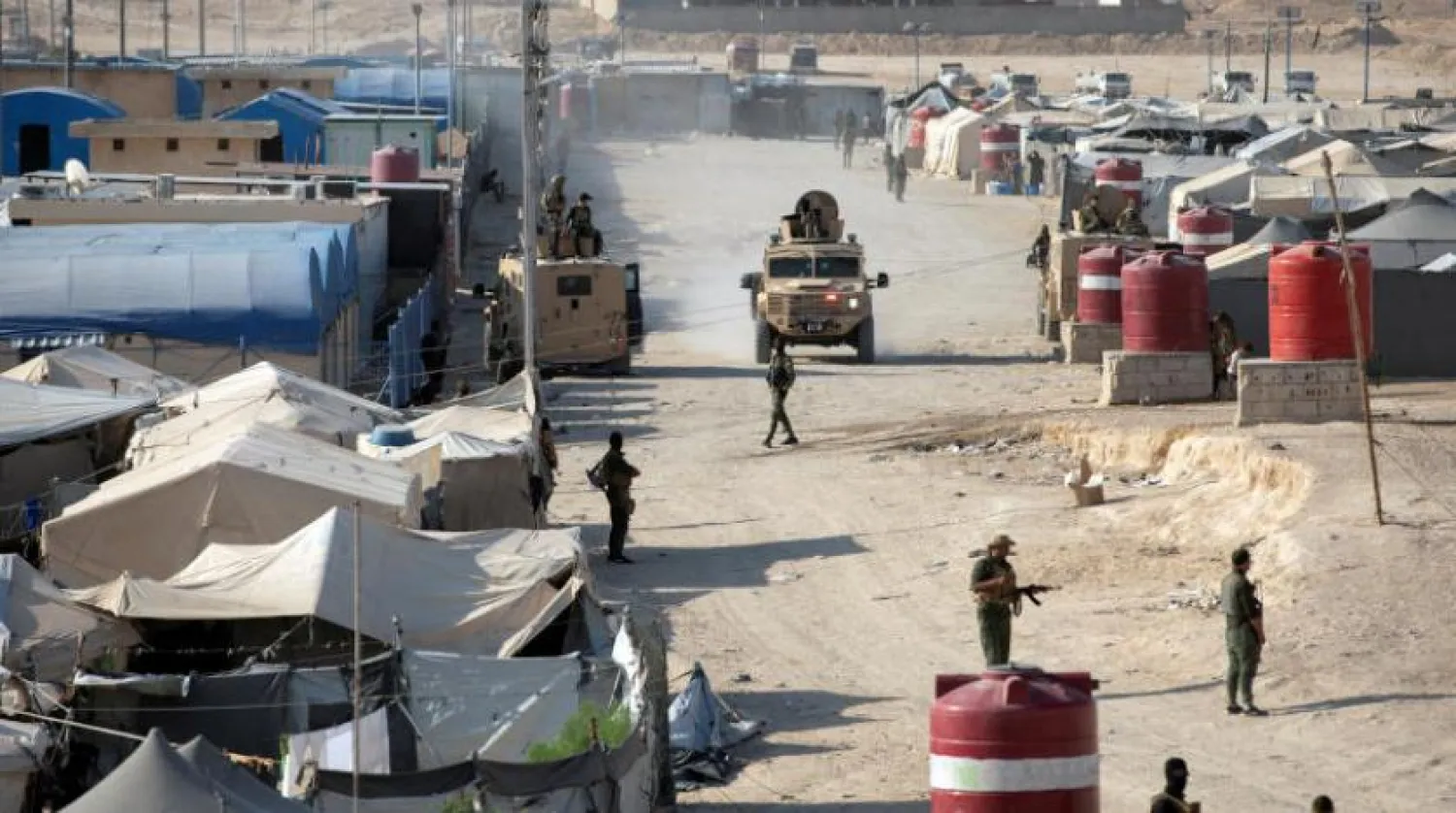
Kurdish fighters are seen at the entrance to Al-Hol camp in Syria. Reuters file phtoo
TT

Rights Court Condemns France over Syria Repatriation Refusals

Kurdish fighters are seen at the entrance to Al-Hol camp in Syria. Reuters file phtoo

The European Court of Human Rights condemned France Wednesday over its refusal to repatriate two women detained in Syria, where they had travelled with their partners to territory controlled by ISIS.

French authorities should promptly re-examine the request by the women's parents to let them return home, the court said. There had not been sufficient reviews to ensure against "arbitrariness" of the refusal, said the ruling.

But it did not issue a blanket ruling that France return all citizens held in Syria since the fall of the ISIS "caliphate," as sought by rights groups and Western allies including the United States.

"Neither domestic law nor international law required the state to act on behalf of its nationals and to repatriate them," said the court based in Strasbourg, eastern France.

It did however say that safety and healthcare conditions at Kurdish-run camps in northeast Syria, where they are being held, "must be considered incompatible with applicable standards under international humanitarian law".

As a result, the court said France's refusal should have been reviewed "by an independent body, separate from the executive authorities of the state" to ensure the decision was not arbitrary.

Ahead of a review, the court ordered the government to pay one set of parents 18,000 euros ($18,000) and the other 13,200 euros in damages and costs, AFP reported.

"The law has triumphed," said the father of one of the women, who gave only his first name, Albert, after the ruling.

"I hope that they are not going to spend another winter over there, my grandson is only three and a half years old and that's all he's ever known."

Human Rights Watch France director Benedicte Jeannerod described the ruling as a "damning assessment" of France's stance.

"France should take this judgment as a wakeup call and promptly repatriate all French children and their mothers still detained in the region, as well as other French nationals held there."

She added: "All other countries under the court's jurisdiction whose nationals are unlawfully detained in northeast Syria should do the same."

Repatriations of citizens who left to join ISIS in Syria and Iraq are hugely controversial in France. The country has seen a wave of militant attacks since 2015 that have killed more than 250 people.

Other European countries, such as Belgium and Germany, have recovered most of their citizens from the Syria camps. The French government has long refused however, saying repatriating radicalized ISIS family members would pose security risks.

Until last July, when 51 women and children were brought back from Syria, France had returned only a handful of women and children, including many orphans, on a "case by case" basis.

Earlier Wednesday, sources confirmed to AFP that one of the women was the widow of one of the attackers who stormed the Bataclan concert venue in Paris in November 2015.

She and the other women have been charged with associating with terrorists and imprisoned.

The French foreign ministry said it "took note" of the ruling and added it was ready to "consider" further repatriations of nationals "whenever conditions permitted".

The case before the ECHR was filed by two couples who had pleaded with the French government directly and via courts for the return of their daughters, as well as grandchildren born after their arrival in Syria.

Both women were among thousands of foreign nationals arrested and detained after the defeat of the ISIS "caliphate" by Western-backed Kurdish forces in 2019.

The parents said they were held at least initially at the Al-Hol camp in northeast Syria, where rights groups have denounced harrowing sanitary conditions, malnutrition and overcrowding.

The United Nations has also reported more than 100 murders at the camp in just 18 months.

Since the detainees' health and lives were in danger, the parents argued, France had an obligation to return its citizens home, as ensured by articles in the European Convention on Human Rights.

The court agreed, noting that the United Nations and other international bodies, as well as Syrian Kurdish forces themselves, have been urging European nations to repatriate citizens who left to join the militants.

On Monday, the head of the US armed forces' Central Command urged nations around the world to repatriate their citizens from Al-Hol, which holds some 56,000 people, mostly women and children.

Most are Syrians or Iraqis, but an estimated 10,000 are wives and children of ISIS fighters from other countries, many of whom are still thought to be highly radicalized.


Yemeni Govt Forces Expand Operations as Houthis Face Fighting on Multiple Fronts

Government forces press ahead with Operation Dawn of Yemen against the Houthis on multiple fronts. (Military media)
TT

Yemeni Govt Forces Expand Operations as Houthis Face Fighting on Multiple Fronts

Government forces press ahead with Operation Dawn of Yemen against the Houthis on multiple fronts. (Military media)

Yemeni government forces launched 874 strikes against Houthi positions across several governorates under Operation Dawn of Yemen, as ground fighting continued and troops repelled attacks and attempted advances by the militia.

The operations targeted Houthi positions, troop concentrations and reinforcements in Marib, Al-Jawf, Taiz, Hajjah and Dhale, the military said.

Armed forces spokesperson Colonel Majed Al-Nuzaili said the strikes included 29 airstrikes, 39 drone strikes, 62 rocket launcher strikes and 744 artillery strikes.

Preliminary battlefield reports showed about 190 Houthi commanders and fighters killed or wounded and roughly 130 military vehicles and pieces of equipment destroyed or damaged, he revealed.

In Al-Jawf, warplanes struck a Houthi tank. Other airstrikes hit Houthi positions and military vehicles near Jabal Han, west of Taiz, and Dar Al-Saynah in the south. The army released footage showing strikes on Houthi fighters and equipment in both provinces.

In Marib, artillery pounded Houthi positions, concentrations and vehicles on the southern front. Drones struck reinforcements and vehicles on the northern front, while other strikes targeted newly established positions and fortifications in the south.

Fighting also continued on northern fronts and southeast of Al-Hazm, the capital of Al-Jawf, where government forces repelled Houthi movements and attacks while striking firing positions, troop concentrations and military vehicles.

In Hajjah, drones targeted Houthi sniper positions and fighters in the Hiran sector as part of wider operations against the militia's positions and fortifications.

Fierce fighting displaces families in Lahj

Heavy fighting and intensified military movements gripped the Al-Mudaribah and Ras Al-Arah in western Lahj. The Southern Giants Brigades and National Shield Forces said they had repelled major Houthi attacks on the Al-Bukrah and Al-Ruwais fronts.

Military sources reported the destruction of Houthi military vehicles. The Giants Brigades released footage showing strikes on Houthi fighters and vehicles in Lahj.

In Al-Maqatirah district, northwest of Lahj, Houthi-affiliated media reported a series of airstrikes on areas under the group's control on Wednesday. Government forces said they had destroyed Houthi military vehicles on the same front as fighting spread across areas bordering southwestern Taiz.

The clashes have worsened humanitarian conditions and driven more families from their homes as fighting nears populated areas in Al-Mudaribah, Al-Maqatirah and around Tur Al-Baha.

Families from other frontline areas have begun fleeing toward Aden and safer locations, raising fears of further displacement if fighting spreads to more residential areas.

Clashes persist in Taiz and Dhale

Government forces and the Popular Resistance continued battling the Houthis across several fronts in Taiz, particularly Al-Shaqab and Al-Aqroud, with fighting entering its 61st consecutive day, military sources said.

Airstrikes hit Houthi positions near Jabal Han, west of Taiz, and Dar Al-Saynah as troops continued repelling attacks in the province's western countryside.

Colonel Muwaffaq Al-Sabai, of the Fifth Presidential Guard Brigade in Taiz, said the Houthis had failed to break through government defenses despite massing fighters and launching attacks over more than a month.

He attributed the failure to government forces and the Popular Resistance taking the offensive initiative and improving coordination.

In Dhale, government troops repelled a Houthi attack on the Hajar front in the province's northwest. Clashes at the foot of Jabal Al-Hasha forced the attackers to retreat after suffering casualties and equipment losses, a military source said.

Meanwhile, the Giants Brigades, National Shield Forces and National Resistance continued operations on the southern and southwestern fronts.

The military spokesperson reported the recapture of positions in some sectors, while fighting continued and troops confronted Houthi movements elsewhere.


Yemeni Minister to Asharq Al-Awsat: Houthis Lose Foreign Commanders as Military Setbacks Mount

Yemeni army fighters in the Houthi-besieged city of Taiz. (AFP)
TT

Yemeni Minister to Asharq Al-Awsat: Houthis Lose Foreign Commanders as Military Setbacks Mount

Yemeni army fighters in the Houthi-besieged city of Taiz. (AFP)

The Houthis have lost numerous foreign commanders involved in directing military operations and developing offensive capabilities, a senior Yemeni official said, as the group faces mounting battlefield losses and internal divisions.

Walid al-Qudaimi, Yemen's minister of state, told Asharq Al-Awsat that airstrikes and battlefield operations had killed key foreign commanders fighting alongside the Houthis, as well as senior Houthi figures whose deaths the group has yet to disclose.

He said airstrikes and fighting across several fronts had weakened the militia's military capabilities, inflicting heavy losses in personnel, leadership and equipment.

Foreign commanders involved in directing operations and launching missile and drone attacks on government-held areas and Saudi Arabia were among those hit, he added.

Despite efforts to develop weapons and military technology, the Houthis were facing mounting setbacks and internal disintegration, al-Qudaimi said.

He said tribal leaders, sheikhs and ordinary Yemenis were increasingly recognizing the militia's agenda and refusing to send their sons into battle amid heavy casualties and growing numbers of missing fighters whose fate remained undisclosed.

Al-Qudaimi said Yemeni forces were fighting under a unified command through the joint forces, adding that Operation Dawn of Yemen would continue with Saudi support and under the direct supervision of the chairman of Yemen's Presidential Leadership Council until its objectives were met.

He said Yemenis increasingly understood the Houthis' ties to Iran and their role as one of Tehran's regional instruments, expressing his belief that large segments of the population were awaiting the group's removal and the restoration of state institutions.

The conflict extended beyond the Houthis because of the military and logistical support they received from foreign parties, al-Qudaimi said.

He stressed the importance of Yemeni diplomatic efforts to confront countries facilitating Houthi activities or providing assistance, saying such support violated diplomatic and political relations and harmed those countries' ties with Yemen.

His remarks came as Yemeni forces pressed ahead with military operations, intensifying airstrikes, drone attacks and artillery fire against Houthi positions, movements and reinforcements.

Government forces also made fresh gains in Al-Jawf province, while fighting continued on several fronts in Taiz, Dhale and Marib.

Turning to Taiz, al-Qudaimi called the city "an important key to victory over the Houthi militia," saying its residents' resistance reflected Yemenis' determination to confront the group.

He said repeated Houthi attempts to defeat the city militarily had failed despite the deployment of extensive manpower and military resources following the group's seizure of coastal areas.

Al-Qudaimi expressed hope that the Yemeni army would launch further operations to break the siege of Taiz and restore freedom of movement and access to besieged areas.

He also accused the Houthis of hypocrisy, saying they proclaimed solidarity with Gaza and the Palestinian people while besieging fellow Yemenis in Taiz and denying them basic rights to movement and daily life.


More Than One Million in Lebanon Face Acute Food Insecurity, UN Says

 A woman holds her daughter's hand as they walk through a neighborhood where homes were destroyed in Israeli strikes near Tebnin Citadel in southern Lebanon, October 3, 2026. (Reuters)
A woman holds her daughter's hand as they walk through a neighborhood where homes were destroyed in Israeli strikes near Tebnin Citadel in southern Lebanon, October 3, 2026. (Reuters)
TT

More Than One Million in Lebanon Face Acute Food Insecurity, UN Says

 A woman holds her daughter's hand as they walk through a neighborhood where homes were destroyed in Israeli strikes near Tebnin Citadel in southern Lebanon, October 3, 2026. (Reuters)
A woman holds her daughter's hand as they walk through a neighborhood where homes were destroyed in Israeli strikes near Tebnin Citadel in southern Lebanon, October 3, 2026. (Reuters)

More than one million people in Lebanon face acute food insecurity, the United Nations warned on Wednesday, following years of war and economic crisis.

Lebanon has endured two successive wars with neighboring Israel since 2023 and remains mired in an unprecedented economic collapse triggered seven years ago.

Nearly a quarter of the population face crisis levels of acute food insecurity or worse, said a joint statement by the UN's Food and Agriculture Organization, the World Food Program and the Lebanese agriculture ministry.

They called for "urgent action" to alleviate the situation.

The number is expected to rise to 1.15 million by the middle of next year, they added.

"Employment opportunities remain limited, savings have been depleted and debt remains high, while the cost of food, fuel and other essentials continues to strain household budgets," the UN bodies said.

The UN defines such levels of food insecurity as households facing malnutrition, or only being able to meet minimum needs through emergency measures such as selling assets.

Of most concern are conditions in conflict-affected areas of south Lebanon, as well as in impoverished regions in the north and east, they said.

Lebanon's authorities estimate that the cost of two wars between Israel and Lebanese group Hezbollah since October 2023 amounts to around $27 billion.

The last war, launched in March in support of Hezbollah's patron Iran, displaced more than one million people in Lebanon. That number has fallen to around 300,000 since violence subsided in June.

The fighting broke out as Lebanon struggled to recover from its worst ever economic crisis, which began in 2019.

Beirut has been seeking a bailout from the International Monetary Fund but has yet to implement reforms demanded by the institution to release the aid.