


Oil Prices Edge Down, Recession Fears Back in Focus

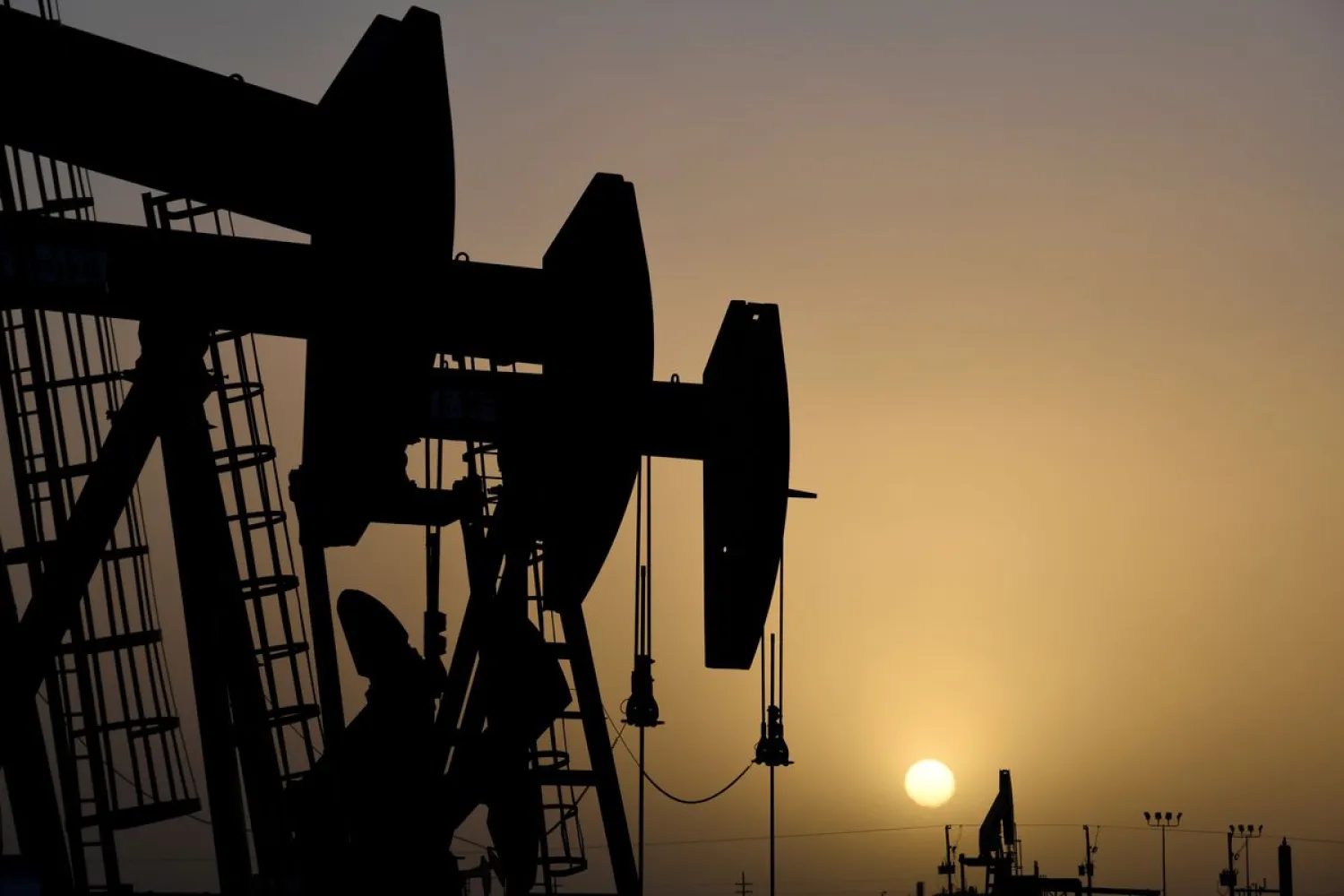
Pump jacks operate at sunset in Midland, Texas, US, February 11, 2019. REUTERS/Nick Oxford/File Photo
TT

Oil Prices Edge Down, Recession Fears Back in Focus

Pump jacks operate at sunset in Midland, Texas, US, February 11, 2019. REUTERS/Nick Oxford/File Photo

Oil prices fell on Friday amid recession fears and a stronger US dollar, though losses were capped by supply concerns after Moscow's new mobilization campaign in its war with Ukraine and an apparent deadlock in talks on reviving the Iran nuclear deal.

Brent crude futures fell 41 cents, or 0.5%, to $90.05 per barrel at 0325 GMT, while US West Texas Intermediate (WTI) crude futures were down 30 cents, or 0.4%, to $83.19, Reuters reported.

Front-month Brent and WTI contracts were down 1.5% and 2.3%, respectively, for the week so far.

"In the wake of accelerating rate hikes by the major central banks, the risk of a global economic recession overshadows supply issues in the oil markets, despite the recent escalation in the Russia-Ukraine war," said CMC Markets analyst Tina Teng.

"However, a sharp fall in the US SPR and drawdown in inventories may still keep oil prices supported at some point as there is still an inevitable undersupply issues in the physical markets, while Iran's nuclear deal is in stalemate," she said, referring to crude oil in the US Strategic Petroleum Reserve which dropped last week to its lowest since 1984.

Following the US Federal Reserve's hefty 75 basis point increase on Wednesday for a third time, central banks around the world also followed suit in hiking interest rates, raising the risk of economic slowdowns.

"Crude prices remain volatile as energy traders grapple with a deteriorating demand outlook that is still vulnerable to shortages," said Edward Moya, senior market analysts at OANDA, in a note.

"Supply risks and tight market conditions should give oil some support above the $80 level, but a quicker tumble to a global recession will keep prices heavy."

A senior US State Department official said that efforts to revive the 2015 Iran nuclear deal have stalled due to Tehran's insistence on the closure of the UN nuclear watchdog's investigations, easing expectations of a resurgence of Iranian crude oil.



US Business Lobbies Say Diesel Export Ban Would Backfire

US Energy Secretary Chris Wright holds a press conference on the sidelines of the International Atomic Energy Agency (IAEA) General Conference in Vienna, Austria, September 14, 2026. (Reuters)
TT

US Business Lobbies Say Diesel Export Ban Would Backfire

US Energy Secretary Chris Wright holds a press conference on the sidelines of the International Atomic Energy Agency (IAEA) General Conference in Vienna, Austria, September 14, 2026. (Reuters)

Trade associations representing large US companies and energy suppliers urged President Donald Trump to resist calls for a diesel fuel export ban, arguing the move would backfire.

"Export bans would lead to less fuel production, tighter supplies, and rising costs for American families, farmers, and truckers," said the September 23 letter, which was signed by the US Business Roundtable, the American Petroleum Institute and more than two dozen other trade groups.

"While we understand the urge for a silver bullet, there are no easy answers."

High fuel prices have emerged as a major drag in the upcoming midterm elections for Trump's Republican Party. Candidates from rural regions in Iowa and other states have urged an export ban on diesel, which is also used in trucks and other hauling vehicles.

While Trump administration officials such as Energy Secretary Chris Wright have rejected a ban, Trump himself on Tuesday signaled support for the move.

"I've called for that too. I've said let's not send out the diesel," Trump said on Tuesday.

Diesel prices in the United States have hit records due to the ongoing US-Iran war. Diesel prices currently average $6.51 per gallon, up 76 percent from the year-ago level.

The business groups argue exports allow "US refineries to balance their systems and maximize production," according to the letter. "An export ban would require refineries to throttle utilization to reduce diesel production to equal domestic demand. Falling utilization would result in less gasoline and jet fuel production and higher prices for those products as well."

Andy Lipow, of Lipow Oil Associates, a Houston consultancy, said there is limited storage capacity in the US Gulf Coast, home to much of the nation's refining capacity.

"If you were to ban diesel exports, the refiners have two choices. One is find a place to store it, or two is not to make it," said Lipow.


Iraq Exports 2.6 million bpd from Southern Ports

An oil field in the Dibs area on the outskirts of Kirkuk, Iraq (Reuters)
TT

Iraq Exports 2.6 million bpd from Southern Ports

An oil field in the Dibs area on the outskirts of Kirkuk, Iraq (Reuters)

Iraq is exporting around 2.6 million barrels of oil per day from its southern ports so far in September and producing more than 3 million bpd from its southern oilfields, Bassem Abdul Karim, head of Iraq's Basra Oil Company, said on Thursday.

Abdul Karim, speaking at an energy conference in Basra, added that Iraq is transporting around 250,000 bpd of Basra crude to Kirkuk for exports via Ceyhan in Türkiye.

On September 16, Iraq launched a pilot operation to transport crude oil by road from its southern oilfields to a Kirkuk storage facility in an effort to boost supplies to the northern export system and potentially increase shipments through Türkiye's Ceyhan port.

The initiative forms part of broader Iraqi efforts to increase flows through the northern export route after the US-Israeli war on Iran disrupted Iraq's shipments through the Strait of Hormuz, its main export route.


Oil Gains on Little Sign of Progress in US-Iran Talks

Gas prices at a Shell gas station above $6 a gallon for regular gasoline and $8 a gallon for diesel are displayed across from a US flag outside of the Marathon Petroleum Corp. (Photo by Patrick T. Fallon / AFP)
TT

Oil Gains on Little Sign of Progress in US-Iran Talks

Gas prices at a Shell gas station above $6 a gallon for regular gasoline and $8 a gallon for diesel are displayed across from a US flag outside of the Marathon Petroleum Corp. (Photo by Patrick T. Fallon / AFP)

Oil prices rose more than 1% on Thursday as diplomatic talks between the US and Iran showed little sign of progress, while investors focused on uncertainty about a potential US ban on diesel exports.

Brent crude futures were up $1.63, or 1.58%, at $104.71 a barrel at 1200 GMT, while West Texas Intermediate futures were up $1.34, or 1.49%, at $93.53 a barrel.

Brent rose to as high as $106.50 earlier in the day, following reports suggesting Iran gave the US one week to meet its publicly stated demands, such as lifting the US naval blockade, Reuters reported.

Iran and the US remain divided over how to end their conflict, but diplomacy must continue, a senior Iranian official told Reuters on Wednesday, after Iran's president told the UN General Assembly that Tehran would never surrender to US pressure.

The official said Tehran was reviewing Washington's response to its peace proposals, which prioritise lifting the US naval blockade on Iranian ports and reopening the Strait of Hormuz.

European diesel futures came off all-time highs on Thursday amid uncertainty about a potential US ban on diesel exports. A White House official on Wednesday denied a report that said the US is preparing a 90-day ban of diesel exports.

A European Commission spokesperson said on Thursday that the EU was concerned about the reported US plans, as such a move would risk a negative impact on both sides.

Analysts and market watchers have warned a US diesel export ban would do little to ease high energy prices and could worsen global supplies and further disrupt economies.

The physical market for oil is nowhere near a fully normalised situation, said Priyanka Sachdeva, head of market insights at Phillip Nova.

"Brent retains a larger geopolitical and sea-route premium because international crude is more directly exposed to Middle East and Hormuz disruption, while WTI benefits more from relatively insulated US supply," Sachdeva added.

US distillate stockpiles, including diesel and heating oil, fell 428,000 barrels to 107.4 million barrels last week, Energy Information Administration data showed.

Meanwhile, US crude inventories rose 3 million barrels to 426.4 million barrels last week, though analysts polled by Reuters had expected a 641,000-barrel draw.