


‘A Time Bomb’: Anger Rising in a Hot Spot of Iran Protests

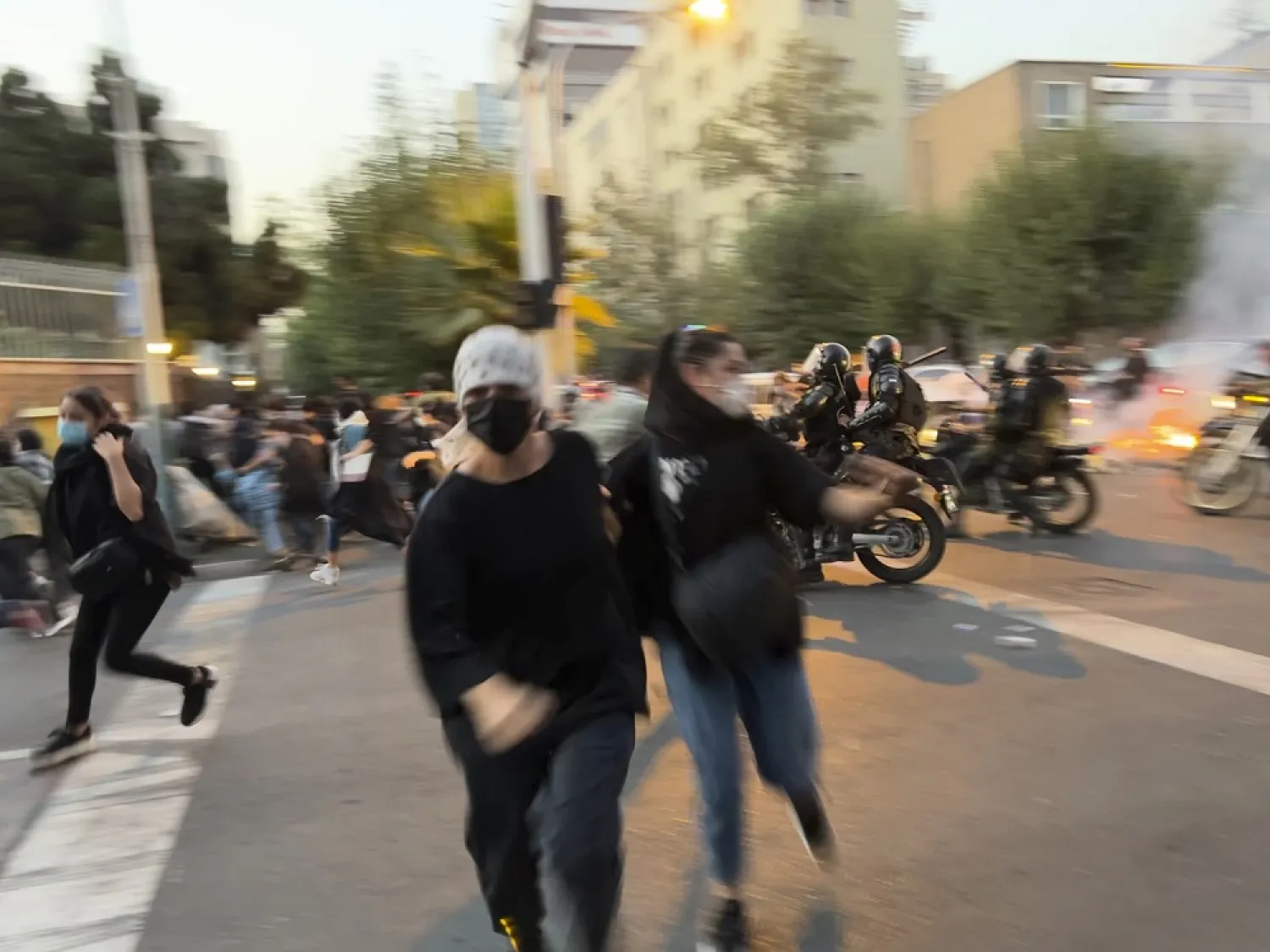
In this Monday, Sept. 19, 2022, photo taken by an individual not employed by the Associated Press and obtained by the AP outside Iran, women run away from anti-riot police during a protest of the death of a young woman who had been detained for violating the country's conservative dress code, in downtown Tehran, Iran. (AP)
TT

‘A Time Bomb’: Anger Rising in a Hot Spot of Iran Protests

In this Monday, Sept. 19, 2022, photo taken by an individual not employed by the Associated Press and obtained by the AP outside Iran, women run away from anti-riot police during a protest of the death of a young woman who had been detained for violating the country's conservative dress code, in downtown Tehran, Iran. (AP)

Growing up under a repressive system, Sharo, a 35-year-old university graduate, never thought she would hear words of open rebellion spoken out loud. Now she herself chants slogans like "Death to the Dictator!" with a fury she didn't know she had, as she joins protests calling for toppling the country's rulers.

Sharo said that after three weeks of protests, triggered by the death of a young woman in the custody of the feared morality police, anger at the authorities is only rising, despite a bloody crackdown that has left dozens dead and hundreds in detention.

"The situation here is tense and volatile," she said, referring to the city of Sanandaj in the majority Kurdish home district of the same name in northwestern Iran, one of the hot spots of the protests.

"We are just waiting for something to happen, like a time-bomb," she said, speaking to The Associated Press via Telegram messenger service.

The anti-government protests in Sanandaj, 300 miles (500 kilometers) from the capital, are a microcosm of the leaderless protests that have roiled Iran.

Led largely by women and youth, they have evolved from spontaneous mass gatherings in central areas to scattered demonstrations in residential areas, schools and universities as activists try to evade an increasingly brutal crackdown.

Tensions rose again Saturday in Sanandaj after rights monitors said two protesters were shot dead and several were wounded, following a resumption of demonstrations. Residents said there has been a heavy security presence in the city, with constant patrols and security personnel stationed on major streets.

The Associated Press spoke to six female activists in Sanandaj who said suppression tactics, including beatings, arrests, the use of live ammunition and internet disruptions make it difficult at times to keep the momentum going. Yet protests persist, along with other expressions of civil disobedience, such as commercial strikes and drivers honking horns at security forces.

The activists in the city spoke on the condition their full names be withheld fearing reprisals by Iranian authorities. Their accounts were corroborated by three human rights monitors.

The burial

Three weeks ago, the news of the death of 22-year-old Mahsa Amini in the custody of the morality police in Tehran spread rapidly across her home province of Kurdistan, of which Sanandaj is the capital. The response was swift in the impoverished and historically marginalized area.

As the burial was underway in Amini's town of Saqqez on Sept. 17, protesters were already filling Sanandaj’s main thoroughfare, activists said.

People of all ages were present and began chanting slogans that would be repeated in cities across Iran: "Woman. Life. Freedom."

The Amini family had been under pressure from the government to bury Mahsa quickly before a critical mass of protesters formed, said Afsanah, a 38-year-old clothing designer from Saqqez. She was at the burial that day and followed the crowds from the cemetery to the city square.

Rozan, a 32-year-old housewife, didn’t know Amini personally. But when she heard the young woman had died in the custody of the morality police in Tehran and had been arrested for violating the country’s hijab rules, she felt compelled to take to the street that day.

"The same thing happened to me," she said. In 2013, like Amini, she had ventured to the capital with a friend when she was apprehended by the morality police because her abaya, or loose robe that is part of the mandatory dress code, was too short. She was taken to the same facility where Amini later died, and fingerprinted and made to sign a declaration of guilt.

"It could have been me," she said. In the years since then Rozan, a former nurse, was fired from the local government health department for being too vocal about her views about women’s rights.

After the funeral, she saw an elderly woman take a step forward and in one swift gesture, remove her headscarf. "I felt inspired to do the same," she said.

Suppression

In the first three days after the burial, protesters were plucked from the demonstrations in arrest sweeps in Sanandaj. By the end of the week, arrests targeted known activists and protest organizers.

Dunya, a lawyer, said she was one among a small group of women’s rights activists who helped organize protests. They also asked shopkeepers to respect a call for a commercial strike along the city’s main streets.

"Almost all the women in our group are in jail now," she said.

Internet blackouts made it difficult for protesters to communicate with one another across cities and with the outside world.

"We would wake up in the morning and have no idea what was happening," said Sharo, the university graduate. The internet would return intermittently, often late at night or during working hours, but swiftly cut off in the late afternoon, the time many would gather to protest.

The heavy security presence also prevented mass gatherings.

"There are patrols in almost every street, and they break up groups, even if its just two or three people walking on the street," said Sharo.

During demonstrations security forces fired pellet guns and tear gas at the crowd causing many to run. Security personnel on motorcycles also drove into crowds in an effort to disperse them.

All activists interviewed said they either witnessed or heard live ammunition. Iranian authorities have so far denied this, blaming separatist groups on occasions when the use of live fire was verified. The two protesters killed Saturday in Sanandaj were killed by live fire, according to the France-based Kurdistan Human Rights network.

Protesters say fear is a close companion. The wounded were often reluctant to use ambulances or go to hospitals, worried they might get arrested. Activists also suspected government informants were trying to blend in with the crowds.

But acts of resistance have continued.

"I assure you the protests are not over," said Sharo. "The people are angry, they are talking back to the police in ways I have never seen."

Disobedience

The anger runs deep. In Sanandaj the confluence of three factors has rendered the city a ripe ground for protest activity — a history of Kurdish resistance, rising poverty and a long history of women’s rights activism.

Yet the protests are not defined along ethnic or regional lines even though they were sparked in a predominantly Kurdish area, said Tara Sepehri Fars, a researcher for Human Rights Watch. "It’s been very unique in that sense," she said.

There have been waves of protest in Iran in recent years, the largest in 2009 bringing large crowds into the streets after what protesters felt was a stolen election. But the continued defiance and demands for regime change during the current wave seem to pose the most serious challenge in years to the republic.

Like most of Iran, Sanandaj has suffered as US sanctions and the coronavirus pandemic devastated the economy and spurred inflation. Far from the capital, in the fringes of the country, its majority Kurdish residents are eyed with suspicion by the regime.

By the third week, with the opening of universities and schools, students began holding small rallies and joined the movement.

Videos circulated on social media showing students jeering school masters, school girls removing their headscarves on the street and chanting: "One by one they will kill us, if we don’t stand together."

One university student said they were planning on boycotting classes altogether.

Afsanah, the clothing designer, said that she likes wearing the headscarf. "But I am protesting because it was never my choice."

Her parents, fearing for her safety, tried to persuade her to stay home. But she disobeyed them, pretending to go to work in the morning only to search for protest gatherings around the city.

"I am angry, and I am without fear — we just need this feeling to overflow on the street," she said.



German FM, in Call with Iranian Counterpart, Demands Hormuz Reopening

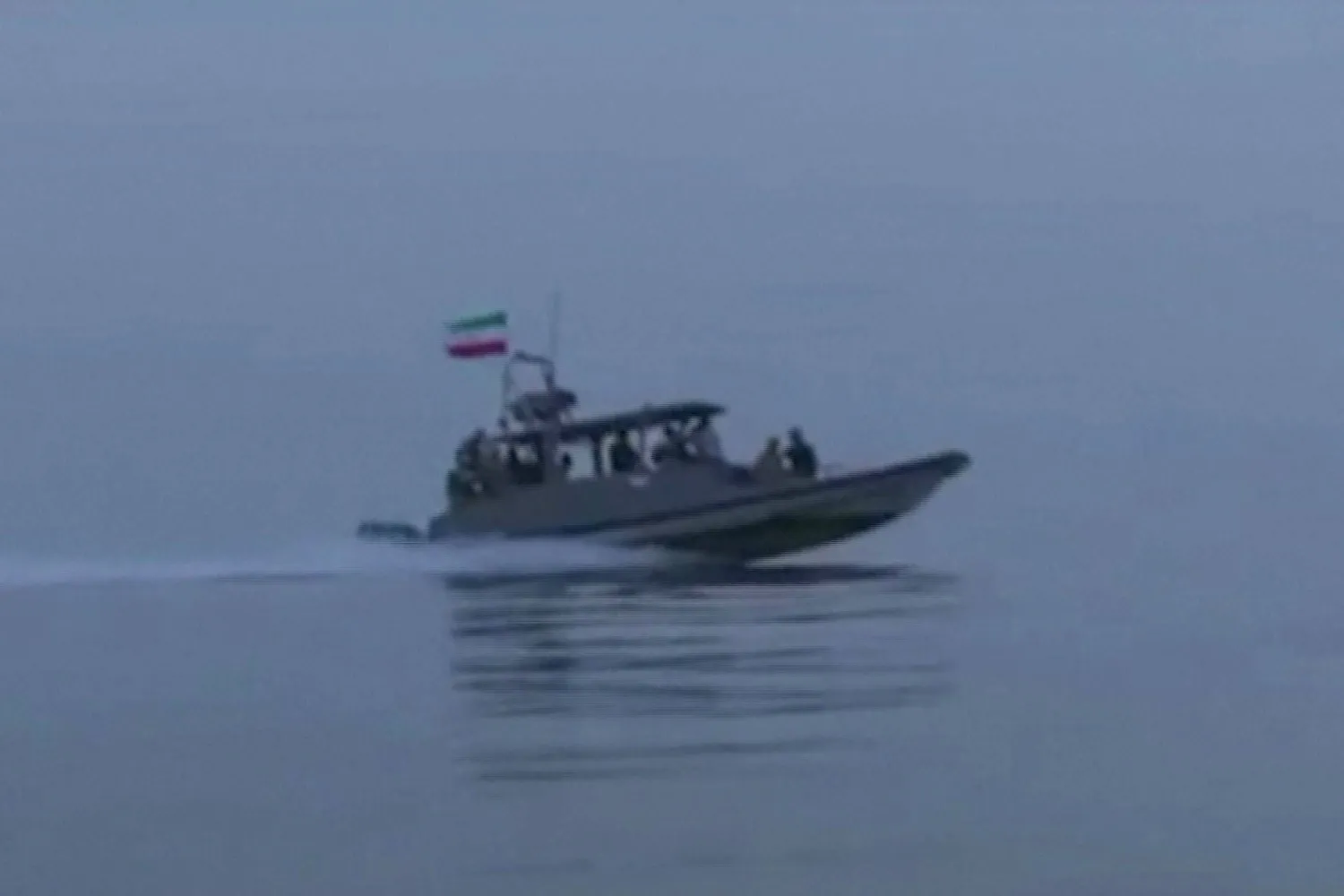
An IRGC boat participates in an operation to intercept vessels attempting to cross the Strait of Hormuz on April 23 (AFP)
TT

German FM, in Call with Iranian Counterpart, Demands Hormuz Reopening

An IRGC boat participates in an operation to intercept vessels attempting to cross the Strait of Hormuz on April 23 (AFP)

German Foreign Minister Johann Wadephul said he on Sunday demanded that Iran reopen the Strait of Hormuz and give up its nuclear weapons programme in a telephone call with Iranian counterpart Abbas Araghchi, AFP reported.

"I emphasized that Germany supports a negotiated solution," Wadephul said in a post on X about the call.

"As a close US ally, we share the same goal: Iran must completely and verifiably renounce nuclear weapons and immediately open the Strait of Hormuz, as also demanded by" US Secretary of State Marco Rubio.


Rubio to Visit Vatican, Rome after Trump Row

Secretary of State Marco Rubio, speaks during a Memorandum of Understanding signing ceremony with EU Commissioner for Trade and Economic Security Maros Sefcovic, at the State Department, Friday, April 24, 2026, in Washington. (AP Photo/Rod Lamkey, Jr.)
TT

Rubio to Visit Vatican, Rome after Trump Row

Secretary of State Marco Rubio, speaks during a Memorandum of Understanding signing ceremony with EU Commissioner for Trade and Economic Security Maros Sefcovic, at the State Department, Friday, April 24, 2026, in Washington. (AP Photo/Rod Lamkey, Jr.)

US Secretary of State Marco Rubio will visit Rome and the Vatican this week, an Italian government source said Sunday, weeks after President Donald Trump's stinging criticism of Pope Leo XIV.

Italian media reported that Rubio would meet the US pontiff himself on Thursday.

The government source told AFP that Rubio would meet Vatican Secretary of State Pietro Parolin and Italian Foreign Minister Antonio Tajani.

The meetings come just weeks after Trump's extraordinary criticism of Pope Leo over the Catholic leader's anti-war rhetoric.

The source said Rubio had asked for a meeting with Italian Prime Minister Giorgia Meloni, one of Trump's closest European allies, whom he turned on after she defended the pope.

Media reports said he was also due to meet Defense Minister Guido Crosetto, amid a deepening rift in transatlantic ties over the Middle East war.

Leo, 70, will on Friday mark one year as leader of the world's 1.4 billion Catholics, after being elected by cardinals on May 8, 2025, following the death of Pope Francis.

As the first ever pope from the United States, his words have arguably carried more weight in Washington than previous pontiffs -- and he has used them, criticising notably the Trump administration's crackdown on immigration.

But it was the pontiff's increasing anti-war rhetoric, particularly following the US-Israeli attacks on Iran, that triggered Trump's ire.

Leo declared Trump's threat to destroy Iran "unacceptable" and urged Americans to demand that US lawmakers "work for peace".

The US president slammed the pontiff in a social media post as "WEAK on Crime, and terrible for Foreign Policy".

Trump also said he was "not a big fan of Pope Leo" and that he does not "want a pope who thinks it's OK for Iran to have a nuclear weapon."

The pontiff responded by saying he had a "moral duty to speak out" against war -- and then sparked more headlines with a speech in Cameroon lambasting "tyrants" ransacking the world.

However, he insisted afterwards that the remarks were written long before the row, and said he had not intended to start a new debate with the US president.

Christians across the world expressed their solidarity with the pope, and Meloni condemned Trump's remarks as "unacceptable" -- prompting the president to turn his fire on her.

"I'm shocked at her. I thought she had courage, but I was wrong," the US president said in an interview with Italian daily Corriere della Sera.

He accused Meloni -- a far-right leader who has sought to act as a bridge between diverging US and European views -- of failing to help the United States with NATO.

Trump has threatened to pull US troops from Italy, saying Rome "has not been of any help to us" in the Iran war.

He has made a similar threat towards Spain, while the Pentagon has announced it will withdraw 5,000 US troops from Germany.

As of December 31, 2025, there were 12,662 active-duty US troops in Italy and 3,814 in Spain. In Germany, there were 36,436.


Israel Court Extends Detention of Gaza Flotilla Activists

Brazilian activist Thiago Avila gestures upon his arrival at a court in Ashkelon on May 3, 2026. Photo by Ilia YEFIMOVICH / AFP)
TT

Israel Court Extends Detention of Gaza Flotilla Activists

Brazilian activist Thiago Avila gestures upon his arrival at a court in Ashkelon on May 3, 2026. Photo by Ilia YEFIMOVICH / AFP)

An Israeli court has extended by two days the detention of two activists arrested aboard a Gaza-bound flotilla that was intercepted by Israeli forces in international waters near Greece, their lawyer said on Sunday.

Saif Abu Keshek, a Spanish national, and Brazilian Thiago Avila were detained by Israeli authorities late on Wednesday and brought to Israel, while more than 100 other pro-Palestinian activists aboard the boats were taken to the Greek island of Crete.

A court spokesperson confirmed that their remand had been extended until May 5.

The governments of Spain and Brazil issued a joint statement on Friday calling their detention illegal.

The activists were part of a second Global Sumud flotilla, launched in an attempt to break Israel’s blockade of Gaza by delivering humanitarian assistance. The ships had set sail from Barcelona on April 12.

Israeli authorities requested a four-day extension of their arrest on suspicion of offences that include assisting the enemy during wartime, contact with a foreign agent, membership in and providing services to a terrorist organisation, and the transfer of property for a terrorist organization, said rights group Adalah, which is assisting in the activists' defense.

Hadeel Abu Salih, the men's attorney, said that the two deny the allegations. Their arrest was unlawful due to a lack of jurisdiction, she told Reuters at the Ashkelon Magistrate's Court after the hearing, adding that the mission was meant to provide aid to civilians in Gaza, not to any militant group.

Abu Salih said that Abu Keshek and Avila were subjected to violence en route to Israel and kept handcuffed and blindfolded until Thursday morning.

The Israeli military did not immediately respond to a request for comment.

Israel's foreign ministry had on Thursday called the flotilla organizers "professional provocateurs".

"Israel will not allow the breach of the lawful naval blockade on Gaza," it said.