Sudan Still Mired in Crisis a Year since Latest Coup

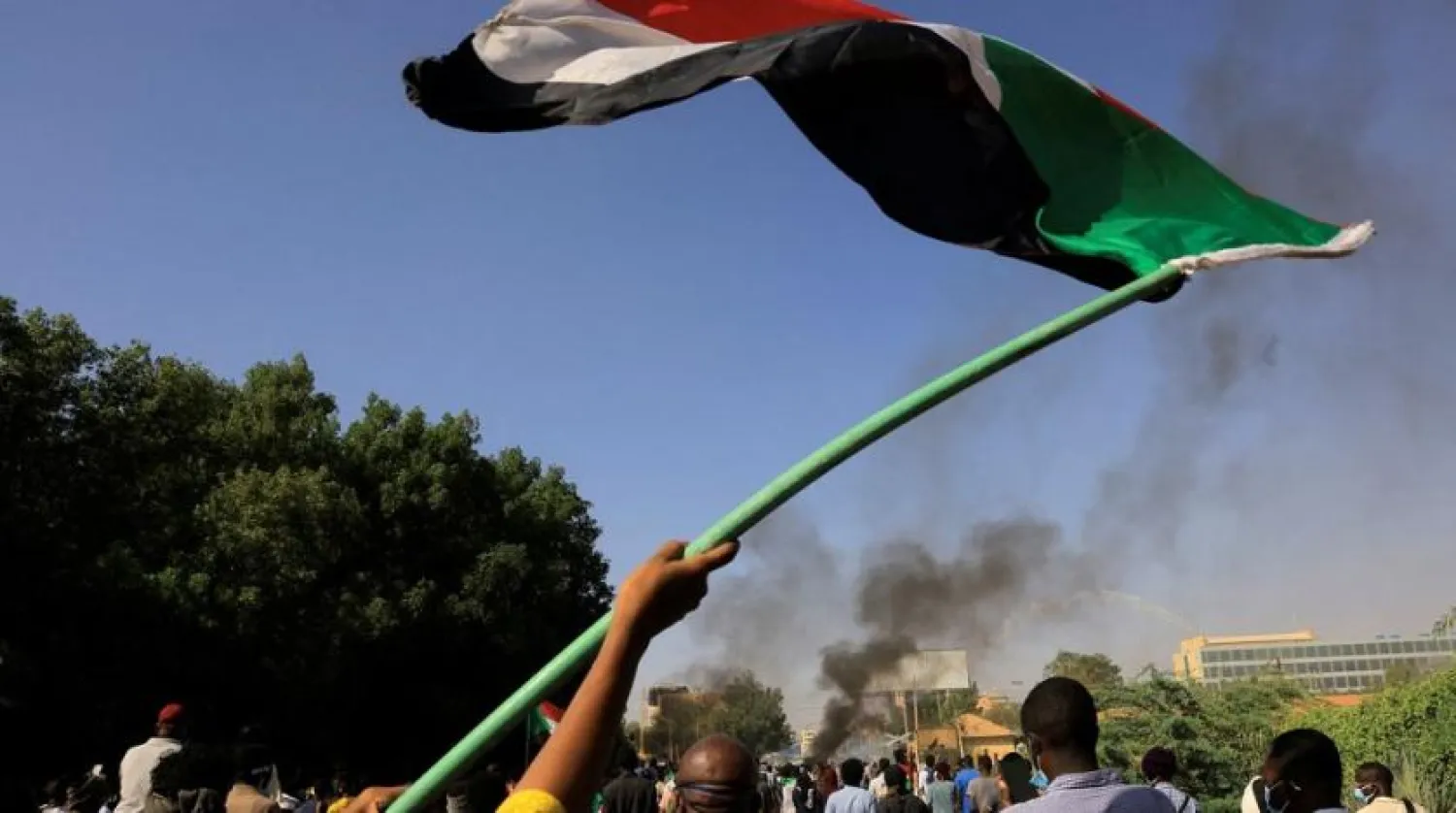
A Sudan flag is being flown as protesters march during a rally against the military rule, following last month's coup in Khartoum, Sudan, January 9, 2022. (Reuters)
TT

Sudan Still Mired in Crisis a Year since Latest Coup

A Sudan flag is being flown as protesters march during a rally against the military rule, following last month's coup in Khartoum, Sudan, January 9, 2022. (Reuters)

One year after a military coup derailed Sudan's transition, the country remains mired in deepening political and economic turmoil that observers say poses threats of even greater instability.

The northeast African nation's latest coup took place on October 25, 2021, when army chief Abdel Fattah al-Burhan removed a key civilian bloc, the Forces for Freedom and Change (FFC), from its role as the head of a transition to full civilian rule, AFP said.

The short-lived transition, which followed the ouster in 2019 of president Omar al-Bashir, was fragile and overshadowed by deepening political divisions and a chronic economic crisis inherited from Bashir's three decades in power.

"The primary target of the coup was achieved, which is to grant the military institution a veto power over politics in Sudan," said Sudanese analyst Magdi el-Gizouli of the Rift Valley Institute.

"But the move has greatly harmed the country."

Burhan initially billed his coup as a move "to rectify the course of the transition", but instead the situation worsened.

Near weekly anti-coup protests have been countered by force that has killed at least 117 people, pro-democracy medics say.

And a broader security breakdown nationwide has left hundreds dead in bouts of ethnic violence.

Western governments have suspended crucial aid, and economic hardship means millions face "acute food insecurity" and children forced to abandon schooling.

Government employees, traders and civil servants have all staged strikes against the worsening living conditions.

This month, Finance Minister Gibril Ibrahim called on the World Bank to resume aid urgently, saying Sudan's "poorest citizens" were being harmed.

Sudan still has no prime minister since the January resignation of Abdalla Hamdok, who was ousted in last October's coup before being reinstated weeks later.

No political initiative aimed at rescuing the country has made significant headway.

In July, Burhan pledged to step aside and make way for factions to agree on a civilian government, but civilian leaders dismissed this as a "ruse".

- It's all about power -
The military has since urged civilians to agree on a government, but divisions among civilian groups have deepened.

Some groups say talks should be held with the military, while others insist on "No partnership, no negotiation, no legitimacy".

Analyst el-Gizouli says that how to solve the country's problems is hardly ever raised.

"All the discussion in politics is around who gets to govern," he said.

"But no one says anything about what they will do in government or how they will solve the economic crisis."

In August, Burhan's deputy Mohamed Hamdan Dagalo admitted the 2021 coup had failed to foster change.

"There are real fears about the country's stability... it has become too fragile," said civilian Mohamed El-Fekki, a member of the FFC ousted in the coup.

"It's true that disputes among civilians have helped prolong the coup," he said. "But part of these disputes are manufactured by the military."

Meanwhile, many Sudanese fear a return to public life by Bashir-era loyalists.

Since the coup, authorities have dissolved a committee tasked with dismantling Bashir's regime which had seized their assets and funds.

Several committee members have been accused of misappropriating funds, allegations they consistently deny.

"Our work within the committee was making strides," said Fekki, who also formerly headed the committee.

"All our gains were lost due to this uncalculated risk (the coup)."

Progress in implementing a landmark but costly peace deal with insurgent groups has also stalled, according to Mohamed Zakaraia of the military-aligned Justice and Equality Movement, a former rebel group.

And Burhan's pledge of elections next year is now seen as far-fetched.

"There won't be elections before a deal is struck," said el-Gizouli.

- The army's 'veto power' -
One recent proposal for a transitional constitution developed by the Sudanese Bar Association has earned widespread attention.

It calls for full civilian rule, and has been publicly welcomed by both the FFC and powerful paramilitary commander Dagalo.

On Monday, FFC leader and ex-minister Khaled Omar Youssef said the military has agreed to the proposal "as the basis for a deal".

"It's a positive indicator," he told reporters. "But there remains a question mark around the transfer of power to civilians."

Pro-democracy activists insist there can be no transition unless the coup leaders are removed.

"The putschists in power have no intention to negotiate or partner with anyone," said Hossam Ali, a member of an informal group known as a "resistance committee" that organizes anti-coup protests.

"We have the patience and determination to bring it to an end," he said.

El-Gizouli believes that the military wants to continue "to oversee the political process".

"That was the main target of the coup," he said. "It has yet to surrender this veto power."

Ahead of planned protests marking the anniversary, the United Nations urged Sudan's authorities on Friday to ensure protests can take place "and to ensure that security forces refrain from the use of force".

"People's expression of longstanding grievances must be facilitated rather than suppressed," UN Human Rights Office spokesperson Ravina Shamdasani said.


US Asks Iraq to Shut Most Iran Border Crossings, Iraqi Foreign Minister Says

Iraqi Foreign Minister Fuad Hussein speaks as he attends a joint press conference with Syrian Foreign Minister Faisal Mekdad (not pictured), in Baghdad, Iraq June 4, 2023. (Reuters)
TT

US Asks Iraq to Shut Most Iran Border Crossings, Iraqi Foreign Minister Says

Iraqi Foreign Minister Fuad Hussein speaks as he attends a joint press conference with Syrian Foreign Minister Faisal Mekdad (not pictured), in Baghdad, Iraq June 4, 2023. (Reuters)

The US Treasury has asked Iraq to close all border crossings with Iran except for two as part of Washington's policy of ‌increasing economic ‌pressure on Tehran, Iraqi ‌Foreign ⁠Minister Fuad Hussein ⁠said in an interview with Al Jazeera.

One of the exceptions is in the Kurdistan region.

"There ⁠are many official ‌and ‌unofficial border crossings with Iran, ‌and closing all ‌of them would be difficult and would affect our economy. The Americans ‌are still demanding the closure of the crossings, ⁠and ⁠we are currently in discussions with them," Hussein said.

Last month, Iraq closed the busy Sheeb border crossing with Iran to review security and install detection equipment to stop smuggling.


Yemen Army Makes New Gains on Battlefronts

A Yemeni soldier in battle in Taiz. (AFP)
TT

Yemen Army Makes New Gains on Battlefronts

A Yemeni soldier in battle in Taiz. (AFP)

The Yemeni arena has witnessed a coordinated military escalation across multiple fronts over the past few hours, stretching from the southwestern governorates of Lahj and Taiz to Marib and Al-Jawf in the north.

The flare-up coincided with a wave of Houthi missile and drone strikes targeting Saudi Arabia, including the capital, Riyadh, alongside the Eastern and Southern Regions, as ongoing Yemeni government military operations point toward a broadening confrontation.

Yemeni military sources said that the air force executed a precision airstrike targeting a meeting of prominent Houthi field commanders in the Al-Maqatirah district of northern Lahj. The strike was launched after intelligence assets tracked the commanders' movements and pinpointed the meeting location.

The final toll of human casualties resulting from the strike, as well as the identities of the commanders present at the targeted site, remain unclear.

The strike took place amidst escalating military operations across the Lahj fronts, particularly in areas intersecting the Al-Maqatirah, Al-Mudharabah, and Tur Al-Baha districts.

Over recent days, these zones have witnessed intense clashes and retaliatory attacks, driven by Houthi attempts to advance toward strategic positions and supply routes linking the Lahj and Taiz governorates.

Government forces had previously announced the recapture of strategic positions on the Al-Mudharabah front following fierce clashes with the Houthis. The fighting involved intensive attacks launched by members of the militia against military sites before government forces managed to repel them and force the attackers to retreat.

On Saturday, the Yemeni army carried out 875 military operations against the Houthis, encompassing artillery strikes, ambushes, and targeted attacks on positions, gatherings, and reinforcements.

The campaign resulted in the neutralization of 130 Houthi members and the destruction or damage of some 50 military vehicles and equipment, including rocket launchers.

The attacks were executed across multiple fronts, focusing on the group's positions, reinforcements, and combat capabilities with the participation of ground units supported by air and artillery assets.

Meanwhile, government forces continued their maneuvers in Al-Jawf and other areas as part of ongoing confrontations to recapture military sites and secure liberated zones.

The escalation extended to the Marib fronts, where government forces announced the downing of a Houthi reconnaissance drone, coinciding with the thwarting of simultaneous ground attacks launched by the group against military positions in the Taiz and Lahj governorates.

Yemeni army artillery targeted Houthi military vehicles and barracks on the northern front of Marib following the downing of a drone on the Mas front. Military sources stated the operations are intended to curb the group's surveillance, reconnaissance, and troop-monitoring capabilities.


Al-Zaidi Intensifies Confrontation with Armed Factions

Iraqi PM Ali Al-Zaidi in Sadr City on Saturday. (INA)
TT

Al-Zaidi Intensifies Confrontation with Armed Factions

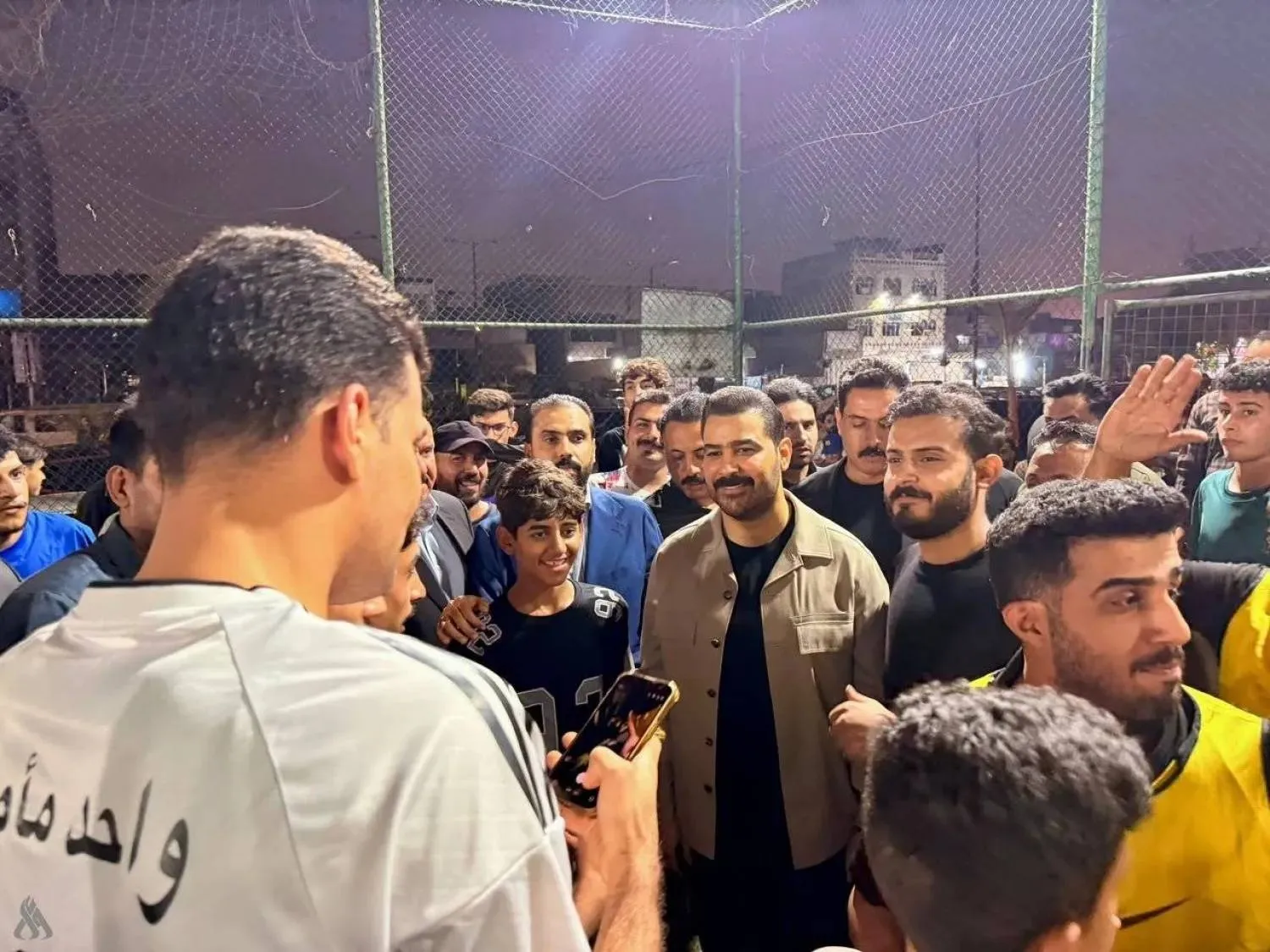
Iraqi PM Ali Al-Zaidi in Sadr City on Saturday. (INA)

The Iraqi Kataib Hezbollah, one of the armed factions that still refuses to disarm, responded to Prime Minister Ali Al-Zaidi's announcement regarding its possession of investments worth billions of dinars and millions of dollars.

The premier has launched what political observers in Baghdad view as an "open battle" against the armed factions, vowing that he "will not let them remain."

Over recent days, Al-Zaidi canceled multi-million dollar contracts across various locations, ranging from Baghdad Airport and the Ministry of Transport to Mosul Airport. Websites close to the government circulated the names of the armed factions that had control of those contracts.

Al-Zaidi dismissed statements issued against him and his associates, including his own brother, by Kataib Hezbollah, choosing Sadr City in eastern Baghdad to assert his firm stance.

Visiting the popular district late Saturday night, he met directly with citizens at a local restaurant and delivered a clear message to armed factions, signaling the start of an open and uncompromising confrontation.

In his most critical message directed at the factions, he declared: "I will absolutely not let weapon holders remain," adding, "If others allowed them to remain, it was because they were benefiting from them."

Al-Zaidi's response to the armed factions came a day after accusations were leveled against his brother by Kataib Hezbollah, which said in a statement: "We address our remarks directly and explicitly to Hassan Al-Zaidi, the media and security official in the Prime Minister's office. All your allegations regarding investments, companies, and the like - whether accurate or completely fabricated slanders - we consider entirely, along with all their dependencies, a 'gift' to you from the Brigades, to be added to your assets."

On Saturday, Al-Zaidi directed the cancellation of contracts for three companies at Mosul Airport due to their links to armed groups, ordering their referral to international firms.

It has become clear that the initiative to restrict weapons to state control is facing growing setbacks, following announcements by armed factions such as Kataib Hezbollah, Al-Nujaba, and Kataib Sayyid al-Shuhada of their refusal to surrender their arms.

This contrasts with other factions, most notably Asaib Ahl al-Haq and Kataib Imam Ali, which complied and secured ministries, agencies, and embassies in exchange for their stance.

The current truce remains tied to the potential military confrontation between the US and Iran, amid leaks that the Americans delivered a warning to Al-Zaidi regarding potential strikes on those factions should they move against neighboring countries or US bases in the region.

Meanwhile, political forces, particularly certain factions represented by the Coordination Framework, have kicked off efforts to prevent the confrontation between the government and the factions from widening because it has started to impact upon "one of the most critical areas that everyone was keen to avoid over the past years: economic committees and investments," said a well-informed Iraqi politician and lawmaker close to both sides.

Speaking on condition of anonymity to Asharq Al-Awsat, the Iraqi lawmaker and politician noted that "certain forces within the Coordination Framework, during talks between some of its factions and the armed groups, have begun leaning toward the factions' refusal to disarm under Al-Zaidi's vision.”

“This shift follows Al-Zaidi's understandings with the US and President Donald Trump, whom he met twice - first during a visit to Washington last July, and second in New York during the UN General Assembly meetings last September - as it became clear to some Framework leaders that the Al-Zaidi-Trump agreement might not stop at the weapon, but could extend to other factions within the Shiite political structure,” he added.