


UN Satellite Analysis Tracks Ukraine Cultural Damage

So far in the war, none of the seven world heritage sites have been damaged Fabrice COFFRINI AFP
TT

UN Satellite Analysis Tracks Ukraine Cultural Damage

So far in the war, none of the seven world heritage sites have been damaged Fabrice COFFRINI AFP

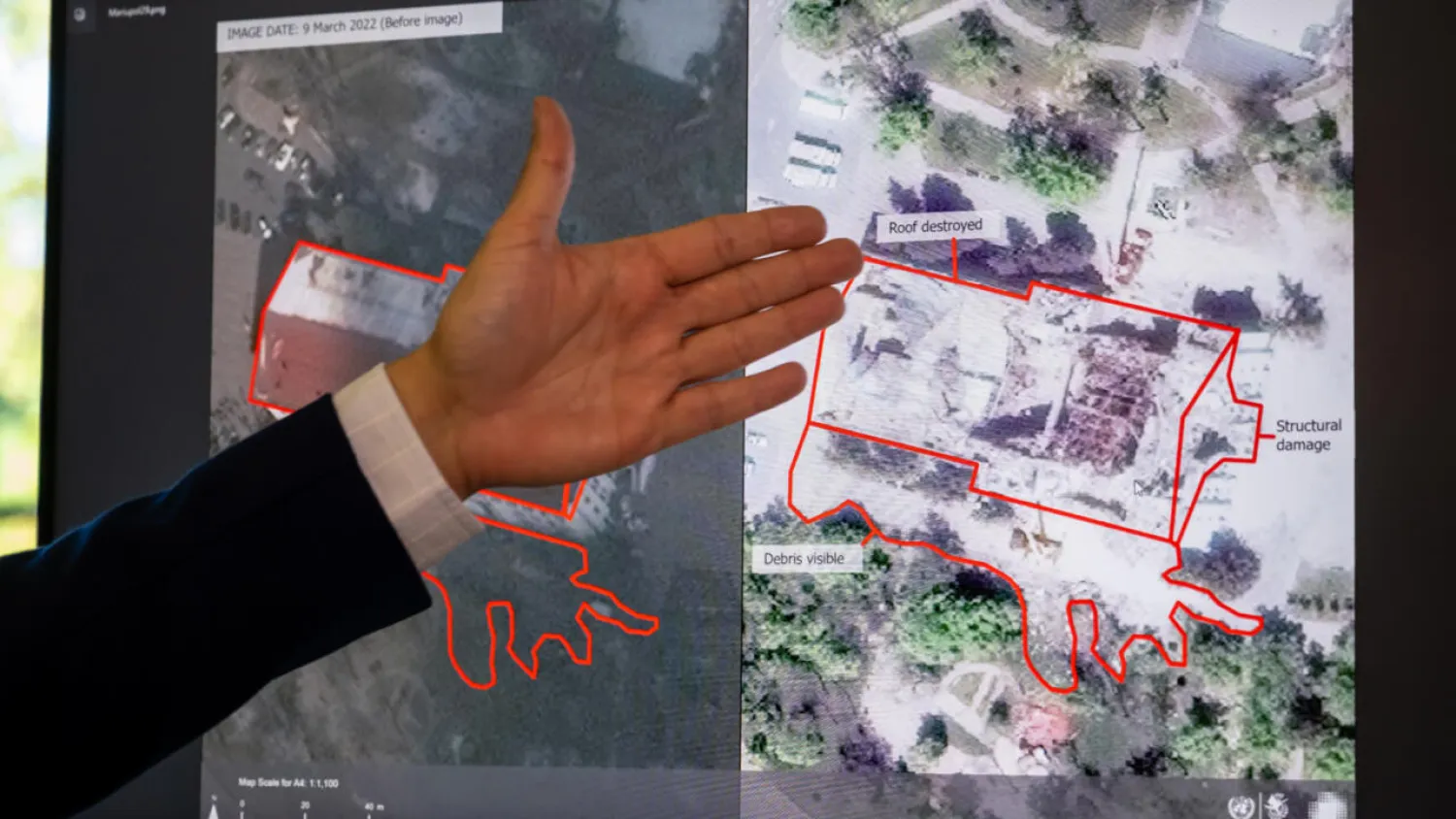
The United Nations is using before-and-after satellite imagery to monitor the cultural destruction inflicted by Russia's war in Ukraine, announcing Wednesday it will launch its tracking platform publicly within weeks.

The UN's culture agency UNESCO said it had verified damage to 207 cultural sites in Ukraine since the Russian invasion began on February 24, AFP said.

They include 88 religious sites, 15 museums, 76 buildings of historical and or artistic interest, 18 monuments and 10 libraries.

The worst-affected regions are in eastern Ukraine and around the capital, with Donetsk region having 59 verified damaged cultural sites, followed by Kharkiv with 51, Kyiv with 30 and Luhansk with 25.

"Our conclusion is it's bad, and it may continue to get even worse," UNESCO's cultural and emergencies director Krista Pikkat told reporters at a briefing in Geneva.

"Cultural heritage is very often collateral damage during wars but sometimes it's specifically targeted as it's the essence of the identity of countries."

- Hi-res imagery -
UNESCO -- the UN Educational, Scientific and Cultural Organization -- has joined forces with the UN Satellite Centre UNOSAT to produce the platform.

Based on reports from the field, UNESCO sends a list of potentially damaged sites to UNOSAT. It then asks for satellite images from commercial suppliers.

UNESCO pays for the very high resolution images bought from Maxar and Airbus, costing around 10 euros ($10) per square kilometre.

A small team of UNOSAT experts study the difference in before-and-after pictures.

"We conduct daily analysis on Ukraine using satellite images in order to have a better understanding of the situation on the ground," Manuel Fiol, the senior imagery analyst, told AFP.

The team matches up the images, analyses the degree of damage and is able to give a time window in which the damage took place.

Whether an image can be obtained depends on the weather, with the Ukraine work expected to be harder during the coming winter, as cloud cover sets in, while snow can blanket a site.

The affected locations are marked on a map and the platform has a searchable database. The platform does not attribute blame for the damage.

"We are not in the business of saying who did what and why," said Pikkat.

"Our primary responsibility is to make sure that we have information available about the sites and the situation they're in, to be ready for recovery," she told AFP.

"But we know that in previous circumstances this documentation has been used also by the country authorities if they want to look into allegations of war crimes."

- World heritage sites -
Pikkat said the platform was a pilot experiment to see how UNESCO could usefully compile such information, and in the longer term, potentially widen its scope beyond Ukraine and have it as a real-time, interactive tool for experts to work with.

So far in the war, none of the seven world heritage sites in Ukraine have been damaged.

Earlier this month, Ukrainian President Volodymyr Zelensky officially requested that UNESCO add the historic port city of Odessa to its World Heritage List in a bid to protect it from Russian air strikes.

UNESCO is working with the Odessa authorities to make sure that its main monuments and cultural sites are marked with a blue shield -- the emblem used during armed conflicts to denote cultural property that should be protected.

UNESCO is also working with museums and collections in Ukraine to try to combat the threat of looting -- a common problem in war.

The agency has been discussing with Kyiv the possibility of removing cultural heritage items from the country for the duration of the war, but Pikkat acknowledged that it was a "difficult call", with the first move being to evacuate collections to safer parts of Ukraine.



Giant Wind Turbine Rises in Germany amid Far-right Headwinds

Conventional wind turbines are seen behind houses in Schipkau, eastern Germany on May 13, 2026. (Photo by Odd ANDERSEN / AFP)
TT

Giant Wind Turbine Rises in Germany amid Far-right Headwinds

Conventional wind turbines are seen behind houses in Schipkau, eastern Germany on May 13, 2026. (Photo by Odd ANDERSEN / AFP)

A wind turbine billed as the world's tallest is rising in eastern Germany, winning praise as a beacon for a clean, green energy future and headwinds from the far-right AfD party.

The giant structure -- set to dwarf the Eiffel Tower at 365 meters (1,200 feet) once completed -- is going up in the former coal-mining region of Lusatia in Brandenburg state, said AFP.

Once its huge rotor blades start spinning in the steady high-altitude winds before the end of the year, it is expected to generate enough electricity to power 7,500 households.

"We're achieving the same performance levels as an offshore wind farm, which means double the output compared to standard wind turbines," Jochen Grossmann, founder of the Dresden-based developer Gicon, told AFP during a visit to the site in a forest near the town of Schipkau.

As workers braved a cold rain, the structure doubled in height within a matter of hours, as 350 tons of steel were hoisted into place by huge yellow construction cranes.

The project is financed to the tune of 20-30 million euros through a government agency that sponsors cutting-edge tech, and seen by promoters as a new milestone in Germany's decades-old energy transition.

Europe's top economy has shuttered its nuclear plants and is phasing out coal while subsidizing renewables, which last year generated almost 59 percent of electricity, about half of it through wind.

Grossmann sees such projects as the way forward if resource-poor Germany wants to meet its emissions targets and wean itself off fossil fuels from conflict-torn regions.

"For the time being, our only options are solar and wind power," he argued.

"Coal reserves are running out, and nuclear power has been phased out. We have only limited supplies of natural gas and oil.

"And at the moment, with the situation in the Strait of Hormuz and everything else, it's clear that we're also not independent when it comes to natural gas and oil."

- 'Windmills of shame' -

Not everyone shares Grossmann's enthusiasm.

The project is located in a stronghold region of the far-right Alternative for Germany (AfD), whose climate-sceptic leaders have decried the smaller "windmills of shame" that already dot the Schipkau area and much of Germany.

The loss of coal mining jobs has only fue led local support for the AfD, which won nearly half the vote there in last year's parliamentary elections.

Birgit Bessin, an AfD member of the regional parliament, told AFP that turbines had effects on the local wildlife and suggested that nuclear energy would be a better alternative for emission-free power.

"When there are such fundamental impacts on residents, they should be consulted," she said, citing opposition from hunters and a local airfield.

The AfD also points to microplastics given off by wind turbines, although scientific studies have found no impact on human health.

- 'Get the public on board' -

While the AfD is adamantly opposed to wind power, Germany's year-old government under conservative Chancellor Friedrich Merz has also been less enthusiastic about renewables than the previous ruling coalition that included the Greens party.

Economy Minister Katherina Reiche has promised a wave of new gas power plants to compensate for renewables' intermittency, arguing this will help bring down German energy costs, among the highest in the world.

The German economy has been flatlining for years, in part because of soaring energy prices in the wake of Russia's 2022 full-scale invasion of Ukraine and the US-Israeli conflict with Iran that started in late February.

Outside the fences guarding the Schipkau site, local citizens sometimes come to have a look, some voicing anger about the project, Gicon staff said.

Klaus Prietzel, Schipkau's independent mayor, has floated the idea of the town taking over the turbine in the future to lower residents' energy bills.

Local authorities already share some of the gains from the existing windfarm, paying each resident 80 euros ($92) a year, usually just before Christmas.

"Our idea was that every citizen living in the municipality of Schipkau who can see the wind turbines should also benefit from them," said the mayor.

The AfD's Bessin dismissed such payments as "bribery", but Prietzel argued they are a useful.

"Around four million euros have already been paid out as part of a so-called acceptance-promoting measure," he said. "You have to get the public on board."


Vietnam Auctions Convicted Tycoon's Luxury Handbags for Over $500k

Vietnamese real estate developer Truong My Lan in court (AP file photo)
TT

Vietnam Auctions Convicted Tycoon's Luxury Handbags for Over $500k

Vietnamese real estate developer Truong My Lan in court (AP file photo)

A pair of luxury Hermes handbags that once belonged to a jailed Vietnamese property tycoon sold at auction for more than $500,000, state media reported, as the government seeks to recover funds linked to a $27 billion fraud.

Property developer Truong My Lan was convicted in 2024 of swindling cash from Saigon Commercial Bank (SCB), which prosecutors said she controlled, AFP reported.

She was initially sentenced to death in one of Vietnam's biggest corruption cases, but now faces life in prison after Hanoi abolished capital punishment for some crimes.

A confiscated Hermes bag with white gemstones sold Thursday at the Ho Chi Minh City Asset Auction Service Center for 11.6 billion Vietnamese dong ($440,000), state media reported. A second Hermes bag sold for 2.5 billion dong ($95,000).

The disgraced tycoon had asked a court to return the rare albino Birkin bags, saying she had purchased one in Italy and received the other as a gift.

They were "mementos" she wanted returned to her family, state media reported.

Tens of thousands of people who invested their savings in Saigon Commercial Bank lost money, shocking the communist nation and prompting rare protests from the victims.

Lan was ordered to compensate victims and has paid more than 12 trillion dong ($455 million) to bondholders so far, according to a statement on the government's website.

Three cars once belonging to Lan -- a Maybach, a BMW and a Lexus -- are set to be auctioned Friday.


British Climber Summits Everest for Record 20th Time, 2 Die on Mountain

Climbers walk in a long queue as they head to summit Mount Everest in the Solukhumbu district, also known as the Everest region, Nepal, May 18, 2026. REUTERS/Purnima Shrestha
TT

British Climber Summits Everest for Record 20th Time, 2 Die on Mountain

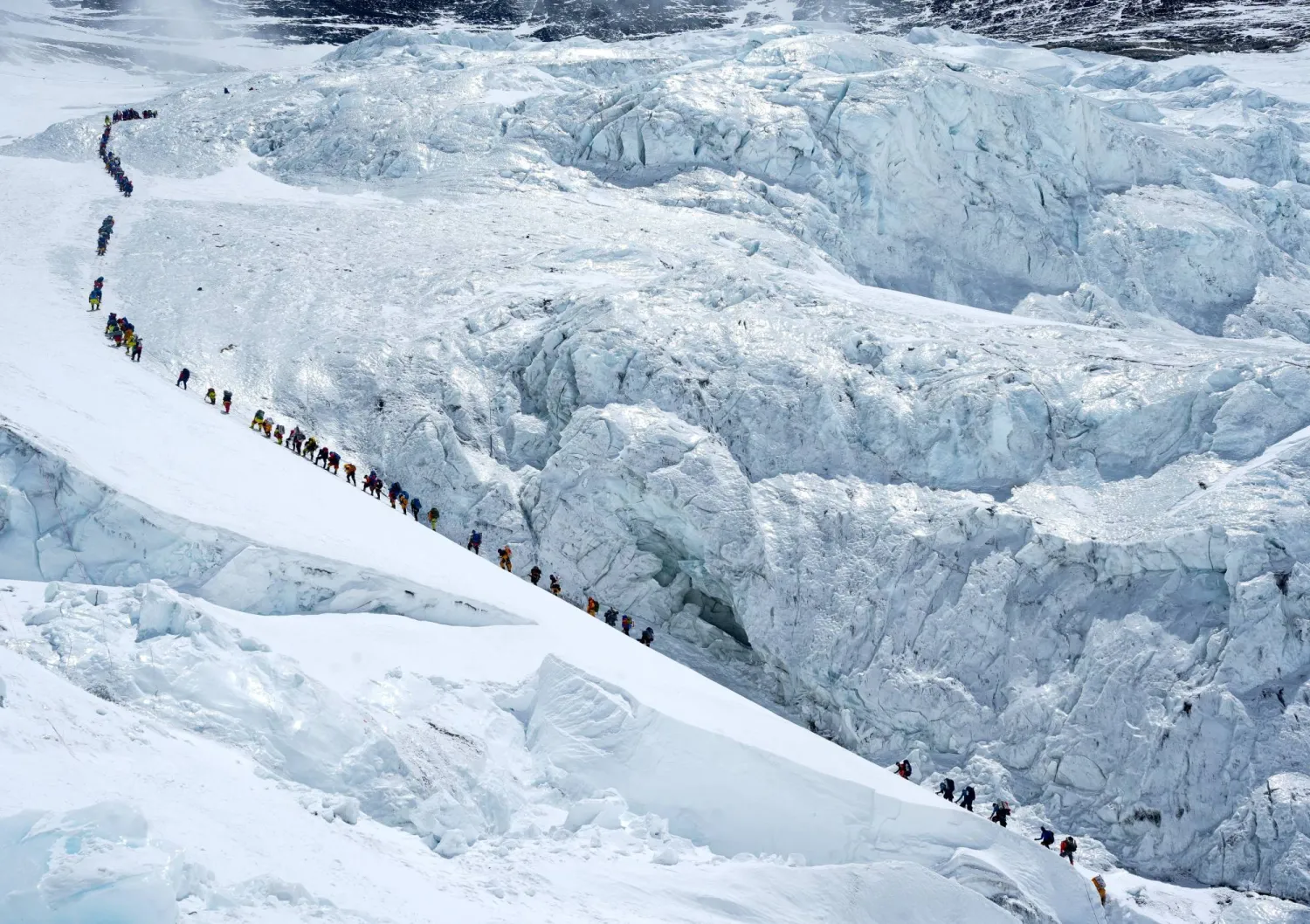
Climbers walk in a long queue as they head to summit Mount Everest in the Solukhumbu district, also known as the Everest region, Nepal, May 18, 2026. REUTERS/Purnima Shrestha

A Briton improved his own Everest record on Friday and notched his 20th ascent to the world’s highest peak, as two Indian climbers died on the mountain, taking the season's toll to five, hiking officials said.

Kenton Cool, 52, climbed the 8,849-meter (29,032-foot) peak before dawn and was descending to lower camps. He was expected to reach the base camp over the weekend, his expedition organizers said, according to Reuters.

An Indian climber died at Camp II and another at the Hillary Step, Nivesh Karki of their expedition organizing company Pioneer Adventure said. Both had climbed the summit on Thursday but ⁠died during descent, ⁠he said on Friday.

Hillary Step is located below the summit in the "death zone", so called because of the dangerously low level of natural oxygen.

Details of their deaths were not available.

"One body is at very high altitude and we are trying to bring the second body from camp II," Karki told Reuters.

Cool, the ⁠British climber, is “quietly rewriting the record books,” said four-time Everest climber and expedition organizer Lukas Furtenbach of the Austria-based Furtenbach Adventures company.

“More Everest summits than any non-Sherpa ever... and still making it look like just another walk in the hills. Absolute legend," Furtenbach told Reuters from the base camp. Cool climbed with one of Furtenbach's teams.

Cool, who first climbed Everest in 2004 and has since repeated the feat every year except some years when authorities closed the mountain due to various reasons, said scaling the height of Everest was ⁠not routine.

“It ⁠never gets any easier or any less frightening. It’s the tallest mountain in the world and with it comes an incredible sense of majesty,” Cool said in a statement.

“I rely on every bit of experience I have to move safely in this environment. Standing on the summit for the twentieth time is incredibly special.”

The record for the highest number of summits at Everest is held by a Nepali Sherpa, Kami Rita, at 32.

Everest has been climbed by more than 8,000 people, many of them multiple times, since it was first scaled by New Zealander Sir Edmund Hillary and Sherpa Tenzing Norgay in 1953.