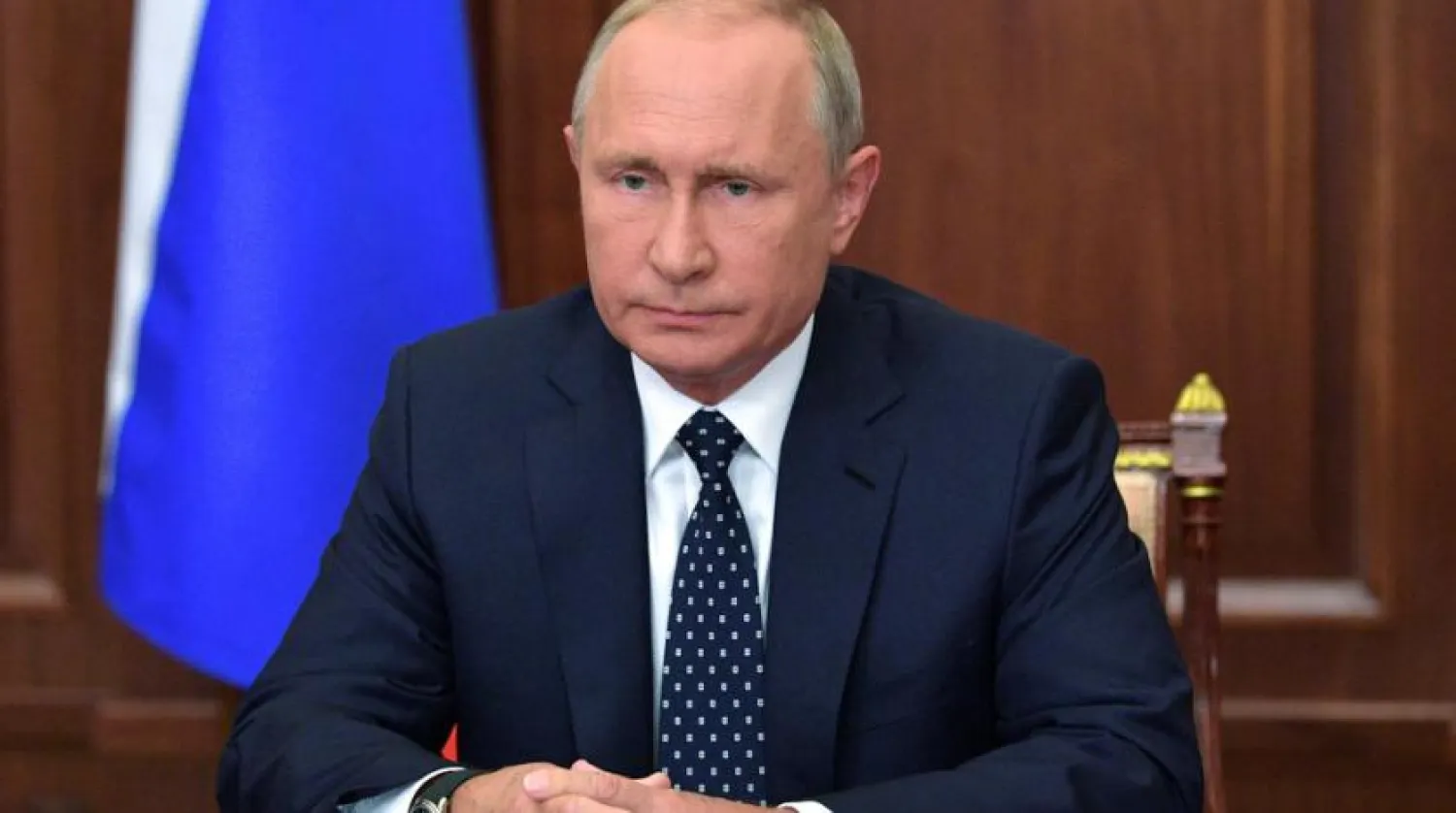
Putin: Russia Battling 'Western Domination' as Ukraine War Grinds On

Russian President Vladimir Putin. (Reuters)
TT

Putin: Russia Battling 'Western Domination' as Ukraine War Grinds On

Russian President Vladimir Putin. (Reuters)

President Vladimir Putin said Thursday that the war in Ukraine was part of Russia's wider struggle against Western domination, and warned that the world is probably entering the "most dangerous" decade since the end of World War II.

The Russian leader showed no sign of backpedaling on the eight-month-old invasion of Ukraine, and indeed painted the current situation as part of the decline of Western dominance in global affairs.

Putin's comments on the global situation at the annual Valdai Discussion Club meeting were answered indirectly by the US Defense Department's release of its formal National Defense strategy, in which it painted Moscow as an "acute threat" to Western values.

"Putin's reckless war of choice against Ukraine -- the worst threat to European security since the end of World War Two -- has made that very clear for the whole world," said US Defense Secretary Lloyd Austin.

- 'Tectonic shifts' -
The heady rhetoric took place as fighting ground on in Ukraine's east and south, with neither side claiming significant gains.

"The historical period of undivided dominance of the West in world affairs is coming to an end," said Putin. "The unipolar world is becoming a thing of the past.

While the West was still "desperately" trying to govern humanity, it was not able to. "Most peoples of the world no longer want to put up with it," he said.

The Ukraine offensive, he said, was simply part of the "tectonic shifts of the entire world order."

"Russia is not challenging the elites of the West, Russia is just trying to defend its right to exist," he said.

- More 'dirty bomb' talk -
Putin said using nuclear weapons in Ukraine would "make no sense at all to us -- either in political or military terms."

But Moscow again raised the allegation that Ukraine planned to use a "dirty bomb" -- a crude, small nuclear weapon -- in the war.

It filed a complaint Thursday with the UN Security Council demanding an international investigation into the United States' "military-biological activities" in Ukraine. The US rejected the accusation, while the UN said it was "not aware" of any such program in Ukraine.

After a closed-door UN Security Council meeting, Russian Ambassador Vassily Nebenzia said they were serious about the dirty bomb allegation.

"We would be happy to be mistaken, but we cannot simply ignore this," he said.

"These allegations are very serious and may lead to very, very unfortunate consequences," he said.

The International Atomic Energy Agency (IAEA), the UN's nuclear watchdog, said it would carry out an "independent verification" in Ukraine this week, inspecting the locations that Moscow tied to its allegations.

IAEA chief Rafael Grossi, who attended the Security Council meeting, said they would work "to detect any diversion of nuclear material under safeguards, any undeclared production or processing of nuclear material at the two locations and assure that there are no undeclared nuclear material and activities."

The agency said it had inspected "one of the two locations a month ago and no undeclared nuclear activities or materials were found there."

- New worries on grain exports -
Both Ukraine and the United States raised fresh concerns about the pace of grain exports from Ukraine, vital to the world but which Ukraine says are being held up by Russian ship inspections.

On Wednesday, after meeting with Guinea-Bissau President Umaro Sissoco Embalo, who represented the Economic Community of West African States, Ukraine's President Volodymyr Zelensky said there was a backup of 175 ships waiting to pick up and deliver grain.

Zelensky said the backup was a "deterioration of access to food for millions of people" in Africa, Asia and Europe.

In Ottawa on Thursday, US Secretary of State Antony Blinken said Russia would face "great anger" if it backs out of the pact to permit Ukraine grain stocks to be delivered to global markets.

The 120-day pact expires on November 19, and the backup of the ships and uncertainty over whether it will be renewed has already caused prices of some food products to rise.

"The idea that Russia would now say it doesn't want to continue it, it wants to turn it off, I think, will be met with great anger by countries around the world who are benefiting from Ukrainian grain," Blinken said.

"I think it's profoundly in everyone's interest to make sure that this grain can continue to move out of Ukraine and certainly, we will do everything we can to sustain the agreement," he said.


Republican 2028 Field Takes Shape After Midterm Drubbing

 US Vice President JD Vance delivers remarks during a Veterans Day ceremony at Arlington National Cemetery in Arlington, Virginia, on November 11, 2026. (AFP)
US Vice President JD Vance delivers remarks during a Veterans Day ceremony at Arlington National Cemetery in Arlington, Virginia, on November 11, 2026. (AFP)
TT

Republican 2028 Field Takes Shape After Midterm Drubbing

 US Vice President JD Vance delivers remarks during a Veterans Day ceremony at Arlington National Cemetery in Arlington, Virginia, on November 11, 2026. (AFP)
US Vice President JD Vance delivers remarks during a Veterans Day ceremony at Arlington National Cemetery in Arlington, Virginia, on November 11, 2026. (AFP)

The Republican Party's midterm drubbing has opened the door to a crowded battle to succeed President Donald Trump, with a wide field of potential 2028 contenders gearing up for presidential bids, according to interviews with more than a dozen people involved in prospective campaigns.

Allies and operatives around Vice President JD Vance, US Senator Ted Cruz of Texas, Florida Governor Ron DeSantis and former Virginia Governor Glenn Youngkin have begun making early preparations or assessing potential campaigns, the people said.

They are "at least trying to get their ducks in order to run," said one Republican operative familiar with the activity.

More Republicans are expected to join them, according to Republican donors, strategists and influential conservative leaders, some of whom spoke on the condition of anonymity to describe private conversations.

Some potential candidates are also considering sitting out 2028 and waiting until 2032, calculating that Trump's unpopularity and the party's midterm losses could make the next presidential election an especially difficult one for the Republican nominee.

After those losses, many Republicans no longer view Vance as Trump's inevitable successor. While potential rivals explore bids, donors are holding back their money and some Republicans are taking a fresh look at governors who can claim distance from Washington and the Trump administration.

"What happened (in the midterms) was a major reset and changed everything as it relates to presidential politics," said Bob Vander Plaats, an Iowa evangelical leader and chief executive of The Family Leader, a conservative Christian advocacy organization.

Had Republicans fared better, "JD Vance would have been a lock in terms of the heir apparent," Vander Plaats said. Now, "he’ll probably have competition and a lot of competition."

VANCE STILL THE MAN TO BEAT

Vance appears likely to ‌run, according to four ‌people familiar with his thinking, but has not yet formally decided as he weighs the souring political environment for Republicans and the effect of a ‌campaign on ⁠his young family.

A ⁠Vance ally, speaking on the condition of anonymity, said Vance and his political operation expected Republican figures opposed to the vice president's brand of conservatism would emerge after the midterms to promote rival presidential candidates.

The person said Vance favored a competitive primary instead of an early Trump endorsement because it would prove his mettle for a general election.

Vance would enter the race with formidable advantages as the sitting vice president with a national profile. One Republican operative who worked on a competitive House race described the nomination as Vance's to lose.

"I think if he wants the nomination, he probably wins it in an ugly fashion," the operative said, predicting a potentially nasty contest.

But running from the vice presidency could complicate his path. After largely avoiding public disagreement with Trump, Vance blamed the Iran war for Republicans’ midterm defeat. A week later, Trump directed him to focus on domestic issues instead of efforts to secure a peace deal with Iran.

The fallout from the conflict will likely prove a challenge for the broader Republican field, as candidates navigate how much to distance themselves from a war that Trump continues to defend.

The Vance ally said the vice president considered the midterm ⁠result a rejection of the Iran war rather than voters' verdict on the Trump presidency. When the war ends, the person said, Vance and populist ‌Republicans will be able to rebuild Trump's coalition of voters.

CRUZ, OTHER RIVALS SEE AN OPENING

Cruz has spoken openly with associates about another White House ‌run, after his failed attempt for the nomination in 2016, and has begun early preparations, according to two people familiar with the activity. Representatives for Cruz did not respond to a request for comment.

Over a steak dinner with conservative ‌economist Stephen Moore before the midterms, Cruz said he planned to launch a bid, Moore told Reuters. On Texas Lieutenant Governor Dan Patrick's podcast in August, Cruz was similarly direct: “It's no secret that I want ‌to be president."

Cruz has spent months positioning himself as a conservative who would return Republicans to a market-first domestic policy and a more traditional approach to international relations, emphasizing that any military action must be in US national interests and not aimed at nation-building.

"He says he's the mantle to the Reagan Republican wing of the party," Moore said.

One Republican donor said calls from potential candidates to major funders are likely to pick up soon, followed by donor retreats and trips to primary states early next year.

Hovering over the emerging field is Trump. He has said the Republican Party has a deep bench but suggested after the midterms that he may not endorse anyone in the primary.

Several strategists said Trump's backing could ‌reshape the Republican nominating race.

"Unless the president swoops in with an endorsement early, there’s plenty of time," said Kellyanne Conway, Trump's 2016 campaign manager and first-term senior counselor. "His endorsement is still the biggest get in all of politics."

DISTANCE FROM TRUMP MAY BENEFIT GOVERNORS

Some Republicans see a lane for conservative ⁠governors who could tout their executive experience and distance ⁠themselves from Washington and Trump's sagging popularity.

DeSantis is keeping his options open for 2028 and considering waiting until 2032, believing Trump’s low approval rating could make it difficult for any Republican to win in the upcoming election cycle, according to a party operative familiar with his thinking. Florida was one of the few Republican strongholds to withstand the Democratic wave in the midterms.

Youngkin is also considering a run, according to Moore and another person familiar with his thinking. He has remained active in national Republican politics since winning the Virginia governorship in 2021 despite the state's leftward turn in recent decades. In August, he began a nationwide education advocacy group widely seen in party circles as a possible launching pad for a presidential bid.

Youngkin, whose term ended in January, supports Trump but is not seen as close to him, which could potentially help him if the party is looking for a reset.

"I know Glenn Youngkin very well and if he can find an avenue, he’s likely to get in the race," Moore said.

Another potential contender is Secretary of State Marco Rubio, who three Republican donors said they hoped would enter the race.

But several people familiar with Rubio's thinking said a 2028 bid appears unlikely for now, with some close to him expecting him to spend time in the private sector. A former aide pointed instead to a possible 2032 run.

The latest Reuters/Ipsos poll showed some 45% of Republican voters said they believed Rubio would be an "excellent" presidential candidate, with 43% saying the same of Vance.

Representatives for DeSantis, Youngkin and Rubio did not respond to requests for comment.

The early jockeying comes as some Republicans have grown pessimistic about their party's 2028 prospects.

Robert Bigelow, a major conservative donor who gave around $14 million to the main pro-Trump super PAC in the 2024 election, blamed Trump for the midterm defeats and said he expected Democrats to win the White House in 2028.

Still, Bigelow said he likes both Vance and Rubio and had suggested them as a potential ticket when Trump asked him in February who should succeed him.

Despite thinking the Democrats’ election "tsunami” could last a decade, Bigelow said Vance should run.

“You can run again," he said. "But not to run at all is a mistake.”


France Expects EU Sanctions on Iran in December Over Fridge Hack

 France's Foreign Affairs Minister Jean-Noel Barrot speaks to the press at the end of the second day of the G7 foreign ministers summit at the Quai d'Orsay in Paris, Tuesday, Nov. 10, 2026. (AP)
France's Foreign Affairs Minister Jean-Noel Barrot speaks to the press at the end of the second day of the G7 foreign ministers summit at the Quai d'Orsay in Paris, Tuesday, Nov. 10, 2026. (AP)
TT

France Expects EU Sanctions on Iran in December Over Fridge Hack

 France's Foreign Affairs Minister Jean-Noel Barrot speaks to the press at the end of the second day of the G7 foreign ministers summit at the Quai d'Orsay in Paris, Tuesday, Nov. 10, 2026. (AP)
France's Foreign Affairs Minister Jean-Noel Barrot speaks to the press at the end of the second day of the G7 foreign ministers summit at the Quai d'Orsay in Paris, Tuesday, Nov. 10, 2026. (AP)

France expects the EU to approve new sanctions against Iran in December over a major cyberattack on supermarket fridges that Paris blames on Tehran, Foreign Minister Jean-Noel Barrot said Monday.

Arriving at a meeting of European Union foreign ministers in Brussels, Barrot said he was "confident" that measures targeting those responsible for the hack would be agreed at the next such gathering on December 14.

"I have come to Brussels today to present evidence concerning those primarily responsible for this extremely serious cyberattack, and to request that European sanctions be imposed against them within one month," Barrot told reporters.

"I am pleased to have secured the support of a vast majority of European Union member states".

Hundreds of French supermarkets were hit in the October 11 and 12 cyberattacks, which raised the temperatures in their refrigerators and freezers, forcing many to throw away entire inventories of perishable food.

Last week Paris pointed the finger at Iran's Revolutionary Guard Corps (IRGC), accusing it of being responsible for what was the first such large-scale cyber sabotage on French territory.

Tehran has dismissed the accusation as "baseless".

Similar incidents were reported in at least 11 other European countries in early November.


Iran Rules Out UN Inspections of Damaged Nuclear Sites Until War Ends

A street in Tehran, June 14, 2026. Majid Asgaripour/WANA (West Asia News Agency) via REUTERS
TT

Iran Rules Out UN Inspections of Damaged Nuclear Sites Until War Ends

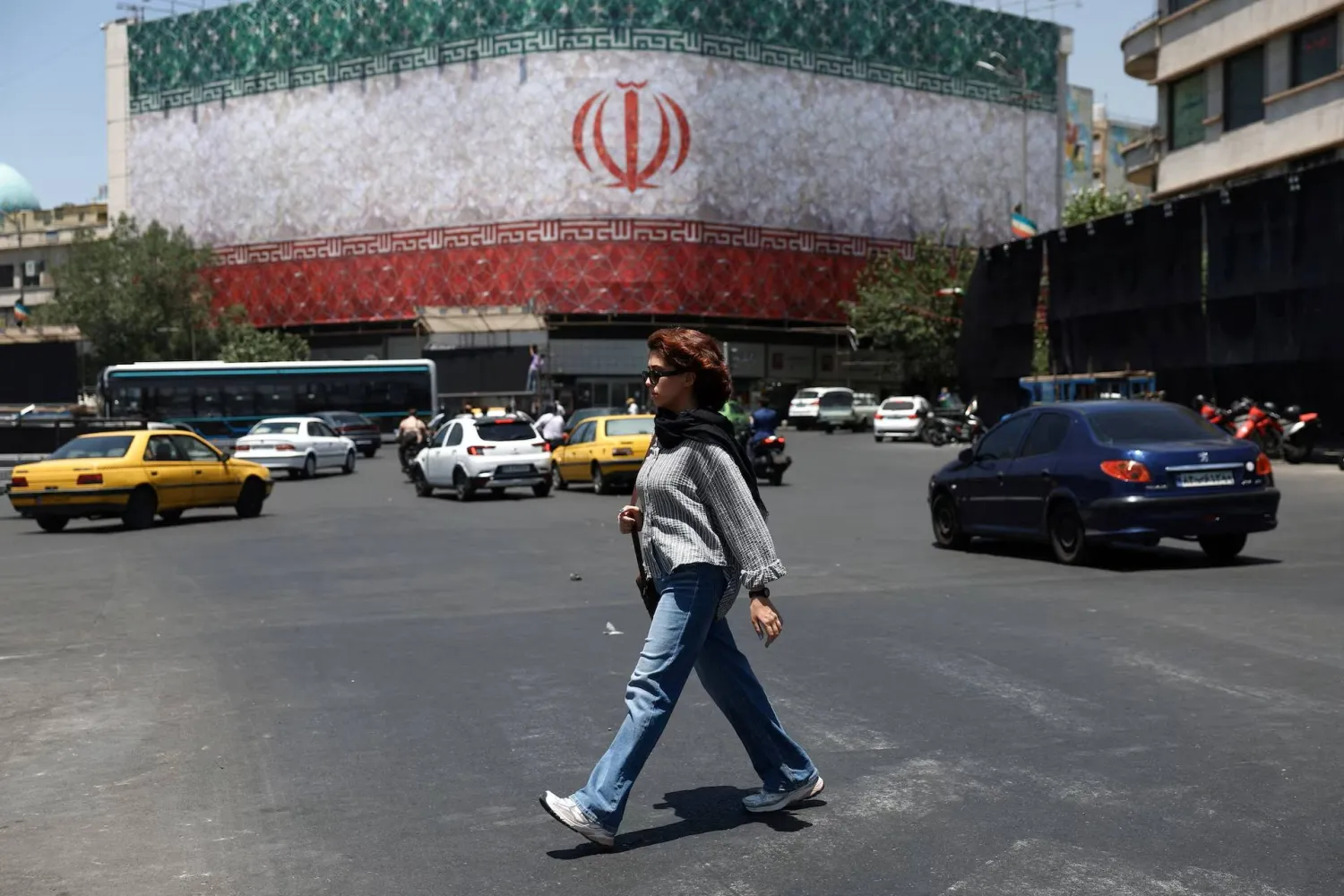
A street in Tehran, June 14, 2026. Majid Asgaripour/WANA (West Asia News Agency) via REUTERS

Iran will not let UN inspectors visit its damaged nuclear facilities until the Middle East war has ended and the United States meets its conditions, a senior Iranian official said.

The remarks came days after the International Atomic Energy Agency urged Tehran to take steps towards resuming inspections, which have been suspended since last year's 12-day war with Israel, when the US also struck Iranian nuclear sites.

"We will not grant the IAEA access to the facilities until Iran's conditions are met and the war has permanently ended," Deputy Foreign Minister Kazem Gharibabadi said in a televised interview late Sunday.

Iranian nuclear facilities were hit again during the war which broke out on February 28 when US-Israeli strikes killed Iran's supreme leader Ali Khamenei.

IAEA inspectors visited Iran's Bushehr nuclear power plant in September but have not gained access to other bombed sites including Natanz, Fordow and Isfahan.

Gharibabadi said the agency's request to inspect damaged facilities was "likely aimed at assessing the effectiveness of American weaponry".

Efforts to end the Middle East war have made little headway. Tehran is demanding that Washington unfreeze Iranian assets and lift sanctions, among other conditions, in exchange for reopening the Strait of Hormuz, the vital energy shipping route it has blockaded during the conflict.

Iranian officials have said talks on Iran's nuclear program would come at a later stage.

Earlier this month, the US military announced a $20 million reward for information on Iran's nuclear program, a move Tehran called "repugnant".